
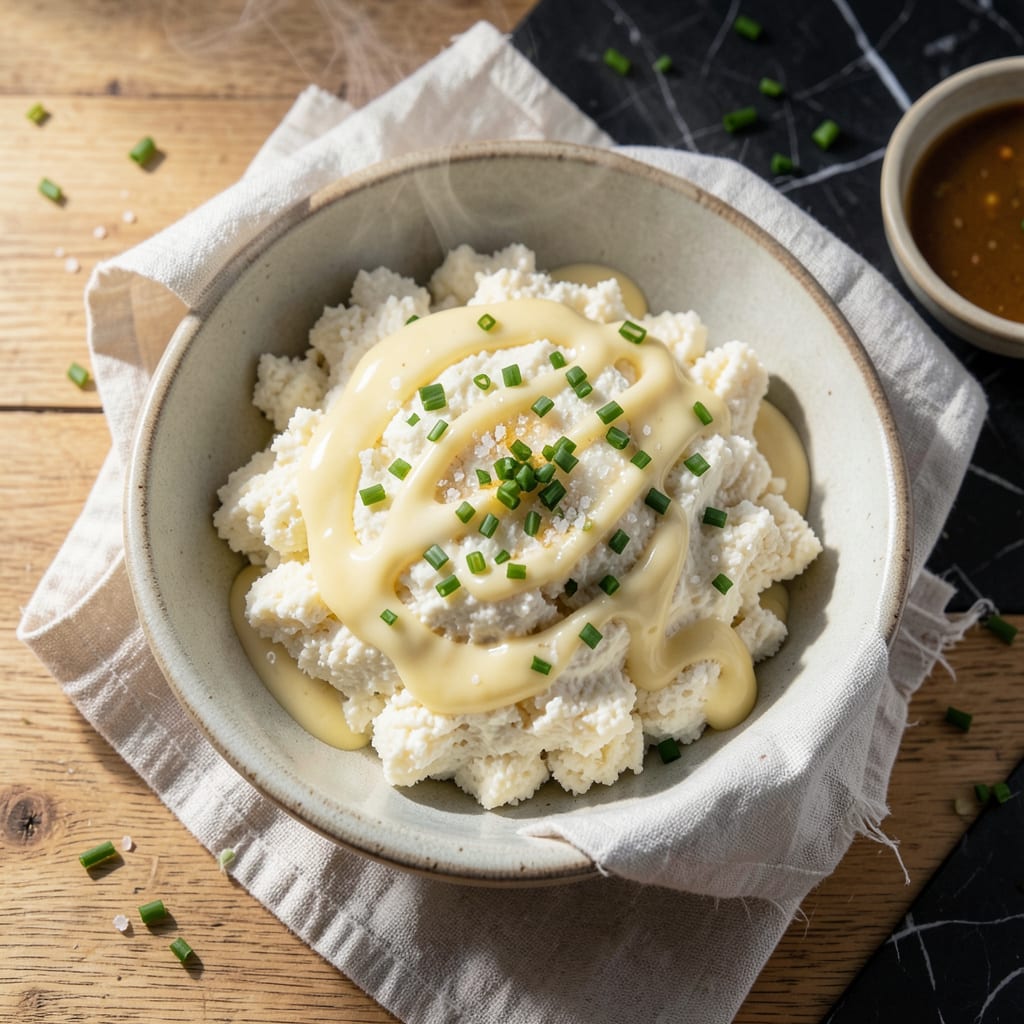
This traditional dish brings old-world charm to your table with its rich, creamy texture and simple preparation.
Using basic ingredients and a straightforward method, you’ll create a satisfying meal that’s both comforting and versatile. The process is easy and rewarding, delivering authentic flavor in every bite.
Ingredients for Pot Cheese
Rich dairy and fresh herbs create this old-world creamy delight with minimal effort.
| Ingredient | Amount | Notes |
|---|---|---|
| Whole Milk 🥛 | 1 cup | Full-fat for creaminess |
| Buttermilk 🥛 | ½ cup | Cultured, low-fat acceptable |
| Heavy Cream 🥛 | ½ cup | At least 36% fat content |
| Salt 🧂 | 1 tsp | Fine sea salt preferred |
| White Vinegar 💧 | 1 tbsp | Or apple cider vinegar |
| Fresh Chives 🌿 | 2 tbsp | Finely minced for garnish |
| Fresh Dill 🍃 | 1 tbsp | Chopped, stems removed |
| Black Pepper 🌶️ | ½ tsp | Freshly cracked preferred |
| Unsalted Butter 🧈 | 2 tbsp | For enriching texture |
| All-Purpose Flour 🌾 | 2 tbsp | Optional, for thickening |
| Garlic Cloves 🧄 | 1 clove | Minced, for depth |
| Lemon Zest 🍋 | ½ tsp | Finely grated, for brightness |
The dairy quality matters here. Whole milk from a local dairy or organic brands like Stonyfield or Horizon produce the best texture. Buttermilk should be cultured—not the powdered substitute. For heavy cream, look for at least 36% fat content; Whole Foods 365 or Organic Valley are reliable. Avoid ultra-pasteurized cream as it may not curdle properly.
No buttermilk? Stir 1.5 tsp lemon juice into 0.5 cup regular milk and let sit 5 minutes. Fresh herbs can be swapped: tarragon or parsley work well instead of chives or dill. For a tangier result, increase vinegar to 1.5 tbsp. The flour is optional—skip for a lighter texture or use cornstarch for a gluten-free version.
Pot cheese keeps 5-7 days in an airtight container in the fridge (the whey may separate—just stir). For longer storage, freeze without garnishes for up to 3 months. Always bring dairy to room temperature before starting for best results.
Why You’ll Love This Recipe
- No Fuss Cooking: I just heat the milk, add vinegar, and let it sit—no fancy techniques or hard-to-find ingredients.
- Rich and Tangy: The buttermilk and heavy cream give it that creamy depth, while the vinegar adds the perfect zing.
- Breakfast to Dessert: I spread it on toast in the morning, then use it in pierogi dough at night. Honestly, it does everything.
- Budget Stretcher: A gallon of milk and a bottle of vinegar make pounds of cheese for pennies. I’ll be real: this saves me a grocery run every time.
Step-by-Step Instructions for Pot Cheese
Master this traditional technique for smooth, tangy results with minimal effort.
Step 1: Acidulate and Warm the Milk Mixture
In a medium saucepan, combine the 1 cup Whole Milk, 0.5 cup Buttermilk, and 0.5 cup Heavy Cream. Stir in the 1 tbsp White Vinegar and let the mixture sit for 5 minutes to begin the curdling process.
Place the saucepan over medium heat and warm the mixture to 180°F, stirring gently to prevent scorching. You’ll notice the milk beginning to separate into curds and whey—this is the desired reaction. Remove from heat once the temperature is reached and the curds are fully formed.
Step 2: Drain and Season the Curds
Line a colander with cheesecloth and set it over a large bowl. Pour the warm mixture into the colander and let it drain for 10 minutes. The whey will collect in the bowl while the curds remain in the cheesecloth.
Once drained, transfer the curds to a clean bowl. Add the 1 tsp Salt, 0.5 tsp Black Pepper, 1 clove minced Garlic Cloves, and 0.5 tsp Lemon Zest. Gently fold these ingredients into the curds to distribute the flavors evenly without breaking them up too much.
Step 3: Incorporate the Butter and Thickener
Return the seasoned curds to low heat in a clean saucepan. Add the 2 tbsp Unsalted Butter and stir until it is fully melted and incorporated. The butter enriches the texture and adds a velvety mouthfeel to the final product.
If a thicker consistency is desired, sprinkle the 2 tbsp All-Purpose Flour over the curds and stir gently for 2-3 minutes until the mixture thickens slightly. This step is optional but recommended for a more spreadable result.
Step 4: Finish with Fresh Herbs and Serve
Remove the pot cheese from heat and let it cool slightly. Stir in the 2 tbsp Fresh Chives and 1 tbsp Fresh Dill, reserving a small amount for garnish if desired. These herbs add a bright, fresh contrast to the creamy, tangy cheese.
Transfer the pot cheese to a serving bowl and let it cool to room temperature. The texture should be smooth yet slightly rustic, with visible flecks of herbs. Serve with crusty bread or crackers, and enjoy the old-world creaminess in every bite.
Pro Tips For Making Pot Cheese
- Heat Slowly: Warm the milk and cream to just 185°F—any hotter and the curds will toughen. I learned this the hard way after ending up with rubbery cheese more than once.
- Use Full-Fat: Skip the low-fat milk; whole milk and heavy cream give the richest, creamiest pot cheese. The extra fat isn’t just for flavor—it actually changes the outcome.
- Drain Thoroughly: Let the curds sit in the cheesecloth for at least 30 minutes to remove all the whey. Sounds tedious, but it works: soggy cheese is nobody’s idea of a good time.
- Add Vinegar Last: Stir in the white vinegar only after the milk reaches temperature. Adding it too early can prevent proper curd formation, and you’ll be left with a weak, watery mess.
Wine and Beer Pairings for pot cheese
White Wine Pairings
A crisp Sauvignon Blanc with its bright acidity cuts through the richness beautifully. I love a New Zealand Kim Crawford—its citrus notes complement the tangy flavor. Pinot Grigio from Italy also works well, offering a clean finish. 🍷
Red Wine Options
For red lovers, a light-bodied Pinot Noir with subtle earthiness pairs nicely. Try Meiomi from California—its soft tannins won’t overpower the dish. Avoid bold Cabernets as they can clash with the creaminess.
Beer Pairings
A wheat beer like Blue Moon with its citrusy notes enhances the fresh herbs. For a darker option, Amber Ale from Fat Tire adds a malty contrast. Avoid hoppy IPAs—they’ll compete with the tangy profile. 🍺
Non-Alcoholic Choices
A sparkling apple cider like Martinelli’s offers a sweet-tart balance. Iced hibiscus tea with a squeeze of lemon also refreshes the palate between bites.
Serving Temperature
Serve whites and wheats ice-cold (45-50°F), while reds like Pinot Noir should be slightly chilled (55-60°F). This enhances the pairing experience by keeping flavors crisp and vibrant.
Garnish Harmony
The fresh chives and dill in the recipe echo the herbal notes in many wines and beers. I often add extra herbs to the table for guests to customize their pairings.
Nutrition Facts
Frequently Asked Questions
Can I use skim milk instead of whole?
Whole milk is best for rich, creamy results. Skim milk will produce a thinner, less flavorful cheese.
Why does the mixture need to reach 180°F?
This temperature fully separates curds from whey, ensuring proper texture. Below 180°F, the curds may be too soft.
How do I know when it’s done draining?
After 10 minutes, the whey should stop dripping. For thicker cheese, let it drain 5 minutes longer.
Can I skip the flour?
Yes! The flour is optional. Without it, the texture will be lighter but still spreadable.

- 4C Bread Crumbs Meatballs Recipe: Crispy Crust and Juicy Centers - September 25, 2026
- 6 Oz Chocolate Chip Cookie Recipe: Perfectly Balanced Crispy Edges and Chewy Hearts - September 25, 2026
- 6-Inch Coffee Cake Recipe: Vanilla Bean Swirls and Buttery Streusel Topping - September 25, 2026