
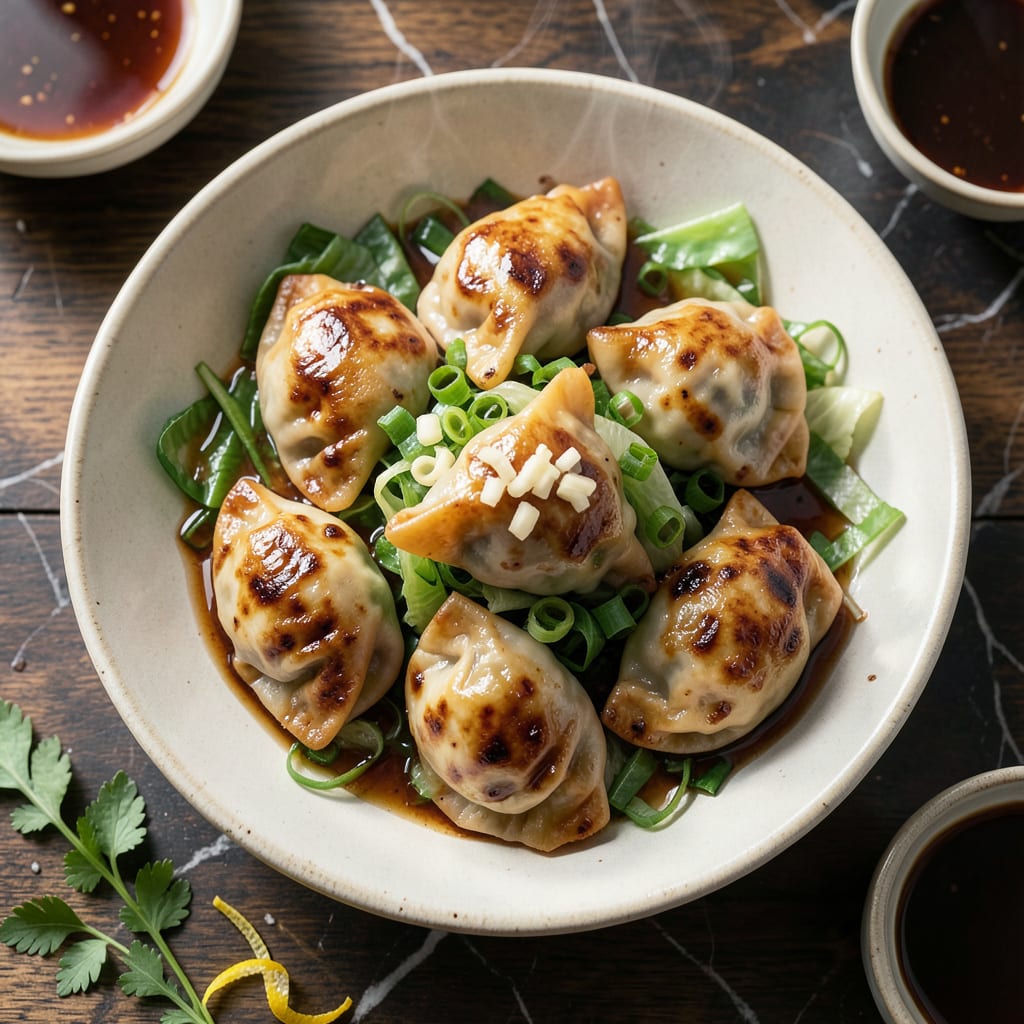
This traditional Chinese pot dumpling recipe brings authentic flavors to your kitchen with a simple yet precise method. The delicate wrappers encase a savory filling, creating a comforting dish that’s both hearty and satisfying.
Mastering these boiled delights requires attention to detail, from crafting the perfect dough to achieving the ideal texture. The result is a dish that honors its cultural roots while being accessible for home cooks.
Ingredients for Pot Dumpling
Traditional ingredients create authentic boiled delights with delicate wrappers and savory filling.
| Ingredient | Amount | Notes |
|---|---|---|
| All-Purpose Flour 🌾 | 2 cups | Plus extra for dusting |
| Warm Water 💧 | ¾ cup | Approximately 110-115°F |
| Ground Pork 🐖 | ½ lb | Or substitute ground chicken |
| Napa Cabbage 🥬 | 1 ½ cups | Finely shredded, salted and drained |
| Green Onions 🧅 | 4 whole | Thinly sliced, white and green parts |
| Fresh Ginger 🌿 | 1 tbsp | Finely minced |
| Garlic Cloves 🧄 | 3 cloves | Finely minced |
| Soy Sauce 🫒 | 2 tbsp | Low-sodium preferred |
| Sesame Oil 🫒 | 1 tbsp | Toasted for best flavor |
| Salt 🧂 | 1 tsp | Divided between dough and filling |
| White Pepper 🌶️ | ½ tsp | Freshly ground preferred |
| Shaoxing Wine 🍶 | 1 tbsp | Or dry sherry as substitute |
| Chives 🌿 | 2 tbsp | Finely chopped for garnish |
The flour quality is paramount for the perfect wrapper texture. King Arthur all-purpose flour provides consistent results, though any reliable brand works. For the filling, freshly ground pork from a trusted butcher ensures optimal flavor and texture. Asian markets typically carry the best selection of Napa cabbage and Shaoxing wine, which are essential for authenticity.
Ground chicken or turkey can replace pork without sacrificing texture. Vegetable oil works in place of sesame oil, though the flavor profile will be less pronounced. If Shaoxing wine isn’t available, dry sherry is the closest substitute. The cabbage must be thoroughly drained after salting to prevent a watery filling—squeeze out all excess moisture.
Uncooked dumplings freeze beautifully on a tray before being transferred to a bag—they’ll keep for 3 months. The filling can be made a day ahead and refrigerated. Always bring the dough to room temperature before rolling for easier handling. Cooked dumplings are best served immediately but will keep in the fridge for 2-3 days.
Why You’ll Love This Recipe
- One Bowl Wonder: I mix the flour and water right in the pot—no extra bowls, no fuss, just dump and stir.
- Umami Bomb: The pork and Napa cabbage together create this rich, savory depth that’s honestly hard to beat.
- Feeds a Crowd: Between us, I’ve stretched this to six servings with zero complaints, even from picky eaters.
- Leftovers? Yes Please: They reheat beautifully in broth or crisped up in a pan—tastes even better the next day.
Step-by-Step Instructions for Pot Dumplings
Master the traditional technique with these precise steps for perfect texture and flavor every time.
Step 1: Prepare the Dough
In a large bowl, combine the 2 cups All-Purpose Flour with 0.25 tsp Salt. Create a well in the center and gradually pour in the 0.75 cup Warm Water, mixing with chopsticks or a fork until a shaggy dough forms.
Transfer to a lightly floured surface and knead for 8-10 minutes until smooth and elastic. The dough should feel slightly tacky but not stick to your hands. Cover with a damp towel and rest for 30 minutes—this relaxation period makes rolling easier.
Step 2: Make the Filling
In a mixing bowl, combine the 0.5 lb Ground Pork with 1.5 cups Napa Cabbage, 4 whole Green Onions, 1 tbsp Fresh Ginger, and 3 cloves Garlic Cloves. These finely chopped ingredients create the authentic texture.
Add the 2 tbsp Soy Sauce, 1 tbsp Sesame Oil, remaining 0.75 tsp Salt, 0.5 tsp White Pepper, and 1 tbsp Shaoxing Wine. Mix in one direction until sticky and well combined. The mixture should be moist but hold its shape when pressed.
Step 3: Assemble the Dumplings
Divide the rested dough into 4 equal portions and roll each into a 1-inch thick rope. Cut into 1-inch pieces and roll each into a thin circle, about 3 inches in diameter, keeping the edges slightly thinner than the center.
Place 1 tbsp of filling in the center of each wrapper. Pleat the edges by pinching and folding as you rotate the dumpling in your hand, creating a crescent shape with a sealed edge. The pleats should be uniform and the seal completely closed to prevent leakage during cooking.
Step 4: Cook the Dumplings
Bring a large pot of water to a rolling boil. Add the dumplings in batches, stirring gently to prevent sticking. When the water returns to a boil, add ½ cup of cold water. Repeat this process 2 more times—the dumplings are done when they float to the surface and the wrappers appear translucent.
Remove with a slotted spoon and transfer to a serving plate. The cooking process should take 6-8 minutes total from the initial boil. The finished dumplings will have a delicate, slightly chewy texture with juicy filling.
Step 5: Garnish and Serve
Drizzle the cooked dumplings with a small amount of Sesame Oil to add shine and extra aroma. Sprinkle with the 2 tbsp Chives for a fresh, oniony contrast to the rich filling.
Serve immediately with a dipping sauce of your choice. The ideal serving temperature is hot, with the filling juices just beginning to burst through the delicate wrapper. Each dumpling should have a perfect balance of tender dough and flavorful filling.
Pro Tips For Making Pot Dumpling
- Boil Before Covering: Drop the dumplings into simmering water first—this prevents sticking to the pot. I learned this the hard way after scraping ruined dumplings off the bottom one too many times.
- Salt the Cabbage: Sprinkle salt on the shredded napa cabbage and let it sit for 10 minutes before squeezing out the water. Sounds tedious, but it removes excess moisture so your filling stays juicy, not soggy.
- Seal Edges Tight: Press the dough edges together firmly with a slight twist to lock in the filling. My grandmother swore by this, and she was right: loose seals mean pork leaking into the broth.
- Use Hot Water: Mix the dough with water that’s hot to the touch but not boiling—about 120°F. It makes the wrapper more pliable and easier to work with, especially if your kitchen is cold.
Essential Equipment for This Dish
Dough Preparation Tools
I always start with a large mixing bowl for the dough—stainless steel or ceramic works best. A damp kitchen towel is essential for covering the dough during its 30-minute rest. This prevents drying while allowing the gluten to relax. 💡
Rolling Essentials
A rolling pin is non-negotiable for achieving those perfect 3-inch circles. I prefer a French-style tapered pin for better control. Keep extra flour nearby for dusting—King Arthur brand is my go-to for consistency.
Filling Equipment
A sharp chef’s knife (I use Wüsthof 8-inch) makes quick work of finely chopping the Napa cabbage and green onions. A microplane grater is perfect for the fresh ginger and garlic, giving you that fine, even texture.
Cooking Gear
Use a large, wide pot (at least 5 quarts) for boiling to give the dumplings room to float. A slotted spoon or spider strainer is crucial for gentle removal. I also keep a ladle nearby for adding the cold water during cooking. 🔥
Serving Supplies
A bamboo steamer can double as an elegant serving piece, keeping dumplings warm. Small ramekins are perfect for individual dipping sauces. I always have tongs ready for precise plating without piercing the delicate wrappers.
Pro Tips
Invest in a kitchen scale for accurate flour measurement—2 cups can vary wildly by scooping method. A dough scraper helps divide the dough cleanly. And don’t forget parchment paper for your workspace to prevent sticking during assembly.
Nutrition Facts
Frequently Asked Questions
Can I use a different type of meat?
Ground chicken or turkey works well as a substitute for pork. Just ensure the meat is fresh and has a similar fat content for the best texture.
How thin should the dough be?
Roll each wrapper to about 1/8-inch thickness, with the edges slightly thinner than the center. This ensures even cooking and prevents thick spots.
Why do my dumplings stick to the pot?
Stir gently after adding them to boiling water. Use a non-stick pot or add a bit of oil to the water. Avoid overcrowding to prevent sticking.
Can I make them ahead of time?
Yes! Freeze uncooked dumplings on a tray before transferring to a bag. They’ll keep for 3 months. Cook from frozen, adding 1-2 minutes to the boiling time.

- 4C Bread Crumbs Meatballs Recipe: Crispy Crust and Juicy Centers - September 25, 2026
- 6 Oz Chocolate Chip Cookie Recipe: Perfectly Balanced Crispy Edges and Chewy Hearts - September 25, 2026
- 6-Inch Coffee Cake Recipe: Vanilla Bean Swirls and Buttery Streusel Topping - September 25, 2026