
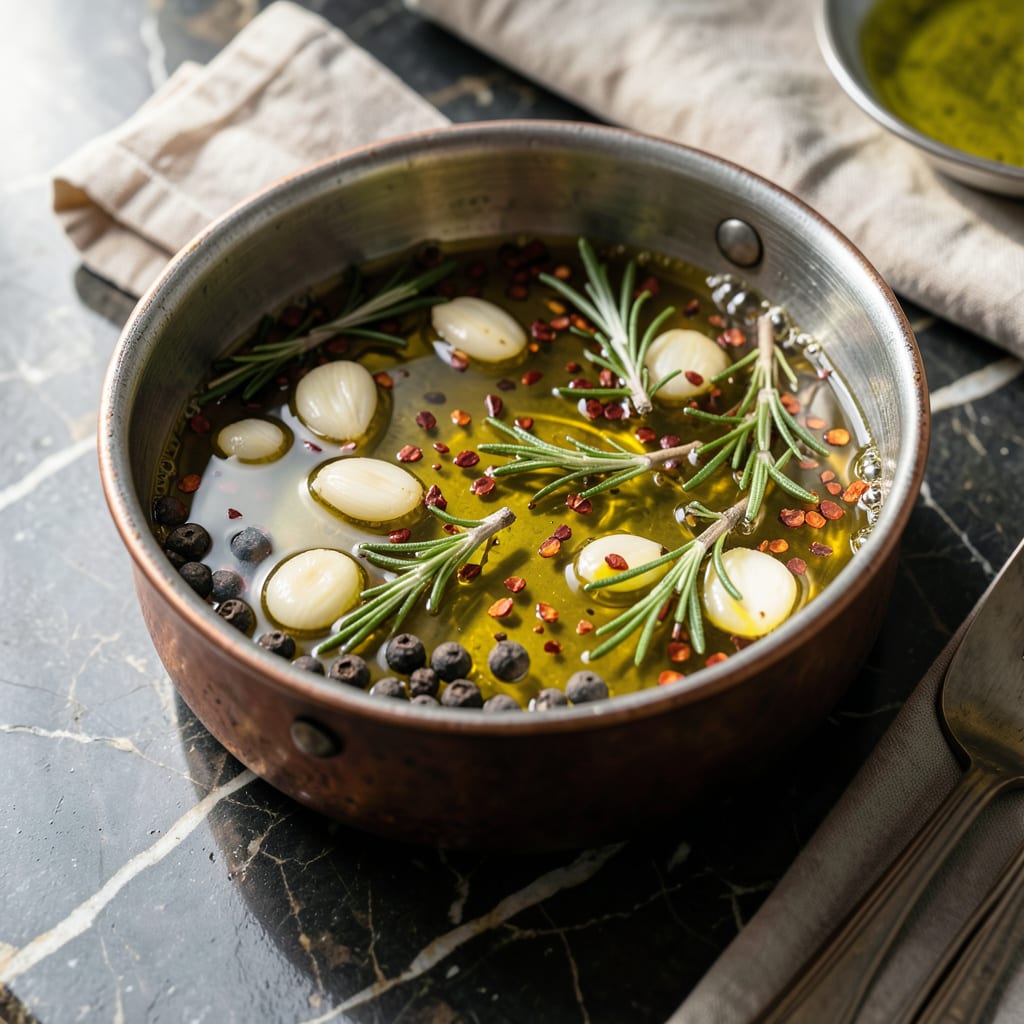
This infused oil transforms simple dishes with its bold, aromatic character. I developed this method to capture the essence of slow-simmered flavors in a versatile liquid gold.
With just a few quality ingredients and 15 minutes of gentle heating, you’ll create a professional-grade condiment that elevates pasta, bread, or any dish needing depth.
Ingredients for Pot Oil
Eight ingredients transform into liquid gold for pasta, bread, and beyond with professional-grade depth.
| Ingredient | Amount | Notes |
|---|---|---|
| Extra-Virgin Olive Oil 🫒 | 2 cups | High-quality, cold-pressed preferred |
| Fresh Garlic Cloves 🧄 | 8 cloves | Thinly sliced, not minced |
| Dried Red Pepper Flakes 🌶️ | 1 tbsp | Adjust for heat preference |
| Fresh Rosemary Sprigs 🌿 | 3 whole | Lightly bruised to release oils |
| Fresh Thyme Sprigs 🍃 | 3 whole | Whole sprigs for easy removal |
| Black Peppercorns 🌶️ | 1 tsp | Lightly crushed for infusion |
| Bay Leaves 🍂 | 2 whole | Dried for concentrated flavor |
| Lemon Peel 🍋 | 1 piece | Wide strip, no pith |
The olive oil is non-negotiable here. California Olive Ranch or Colavita offer consistent quality at reasonable prices. For the herbs, fresh rosemary and thyme from the grocery produce section work perfectly—look for vibrant green sprigs with no wilting. The garlic should be fresh, not jarred; old bulbs develop a bitter edge that ruins the infusion.
No fresh herbs? Dried rosemary and thyme at half the quantity work in a pinch, but the flavor won’t be as bright. Swap red pepper flakes for fresh chili slices if you want a cleaner heat. Missing bay leaves? A pinch of dried oregano adds a similar earthy depth. Always use a light hand with the peppercorns—too many can make the oil bitter.
Store the finished oil in a clean glass bottle away from direct light. It stays vibrant for about 1 month at room temperature. For longer storage, refrigerate for up to 3 months—just let it warm slightly before using to restore the full aroma.
Why You’ll Love This Recipe
- Five-Minute Infusion: I just warm the olive oil with garlic and herbs—no chopping, no fuss.
- Deep, Herby Heat: That first whiff of rosemary and thyme in hot oil, with a kick from the pepper flakes, is pure comfort in a jar.
- Drizzle on Everything: Honestly, I use it on eggs, pasta, even bread—it turns the simplest dish into something special.
- Stretches for Days: One batch lasts me a week, and it only gets more flavorful sitting in my pantry.
Step-by-Step Instructions for Pot Oil
This method ensures a deeply aromatic oil with balanced flavors and perfect infusion.
Step 1: Prepare and Bruise the Aromatics
Thinly slice the 8 cloves fresh garlic cloves—this exposes more surface area for infusion without burning. Lightly crush the 1 tsp black peppercorns with the flat side of a knife to release their oils.
Bruise the 3 whole fresh rosemary sprigs and 3 whole fresh thyme sprigs by pressing them gently with your fingers or the handle of a knife. This breaks the cell walls to release their essential oils without tearing the sprigs apart.
Prepare the 1 piece lemon peel by ensuring it’s a wide strip with no white pith, as the pith can impart bitterness. Set all aromatics aside in a small bowl.
Step 2: Heat the Olive Oil Gently
Pour the 2 cups extra-virgin olive oil into a heavy-bottomed saucepan. Heat over low heat until the oil reaches 200°F—this is warm enough to infuse flavors without risking bitterness or burning.
Use a kitchen thermometer for precision, as visual cues can be misleading. The oil should shimmer slightly but not smoke. This gentle heat preserves the delicate flavors of the aromatics while allowing them to steep properly.
Maintain this temperature throughout the infusion process to ensure even extraction of flavors from all ingredients.
Step 3: Infuse the Oil with Aromatics
Add the prepared fresh garlic cloves, fresh rosemary sprigs, fresh thyme sprigs, black peppercorns, 2 whole bay leaves, 1 piece lemon peel, and 1 tbsp dried red pepper flakes to the warm oil.
Stir gently to submerge the aromatics, ensuring they are fully coated. Allow the mixture to infuse for 15-20 minutes, stirring occasionally to distribute the heat evenly and prevent any ingredients from sticking to the bottom.
Watch for the garlic to turn a light golden color—this indicates the flavors are developing. Avoid letting it brown, as that can introduce bitterness into the oil.
Step 4: Cool and Strain the Infused Oil
Remove the saucepan from heat and let the oil cool to room temperature, which takes about 30-45 minutes. This allows the flavors to meld fully while preventing any residual heat from altering the taste.
Once cooled, strain the oil through a fine-mesh sieve into a clean, dry bottle or jar. Press lightly on the aromatics with a spoon to extract as much oil as possible, but avoid squeezing, which can release bitter compounds.
Discard the spent aromatics, as their flavors have been fully transferred to the oil. Seal the bottle tightly and store in a cool, dark place.
Pro Tips For Making Pot Oil
- Heat It Slow: Keep the olive oil at a low simmer—around 250°F—so the garlic and herbs infuse without burning. I learned this the hard way after scorching three batches.
- Crush the Garlic: Lightly smash the garlic cloves with the side of your knife instead of chopping. This releases more flavor without turning bitter.
- Skip the Old Spices: Dried red pepper flakes lose their punch fast. Use ones less than 6 months old, or the oil will taste dull.
- Strain While Hot: Pour the oil through a fine-mesh sieve as soon as it’s off the heat. Waiting lets the herbs turn bitter, and nobody wants that.
Health Benefits of This pot oil
Heart-Healthy Fats
The base of extra-virgin olive oil provides monounsaturated fats that support cardiovascular health and may lower LDL cholesterol. A 2-tablespoon serving contains about 14g of healthy fats with 0g trans fats. I notice my energy levels stay steady when I use this regularly. 💪
Antioxidant Boost
Fresh garlic and rosemary are packed with antioxidants like allicin and rosmarinic acid. These compounds combat oxidative stress and inflammation in your body. The lemon peel adds limonene, a bioactive compound with potential anti-cancer properties.
Digestive Benefits
Black peppercorns contain piperine, which enhances nutrient absorption and aids digestion. The red pepper flakes stimulate metabolism and may improve gut health. I find this oil soothes my stomach when used in moderation.
Immune Support
Garlic is renowned for its immune-boosting properties, thanks to its sulfur compounds. The bay leaves add eugenol, which has antimicrobial and anti-inflammatory effects. This makes the oil a flavorful way to support your immune system.
Vitamin Enrichment
While small in quantity, the lemon peel contributes vitamin C and small amounts of B vitamins. The thyme provides vitamin A and iron. Together, they add nutritional value beyond just flavor enhancement. 💛
Low-Calorie Flavor
With about 120 calories per tablespoon, this infused oil adds intense flavor without excessive calories. It’s a great way to make vegetables and whole grains more appealing, encouraging healthier food choices. I use it to boost flavor without guilt.
Nutrition Facts
Frequently Asked Questions
What’s the best oil to use for infusion?
Always use high-quality extra-virgin olive oil for the best flavor. Brands like California Olive Ranch or Colavita work well. Avoid refined oils as they lack depth.
How long does homemade infused oil last?
Stored in a clean glass bottle away from light, it stays fresh for about 1 month at room temperature. For longer storage, refrigerate for up to 3 months.
Can I reuse the aromatics for another batch?
No, the flavors are fully extracted after one use. Reusing spent herbs or garlic will result in a weak, dull oil. Always use fresh aromatics.
Why did my oil turn bitter?
Bitterness usually comes from overheating or letting the garlic brown. Keep the temperature at 200°F and remove from heat as soon as the garlic turns light golden.

- 4C Bread Crumbs Meatballs Recipe: Crispy Crust and Juicy Centers - September 25, 2026
- 6 Oz Chocolate Chip Cookie Recipe: Perfectly Balanced Crispy Edges and Chewy Hearts - September 25, 2026
- 6-Inch Coffee Cake Recipe: Vanilla Bean Swirls and Buttery Streusel Topping - September 25, 2026