
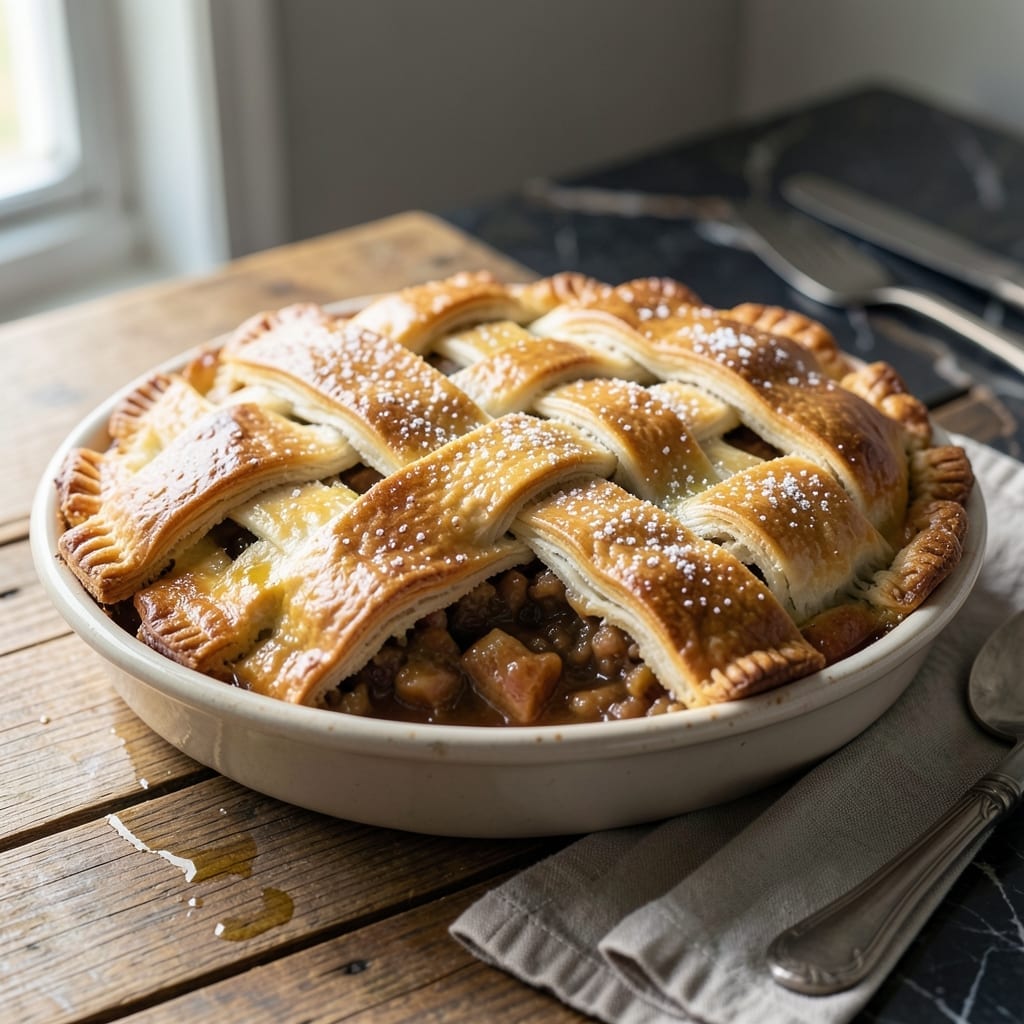
Achieving a flaky pot pie crust without butter is simpler than you think. This recipe replaces traditional dairy with a plant-based fat that delivers the same tender, layered results.
The key is using cold shortening or coconut oil, which creates pockets of air when baked. This mimics butter’s flakiness while keeping the crust sturdy enough to hold fillings.
With just a few ingredients and a gentle touch, you’ll create a golden, flaky crust that’s perfect for savory pies. The process is straightforward, with no special equipment required.
This method ensures a crisp, tender crust every time, proving that dairy-free baking doesn’t mean sacrificing texture or flavor.
Ingredients for Pot Pie Crust Recipe No Butter
A few quality ingredients transform into a golden, dairy-free crust with perfect flakiness.
| Ingredient | Amount | Notes |
|---|---|---|
| All-Purpose Flour 🌾 | 2 ½ cups | Unbleached preferred for texture |
| Vegetable Shortening 🧈 | ¾ cup | Cold, cubed for flakiness |
| Coconut Oil 🥥 | ½ cup | Solid, chilled, unrefined preferred |
| Ice Water 💧 | ½ cup | Plus 1-2 tbsp as needed |
| Salt 🧂 | 1 tsp | Fine sea salt preferred |
| Sugar 🍚 | 1 tsp | Optional, for color |
| Apple Cider Vinegar 🍏 | 1 tbsp | For tenderization |
| Baking Powder 🍞 | ¼ tsp | For slight lift |
| Chilled Vodka 🍸 | 2 tbsp | Optional, enhances flakiness |
The fat choice is critical here. Crisco all-vegetable shortening is a reliable standard for flakiness, while unrefined coconut oil adds a subtle richness. Both must be icy cold—store them in the freezer for 15 minutes before starting. King Arthur Flour is my go-to for consistent results, but any unbleached all-purpose works. The vinegar tenderizes the gluten, but don’t skip it (worth the extra minute).
No shortening? Solid palm oil works as a 1:1 swap. Out of coconut oil? Vegan lard substitutes like leaf lard alternatives do the trick. The vodka trick (from Cook’s Illustrated) creates extra flakiness—alcohol evaporates during baking, leaving air pockets. Skip the sugar if you prefer a strictly savory crust. The water amount is flexible (about 0.5 cup)—add gradually until the dough just comes together.
The dough keeps 2-3 days wrapped tightly in the fridge, or freeze for 1 month. For best results, let chilled dough sit at room temperature for 10 minutes before rolling to prevent cracking. Baked crusts hold their flakiness for 48 hours at room temperature in an airtight container.
Why You’ll Love This Recipe
- No-Fuss Mixing: I just cut the shortening and coconut oil into the flour, add ice water, and it comes together in minutes—no butter to soften, no waiting.
- Crispy & Flaky: The combo of shortening and coconut oil gives that perfect golden crunch with layers that melt in your mouth.
- Freezer Friendly: I make a double batch, roll it out, and freeze the extra—so I can pull out a ready-to-go crust whenever I need it.
- Budget Win: Vegetable shortening and coconut oil cost way less than butter, and I get the same rich, satisfying crust every time.
Step-by-Step Instructions for Pot Pie Crust No Butter
This method guarantees flaky, tender layers without a single pat of butter.
Step 1: Chill and Combine the Fats
Place the 0.75 cup vegetable shortening and 0.5 cup coconut oil in the freezer for 15 minutes to ensure they’re solid and cold. Cold fat is the secret to flakiness—it creates pockets of steam that separate the dough into distinct layers during baking.
In a large mixing bowl, whisk together the 2.5 cups all-purpose flour, 1 tsp salt, 1 tsp sugar, and 0.25 tsp baking powder until evenly distributed. This dry mixture will coat the fat evenly, preventing it from melting prematurely.
Step 2: Cut in the Fats for a Flaky Texture
Add the chilled vegetable shortening and coconut oil to the flour mixture. Using a pastry cutter or your fingers, work the fats into the flour until the mixture resembles coarse crumbs with pea-sized pieces of fat visible. This step is critical—you want visible fat chunks to create those coveted flaky layers.
Be patient here. If the mixture starts feeling warm or the fats begin to melt, pause and chill the bowl in the freezer for 5 minutes. The goal is to keep everything as cold as possible to maintain the integrity of the fat pockets.
Step 3: Add Liquids and Form the Dough
In a small bowl, combine the 0.5 cup ice water, 1 tbsp apple cider vinegar, and 2 tbsp chilled vodka. The vinegar tenderizes the gluten, while the vodka enhances flakiness without adding extra moisture that would develop gluten.
Gradually drizzle the liquid mixture into the flour-fat mixture, tossing with a fork until the dough just begins to come together. You may not need all the liquid—stop when the dough holds its shape when pressed. Overworking the dough at this stage will result in a tough crust, so handle it minimally.
Step 4: Chill and Roll the Dough
Turn the dough out onto a lightly floured surface and gently pat it into a 1-inch thick disc. Wrap it tightly in plastic wrap and refrigerate for at least 1 hour, or up to 2 days. This resting period allows the flour to hydrate fully and the gluten to relax, making the dough easier to roll out without shrinking.
When ready to use, roll the dough out on a floured surface to a ⅛-inch thickness. The edges should look slightly shaggy with visible layers—this indicates you’ve achieved the flakiness you’re after. If the dough starts to stick, dust with a bit more flour, but avoid over-flouring, which can make the crust dry.
Step 5: Blind Bake or Assemble for Pot Pie
For a pre-baked crust, transfer the rolled dough to a pie dish, crimp the edges, and prick the bottom all over with a fork. Chill for 20 minutes to prevent shrinking, then bake at 375°F for 15-20 minutes until light golden brown.
For pot pie, use the dough to line your dish, add filling, then top with another rolled sheet. Crimp the edges tightly to seal. Brush the top with a bit of water or non-dairy milk for browning, then cut a few slits for steam to escape. Bake at 375°F for 30-40 minutes until the crust is deep golden brown and the filling is bubbling.
Pro Tips For Making Pot Pie Crust Recipe No Butter
- Chill the Fat: Keep your vegetable shortening and coconut oil ice-cold until mixing—I learned this the hard way after ending up with a tough crust instead of flaky layers.
- Use Ice Water: Measure your water, then add ice cubes to it for 5 minutes before using; this prevents the dough from becoming gummy when worked.
- Avoid Overworking: Mix just until the dough comes together, even if it looks a little shaggy—overmixing develops gluten, and your crust will turn out dense instead of tender.
- Blind Bake First: Pre-bake the crust at 375°F for 10-12 minutes before adding filling to prevent a soggy bottom, especially with a wet pot pie filling.
Regional Styles of This Recipe
Southern Style
In the South, lard is the traditional fat for pie crusts, creating an incredibly tender texture. Use ½ cup lard plus ¼ cup ice water for a single crust. The result is flakier than butter and has a rich, savory depth that complements chicken pot pie beautifully.
Midwestern Approach
Midwestern cooks often use all-vegetable shortening like Crisco for a neutral flavor that lets the filling shine. Their trick is adding 1 tbsp white vinegar to the ice water for extra tenderness. This method produces a sturdy crust perfect for hearty fillings.
I’ve found this version holds up especially well when making ahead and freezing.
Pacific Northwest
On the West Coast, coconut oil is popular for its subtle sweetness and health benefits. Use ¾ cup solid coconut oil for a single crust, and add 1 tsp sugar to enhance browning. The crust develops a delicate crispness that pairs well with seafood fillings. 💛
New England Tradition
New England bakers often incorporate leaf lard (rendered pork fat) for a flaky, flavorful crust. Substitute ½ cup leaf lard for the shortening in this recipe. The result is a slightly savory crust that’s especially delicious with turkey or beef pot pies.
Vegan Adaptation
For a completely plant-based version, palm oil works as a 1:1 swap for shortening. It creates a flaky texture while keeping the crust dairy-free. I recommend sustainable palm oil brands for ethical sourcing.
Nutrition Facts
Frequently Asked Questions
Can I use margarine instead of shortening?
Margarine works but may reduce flakiness. Use 1 cup cold margarine as a 1:1 swap, and ensure it’s trans-fat free for best texture. The water content in margarine can make the crust less crisp.
Why does the dough need to stay cold?
Cold fat creates steam during baking, which separates the dough into flaky layers. If the fat melts prematurely, the crust becomes dense. Chill the dough between steps for best results.
Can I make this ahead of time?
Yes! Wrap the dough tightly and refrigerate for up to 2 days or freeze for 1 month. Let it warm slightly before rolling to prevent cracking.
What if my crust turns out tough?
Toughness usually means overworked dough. Handle it minimally, and avoid adding too much flour. The vinegar in the recipe helps tenderize, but gentle handling is key.

- 6 Oz Chocolate Chip Cookie Recipe: Perfectly Balanced Crispy Edges and Chewy Hearts - September 25, 2026
- 6-Inch Coffee Cake Recipe: Vanilla Bean Swirls and Buttery Streusel Topping - September 25, 2026
- 1 Hour Soup Recipe: Velvety Richness Without the Wait - September 25, 2026