
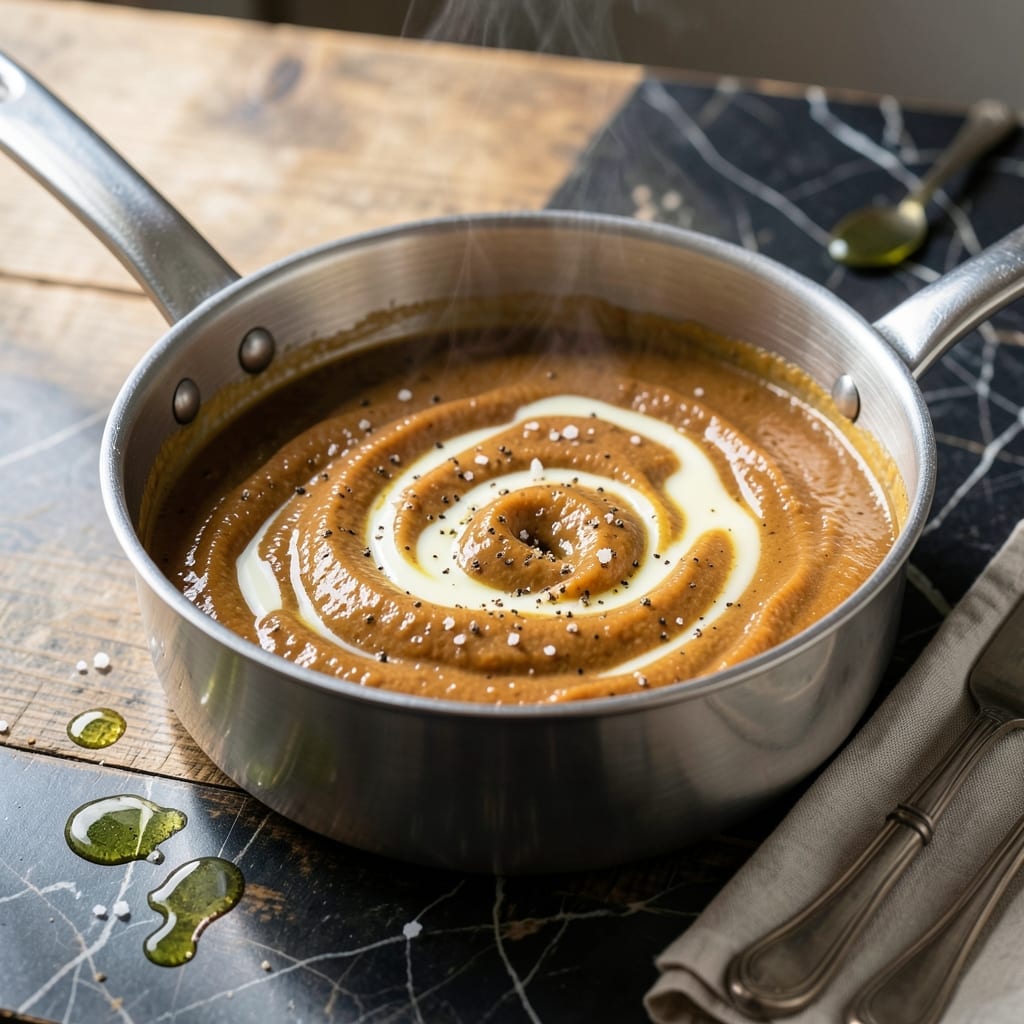
A proper roux is the backbone of any great pot pie filling, transforming simple ingredients into a silky, velvety sauce that binds everything together. This foundation creates the perfect consistency for creamy, restaurant-quality fillings.
The process is straightforward but precise: equal parts fat and flour cook together to form a smooth paste, then liquid is gradually added to create a rich, thick sauce. The key is patience—rushing this step risks a lumpy or thin result.
What you get is a creamy base that clings beautifully to vegetables and proteins, elevating your pot pie from good to exceptional. It’s the difference between a dish that’s merely satisfying and one that’s unforgettable.
Master this technique, and you’ll have the confidence to build any pot pie variation with professional results. Here’s how to get it right every time.
Ingredients for Pot Pie Roux
Eight ingredients transform into that silky, velvety pot pie foundation you crave.
| Ingredient | Amount | Notes |
|---|---|---|
| Unsalted Butter 🧈 | ½ cup | European-style preferred for richness |
| All-Purpose Flour 🌾 | ½ cup | Sifted for lump-free sauce |
| Whole Milk 🥛 | 2 cups | Full-fat for creaminess |
| Chicken Stock 🍲 | 2 cups | Low-sodium preferred for control |
| Kosher Salt 🧂 | ½ tsp | Diamond Crystal brand recommended |
| Freshly Ground Black Pepper 🌶️ | ¼ tsp | Coarse grind preferred |
| Garlic Powder 🧄 | ½ tsp | Not garlic salt |
| Onion Powder 🧅 | ½ tsp | Adds depth without texture |
The butter makes this sing. European-style (like Plugrá or Kerrygold) has higher fat content, so your roux will be richer and smoother. The flour needs to be fresh and sifted—old flour can taste stale and create lumps. Most grocery stores carry it in the baking aisle, but if you’re baking often, grab a 5-pound bag from Costco for better value.
Out of whole milk? Half-and-half at half the quantity makes it even creamier. No chicken stock? Vegetable stock works in a pinch (just add a pinch of poultry seasoning). The garlic and onion powders can be swapped for fresh minced at triple the amount, but powders dissolve better. Skip the pre-seasoned flours—they can throw off the flavor balance.
Roux is best used fresh, but you can make it ahead. Store in the fridge for up to 3 days in an airtight container. To reheat, warm slowly with a splash of milk—don’t boil or it’ll break. Freezing isn’t ideal, but it’ll keep for 1 month if really needed.
Why You’ll Love This Recipe
- 5-Minute Base: Honestly, I can melt the butter and whisk in the flour before my coffee’s done brewing.
- Rich, Velvety Sauce: That butter-flour combo thickens into a silky base that makes chicken stock taste like a hug in a bowl.
- Weeknight Hero: I toss this together on Tuesday nights, then use it for pot pies, casseroles, or even a quick gravy.
- Stretches Further: A double batch keeps in the fridge for days, so I’m basically prepping two meals at once.
Step-by-Step Instructions for Pot Pie Roux
This method guarantees a velvety, lump-free base that transforms your filling into something extraordinary.
Step 1: Create the Butter-Flour Foundation
Melt the 0.5 cup unsalted butter in a heavy saucepan over medium heat. I use a light-colored pan so I can see the color changes clearly. Let it melt completely but don’t let it brown—just until it’s fully liquid and foamy.
Add the 0.5 cup all-purpose flour all at once and whisk constantly. The mixture will look crumbly at first, but keep whisking for 2-3 minutes until it forms a smooth paste and turns a pale golden color. This is your roux, and that gentle cooking removes the raw flour taste.
Watch for the edges to bubble slightly—that’s your cue the flour is cooking properly. The roux should smell nutty and toasted, not raw or burnt.
Step 2: Gradually Incorporate the Liquids
Slowly pour in the 2 cups whole milk, whisking constantly to prevent lumps from forming. I add it in a thin stream, about 1 cup at a time, making sure each addition is fully incorporated before adding more.
Once the milk is fully combined, do the same with the 2 cups chicken stock. The mixture will thicken significantly as you add the liquids—this is normal. Keep the heat at medium and maintain that constant whisking motion.
At this stage, the sauce will look thick and paste-like. Don’t worry, it’ll loosen up as it continues to cook and absorb the remaining liquid.
Step 3: Season and Simmer to Perfection
Add the 0.5 tsp kosher salt, 0.25 tsp freshly ground black pepper, 0.5 tsp garlic powder, and 0.5 tsp onion powder. Whisk these in thoroughly to distribute the seasonings evenly throughout the sauce.
Reduce the heat to medium-low and let the mixture simmer for 8-10 minutes, stirring occasionally. You’re looking for the sauce to thicken enough to coat the back of a spoon but still be pourable.
Taste and adjust seasoning if needed, remembering that the sauce will be paired with other ingredients in your pot pie. The flavor should be rich and savory, with the garlic and onion powders adding depth without overpowering.
Step 4: Achieve the Ideal Consistency
After simmering, the sauce should have reduced slightly and taken on a velvety texture. If it’s too thick, whisk in a splash more chicken stock to reach your desired consistency. For pot pie, you want it thick enough to cling to the filling ingredients but not so stiff that it won’t incorporate well.
If you see any lumps, don’t panic—just whisk vigorously or use an immersion blender for 10-15 seconds to smooth it out. The sauce should look glossy and have a rich, creamy appearance.
Remove from heat and use immediately in your pot pie, or let it cool slightly before combining with your filling ingredients. This roux will transform your pot pie from good to extraordinary with its silky texture and rich flavor base.
Pro Tips For Making Pot Pie Roux
- Whisk Constantly: I learned this the hard way—once you add flour to melted butter, keep whisking for at least 2-3 minutes to cook out the raw taste. Lumps mean a broken roux, and nobody wants that.
- Warm Your Liquids: Cold milk or stock will seize the roux into a gluey mess. Heat them gently in the microwave or on the stove before slowly adding—about 110°F is perfect.
- Skip Cold Butter: Sounds weird, but it works: use room-temperature butter so it melts evenly without separating. I used to pull it straight from the fridge and wondered why my roux looked greasy.
- Season in Layers: Don’t wait until the end to add salt. Start with a pinch in the butter, another when you add flour, and adjust again after the stock goes in—it builds depth.
Pro Cooking Tips for Perfect Results
Fat Selection Matters
I always use European-style butter like Plugrá for its higher fat content—it creates a richer, smoother base. If using regular butter, opt for unsalted to control sodium levels. Clarified butter works too for a nuttier flavor. 🧈
Cook the Roux Right
Cook your roux for at least 2-3 minutes over medium heat until it turns pale golden. This removes the raw flour taste and develops depth. Use a light-colored pan to monitor the color change accurately.
Liquid Temperature Trick
Warm your milk and chicken stock slightly before adding to the roux—this prevents the sauce from seizing up. I heat mine for 30 seconds in the microwave. Add liquids in a thin stream while whisking constantly.
Whisking Technique
Use a balloon whisk for best results—it covers more surface area and prevents lumps. Keep the heat at medium and maintain constant motion as you add liquid. A flat-bottomed saucepan helps distribute heat evenly.
Consistency Check
Your finished sauce should coat the back of a spoon but still be pourable. If too thick, whisk in additional chicken stock, 1 tablespoon at a time. For lumps, blend with an immersion blender for 10 seconds. 💡
Seasoning Timing
Add seasonings after all liquid is incorporated—this prevents them from concentrating in one area. Taste before final use, as the sauce will be paired with other filling ingredients in your pot pie.
Nutrition Facts
Frequently Asked Questions
What’s the ideal color for a pot pie roux?
Aim for a pale golden shade after cooking the butter and flour for 2-3 minutes. This ensures the raw flour taste is gone while keeping the flavor mild and smooth.
Can I use oil instead of butter?
Yes, but butter adds richness and flavor that oil can’t match. If substituting, use a neutral oil like vegetable or canola and maintain the 1:1 fat-to-flour ratio.
Why did my roux turn lumpy?
Lumps usually mean the liquid was added too quickly or the mixture wasn’t whisked constantly. Fix it by blending with an immersion blender for 10-15 seconds until smooth.
How do I thin a roux that’s too thick?
Whisk in warm chicken stock 1 tablespoon at a time until it reaches your desired consistency. This keeps the flavor balanced while adjusting the texture.

- 4C Bread Crumbs Meatballs Recipe: Crispy Crust and Juicy Centers - September 25, 2026
- 6 Oz Chocolate Chip Cookie Recipe: Perfectly Balanced Crispy Edges and Chewy Hearts - September 25, 2026
- 6-Inch Coffee Cake Recipe: Vanilla Bean Swirls and Buttery Streusel Topping - September 25, 2026