
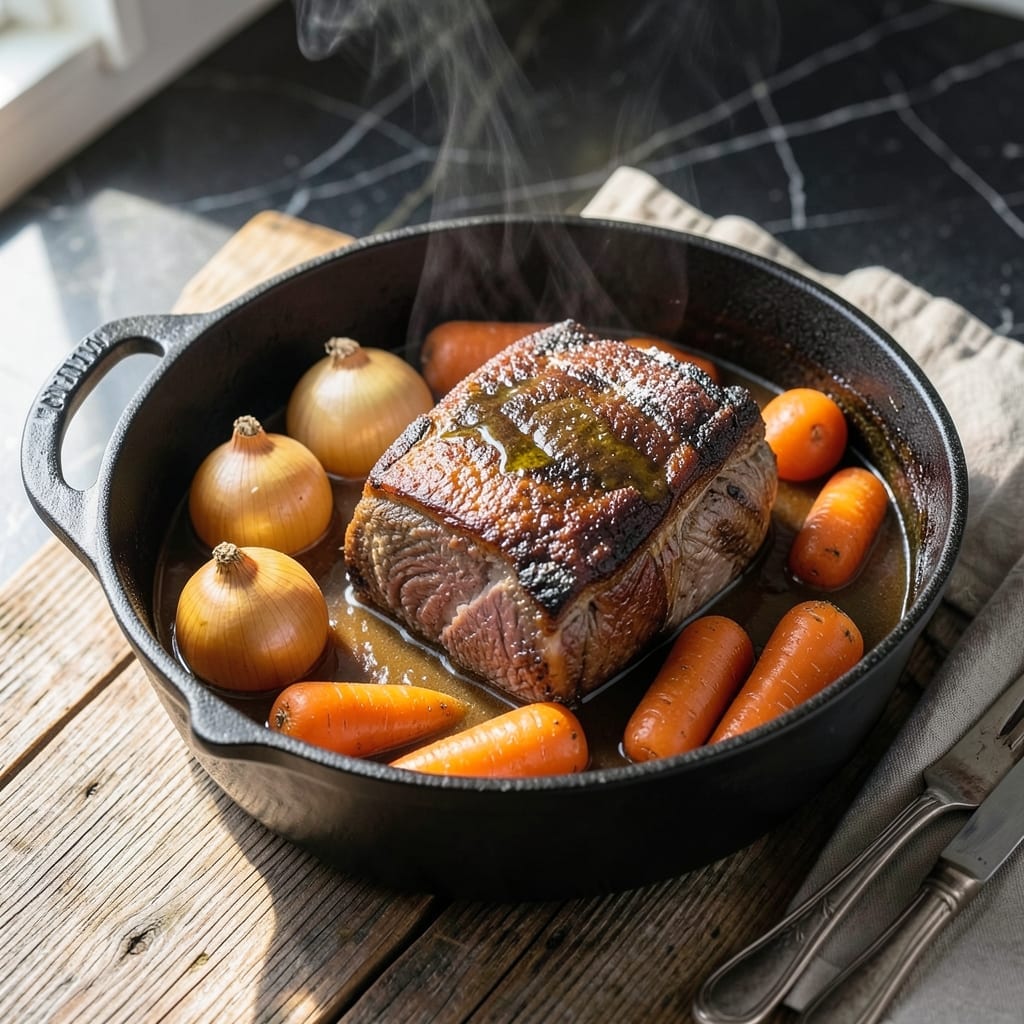
There’s a reason pot roast remains a beloved tradition—it transforms simple ingredients into something deeply satisfying. This recipe relies on time and patience to coax rich, savory flavors from tough cuts of beef.
The process begins with searing the meat to lock in juices, then slow-cooking it with vegetables and broth until it’s fall-apart tender. Every bite carries the warmth of a home-cooked meal.
By the end, you’ll have a dish with a rich, velvety sauce and meat so tender it melts in your mouth. The aroma alone will draw everyone to the table.
Serve it with mashed potatoes or crusty bread to soak up every drop of the flavorful juices. This is comfort food at its finest.
Ingredients for Pot Pot Roast
Transform humble ingredients into deeply satisfying comfort with this classic preparation.
| Ingredient | Amount | Notes |
|---|---|---|
| Beef Chuck Roast 🥩 | 3 lb | Boneless, well-marbled, trimmed of excess fat |
| Kosher Salt 🧂 | 1 ½ tsp | Diamond Crystal preferred for even seasoning |
| Black Pepper 🌶️ | 1 tsp | Freshly ground for maximum aroma |
| All-Purpose Flour 🌾 | ¼ cup | For dredging the beef |
| Olive Oil 🫒 | 2 tbsp | Divided for searing and sautéing |
| Yellow Onions 🧅 | 2 whole | Large, peeled and quartered |
| Carrots 🥕 | 4 whole | Peeled and cut into 2-inch chunks |
| Celery Stalks 🌿 | 3 whole | Cut into 2-inch pieces |
| Garlic Cloves 🧄 | 5 cloves | Lightly crushed with skin on |
| Dry Red Wine 🍷 | 1 cup | Full-bodied like Cabernet Sauvignon |
| Beef Broth 💧 | 2 cups | Low-sodium preferred for control |
| Tomato Paste 🍅 | 2 tbsp | For depth of flavor in sauce |
| Fresh Thyme Sprigs 🌿 | 3 whole | Plus extra for garnish |
| Bay Leaf 🍃 | 1 whole | Dried, for aromatic depth |
| Water 💧 | 1 cup | To adjust liquid level as needed |
The beef selection is critical. Chuck roast with abundant marbling yields the most tender results after slow cooking. Source from Whole Foods or Costco for consistent quality, or ask your butcher for a well-marbled piece. The fat cap should be about 1/4-inch thick for optimal flavor development. Avoid lean cuts like round—they simply won’t achieve the same unctuous texture.
No red wine? Substitute with additional beef broth plus 1 tbsp balsamic vinegar for acidity. Fresh thyme can be replaced with 1 tsp dried thyme. Tomato paste may seem minor, but it’s essential for the sauce’s depth—San Marzano tomato paste in tubes eliminates waste. For the onions, sweet varieties like Vidalia work equally well, though they’ll caramelize faster.
The pot roast improves overnight as flavors meld. Store cooled leftovers in an airtight container for up to 4 days in the refrigerator or freeze for 3 months. Reheat gently on the stovetop with a splash of water to restore the sauce’s velvety consistency. The vegetables may soften further but retain excellent flavor.
Why You’ll Love This Recipe
- One Pot Wonder: I just sear the chuck roast, dust it with flour, and let the pot do the rest—hardly any active time.
- Rich and Tender: The beef soaks up all the juices from the slow cook, falling apart at the touch of a fork.
- Feeds My Crew: Between us, this stretches to multiple meals, whether for Sunday dinner or packed lunches.
- Budget Friendly: A chuck roast is affordable, and with flour and oil already in my pantry, it’s a no-brainer.
Step-by-Step Instructions for Pot Roast
This method guarantees tender beef and rich, aromatic gravy with minimum effort.
Step 1: Sear and Season the Beef Chuck Roast
Pat the 3 lb Beef Chuck Roast completely dry with paper towels. Season all sides generously with the 1.5 tsp Kosher Salt and 1 tsp Black Pepper. This creates a flavorful crust during searing.
Dredge the roast in the 0.25 cup All-Purpose Flour, shaking off any excess. The flour coating will thicken the gravy later while giving the beef a beautiful golden-brown sear.
Heat 1 tbsp Olive Oil in a large Dutch oven over medium-high heat until shimmering. Sear the roast on all sides for 3-4 minutes per side until deeply browned. Transfer to a plate and set aside.
Step 2: Sauté the Aromatic Vegetables
In the same pot, add the remaining 1 tbsp Olive Oil. Add the 2 whole Yellow Onions, 4 whole Carrots, and 3 whole Celery Stalks. Cook for 5-7 minutes, stirring occasionally, until the vegetables begin to soften and develop color.
Add the 5 cloves Garlic Cloves and cook for 1 minute until fragrant. Stir in the 2 tbsp Tomato Paste and cook for an additional 2 minutes, which deepens the flavor and eliminates any raw taste.
This vegetable base builds the foundation for the rich gravy that will develop during braising.
Step 3: Deglaze and Braise the Roast
Pour in the 1 cup Dry Red Wine to deglaze the pot, scraping up all the browned bits from the bottom with a wooden spoon. Let the wine reduce by half, about 3-4 minutes.
Return the seared roast to the pot. Add the 2 cups Beef Broth, 3 whole Fresh Thyme Sprigs, and 1 whole Bay Leaf. The liquid should come about halfway up the roast. Add the 1 cup Water if needed to maintain this level.
Bring to a gentle simmer, then reduce the heat to low. Cover and let braise for 3 to 3.5 hours, turning the roast every 45 minutes to ensure even cooking.
Step 4: Finish and Serve
Remove the roast from the pot and transfer to a cutting board. Tent with foil and let rest for 15 minutes before slicing. This allows the juices to redistribute for maximum tenderness.
Skimming excess fat from the surface of the gravy, if desired, then adjust seasoning with additional Kosher Salt and Black Pepper to taste. The gravy should be rich and deeply flavorful from the slow braising process.
Slice the roast against the grain and serve with the vegetables and gravy spooned over the top. The beef should be fork-tender, falling apart with minimal pressure.
Pro Tips For Making Pot Pot Roast
- Sear Hard: Get your oil smoking hot before adding the chuck roast—I learned this the hard way after pulling pale, steamed meat out of the pot. That deep brown crust is what builds the rich flavor base.
- Pat It Dry: Blot the roast with paper towels before seasoning and searing. Sounds tedious, but wet meat steams instead of browning, and you’ll lose that crucial caramelized crust.
- Don’t Rush the Sear: Give each side a full 3-4 minutes in the pan, even if it looks dark early. I used to flip too soon and ended up with a weak, uneven crust that didn’t deepen the flavor.
- Use Room-Temp Meat: Pull the chuck roast out of the fridge 30-45 minutes before cooking. Cold meat seizes up in the hot oil, making it harder to get an even sear and can lead to uneven cooking.
Troubleshooting This Recipe
Tough Meat Problems
If your roast turns out chewy, it likely didn’t cook long enough. The 3-3.5 hour braise is non-negotiable for breaking down collagen in chuck roast. I once pulled mine out at 2.5 hours and regretted the rubbery texture immediately. 🌡️
Sauce Too Thin
For a gravy that’s watery instead of velvety, remove the lid and simmer uncovered for 10-15 minutes. The flour from dredging should thicken it naturally. If still thin, mix 1 tbsp cornstarch with 1 tbsp cold water and stir into the hot liquid.
Dry Roast Issues
Overcooking can dry out even the most marbled chuck. Check for doneness at 3 hours – the meat should pull apart easily with a fork. If it’s already shredding but dry, next time try adding ½ cup more broth at the start.
Bland Flavor
This usually means under-seasoning. Don’t be shy with the 1.5 tsp salt – remember you’re seasoning the entire 3 lb roast and all the vegetables. I also boost flavor by using low-sodium broth so I control the salt content. 💡
Vegetables Mushy
If your carrots and celery turn to mush, add them later. Sear the meat and sauté onions first, then add other vegetables after 1 hour of braising. This keeps them tender but intact. Cut them into 2-inch chunks as specified for even cooking.
Burnt Bottom
If you’re getting burnt bits, your heat is too high. The braise should be at a gentle simmer, not a rolling boil. I use a heavy Dutch oven which distributes heat evenly. If using a thin pot, place a heat diffuser under it to prevent hot spots.
Nutrition Facts
Frequently Asked Questions
What’s the best cut for this dish?
Chuck roast is ideal due to its marbling and connective tissue. These break down during the 3-3.5 hour braise to create tender, flavorful meat. Avoid lean cuts like round—they won’t achieve the same texture.
Can I make this in a slow cooker?
Yes! Sear the meat first, then transfer to the slow cooker with all ingredients. Cook on low for 8-10 hours or high for 5-6 hours. The results will be just as tender.
How do I prevent the sauce from being greasy?
Skimming fat is key. After cooking, let the gravy settle for 5 minutes, then skim the surface with a spoon. For extra clarity, refrigerate the sauce and remove hardened fat before reheating.
Can I add potatoes to the pot?
Add peeled, halved potatoes during the last 45 minutes of cooking so they don’t turn mushy. They’ll soak up the rich flavors beautifully.

- 4C Bread Crumbs Meatballs Recipe: Crispy Crust and Juicy Centers - September 25, 2026
- 6 Oz Chocolate Chip Cookie Recipe: Perfectly Balanced Crispy Edges and Chewy Hearts - September 25, 2026
- 6-Inch Coffee Cake Recipe: Vanilla Bean Swirls and Buttery Streusel Topping - September 25, 2026