
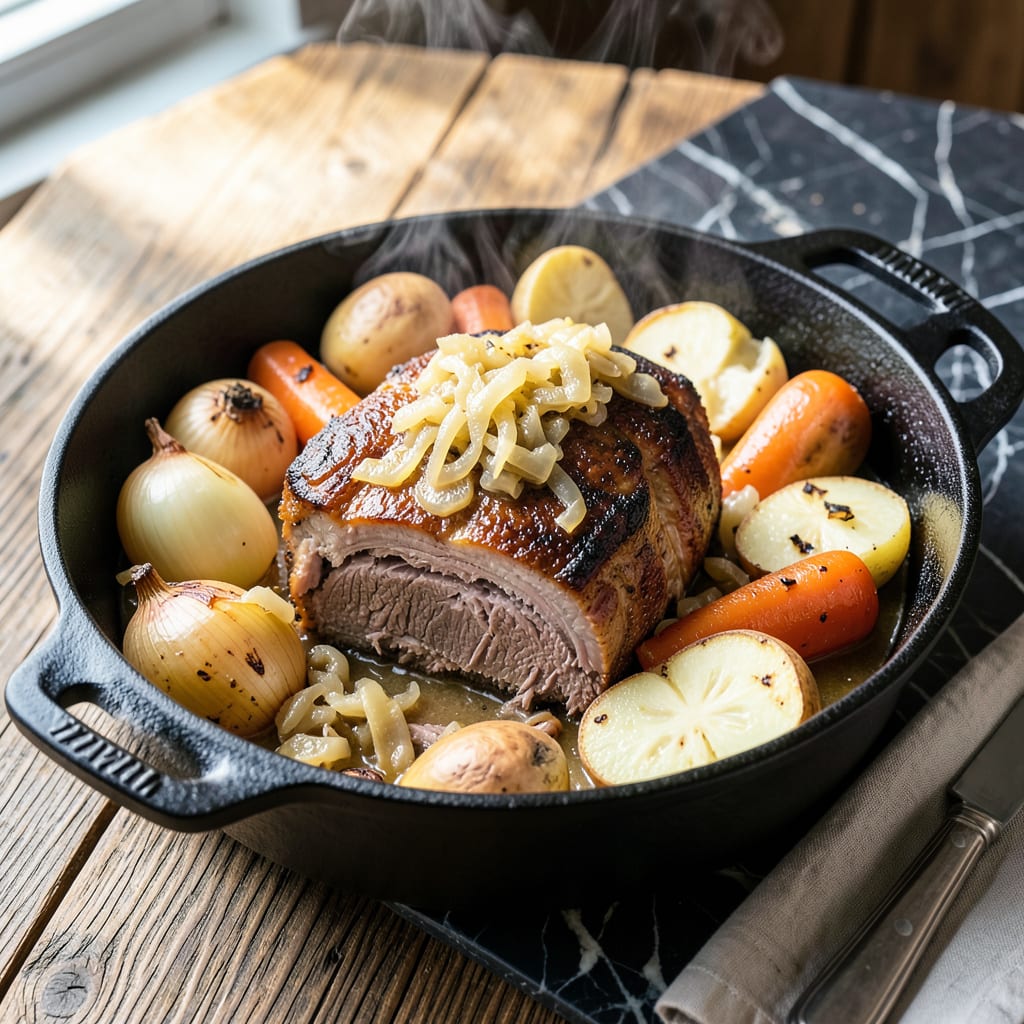
This hearty dish brings together tender beef and tangy sauerkraut for a classic German-inspired Sunday meal. The slow cooking process ensures fall-apart meat and perfectly balanced flavors.
With simple preparation and hands-off cooking, this recipe delivers a comforting, traditional supper that fills the kitchen with rich, savory aromas.
Ingredients for Pot Roast and Sauerkraut
Traditional German flavors come together with tender beef and tangy sauerkraut for this Sunday supper.
| Ingredient | Amount | Notes |
|---|---|---|
| Beef Chuck Roast 🥩 | 3 lb | Boneless, well-marbled preferred |
| Sauerkraut 🥬 | 2 lb | Rinsed and drained |
| Yellow Onion 🧅 | 1 whole | Large, thinly sliced |
| Carrots 🥕 | 3 whole | Peeled, cut into chunks |
| Russet Potatoes 🥔 | 1 ½ lb | Peeled, quartered |
| Garlic Cloves 🧄 | 4 cloves | Minced or smashed |
| Beef Broth 💧 | 2 cups | Low-sodium preferred |
| Apple Cider Vinegar 🍏 | 2 tbsp | For balancing acidity |
| Brown Sugar 🍚 | 1 tbsp | Light or dark |
| Caraway Seeds 🌿 | 1 tsp | Lightly crushed |
| Bay Leaves 🍃 | 2 pieces | Dried, whole |
| Black Peppercorns 🌶️ | 1 tsp | Freshly cracked |
| Kosher Salt 🧂 | 1 tbsp | Diamond Crystal preferred |
| Olive Oil 🫒 | 2 tbsp | For searing roast |
| Juniper Berries 🫒 | 6 pieces | Lightly crushed (optional) |
[recipeingredientscaler]
The beef is the foundation here. Chuck roast from Whole Foods or a trusted butcher yields the most tender results due to its connective tissue. Look for pieces with good marbling—this fat renders down during slow cooking, creating melt-in-your-mouth texture. Sauerkraut should be refrigerated, not shelf-stable, for optimal tang. Libby’s or Silver Floss are reliable brands available at most supermarkets.
Need a shortcut? Pre-cut stew meat works if you can’t find a whole chuck roast. No caraway seeds? Dill seeds at half the amount offer a different but complementary flavor. For a sweeter profile, swap brown sugar for maple syrup. If you’re missing juniper berries (a traditional German touch), a pinch of allspice provides similar depth. Always rinse sauerkraut unless you prefer extra tang.
Leftovers actually improve overnight as flavors meld. Store in the fridge for up to 4 days or freeze for 3 months. To reheat, warm gently on the stove with a splash of broth. The sauerkraut’s acidity helps preserve the dish, but airtight containers are still essential.
Why You’ll Love This Recipe
- Set and Forget: I toss the chuck roast, sauerkraut, and veggies in the pot and let the slow cooker do the work for 6-8 hours.
- Tangy Comfort: The sauerkraut mellows into the beef, while the carrots and potatoes soak up that rich, slightly sour flavor.
- Feeds the Squad: This one-pot meal stretches to feed at least six, with hearty portions of meat and veggies.
- Leftovers for Days: Honestly, it tastes even better the next day—shred the beef for sandwiches or pair with mashed potatoes.
Step-by-Step Instructions for Pot Roast and Sauerkraut
This method delivers tender beef and tangy sauerkraut with minimal active effort.
Step 1: Sear the Beef Chuck Roast
Heat the 2 tbsp olive oil in a large Dutch oven over medium-high heat until shimmering. Pat the 3 lb beef chuck roast dry with paper towels, then season all over with the 1 tbsp kosher salt and 1 tsp black peppercorns.
Sear the roast for 4-5 minutes per side until deeply browned on all surfaces. This creates a flavorful fond that will enrich the braising liquid. Don’t rush this step—the crust should be dark mahogany before proceeding. Transfer the roast to a plate.
Step 2: Build the Aromatic Base
In the same pot, add the 1 whole yellow onion, 3 whole carrots, and 4 cloves garlic cloves. Sauté for 3-4 minutes until the onions soften and develop light caramelization.
This establishes the flavor foundation for the dish. The residual fat from the roast will carry these aromatics into the final braise. Add the 1 tsp caraway seeds and crushed 6 pieces juniper berries during the last minute to bloom their spices.
Step 3: Combine and Braise
Return the roast to the pot. Add the 2 lb sauerkraut, 1.5 lb russet potatoes, 2 cups beef broth, 2 tbsp apple cider vinegar, 1 tbsp brown sugar, and 2 pieces bay leaves. The liquid should come about halfway up the roast.
Bring to a simmer, then reduce heat to low. Cover and braise for 3 to 3.5 hours, turning the roast every 45 minutes. The dish is done when the beef shreds easily with a fork and the potatoes are tender when pierced.
Step 4: Rest and Serve
Transfer the roast to a cutting board and let it rest for 15 minutes before slicing. This allows the juices to redistribute for maximum tenderness. Skim excess fat from the braising liquid if desired, though this adds flavor to the dish.
Serve the sliced pot roast with the sauerkraut, vegetables, and plenty of the braising liquid spooned over the top. The sauerkraut should be tender with a balanced tang, and the beef should fall apart at the touch of a fork.
Pro Tips For Making Pot Roast And Sauerkraut
- Brown the Beef: Sear the chuck roast on all sides in a hot Dutch oven until deeply browned—about 4-5 minutes per side. I learned this the hard way: skipping this step gives you a gray, bland roast instead of one with rich, caramelized flavor.
- Rinse the Kraut: Drain and rinse the sauerkraut under cold water to remove excess brine, then squeeze out as much liquid as possible. Sounds weird, but it works: this prevents the dish from turning out too sour or watery.
- Skip the Small Potatoes: Cut russet potatoes into large, even chunks—at least 2 inches—so they hold their shape and don’t turn to mush during the long braise. After burning three batches with mushy spuds, I finally figured out size matters.
- Start with Onions: Sauté the yellow onions in the same pot after browning the beef to pick up those flavorful browned bits. My grandmother swore by this, and she was right: it builds a deeper base for the whole dish.
Health Benefits of This pot roast and sauerkraut
Protein Powerhouse
The 3 lb beef chuck roast delivers about 150g of protein per pound, giving you a hearty dose of amino acids for muscle repair and satiety. This slow-cooked method breaks down collagen into gelatin, which supports joint health and gives the dish its signature richness. 💪
Gut Health Boost
Sauerkraut is a fermented food packed with probiotics that support digestive health. A 2 lb serving provides billions of beneficial bacteria, which can improve gut microbiome diversity and immune function. I notice better digestion after regular consumption.
Vitamin-Rich Vegetables
The 3 carrots and 1.5 lb potatoes add fiber, vitamin A, and potassium. Carrots provide beta-carotene for eye health, while potatoes offer vitamin C and B vitamins. The slow cooking preserves most of these nutrients.
Low-Calorie Comfort
Despite its rich flavors, this dish is relatively balanced. The sauerkraut adds volume with minimal calories—about 50 calories per cup. The beef provides iron and zinc, essential minerals often lacking in modern diets.
Antioxidant Benefits
The caraway seeds and juniper berries contain antioxidants that combat inflammation. Garlic and onions add allicin and quercetin, compounds linked to heart health and immune support. 🌿
Balanced Macronutrients
This meal offers a natural balance of protein, healthy fats, and complex carbs. The olive oil provides monounsaturated fats, while the vegetables contribute fiber for sustained energy. It’s a complete, nourishing dish in one pot.
Nutrition Facts
Frequently Asked Questions
Should I rinse the sauerkraut before using?
Yes, rinsing removes excess brine and mellows the tang. Use cold water and drain well to avoid a watery dish.
Can I use a slow cooker instead of a Dutch oven?
Brown the meat first, then cook on low for 6-8 hours or high for 4-5 hours. The flavors meld beautifully.
Why is my pot roast tough after cooking?
It likely didn’t cook long enough. Braise until it reaches 195-205°F internally. This breaks down connective tissue for fall-apart tenderness.
What can I substitute for caraway seeds?
Try 1/2 tsp dill seeds or 1/4 tsp fennel seeds for a similar aromatic touch. Both complement the sauerkraut well.

- 4C Bread Crumbs Meatballs Recipe: Crispy Crust and Juicy Centers - September 25, 2026
- 6 Oz Chocolate Chip Cookie Recipe: Perfectly Balanced Crispy Edges and Chewy Hearts - September 25, 2026
- 6-Inch Coffee Cake Recipe: Vanilla Bean Swirls and Buttery Streusel Topping - September 25, 2026