
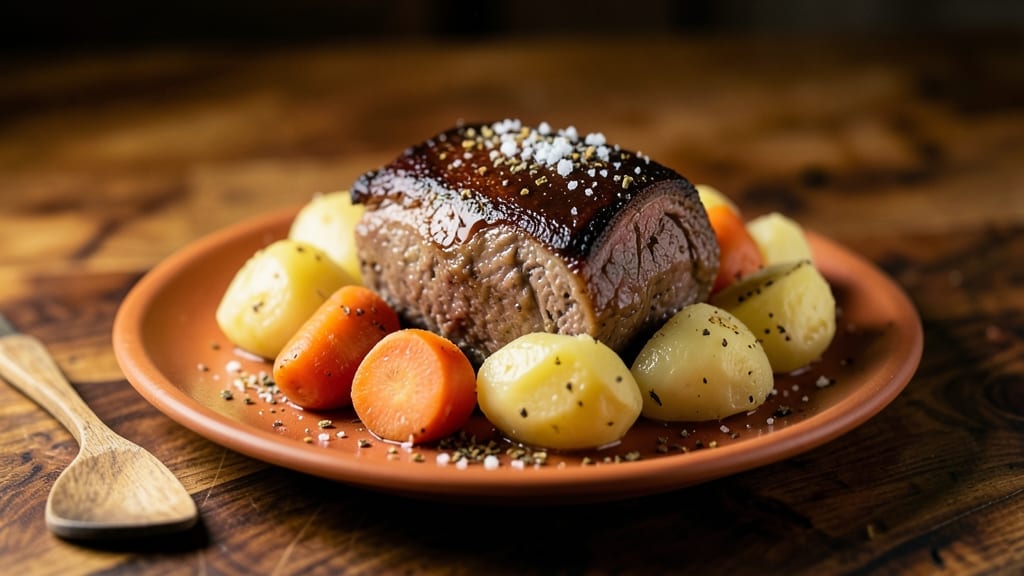
A pot roast with carrots and potatoes is the ultimate slow-cooked dinner that transforms tough cuts into melt-in-your-mouth perfection while feeding a crowd effortlessly.
The secret lies in marinating the beef overnight to tenderize it deeply, then slow-cooking until the meat practically falls apart and the vegetables caramelize into sweet, flavorful bites. This recipe delivers restaurant-quality results with minimal effort—ideal for busy weeknights or weekend gatherings.
The process begins with a simple yet effective marinade of soy sauce, Worcestershire, garlic, and herbs that penetrates the beef, ensuring maximum tenderness. While the meat simmers for hours, the carrots and potatoes develop a rich, caramelized crust from the slow-cooking process, creating a dish that’s both hearty and comforting.
The long cooking time allows flavors to meld together, resulting in a deeply satisfying meal that’s perfect for serving with crusty bread to soak up every last drop of the savory juices.
By the time you pull this pot roast from the oven, you’ll have a dish that’s rich in flavor and texture—tender beef, crisp-tender carrots, and buttery potatoes all swimming in a deeply aromatic sauce.
This recipe serves 4-6 people and requires just 3 hours of active cooking time, making it a foolproof choice for any occasion. The best part? Leftovers reheat beautifully, so you’ll have dinner covered for days.
Whether you’re feeding a family, hosting a dinner party, or simply craving a comforting meal, this pot roast delivers the kind of hearty satisfaction that turns a simple dinner into a memorable experience. Here’s how to make it perfectly every time.
Ingredients for pot roast carrots potatoes
Six hearty ingredients transform tough beef into melt-in-your-mouth perfection while feeding a crowd effortlessly.
| Ingredient | Amount | Notes |
|---|---|---|
| Beef Chuck Roast 🥩 | 3 lb | 3-4 inches thick, well-marbled |
| Yellow Onions 🧅 | 2 whole | Large, peeled, cut into chunks |
| Carrots 🥕 | 1 ½ lb | Whole, peeled, cut into 2-inch pieces |
| Russet Potatoes 🥔 | 2 lb | Cut into 2-inch chunks, peeled |
| Garlic Cloves 🧄 | 8 cloves | Peeled, smashed |
| Fresh Thyme 🌿 | 2 tbsp | Leaves only, chopped |
| Fresh Rosemary 🌿 | 1 tbsp | Chopped, coarse |
| Worcestershire Sauce 🍶 | 2 tbsp | Full-strength, not reduced |
| Soy Sauce 🍶 | 2 tbsp | Light or all-purpose |
| Beef Broth 💧 | 3 cups | Low-sodium, homemade or high-quality |
| Red Wine 🍷 | 1 cup | Dry, bold red like Cabernet |
| Olive Oil 🫒 | 2 tbsp | Extra-virgin, for searing |
| Salt 🧂 | 1 ½ tsp | Diamond Crystal kosher salt |
| Black Peppercorns 🌶️ | 1 tsp | Freshly cracked |
| Bay Leaves 🍃 | 2 whole | Dried, standard size |
The beef is non-negotiable—chuck roast with visible marbling delivers that signature fall-apart texture. Costco or Whole Foods carry excellent cuts, or ask your butcher for a well-marbled chuck. If you’re buying a whole roast, trim excess fat but leave some for flavor. The onions, carrots, and potatoes should be firm and fresh—no wilted veggies here. For the herbs, fresh thyme and rosemary from the grocery store’s produce section (not the dried aisle) make all the difference. Pro tip: Smash the garlic cloves with the flat side of your knife instead of mincing—they’ll infuse more flavor into the meat.
No red wine? Substitute an extra cup of beef broth—just add a splash of balsamic vinegar for depth. Short on fresh herbs? Dried thyme at one-third the amount works, but fresh is ideal. The soy sauce and Worcestershire are flavor anchors—use full-strength versions (the reduced stuff lacks punch). For the broth, homemade or high-quality low-sodium** like Pacific Foods or Kirkland Signature keeps things balanced. The potatoes can be Yukon Gold or Russet—both work, but Yukons stay creamier. If you’re prepping ahead, par-cook the potatoes for 10 minutes before adding to the pot—they’ll caramelize faster.
This dish tastes even better the next day—plan ahead. The roast keeps 4-5 days in the fridge and freezes beautifully for up to 3 months. For leftovers, portion into containers with a splash of the juices to keep everything moist. The vegetables reheat perfectly, but if they’re too soft, add a splash of broth when warming. The sauce thickens as it cools, so thin with extra broth if needed. Store the beef separately if you prefer it reheated quickly—just slice and warm with a drizzle of the sauce.
Why You’ll Love This Recipe
- One-Pan Magic: I swear by this—just toss everything in a deep skillet or Dutch oven, add broth, and let it bubble away. No chopping boards, no extra pots, just hands-off cooking while you stir in the onions and carrots later.
- Deep, Rich Taste: That beef chuck roast turns so tender it practically melts, and the garlic-clove punch? It’s like a hug in a bowl. The potatoes soak up all the savory juices—crispy outside, fluffy inside—while the carrots caramelize into sweet perfection.
- Weeknight to Potluck: Honestly, this feeds a crowd without stress. Double the recipe for game day, but it’s also my lazy Sunday dinner when I’m too comfy to cook. The leftovers? Even better the next day, wrapped in that thick, meaty sauce.
- Budget-Friendly Feast: A chuck roast stretches further than steak, and potatoes/carrots are cheap staples. I’ve made this for under $15 for six people—filling, hearty, and no one complains about the price tag. (Yes, even on a Tuesday night.)
Step-by-step instructions for pot roast with carrots and potatoes
Here’s how to transform tough chuck roast into melt-in-your-mouth perfection with tender vegetables.
Sear the Beef Chuck Roast for Maximum Flavor
Pat the 3 lb beef chuck roast completely dry with paper towels—this ensures a perfect crust. Heat 2 tablespoons olive oil in a heavy Dutch oven over medium-high heat until shimmering. Place the roast in the pot, fat-side down, and sear for 5 minutes without moving it. This creates a deep, flavorful crust that will dissolve into the sauce later.
Flip the roast and sear the other side for another 5 minutes. Here’s the thing—don’t rush this step. You’re building flavor that will infuse the entire dish. Remove the roast and set it aside on a plate, leaving all that beautiful browned meat behind in the pot.
Build the Aromatic Vegetable Base
In the same Dutch oven, add the 2 whole yellow onions and 1.5 lb carrots cut into 2-inch pieces. Cook for 5 minutes, stirring occasionally, until the onions begin to soften and caramelize slightly. Add the 2 lb russet potatoes cut into 2-inch chunks and cook for another 3 minutes, stirring to coat everything in the rendered beef fat.
Push the vegetables to the sides of the pot and add 2 tablespoons olive oil to the center. Add the 8 peeled and smashed garlic cloves, 2 tablespoons chopped fresh thyme, and 1 tablespoon chopped fresh rosemary. Cook for 30 seconds until the garlic becomes fragrant—this is where the magic happens. The garlic should sizzle gently but not burn.
Deglaze and Create the Sauce Foundation
Pour in the 1 cup red wine, scraping up all those delicious browned bits from the bottom of the pot with a wooden spoon. This deglazing step captures all the meaty flavor that would otherwise disappear. Let the wine simmer for 3 minutes until reduced by half, then add the 2 tablespoons Worcestershire sauce and 2 tablespoons soy sauce, stirring to combine.
Add the 3 cups beef broth, 1.5 teaspoons salt, and 1 teaspoon freshly cracked black peppercorns. Bring everything to a gentle simmer, then return the beef chuck roast to the pot, fat-side up. Add the 2 whole bay leaves and bring the liquid to a full boil. This initial boil helps dissolve any remaining surface flavors from the meat.
Slow Cook Until Fork-Tender
Reduce the heat to low, cover the Dutch oven with a tight-fitting lid, and transfer it to a preheated 300°F oven. Here’s where patience pays off—cook for 3 hours, then carefully flip the roast and add any accumulated juices from the plate back to the pot. Return to the oven and cook for another 1 to 2 hours, until the beef is fork-tender and easily pulls apart.
Check for doneness by inserting a meat thermometer into the thickest part of the roast—it should read 205°F. The vegetables should be tender but not mushy, with the potatoes falling apart when pierced with a fork. If the liquid reduces too much before the meat is done, add a splash of water or beef broth to maintain moisture.
Rest and Serve with Pan Sauce
Remove the pot roast from the oven and transfer the beef to a cutting board. Tent loosely with foil and let it rest for 15 minutes. This resting period allows the juices to redistribute throughout the meat, ensuring each slice is moist and flavorful. Discard the bay leaves and skim any excess fat from the surface of the sauce if desired.
Slice the beef chuck roast against the grain into ½-inch thick pieces and serve directly from the pot with the vegetables and rich sauce. The vegetables should be tender but still hold their shape, and the sauce should coat everything beautifully. This hearty pot roast serves 6 generously and tastes even better the next day!
Pro Tips For Making Pot Roast Carrots Potatoes
- SEAR THE ROAST FIRST: That dark crust isn’t just for looks—it locks in flavor. Heat your Dutch oven until smoking hot, then sear the chuck roast on all sides for 3-4 minutes per side before adding liquids. I used to skip this step because it seemed like extra work, but the difference in depth of flavor is night and day.
- CUT POTATOES UNEVENLY: Yes, I know it’s messy, but irregular chunks (some thick, some thin) cook more evenly and develop that perfect mix of tender and slightly crisp edges. The thinnest slices will soften first, while the thicker ones hold their shape—just like your grandmother’s pot roast. Use a knife, not a mandoline, unless you enjoy cleaning up a mountain of potato dust.
- ADD POTATOES LATE: Tossing them in at the start turns them into mush. Wait until the roast has released its juices and the onions are softening—about 2 hours into cooking—before adding potatoes. They’ll soak up all that rich flavor in the last 45-60 minutes without falling apart. (And yes, even if you’re impatient like me, resist the urge to peek too early.)
- USE COLD WATER FOR SOUP: Start with cold liquid instead of hot to prevent the potatoes from cooking too fast and turning gluey. It also keeps the broth from curdling if you’re adding tomatoes or wine later. I learned this the hard way after serving a pot roast where the potatoes disintegrated into a sad, starchy sludge—no one wants that.
Wine and beer pairings for these flavors
Red Wine Pairings
A bold, full-bodied Cabernet Sauvignon from Napa Valley is my go-to pairing for this dish—its dark fruit notes and tannins complement the rich beef beautifully. Look for a 2018 or newer vintage with 14-15% ABV to stand up to the hearty flavors.
The wine’s acidity cuts through the fat, while its oak undertones enhance the caramelized vegetables. 🍷
For a more affordable option, try a Chianti Classico from Tuscany—its bright acidity and cherry flavors balance the dish’s savory depth. I recommend Castello di Volpaia Chianti Classico for its excellent quality-to-price ratio.
If you prefer something smoother, a Malbec from Argentina offers velvety tannins that pair wonderfully with the tender beef.
Beer Pairings
A dark amber ale with malt-forward flavors works exceptionally well—think Guinness or Samuel Smith’s Nut Brown Ale. The beer’s roasted malt notes mirror the caramelized vegetables, while its slight bitterness contrasts the richness of the beef.
For a craft option, try Allagash Brown from Maine, which has a balanced sweetness and caramel undertones. 🍺
If you prefer lighter beers, a Belgian-style witbier like Hoegaarden adds a refreshing citrus note that cuts through the dish’s richness. The beer’s peppery spice also complements the thyme and rosemary in the recipe. Avoid heavy IPAs or stouts—they can overpower the delicate balance of flavors in this pot roast.
White Wine Alternatives
For those who prefer white wine, a dry Riesling from Germany or Alsace offers surprising versatility. Its crisp acidity and hints of citrus balance the beef’s richness, while its slight sweetness complements the caramelized carrots. I love Dr. Loosen Blue Slate Riesling for its complexity and food-friendly profile. 🍷
Another excellent choice is a Chardonnay with noticeable oak—look for a California or Burgundy example with 13-14% ABV. The wine’s buttery notes harmonize with the potatoes, while its acidity keeps the dish from feeling too heavy. Avoid unoaked Chardonnays—they lack the body to match this hearty meal.
Non-Alcoholic Options
For a non-alcoholic pairing, try a sparkling apple cider like Martinelli’s—its effervescence and tartness cleanse the palate between bites. The cider’s crisp acidity mirrors the wine pairings while offering a refreshing contrast.
For something more savory, a ginger beer like Feather’s adds a spicy kick that complements the dish’s depth. 🍏
Another great option is sparkling water with a twist of lemon—it’s simple but effective. Add a splash of grapefruit juice for a citrusy note that pairs beautifully with the beef. For a festive touch, serve with iced herbal tea (like hibiscus or mint) to enhance the dish’s aromatic herbs.
Nutrition facts
Frequently asked questions
Can I use a different cut of beef instead of chuck roast?
While chuck roast is ideal for its marbling and tenderness, you can substitute with brisket or short ribs. For brisket, increase cooking time by 30-60 minutes since it’s tougher. Short ribs will be ready sooner but may need 25-30 minutes less total time. Avoid lean cuts like sirloin—they won’t become tender enough.
How do I prevent the vegetables from turning mushy?
Start the veggies in the pot 15-20 minutes before the meat is fully done to ensure they’re tender but still hold shape. For extra crisp-tender carrots, par-cook them for 5 minutes before adding to the pot. Potatoes should be cut into 2-inch chunks (not smaller) and added after the onions and carrots have softened slightly.
Can I make this in a slow cooker instead of the oven?
Brown the meat first in a skillet, then transfer everything to a 6-quart slow cooker on low for 8 hours or high for 5-6 hours. Add ½ cup extra broth since slow cookers evaporate more liquid. The meat will be just as tender, but the vegetables may be slightly softer. For best results, use the oven method for that caramelized crust.
What’s the best way to reheat leftovers?
Reheat in a covered pot with 2 tablespoons beef broth over medium-low heat until warmed through (10-15 minutes). For the microwave, cover with a damp paper towel and heat in 1-minute intervals, stirring between each. Add a splash of broth if the meat seems dry. Leftovers keep for 4-5 days in the fridge or 3 months frozen.
Can I make this dish ahead of time?
This roast tastes even better the next day! Prepare it completely, then refrigerate uncovered for 1-2 hours to thicken the sauce. Store in an airtight container for up to 5 days. For serving, reheat gently in the oven at 300°F for 20-30 minutes to restore the sauce’s richness. The flavors meld beautifully overnight.

- Baked Potatoes in Crock Pot Recipe: Buttery Interiors and Crispy Top Magic - November 1, 2026
- Braised Beef Short Ribs Recipe: Crock Pot Fall-Off-Bone Magic in 6 Hours - November 1, 2026
- Crock Pot Cocoa Recipe: Velvety Warmth With Hidden Spice Magic - November 1, 2026