
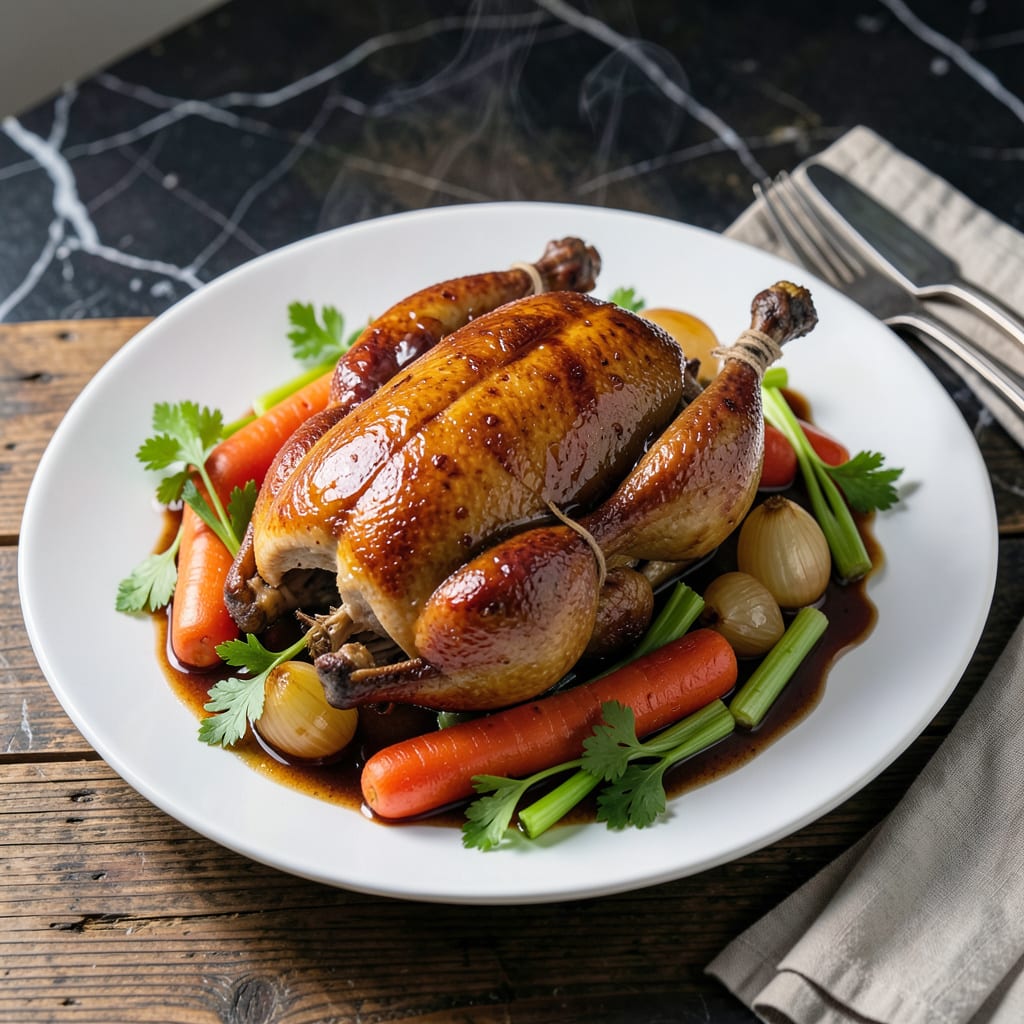
This pot roast duck delivers wine-braised richness with tender meat and deeply flavored root vegetables. The slow cooking process transforms tough cuts into melt-in-your-mouth perfection.
I’ve refined this method to ensure the duck stays moist while the vegetables absorb the wine and herbs. The result is a restaurant-quality dish that’s surprisingly simple to make at home.
Ingredients for Pot Roast Duck
Transform humble ingredients into restaurant-quality braised perfection with these essentials.
| Ingredient | Amount | Notes |
|---|---|---|
| Whole Duck 🦆 | 4 lb | Domestic, skin-on, excess fat trimmed |
| Dry Red Wine 🍷 | 2 cups | Bold variety like Cabernet Sauvignon |
| Chicken Stock 🥣 | 2 cups | Low-sodium preferred for control |
| Carrots 🥕 | 4 whole | Large, peeled, cut into chunks |
| Yellow Onions 🧅 | 2 whole | Medium, quartered through root |
| Celery Stalks 🌿 | 3 whole | Cut into 2-inch pieces |
| Garlic Cloves 🧄 | 6 cloves | Smashed, skin left on |
| Fresh Thyme Sprigs 🌿 | 4 whole | Plus 2 tsp chopped for garnish |
| Fresh Rosemary Sprigs 🌿 | 2 whole | Woody stems removed |
| Bay Leaves 🍃 | 2 whole | Dried, for braising liquid |
| Dijon Mustard 🟡 | 2 tbsp | For duck skin glaze |
| Kosher Salt 🧂 | 1 tbsp | Diamond Crystal preferred for consistency |
| Black Peppercorns 🌶️ | 1 tsp | Lightly crushed for braise |
| Olive Oil 🫒 | 2 tbsp | For searing duck skin |
| Butter 🧈 | 2 tbsp | Unsalted, for finishing sauce |
The duck is non-negotiable—sourced from reputable butchers like D’Artagnan or local farms ensures superior fat rendering and flavor. Look for plump birds with smooth, unblemished skin (approximately 4 lbs each). The wine matters too: Cabernet Sauvignon or Merlot provide the tannic structure needed to cut through the richness. Avoid cooking wines; they lack depth. Chicken stock should be homemade or high-quality to avoid metallic aftertastes that cheap brands impart.
No dry red wine? Port or Madeiras work in a pinch but reduce quantity by half. Duck can be swapped for duck legs only (adjust cooking time to 2.5 hours). For the herbs, dried thyme and rosemary at one-third the amount can substitute if fresh isn’t available. The celery is flexible—fennel or parsnips add interesting variations. Always use low-sodium stock; you can reduce later but can’t remove excess salt.
Braise can be made 2 days ahead—flavors intensify overnight. Store duck in cooking liquid, refrigerated. Reheat gently on stovetop. The butter finish is essential—do not skip. Leftovers freeze beautifully for 3 months, though texture changes slightly. Skim fat before freezing for cleaner reheating.
Why You’ll Love This Recipe
- One Pot Wonder: I toss everything in a Dutch oven and let the oven do the work—no babysitting required.
- Rich, Deep Flavor: The red wine and chicken stock create a sauce so good I could drink it with a spoon.
- Sunday Supper Star: This is my go-to when I want to impress without the stress.
- Leftovers for Days: Duck tastes even better the next day in sandwiches or over pasta.
Step-by-Step Instructions for Pot Roast Duck
Master this technique for fall-off-the-bone tenderness with a rich wine-infused sauce.
Step 1: Prep and Sear the Duck
Pat the 4 lb Whole Duck dry inside and out with paper towels. This ensures proper browning. Season the cavity generously with 1 tbsp Kosher Salt and the 1 tsp Black Peppercorns, lightly crushed. Tie the legs together with kitchen twine for even cooking.
Heat 2 tbsp Olive Oil in a large Dutch oven over medium-high heat. Sear the duck, breast-side down first, for 6-8 minutes per side until the skin is deep golden brown. The fat will render and create a crispy exterior. Remove the duck and set aside.
Step 2: Build the Aromatic Base
Pour off all but 2 tbsp of the rendered duck fat from the Dutch oven. Add the 2 whole Yellow Onions, 4 whole Carrots, and 3 whole Celery Stalks. Sauté over medium heat for 5-6 minutes until the vegetables begin to soften and brown slightly.
Add the 6 cloves Garlic Cloves, 4 whole Fresh Thyme Sprigs, 2 whole Fresh Rosemary Sprigs, and 2 whole Bay Leaves. Stir for 1 minute until the garlic releases its aroma, being careful not to let it burn.
Step 3: Deglaze and Braise
Pour in the 2 cups Dry Red Wine and scrape up all the browned bits from the bottom of the pot with a wooden spoon. This step is crucial for building deep flavor. Bring the wine to a simmer and cook for 3-4 minutes until reduced by half.
Add the 2 cups Chicken Stock and 2 tbsp Dijon Mustard, stirring to combine. Return the duck to the pot, breast-side up. The liquid should come about halfway up the duck. If needed, add a bit more stock. Bring to a gentle simmer.
Step 4: Slow Cook to Perfection
Cover the Dutch oven and transfer to a preheated 325°F oven. Braise for 2 to 2.5 hours, turning the duck halfway through, until the meat is fork-tender and nearly falling off the bone. Baste the duck occasionally with the cooking liquid to keep it moist.
The duck is done when the internal temperature reaches 180°F in the thickest part of the thigh. The vegetables should be soft and saturated with the rich, wine-infused braising liquid.
Step 5: Finish and Serve
Carefully remove the duck from the pot and set it on a cutting board. Skim excess fat from the surface of the braising liquid, then stir in 2 tbsp Butter to enrich the sauce. Adjust seasoning if needed.
Carve the duck and arrange on a platter with the vegetables. Spoon the sauce over the top and garnish with chopped thyme if desired. Serve immediately with crusty bread or mashed potatoes to soak up the delicious sauce.
Pro Tips For Making Pot Roast Duck
- Render the Fat: Start the duck skin-side down in a cold pan, then slowly render the fat over medium-low heat—I learned this the hard way after ending up with rubbery skin from high heat.
- Deglaze with Wine: After browning the duck, pour in 1 cup of dry red wine to scrape up all those browned bits; it adds depth the stock alone can’t.
- Skip the Overcrowding: Don’t cram all the carrots and onions under the duck at once—give them room or they’ll steam instead of caramelize, and you’ll lose that sweet, rich flavor.
- Rest Before Serving: Let the duck rest 15 minutes out of the liquid before slicing, or all the juices will end up on the cutting board instead of in the meat.
Storing and Reheating This Dish
Refrigerator Storage
Let your duck cool for no more than 2 hours before transferring to airtight containers with the braising liquid. I use glass containers to preserve flavors. Store at 40°F or below for up to 3 days. The flavors deepen overnight as the duck reabsorbs the cooking liquid. ❄️
Freezer Storage
For longer storage, freeze the duck and braising liquid together in heavy-duty freezer bags for up to 3 months. Leave 1 inch of headspace for expansion. Squeeze out excess air to prevent freezer burn. Label with the date for easy tracking.
Stovetop Reheating
This is my preferred method for maintaining texture. Reheat the duck and liquid together in a pot over medium-low heat for 10-15 minutes. Add a splash of water or stock if the sauce looks too thick. Stir occasionally to ensure even heating. 🔥
Oven Reheating
Preheat your oven to 300°F. Place the duck and vegetables in an oven-safe dish, cover with foil, and reheat for 20-25 minutes. This method works well for larger portions and helps maintain moisture.
Sauce Revival Tip
If the sauce separates after storage, whisk in 1 tbsp cold butter to re-emulsify. This trick restores the rich, velvety texture. Taste and adjust seasoning with salt or pepper if needed before serving.
Nutrition Facts
Frequently Asked Questions
Can I use duck legs instead of a whole duck?
Yes, swap for 4-6 duck legs and reduce braising time to 2-2.5 hours. The technique remains the same, but legs cook faster than a whole bird.
Why is my sauce too thin after cooking?
Simmer uncovered for 5-10 minutes after removing the duck to reduce the liquid. A cornstarch slurry can thicken it quickly if needed.
What’s the best wine substitute?
Use 2 cups beef stock with 1 tbsp balsamic vinegar for acidity. Port works too, but reduce quantity by half.
Can I make this in a slow cooker?
Yes, but sear the duck first. Cook on low for 6-8 hours or until the duck reaches 180°F internally.

- 4C Bread Crumbs Meatballs Recipe: Crispy Crust and Juicy Centers - September 25, 2026
- 6 Oz Chocolate Chip Cookie Recipe: Perfectly Balanced Crispy Edges and Chewy Hearts - September 25, 2026
- 6-Inch Coffee Cake Recipe: Vanilla Bean Swirls and Buttery Streusel Topping - September 25, 2026