
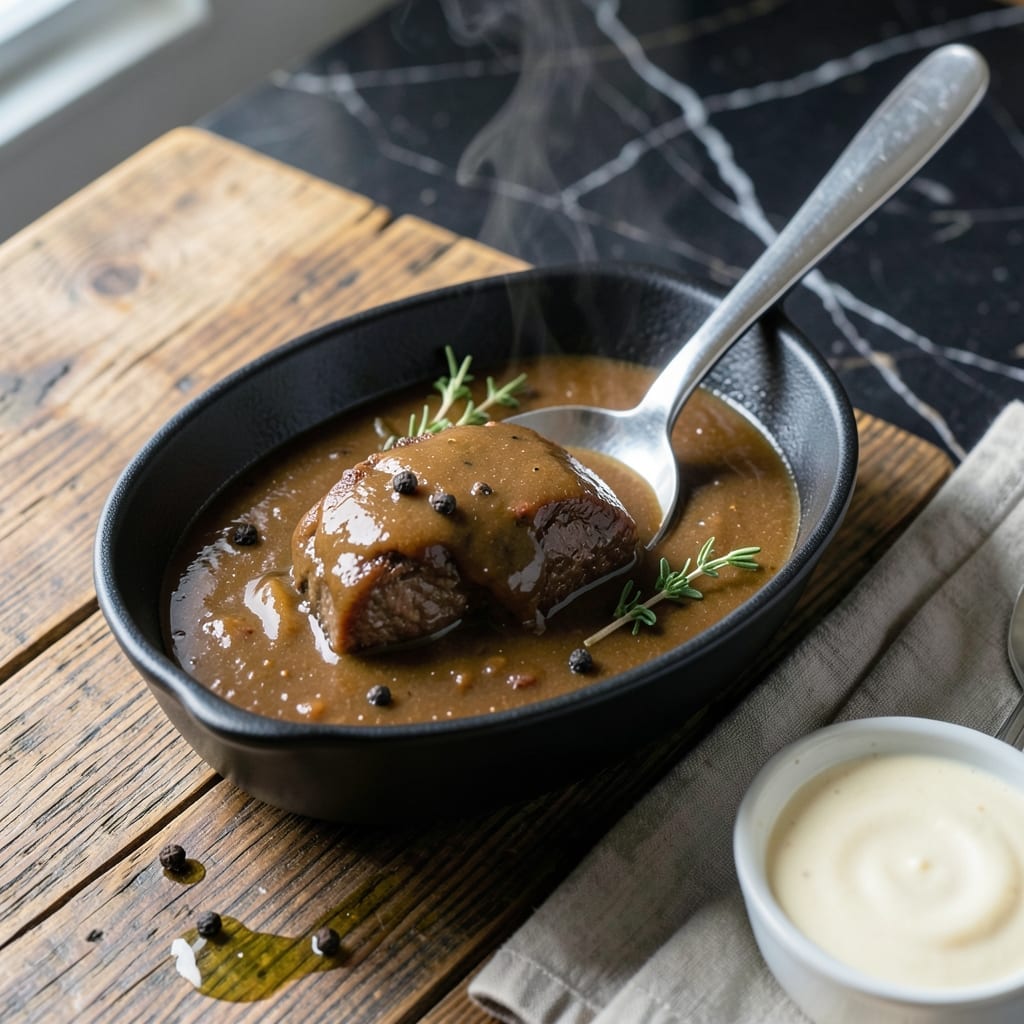
There’s a simple way to transform pot roast drippings into a velvety, lump-free gravy that rivals any restaurant version. This method uses cornstarch for reliable thickening without the risk of flour clumps or raw taste.
The process starts with rich, flavorful pan juices from your roast, which are then thickened to the perfect consistency. Cornstarch creates a glossy finish and holds its texture even when reheated.
What you get is a smooth, deeply savory gravy that enhances every bite of tender pot roast and vegetables. It’s the kind of finishing touch that turns a good meal into a memorable one.
Use it to smother mashed potatoes, drizzle over roasted vegetables, or serve alongside biscuits for soaking up every last drop.
Ingredients for Pot Roast Gravy Recipe Cornstarch
Transform pan juices into silky gravy with these simple, flavor-packed ingredients.
| Ingredient | Amount | Notes |
|---|---|---|
| Pot Roast Drippings 🥩 | 2 cups | Fat skimmed from top |
| Cornstarch 🌾 | 2 tbsp | Dissolved in cold water |
| Cold Water 💧 | 2 tbsp | For cornstarch slurry |
| Beef Stock 🍖 | 1 cup | Low-sodium preferred |
| Worcestershire Sauce 🫒 | 1 tbsp | Adds depth to flavor |
| Dijon Mustard 🟡 | 1 tsp | For tangy complexity |
| Black Pepper 🌶️ | ½ tsp | Freshly ground preferred |
| Kosher Salt 🧂 | ½ tsp | Adjust to taste |
| Fresh Thyme Leaves 🌿 | 1 tsp | Optional for herbaceous note |
| Garlic Clove 🧄 | 1 clove | Minced for aromatic base |
The drippings are everything here. Save every bit from your pot roast—fat and all. Skim the fat after it cools (it’ll rise to the top), but don’t toss it; you can use it for roasting potatoes later. For the stock, Better Than Bouillon is my go-to—just mix a teaspoon into hot water. The cornstarch is your thickening hero; Argo or Clabber Girl both work great.
No beef stock? Chicken stock works in a pinch, but the flavor won’t be as deep. Out of cornstarch? Arrowroot powder at the same ratio gives a similar glossy finish. Skip the Worcestershire if you don’t have it, but add a dash of soy sauce for umami. The Dijon mustard brightens everything up—Grey Poupon is classic, but any whole-grain mustard adds a nice texture too.
Gravy thickens as it cools, so it’ll seem thin at first. Stores 3-4 days in the fridge—reheat gently with a splash of water. Freezes beautifully for 3 months. Pro tip: strain it before storing for ultra-smooth results.
Why You’ll Love This Recipe
- Five-Minute Fix: I stir cornstarch into cold water while the drippings simmer—gravy thickens in minutes, no roux fuss.
- Umami Bomb: Worcestershire and beef stock in the drippings create a rich, savory depth that tastes like it simmered all day.
- Sunday to Wednesday: I pour this over roast beef, mashed potatoes, or even a quick sandwich—leftovers never go to waste.
- Pantry Staples: Cornstarch and a few fridge basics are all it takes, so I can make it on a whim without a grocery run.
Step-by-Step Instructions for Pot Roast Gravy
Here’s the foolproof method for lump-free gravy with rich, velvety texture.
Step 1: Skim and Heat the Drippings
Pour the 2 cups Pot Roast Drippings into a saucepan, leaving any solidified fat in the original container. I skim off the fat cap first because too much grease makes gravy oily rather than rich. Place the saucepan over medium heat and bring just to a gentle simmer.
You’ll notice the drippings thin out as they warm. This is perfect—hot liquid is essential for the next step. Don’t let it boil vigorously; a gentle simmer prevents scorching and maintains all those beautiful roasted flavors you worked so hard to develop.
Step 2: Create the Cornstarch Slurry
While the drippings heat, combine the 2 tbsp Cornstarch and 2 tbsp Cold Water in a small bowl. Whisk until completely smooth with no visible lumps. I always use cold water for this—hot water can start thickening the cornstarch prematurely, creating lumps before you even add it to the gravy.
The ratio here is critical: equal parts cornstarch to cold water ensures the perfect thickening power without altering the gravy’s flavor. This slurry method is what guarantees that velvety texture without the dreaded lumps that ruin so many homemade gravies.
Step 3: Thicken the Base
Once the drippings are simmering, pour in the cornstarch slurry while whisking constantly. I like to pour it in a slow, steady stream near the edge of the pan where the whisk is moving. This immediate whisking distributes the cornstarch evenly throughout the liquid.
Continue whisking for 1-2 minutes until the mixture thickens and becomes translucent. You’re looking for it to coat the back of a spoon. If it’s too thick, you can thin it with a bit of the 1 cup Beef Stock later. If it’s too thin, remember you can always make more slurry—but you can’t un-thicken gravy.
Step 4: Build Flavor with Aromatics and Seasonings
Reduce heat to low and stir in the 1 cup Beef Stock, 1 tbsp Worcestershire Sauce, 1 tsp Dijon Mustard, 0.5 tsp Kosher Salt, and 0.5 tsp Black Pepper. These ingredients transform good gravy into exceptional gravy with depth and complexity.
Add the 1 clove Garlic Clove (minced) and 1 tsp Fresh Thyme Leaves. Simmer for another 3-4 minutes, stirring occasionally. The garlic should become fragrant but not brown, and the thyme will infuse its subtle earthy notes. Taste and adjust seasoning—remember that the cornstarch can mute flavors slightly, so you might need a touch more salt.
Step 5: Finish and Serve
Give the gravy one final whisk and check the consistency. It should flow like heavy cream but still coat the back of a spoon. If it’s too thick, whisk in additional beef stock 1 tablespoon at a time until you reach the perfect velvety texture.
Strain the gravy through a fine-mesh sieve if you prefer a perfectly smooth finish, though I often skip this for rustic pot roast gravy. Serve immediately while hot—the cornstarch will continue to thicken slightly as it cools, so work quickly for that ideal pour-over consistency.
Pro Tips For Making Pot Roast Gravy Recipe Cornstarch
- Skim the Fat: Spoon off the excess fat from the pot roast drippings before making the gravy—I learned this the hard way after serving greasy gravy at a family dinner.
- Chill the Drippings: Pop the drippings in the freezer for 10 minutes to solidify the fat, making it easier to separate and skim off cleanly.
- Mix Cornstarch First: Whisk the cornstarch with cold water until completely smooth before adding it to the drippings, or you’ll end up with lumpy gravy every time.
- Simmer, Don’t Boil: Keep the gravy at a gentle simmer while it thickens—boiling breaks down the cornstarch and thins it out again.
Pro Cooking Tips for Great pot roast gravy recipe cornstarch
Slurry Secrets
Always use cold water for your cornstarch slurry—hot water activates the starch too soon, creating lumps. I whisk mine in a small Pyrex measuring cup for easy pouring. The 1:1 ratio of cornstarch to water is non-negotiable for smooth results. 💡
Whisking Technique
Pour the slurry slowly near the pan’s edge while whisking vigorously. This creates a vortex that distributes cornstarch evenly. I use a flat whisk for better pan contact. Keep whisking for 1-2 minutes after adding—this prevents settling.
Temperature Control
Maintain a gentle simmer, never a rolling boil. Too-high heat can break down the starch bonds, causing thin gravy. I adjust my gas burner to medium-low for perfect control. The gravy will thicken as it cools slightly.
Flavor Boosters
Bloom the minced garlic in the hot drippings for 30 seconds before adding slurry. This builds depth. The Worcestershire sauce adds umami—Lea & Perrins is my preferred brand. A pinch of MSG (optional) intensifies all flavors.
Consistency Check
Test by coating a spoon’s back. If it runs off completely, simmer 1-2 more minutes. Too thick? Thin with beef stock 1 tbsp at a time. Remember, cornstarch gravy thickens further as it cools, so remove from heat when it’s slightly thinner than desired.
Straining Tip
For ultra-smooth gravy, strain through a fine-mesh sieve after cooking. Press the solids with a spoon to extract all flavor. I skip this for rustic pot roast gravy but always do it for special occasions. The difference is noticeable. ✨
Nutrition Facts
Frequently Asked Questions
How do I avoid lumps in my gravy?
Always make a cornstarch slurry with cold water first. Whisk vigorously while pouring it slowly into simmering drippings. This prevents clumping and ensures a silky finish.
Can I use flour instead of cornstarch?
Yes, but it requires a roux (equal parts flour and fat) cooked first. Cornstarch works faster and creates a glossier texture. Flour gravy may taste slightly raw if undercooked.
How long will homemade gravy keep?
Store in an airtight container in the fridge for 3-4 days. Reheat gently, adding a splash of water if it thickens too much. It freezes well for up to 3 months.
Why did my gravy turn out thin?
Cornstarch needs 1-2 minutes of simmering to fully thicken. If still thin, mix more slurry and add gradually. Avoid boiling vigorously—it can break the starch bonds.

- 6 Oz Chocolate Chip Cookie Recipe: Perfectly Balanced Crispy Edges and Chewy Hearts - September 25, 2026
- 6-Inch Coffee Cake Recipe: Vanilla Bean Swirls and Buttery Streusel Topping - September 25, 2026
- 1 Hour Soup Recipe: Velvety Richness Without the Wait - September 25, 2026