
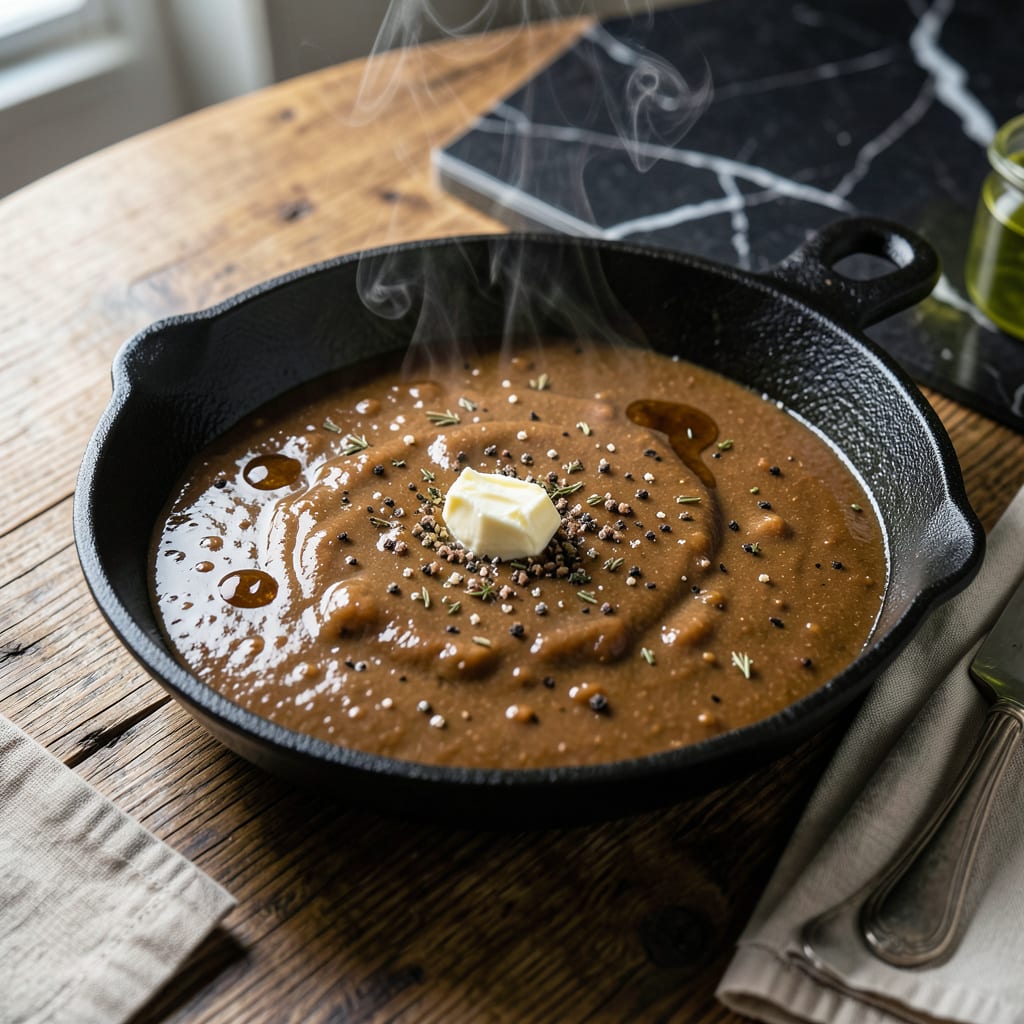
This rich pan sauce transforms pot roast into a restaurant-quality meal with its deep meaty flavor and velvety texture. The secret lies in using the caramelized drippings as your base.
With just a few simple ingredients like flour and seasonings, you’ll create a smooth, flavorful gravy that elevates every bite. It comes together in minutes right on your stovetop.
Ingredients for Pot Roast Gravy
Nine ingredients turn pan drippings into a velvety, restaurant-quality sauce you will crave.
| Ingredient | Amount | Notes |
|---|---|---|
| Pot Roast Drippings 🍖 | 2 cups | Caramelized, skimmed of excess fat |
| All-Purpose Flour 🌾 | ¼ cup | For thickening the gravy |
| Beef Broth 🥩 | 1 ½ cups | Low-sodium preferred for control |
| Unsalted Butter 🧈 | 2 tbsp | For enriching the sauce |
| Worcestershire Sauce 🍶 | 1 tbsp | Adds umami depth |
| Kosher Salt 🧂 | ½ tsp | Adjust to taste at the end |
| Freshly Ground Black Pepper 🌶️ | ¼ tsp | For balanced seasoning |
| Garlic Cloves 🧄 | 2 cloves | Minced for aromatic base |
| Dijon Mustard 🟡 | 1 tsp | Optional for tangy complexity |
The drippings are everything here. Use what’s left in the pan after cooking the pot roast—all those browned bits equal flavor gold. If your drippings are pale, let the pan sit a few extra minutes over medium heat to deepen the color. Low-sodium beef broth (like Swanson or Better Than Bouillon) keeps the sodium in check so you can season to taste as you go.
No drippings? Substitute 2 cups of strong beef broth with a teaspoon of soy sauce for depth. Out of Worcestershire? A splash of balsamic vinegar plus a pinch of sugar mimics the tangy complexity. Dijon mustard isn’t traditional, but it adds a subtle sharpness that brightens the richness. If using salted butter, reduce the added salt by half.
Gravy thickens as it cools, so thin with a splash of broth if needed. Keeps 3-4 days in the fridge, freezes for 3 months. Reheat gently to avoid breaking the sauce (or whisk in a pat of butter to bring it back together).
Why You’ll Love This Recipe
- 5-Minute Magic: I just whisk the drippings with a little flour and broth—no extra pots, no fuss.
- Rich and Deep: The Worcestershire adds this savory depth that makes every bite taste like Sunday dinner.
- Stretches the Meal: Honestly, it turns pot roast leftovers into a whole new meal with mashed potatoes or biscuits.
- Pantry Staples: I always have flour, broth, and butter on hand, so it’s my go-to when I need gravy fast.
Step-by-Step Instructions for Pot Roast Gravy
This rich, velvety sauce comes together quickly with ingredients you already have from the roast.
Step 1: Create a Smooth Roux Base
Place your skillet with the 2 cups pot roast drippings over medium heat. As it warms, whisk in the 0.25 cup all-purpose flour until completely smooth. The mixture will thicken noticeably as the flour absorbs the fat.
Cook for 2-3 minutes, stirring constantly, until the roux turns a light golden color. This cooking step removes the raw flour taste and builds the foundation for your gravy. Watch carefully—you want it golden, not brown.
Step 2: Build Flavor with Aromatics
Add the 2 cloves garlic cloves and cook for 30 seconds until fragrant. The garlic should sizzle gently in the hot roux, releasing its aroma without browning. Immediately pour in the 1.5 cups beef broth, 1 tbsp Worcestershire sauce, and 1 tsp Dijon mustard.
Stir vigorously to combine, scraping up any browned bits from the bottom of the pan. These fond bits are pure flavor and will dissolve into your gravy as it simmers.
Step 3: Simmer to Perfection
Bring the mixture to a gentle simmer, then reduce heat to medium-low. Let it cook for 8-10 minutes, stirring occasionally, until the gravy thickens enough to coat the back of a spoon. You’ll notice it transforming from a thin liquid to a luscious, velvety consistency.
The gravy should reduce slightly but not become too thick—it will continue to thicken as it cools. If it gets too thick, thin it with a splash of additional beef broth.
Step 4: Finish with Butter and Season
Remove the gravy from heat and stir in the 2 tbsp unsalted butter until completely melted and incorporated. This final step adds a silky richness that makes the gravy truly special. Taste and adjust seasoning with the 0.5 tsp kosher salt and 0.25 tsp freshly ground black pepper.
Remember, the pot roast drippings are already seasoned, so go easy with the salt initially. You can always add more, but you can’t take it out. The finished gravy should have a deep, meaty flavor with just enough salt to enhance, not overpower.
Pro Tips For Making Pot Roast Gravy
- Skim the Fat: I learned this the hard way—let the drippings sit for 5 minutes so the fat rises, then skim it off with a spoon before making the gravy. Your gravy will be richer, not greasy.
- Toast the Flour: Cook the flour in the drippings for 1-2 minutes before adding liquid—it removes the raw taste and gives the gravy a deeper, nuttier flavor.
- Whisk Constantly: After adding beef broth, whisk nonstop over medium heat until it thickens. This prevents lumps and guarantees a silky-smooth gravy every time.
- Finish with Butter: Sounds weird, but it works: Stir in a pat of cold unsalted butter at the end. It adds a velvety shine and rounds out the flavors beautifully.
Regional Styles of pot roast gravy
Southern Style
In the South, we often add a splash of apple cider vinegar for brightness. I use 1 tbsp after the roux stage. This cuts through the richness while keeping that deep meaty flavor you love.
Texas Twist
For a bold Texas approach, deglaze your pan with ½ cup strong coffee instead of broth. The bitterness complements the beef beautifully. I learned this trick from a pitmaster in Lockhart.
Midwest Comfort
Midwestern cooks often stir in 2 tbsp sour cream at the end for extra creaminess. This creates a velvety texture that’s perfect for mashed potatoes. I find it especially comforting on cold days. ❄️
French Influence
A French technique involves adding 1 tbsp cognac with the Worcestershire. This adds depth and a subtle warmth. I use Hennessy VS for this—it makes a noticeable difference.
Pennsylvania Dutch
In Pennsylvania, some add 1 tsp sugar to balance the savory notes. This creates a slightly caramelized flavor profile. I was surprised how well this works with the existing ingredients.
Creole Kick
For a Creole version, add 1 tsp Tony Chachere’s seasoning with the salt and pepper. This brings a spicy, herby complexity that elevates the gravy. I discovered this in New Orleans and haven’t looked back. 🔥
Nutrition Facts
Frequently Asked Questions
Can I make this without drippings?
Yes! Use 2 cups strong beef broth with 1 tsp soy sauce for depth. The flavor won’t be as rich, but it’ll still taste great.
Why is my gravy lumpy?
Lumps form when flour isn’t fully incorporated. Whisk vigorously while adding flour, or strain the finished gravy through a fine-mesh sieve.
How do I fix gravy that’s too thin?
Mix 1 tbsp cornstarch with 1 tbsp cold water, then whisk into simmering gravy. Cook for 1-2 minutes until thickened.
Can I make this ahead?
It keeps 3-4 days refrigerated or 3 months frozen. Reheat gently, stirring often to prevent separation.

- 4C Bread Crumbs Meatballs Recipe: Crispy Crust and Juicy Centers - September 25, 2026
- 6 Oz Chocolate Chip Cookie Recipe: Perfectly Balanced Crispy Edges and Chewy Hearts - September 25, 2026
- 6-Inch Coffee Cake Recipe: Vanilla Bean Swirls and Buttery Streusel Topping - September 25, 2026