
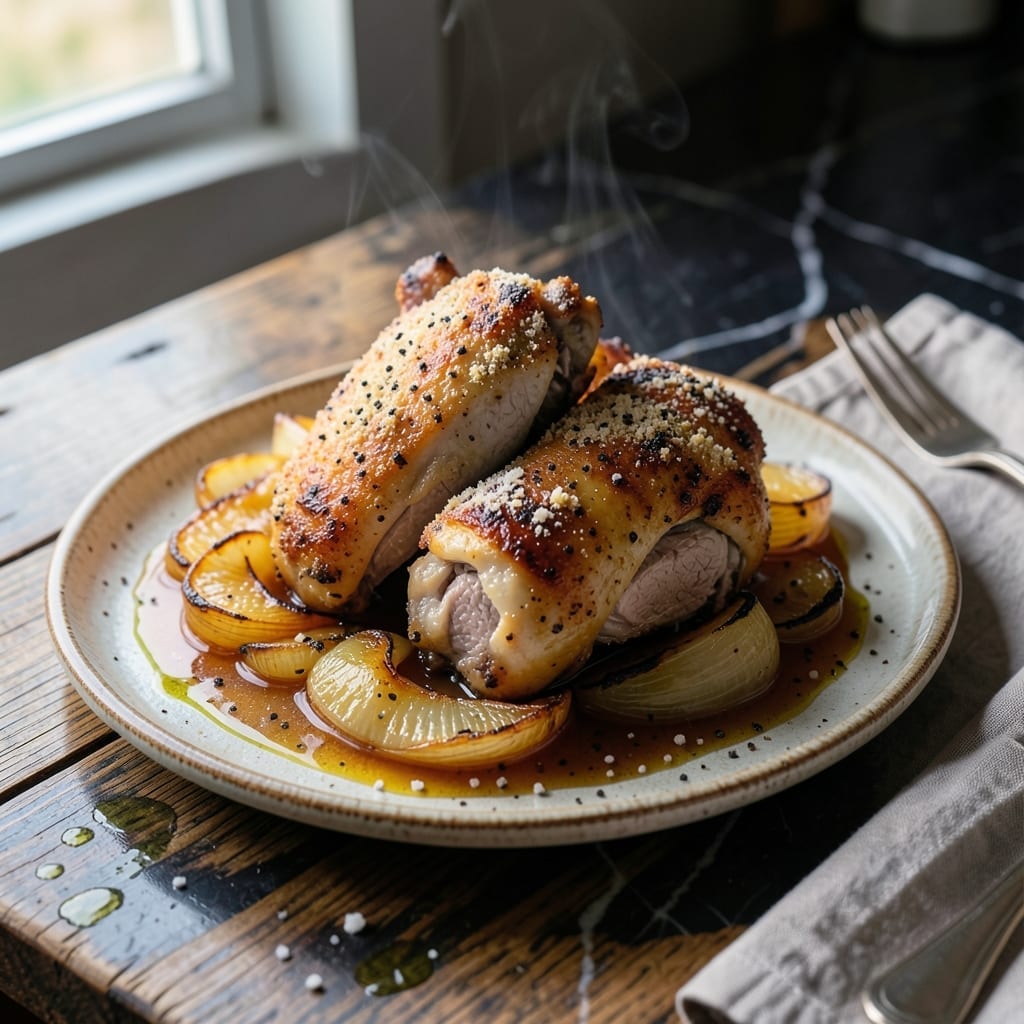
This slow-cooked guinea fowl transforms into a tender, fall-off-the-bone masterpiece with deep, savory layers. The key lies in browning the bird thoroughly before braising, which builds a rich foundation for the stew.
Low and slow cooking allows the connective tissue to break down completely, resulting in meat that’s juicy and infused with the flavors of aromatic vegetables and herbs. This method ensures every bite is packed with richness.
What emerges is a hearty, comforting dish with a velvety sauce that soaks into the meat and vegetables. The guinea fowl’s natural depth pairs perfectly with the slow-developed flavors of the pot.
Serve this stew with crusty bread or buttery mashed potatoes to soak up every last drop of the savory sauce. It’s a dish that rewards patience with unforgettable results.
Ingredients for Pot Roast Guinea Fowl
Rich, slow-cooked guinea fowl with aromatic vegetables and bold red wine creates this velvety stew.
| Ingredient | Amount | Notes |
|---|---|---|
| Guinea Fowl 🦢 | 3 lb | Cut into 8 pieces, skin-on |
| Olive Oil 🫒 | 3 tbsp | Divided for browning and braising |
| All-Purpose Flour 🌾 | ¼ cup | For dredging guinea fowl |
| Kosher Salt 🧂 | 1 ½ tsp | Diamond Crystal preferred |
| Freshly Ground Black Pepper 🌶️ | 1 tsp | Coarsely ground for texture |
| Yellow Onions 🧅 | 2 whole | Large, chopped into chunks |
| Carrots 🥕 | 3 whole | Peeled, cut into 2-inch pieces |
| Celery Stalks 🌿 | 3 whole | Cut into 2-inch pieces |
| Garlic Cloves 🧄 | 6 cloves | Smashed, peeled left whole |
| Fresh Thyme Sprigs 🌿 | 4 pieces | Plus 1 tbsp chopped leaves |
| Fresh Rosemary Sprigs 🌿 | 2 pieces | Plus 1 tbsp chopped leaves |
| Bay Leaves 🍃 | 2 pieces | Dried, for braising liquid |
| Dry Red Wine 🍷 | 1 ½ cups | Bold variety like Cabernet Sauvignon |
| Beef Stock 🥣 | 2 cups | Low-sodium preferred for control |
| Tomato Paste 🍅 | 2 tbsp | For depth of flavor in sauce |
The guinea fowl is paramount here. Source from specialty grocers like Whole Foods or online purveyors such as D’Artagnan—look for birds weighing 3-4 lbs each, which yield perfect portions. Freshness is key; the skin should be smooth and the flesh should smell clean, not gamey. For the herbs, organic thyme and rosemary from the refrigerated section at your market will have the most vibrant flavor (the good stuff, not the pre-shredded kind).
No red wine? Substitute with additional beef stock plus 1 tbsp balsamic vinegar for acidity. Fresh herbs can be replaced with dried at one-third the amount. If guinea fowl is unavailable, chicken thighs (bone-in, skin-on) work well, though the flavor will be milder. For the stock, Better Than Bouillon makes a robust beef base that’s widely available at Kroger and Safeway.
This stew improves overnight as flavors meld. Refrigerate in an airtight container for up to 4 days, or freeze for 3 months. Reheat gently on the stovetop to maintain the sauce’s velvety texture (worth the extra minute).
Why You’ll Love This Recipe
- One Pan Wonder: I toss the guinea fowl with flour, salt, and pepper, sear it in olive oil, then let the oven do the rest.
- Rich and Savory: The slow roasting turns the guinea fowl fall-off-the-bone tender with a deep, satisfying flavor.
- Sunday Dinner, Anytime: I serve this for weekend family meals, but it’s just as good on a quiet Tuesday night.
- Leftovers for Days: Honestly, the meat tastes even better the next day, and it stretches for sandwiches or salads.
Step-by-Step Instructions for Pot Roast Guinea Fowl
Here’s the method. Straightforward, tested, works every time.
Step 1: Season and Dredge the Guinea Fowl
Pat the 3 lb Guinea Fowl pieces completely dry with paper towels. This ensures the 0.25 cup All-Purpose Flour adheres properly and creates a golden crust during browning. Season all sides generously with 1.5 tsp Kosher Salt and 1 tsp Freshly Ground Black Pepper, pressing the seasoning into the meat.
Dredge each piece in the All-Purpose Flour, shaking off any excess. The flour coating will thicken the braising liquid later and give the exterior a beautiful sear. Let the seasoned pieces rest for 10 minutes while you prepare the remaining ingredients—this allows the salt to penetrate the meat slightly.
Step 2: Brown the Guinea Fowl and Sauté Aromatics
Heat 2 tbsp Olive Oil in a large Dutch oven over medium-high heat until shimmering. Working in batches to avoid crowding, add the guinea fowl pieces skin-side down. Cook undisturbed for 5-6 minutes until the skin is deep golden brown and crisp.
Flip and brown the other side for 3-4 minutes. Transfer the browned pieces to a plate. Add the remaining 1 tbsp Olive Oil to the pot, then add the 2 whole Yellow Onions, 3 whole Carrots, and 3 whole Celery Stalks. Sauté for 5 minutes until the vegetables begin to soften and develop color.
Step 3: Build the Braising Liquid
Add the 6 cloves Garlic Cloves, 4 pieces Fresh Thyme Sprigs, 2 pieces Fresh Rosemary Sprigs, and 2 pieces Bay Leaves to the pot. Stir in the 2 tbsp Tomato Paste and cook for 1-2 minutes until it darkens slightly and becomes fragrant.
Pour in the 1.5 cups Dry Red Wine and scrape up any browned bits from the bottom of the pot with a wooden spoon. Simmer for 3-4 minutes until the wine reduces by about half. Add the 2 cups Beef Stock and bring to a gentle simmer.
Step 4: Braise to Tenderness
Return the guinea fowl pieces to the pot along with any accumulated juices, arranging them so they are mostly submerged in the liquid. The braising liquid should come about halfway up the pieces. Cover the pot and transfer it to a preheated 325°F oven.
Braise for 1.5 to 2 hours, turning the pieces occasionally, until the meat is fork-tender and nearly falling off the bone. The liquid should be gently bubbling throughout the cooking time. If it boils too vigorously, reduce the oven temperature slightly.
Step 5: Reduce the Sauce and Serve
Carefully transfer the guinea fowl pieces to a serving platter and tent loosely with foil to keep warm. Skim any excess fat from the surface of the braising liquid, then simmer the sauce over medium heat for 5-7 minutes until it thickens slightly and coats the back of a spoon.
Taste and adjust the seasoning with additional salt and pepper if needed. Pour the sauce over the guinea fowl and serve immediately with the braised vegetables. The sauce should be rich, deeply flavored, and glossy.
Pro Tips For Making Pot Roast Guinea Fowl
- Brown the Flour: After dusting the guinea fowl in flour, let it sit for 5 minutes before browning—this creates a thicker, more flavorful crust. I learned this the hard way after my first few attempts ended up with a pale, weak coating.
- Start Hot, Finish Low: Sear the guinea fowl in olive oil over medium-high heat to get that deep golden crust, then drop the temp to low for the pot roasting phase. Sounds obvious, but I used to rush the sear and regret it every time.
- Salt the Bird Overnight: Generously salt the guinea fowl with kosher salt at least 12 hours before cooking—it seasons deep into the meat and keeps it juicy. My grandmother swore by this, and she was right.
- Skip the Overcrowding: Don’t cram the pot with too many vegetables or liquid, or the guinea fowl will steam instead of roast. This isn’t the prettiest method, but it’s the tastiest.
Wine and Beer Pairings for This Recipe
Bold Red Wines
A full-bodied Cabernet Sauvignon from Napa Valley stands up to the rich, gamey flavors of this dish. The dark fruit notes and firm tannins complement the deep, savory sauce beautifully. I often reach for Caymus Vineyards for its consistent quality. 🍷
Earthy Pinot Noir
For a lighter option, try a Pinot Noir from Oregon’s Willamette Valley. Its bright acidity and earthy undertones balance the richness without overpowering the guinea fowl’s natural depth. Domaine Serene is a personal favorite.
Old World Syrah
A French Syrah from the Northern Rhône, like a Crozes-Hermitage, offers peppery notes and smoky depth that pair wonderfully with the braised herbs and vegetables. These wines are often more affordable than their Southern Rhône counterparts.
Craft Beer Pairings
A robust Belgian Dubbel ale, such as Westmalle, brings caramel and dark fruit flavors that harmonize with the dish’s richness. The beer’s effervescence cuts through the velvety sauce, cleansing your palate between bites. 🍺
Dark Lager Option
For beer lovers, a Munich Dunkel like Ayinger Altbairisch offers toasty malt flavors that complement the guinea fowl’s depth. Its smooth, slightly sweet profile won’t compete with the dish’s savory notes.
Malty Amber Ale
An Amber Ale such as Fat Tire from New Belgium provides a balance of caramel sweetness and a touch of hop bitterness. This makes it a versatile pairing that enhances the stew’s complexity without overwhelming it.
Nutrition Facts
Frequently Asked Questions
Can I use chicken instead of guinea fowl?
Yes, bone-in, skin-on chicken thighs work well as a substitute. They’ll have a milder flavor but still absorb the braising liquid beautifully. Adjust cooking time to 1 to 1.25 hours since chicken cooks faster.
Why do I need to brown the meat first?
Browning creates a flavorful fond that enriches the sauce. The Maillard reaction also develops complex flavors that define the dish. Skipping this step results in a bland stew.
How do I know when it’s done?
The meat should pull away from the bone easily when pierced with a fork. If it resists, return it to the oven for another 15-20 minutes and check again.
Can I make this in a slow cooker?
Brown the meat first, then transfer everything to the slow cooker. Cook on low for 6-7 hours or high for 3-4 hours.

- 4C Bread Crumbs Meatballs Recipe: Crispy Crust and Juicy Centers - September 25, 2026
- 6 Oz Chocolate Chip Cookie Recipe: Perfectly Balanced Crispy Edges and Chewy Hearts - September 25, 2026
- 6-Inch Coffee Cake Recipe: Vanilla Bean Swirls and Buttery Streusel Topping - September 25, 2026