
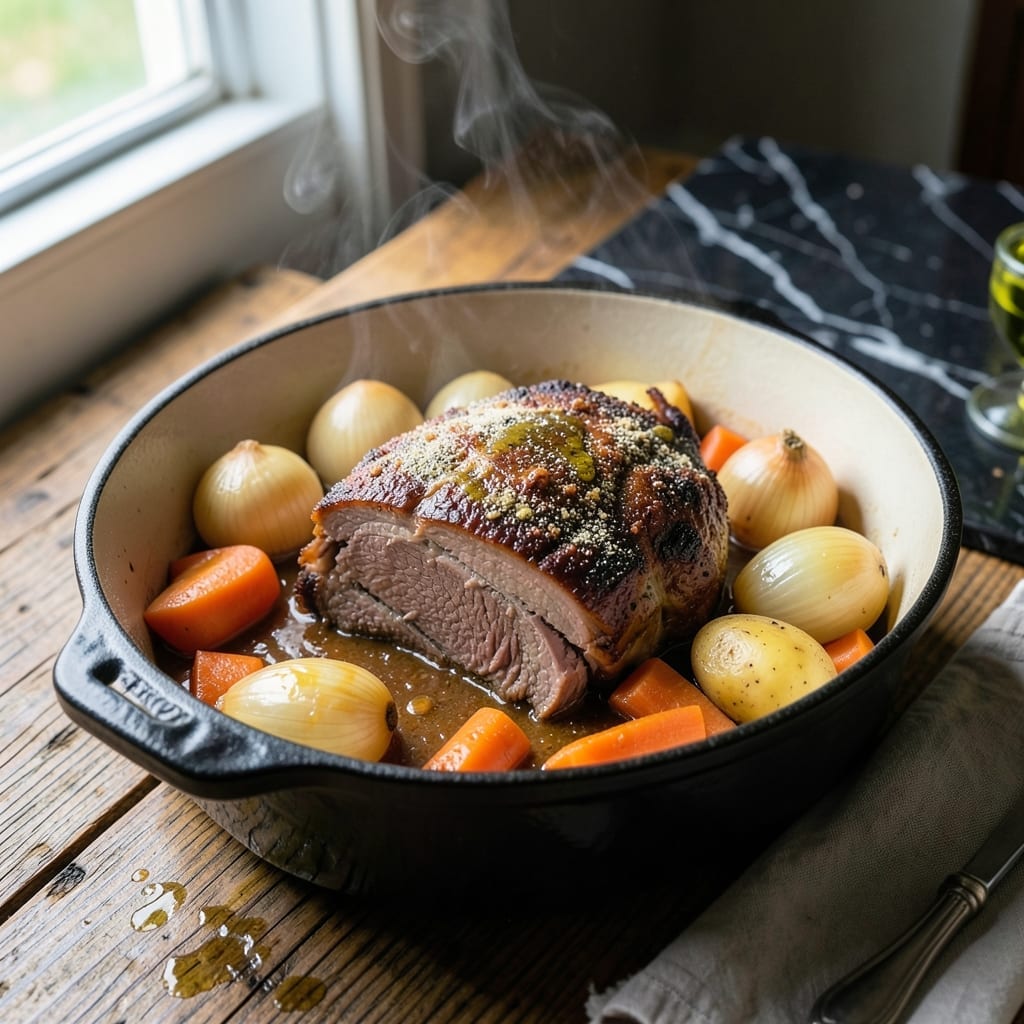
There’s a reason pot roast remains a beloved classic—it transforms humble ingredients into something extraordinary through slow, gentle braising. This method yields fall-apart tender beef with deeply flavorful results every time.
The wine-enhanced braising liquid infuses the meat with rich, complex notes while root vegetables soak up every bit of savory goodness. Low heat and patience are the keys to achieving that perfect texture and depth of flavor.
You’ll end up with a dish that’s hearty, comforting, and impressive enough for any occasion. The meat becomes so tender it nearly dissolves in your mouth, while the vegetables turn perfectly soft without losing their shape.
Serve this with crusty bread to soak up the incredible sauce. Here’s how to make it right.
Ingredients for Pot Roast Recipe Chef John
Transform humble ingredients into extraordinary comfort with this classic braising method.
| Ingredient | Amount | Notes |
|---|---|---|
| Beef Chuck Roast 🥩 | 3 lb | Well-marbled, trimmed of excess fat |
| Kosher Salt 🧂 | 2 tsp | Diamond Crystal preferred for even seasoning |
| Black Pepper 🌶️ | 1 tsp | Freshly ground for maximum flavor |
| All-Purpose Flour 🌾 | ¼ cup | For dredging the beef |
| Olive Oil 🫒 | 2 tbsp | Divided for searing and sautéing |
| Yellow Onion 🧅 | 2 whole | Large, roughly chopped |
| Carrots 🥕 | 4 whole | Peeled and cut into 2-inch chunks |
| Celery Stalks 🌿 | 3 whole | Cut into 2-inch pieces |
| Garlic Cloves 🧄 | 6 cloves | Smashed but left whole |
| Dry Red Wine 🍷 | 2 cups | Bold and full-bodied like Cabernet Sauvignon |
| Beef Broth 🥣 | 2 cups | Low-sodium preferred for control |
| Tomato Paste 🍅 | 2 tbsp | For depth and umami richness |
| Fresh Thyme Sprigs 🌿 | 4 pieces | Plus extra for garnish |
| Fresh Rosemary Sprig 🌿 | 1 piece | For aromatic depth in braising liquid |
| Bay Leaf 🍃 | 1 whole | Dried, for subtle earthiness |
The beef is the foundation here. Chuck roast with good marbling ensures fall-apart tenderness after hours of braising. Whole Foods or Costco often have well-marbled cuts, but any reputable butcher will guide you right. Look for pieces with visible fat streaks—this melts into the meat during cooking. Avoid pre-cut stew meat, as the uniform size can dry out unevenly.
No red wine? Beef broth with a tablespoon of balsamic vinegar makes a decent substitute. Fresh herbs are ideal, but dried at one-third the amount works if that’s what you’ve got. For the tomato paste, those Trader Joe’s squeeze tubes are perfect—no waste, and they keep indefinitely. Baby carrots can replace whole, but the flavor won’t be as robust.
This pot roast tastes even better the next day. Store leftovers in an airtight container for up to 4 days in the fridge or freeze for 3 months. Reheat gently to preserve the meat’s texture, and don’t forget to skim any solidified fat before serving.
Why You’ll Love This Recipe
- Minimal Effort: I just coat the beef chuck in flour, salt and pepper then sear—no fancy steps.
- Feeds the Crew: One pot serves my whole family plus leftovers for sandwiches tomorrow.
- Budget Hero: A cheap cut like chuck becomes a star dish with just olive oil and pantry staples.
Step-by-Step Instructions for Wine-Enhanced Braising with Root Vegetables
Master the technique that transforms tough cuts into fork-tender perfection with rich, layered flavors.
Step 1: Season and Sear the Beef Chuck Roast
Pat the 3 lb Beef Chuck Roast dry with paper towels, then season all sides generously with the 2 tsp Kosher Salt and 1 tsp Black Pepper. This dry surface ensures a proper sear rather than steaming the meat.
Dredge the roast in the 0.25 cup All-Purpose Flour, shaking off any excess. Heat 1 tbsp Olive Oil in a large Dutch oven over medium-high heat until shimmering. Sear the beef for 4-5 minutes per side until deeply browned. This creates the Maillard reaction that builds complex flavors in your braise.
Transfer the seared roast to a plate and set aside. The fond left in the pot will become the foundation of your braising liquid.
Step 2: Sauté the Aromatic Vegetables
In the same Dutch oven, add the remaining 1 tbsp Olive Oil. Add the 2 whole Yellow Onion, 4 whole Carrots, and 3 whole Celery Stalks, cooking for 5-6 minutes until the vegetables begin to soften and develop color.
Add the 6 cloves Garlic Cloves, 2 tbsp Tomato Paste, 4 pieces Fresh Thyme Sprigs, 1 piece Fresh Rosemary Sprig, and 1 whole Bay Leaf. Cook for 2 minutes, stirring constantly, until the tomato paste darkens slightly and coats the vegetables. This step intensifies the umami depth of your dish.
Step 3: Deglaze and Build the Braising Liquid
Pour in the 2 cups Dry Red Wine, using a wooden spoon to scrape up all the browned bits from the bottom of the pot. Bring to a simmer and cook for 3-4 minutes until the liquid reduces by about half.
Add the 2 cups Beef Broth and return the seared beef to the pot along with any accumulated juices. The liquid should come about halfway up the sides of the roast. This precise ratio ensures proper braising without diluting the wine’s bold character.
Step 4: Braise to Fork-Tender Perfection
Cover the Dutch oven and transfer to a preheated 325°F oven. Braise for 2.5 to 3 hours, turning the roast halfway through the cooking time. The low and slow method breaks down the connective tissue in the chuck roast, transforming it into buttery tenderness.
You’ll know it’s ready when the meat yields easily to a fork and the internal temperature reaches 195-200°F. The vegetables should be soft and infused with the rich braising liquid, which will have reduced into a flavorful sauce.
Remove the Fresh Thyme Sprigs, Fresh Rosemary Sprig, and Bay Leaf before serving. The herbs have imparted their aromatic qualities and should be discarded to prevent biting into woody stems.
Pro Tips For Making Pot Roast Recipe Chef John
- Sear Until Dark: Get that chuck roast deeply browned in the olive oil—more than you think. I learned this the hard way: a light sear means weak flavor in the final dish.
- Season Generously: Use more kosher salt and black pepper than feels natural on the floured roast. After burning three batches, I finally figured out under-seasoning ruins the crust.
- Don’t Rush Browning: Let each side of the roast sear for at least 3-4 minutes before flipping. Sounds weird, but it works: this builds the fond you’ll deglaze later.
- Use Room-Temp Meat: Pull the chuck roast out of the fridge 30-45 minutes before searing. My grandmother swore by this, and she was right: cold meat seizes up and doesn’t brown evenly.
Troubleshooting Great pot roast recipe chef john
Tough Meat Issues
If your pot roast isn’t tender after braising, it likely didn’t cook long enough. Return it to the oven at 325°F for another 30-60 minutes. Check that your braising liquid covers at least halfway up the meat. I’ve found that chuck roast needs that full time to break down properly. 💡
Dry Pot Roast
Dryness usually means the liquid level was too low. Next time, add an extra ½ cup beef broth at the start. Also, ensure you’re using a heavy pot with a tight-fitting lid. My Le Creuset Dutch oven works perfectly for maintaining moisture.
Weak Flavor
Bland results often come from skipping the searing step or not browning the tomato paste. Don’t rush these steps—they build the flavor foundation. I also recommend using a full-bodied red wine like Cabernet Sauvignon for depth.
Sauce Too Thin
For a thicker sauce, remove the meat and vegetables, then simmer the liquid uncovered for 10-15 minutes. You can also mix 1 tbsp cornstarch with 1 tbsp water and stir it in while simmering. This trick saves my gravy every time.
Vegetables Mushy
If your veggies are turning to mush, add them later in the cooking process. Try braising the meat alone for 2 hours, then add the vegetables for the final 1 hour. This keeps them perfectly tender without losing shape.
Burnt Bottom
Burning often happens if the heat is too high or the liquid reduces too much. Always use medium-low heat and check the liquid level halfway through cooking. If it’s low, add ½ cup hot water to prevent scorching.
Nutrition Facts
Frequently Asked Questions
What cut of beef works best?
Chuck roast is ideal due to its marbling and connective tissue. This breaks down beautifully during the 2.5-3 hour braise, creating that signature tender texture. Avoid lean cuts like sirloin.
Can I make this in a slow cooker?
Yes! Sear the meat first, then transfer everything to a slow cooker. Cook on low for 8-10 hours or high for 5-6 hours. The flavors develop just as deeply.
Why is my sauce too thin?
Simmer the liquid uncovered after removing the meat and veggies. This reduces it naturally. For quicker results, mix 1 tbsp cornstarch with 1 tbsp water and stir in.

- 6 Oz Chocolate Chip Cookie Recipe: Perfectly Balanced Crispy Edges and Chewy Hearts - September 25, 2026
- 6-Inch Coffee Cake Recipe: Vanilla Bean Swirls and Buttery Streusel Topping - September 25, 2026
- 1 Hour Soup Recipe: Velvety Richness Without the Wait - September 25, 2026