
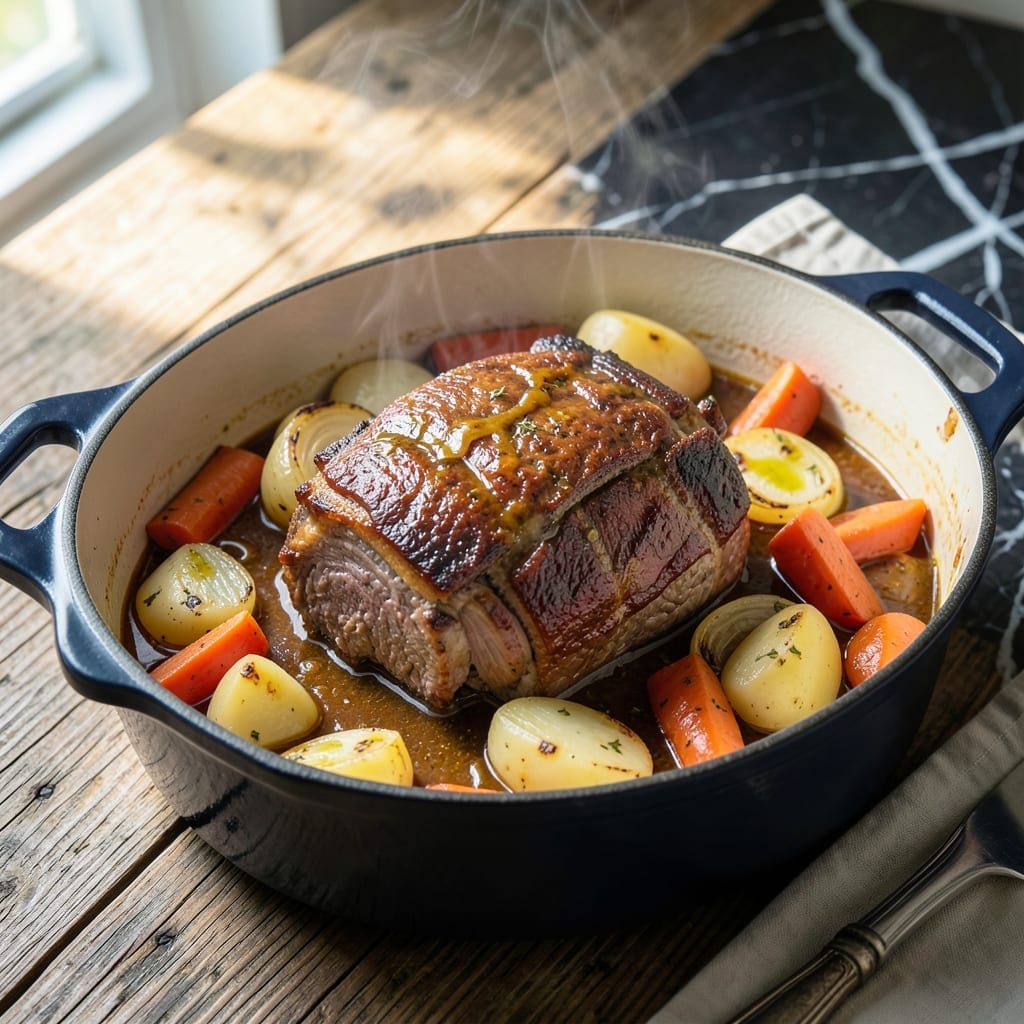
There’s an art to achieving perfect pot roast, and it all starts with the right oven temperature. Low and slow is the only way to transform tough cuts into fork-tender, deeply flavorful meat that falls apart with ease.
This method relies on a controlled 325°F environment, allowing the connective tissue to break down gradually while the outside develops a rich, caramelized crust. The result is a dish that’s infinitely more satisfying than any rushed version.
The slow braising process ensures every bite is infused with the deep, savory notes of the cooking liquid, creating a meal that tastes like it simmered for hours. It’s the kind of dish that turns a simple Sunday into something special.
Master this technique, and you’ll have a foolproof way to deliver restaurant-quality results at home. Every time.
Ingredients for Pot Roast Recipe Oven Temperature
A handful of quality ingredients transforms chuck roast into tender, flavorful perfection with low, slow heat.
| Ingredient | Amount | Notes |
|---|---|---|
| Chuck Roast 🥩 | 3 lb | Well-marbled, boneless preferred |
| Kosher Salt 🧂 | 2 tsp | Diamond Crystal brand recommended |
| Black Pepper 🌶️ | 1 tsp | Freshly ground for best flavor |
| All-Purpose Flour 🌾 | ¼ cup | For dusting meat before searing |
| Olive Oil 🫒 | 2 tbsp | Divided for searing and sautéing |
| Yellow Onion 🧅 | 1 whole | Large, diced into chunks |
| Carrots 🥕 | 3 whole | Medium, peeled and cut into chunks |
| Celery Stalks 🌿 | 3 whole | Cut into large pieces |
| Garlic Cloves 🧄 | 6 cloves | Smashed for robust flavor |
| Beef Stock 💧 | 3 cups | Low-sodium preferred for control |
| Red Wine 🍷 | 1 cup | Dry variety like Cabernet Sauvignon |
| Tomato Paste 🍅 | 2 tbsp | For depth and umami |
| Fresh Thyme Sprigs 🌿 | 4 whole | Tied with kitchen twine |
| Bay Leaves 🍃 | 2 whole | Dried, for aromatic depth |
| Fresh Parsley 🌿 | ¼ cup | Chopped, for garnish at serving |
The chuck roast is non-negotiable here—look for heavy marbling at the butcher counter or Whole Foods. Pre-cubed beef won’t hold up to the long braise. Ask for a single piece weighing about 3 pounds; this ensures even cooking and maximum flavor development. Avoid lean cuts like sirloin, as they lack the connective tissue that breaks down into fork-tender perfection.
No red wine? Beef stock with a tablespoon of balsamic vinegar mimics the depth. Fresh thyme can be swapped for dried at one-third the amount. If you’re missing tomato paste, 2 tablespoons ketchup in a pinch works (though less refined). For the stock, Better Than Bouillon is a reliable brand. The vegetables can be flexible—parsnips or potatoes add heartiness too.
This tastes even better the next day as the flavors meld. Store leftovers in airtight containers for up to 4 days in the fridge or freeze for 3 months. Reheat gently on the stove, adding a splash of water or stock to loosen the sauce.
Why You’ll Love This Recipe
- Set It and Forget: I toss the floured chuck roast in the Dutch oven, pop it in the oven, and walk away—no stirring, no fuss.
- Rich and Tender: That slow oven heat turns the salt, pepper, and flour into the most crave-worthy crust, and the meat just falls apart.
- Sunday or Tuesday: Honestly, this feeds my family just as well on a busy weeknight as it does for company.
- Leftovers for Days: Between us, the sandwiches from the next-day slices might be even better than the first meal.
Step-by-Step Instructions for Pot Roast Oven Temperature
Master the art of low and slow braising with this foolproof method for tender results.
Step 1: Sear and Season the Chuck Roast
Pat the 3 lb Chuck Roast dry with paper towels, then season generously with 2 tsp Kosher Salt and 1 tsp Black Pepper on all sides. This ensures a flavorful crust. Dredge the roast lightly in 0.25 cup All-Purpose Flour, shaking off any excess.
Heat 1 tbsp Olive Oil in a Dutch oven over medium-high heat until shimmering. Sear the roast for 4-5 minutes per side until deeply browned. This step builds the foundation of flavor for your dish. Remove the roast and set aside.
Step 2: Sauté the Aromatic Vegetables
In the same Dutch oven, add the remaining 1 tbsp Olive Oil. Add the 1 whole Yellow Onion, 3 whole Carrots, and 3 whole Celery Stalks, all cut into large chunks. Cook for 5-6 minutes until the vegetables begin to soften and develop color.
Add the 6 cloves Garlic Cloves (smashed) and 2 tbsp Tomato Paste, stirring to coat the vegetables. Cook for 1-2 minutes until the tomato paste darkens slightly, which intensifies its umami richness.
Step 3: Deglaze and Build the Braising Liquid
Pour in 1 cup Red Wine to deglaze the pan, scraping up any browned bits from the bottom. Let it simmer for 2-3 minutes until reduced by half. This step ensures every bit of flavor is incorporated into the dish.
Add 3 cups Beef Stock, 4 whole Fresh Thyme Sprigs, and 2 whole Bay Leaves. Stir to combine, then return the seared roast to the Dutch oven, nestling it into the liquid. The liquid should come about halfway up the sides of the meat.
Step 4: Braise at the Perfect Oven Temperature
Cover the Dutch oven and transfer it to a preheated 325°F oven. Braise for 3 to 3.5 hours, turning the roast halfway through the cooking time. This low and slow method breaks down the collagen in the meat, resulting in a fork-tender texture.
You’ll know it’s done when the roast shreds easily with a fork and the internal temperature reaches 195-200°F. The braising liquid should be rich and deeply flavored, with the vegetables softened and infused with the meat’s savory essence.
Step 5: Rest and Garnish for Serving
Remove the roast from the oven and let it rest in the braising liquid for 15-20 minutes. This allows the juices to redistribute, ensuring every bite is moist and flavorful. Skim any excess fat from the surface of the liquid if desired.
Garnish with 0.25 cup Fresh Parsley (chopped) before serving. The parsley adds a bright, fresh contrast to the rich, hearty dish. Serve the pot roast with the braised vegetables and a ladle of the flavorful cooking liquid.
Pro Tips For Making Pot Roast Recipe Oven Temperature
- Start High, Finish Low: Sear the chuck roast at 450°F for 20 minutes to develop a deep crust, then drop the oven to 300°F for the remaining cook time—I learned this the hard way after pulling out dry, gray meat from a too-low initial temp.
- Pat It Dry: Blot the chuck roast with paper towels before seasoning and searing; even a little moisture will steam the meat instead of browning it, and you’ll lose that rich flour crust.
- Don’t Rush the Rest: Let the roast rest under foil for at least 15 minutes after pulling it from the oven, or all those juices will end up on the cutting board instead of in the meat.
- Use a Heavy Pan: A thick, oven-safe Dutch oven holds heat evenly and prevents hot spots that can burn the flour coating—after ruining two roasts in a thin pot, I finally upgraded and never looked back.
Best Sauces and Condiments for This Dish
Classic Horseradish Cream
Mix ½ cup sour cream with 2 tbsp prepared horseradish and 1 tsp Dijon mustard. The sharp bite cuts through the richness beautifully. I love how this adds a creamy tang that complements the deep beef flavors. 💫
Wine Reduction Sauce
Simmer 1 cup reserved braising liquid with ½ cup red wine until reduced by half. Finish with 1 tbsp cold butter for a glossy, restaurant-quality sauce. The concentrated flavors deepen the dish’s savory profile.
Garlic Herb Butter
Blend 4 tbsp softened butter with 2 minced garlic cloves and 1 tbsp chopped parsley. A dollop melts beautifully over each serving, adding fresh herbal notes. I always make extra for bread.
Spicy Tomato Relish
Combine 1 cup diced tomatoes, 1 tbsp red wine vinegar, and ½ tsp red pepper flakes. This bright, tangy topping provides a vibrant contrast to the hearty pot roast. 🌶️
Grainy Mustard Glaze
Whisk 2 tbsp grainy mustard with 1 tbsp honey and 1 tsp apple cider vinegar. Brush over the roast during the last 30 minutes of cooking for a sweet-spicy crust.
Mushroom Gravy
Sauté 8 oz sliced mushrooms in 1 tbsp butter until golden. Stir in 2 tbsp flour, then gradually add 2 cups reserved cooking liquid. Simmer until thickened for a rich, earthy accompaniment.
Nutrition Facts
Frequently Asked Questions
What happens if I cook it at a higher temperature?
Higher heat will toughen the meat instead of tenderizing it. Stick to 325°F for the low and slow breakdown of collagen that creates fork-tender results.
Can I use a different cut of beef?
Avoid lean cuts like sirloin—they lack connective tissue. Stick with well-marbled chuck, brisket, or short ribs for the best texture after 3-3.5 hours of braising.
How do I know when it’s done?
The meat should shred easily with a fork and reach an internal temp of 195-200°F. The braising liquid will be rich and deeply flavored.
Should I cover it while cooking?
Yes, keep it covered to trap steam and moisture. This ensures even cooking and prevents the top from drying out during the long 325°F braise.

- 3 Dozen Deviled Eggs Recipe: Classic Bites With Creamy Yolk Magic - September 25, 2026
- 3-Ingredient Baked Chicken Wings Recipe: Crispy, Juicy, and Ready in 25 Minutes - September 25, 2026
- 1950s Deviled Eggs Recipe: Nostalgic Creamy Yolk Magic - September 25, 2026