
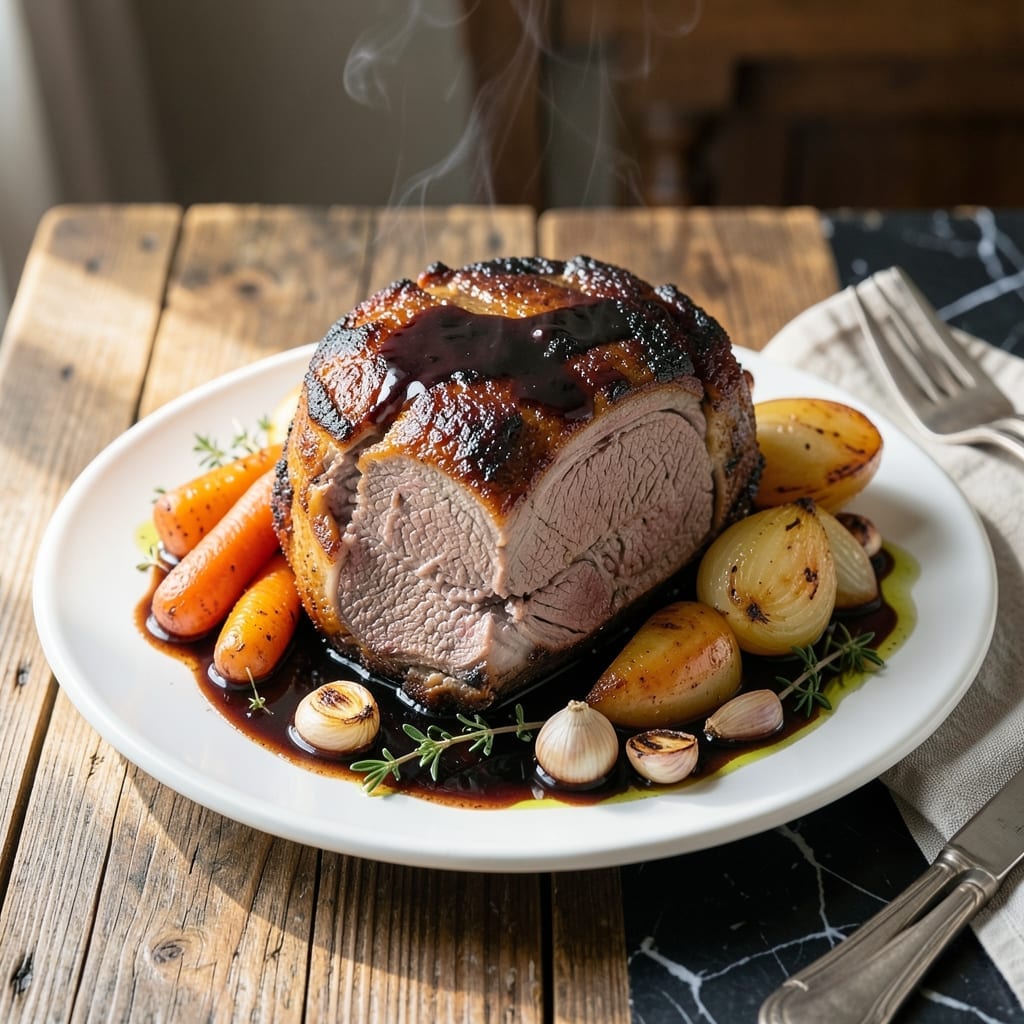
This pot roast recipe transforms an affordable cut of beef into a melt-in-your-mouth masterpiece through slow cooking. The balsamic vinegar glaze adds a sweet-tart depth that elevates every bite.
I developed this method to maximize flavor without complicated techniques. A simple sear followed by long, gentle braising allows the vinegar to mellow into a rich, complex sauce.
The result is fall-apart tender beef with vegetables that have absorbed the savory balsamic essence. Each serving delivers layers of flavor that taste far more sophisticated than the effort required.
Perfect for Sunday suppers or special occasions when you want restaurant-quality results at home. The balsamic glaze makes this version truly unforgettable.
Ingredients for Pot Roast Recipe with Balsamic Vinegar
Pantry staples and a few fresh picks. Nothing fancy, just big flavor in every bite.
| Ingredient | Amount | Notes |
|---|---|---|
| Beef Chuck Roast 🥩 | 3 lb | Boneless, well-marbled preferred |
| Balsamic Vinegar 🍷 | ½ cup | Aged for depth of flavor |
| Olive Oil 🫒 | 2 tbsp | Divided for searing and sauce |
| Yellow Onions 🧅 | 2 whole | Large, sliced thick |
| Carrots 🥕 | 4 whole | Peeled, cut into chunks |
| Garlic Cloves 🧄 | 6 cloves | Peeled, smashed |
| Beef Broth 🥣 | 2 cups | Low-sodium preferred |
| Tomato Paste 🍅 | 2 tbsp | For umami richness |
| Dried Thyme 🌿 | 1 tsp | Rubbed between fingers |
| Dried Rosemary 🌿 | 1 tsp | Crushed lightly |
| Bay Leaves 🍃 | 2 whole | Removed before serving |
| Kosher Salt 🧂 | 1 ½ tsp | Diamond Crystal preferred |
| Black Pepper 🌶️ | 1 tsp | Freshly ground |
| Russet Potatoes 🥔 | 1 ½ lb | Cut into large chunks |
The beef is non-negotiable here—chuck roast with good marbling breaks down into that melt-in-your-mouth texture. Costco has great pre-cut pieces, but most butchers will cube it for you (just ask for stew meat). The balsamic vinegar needs to be aged at least 12 years for that deep, complex sweetness. Skip the cheap stuff; it’ll taste harsh. For the broth, Better Than Bouillon makes a rich base that doesn’t taste tinny.
No balsamic? Red wine vinegar plus 1 tbsp brown sugar gets close (not quite the same, but workable). Swap thyme for marjoram at equal amounts—similar earthy vibe. Fresh out of tomato paste? 1/4 cup crushed tomatoes cooked down works. The potatoes can be Yukon Gold if you prefer their buttery texture (they hold shape better than russets, honestly).
Leftovers taste even better the next day—4 days in the fridge, 3 months frozen. Slice the beef against the grain before storing for easier reheating. The sauce thickens as it cools, so stir in a splash of broth when reheating (worth the extra minute).
Why You’ll Love This Recipe
- One Pot Wonder: I toss everything in, let the oven do the work, and come back to fall-apart beef with zero babysitting.
- Deep Umami Richness: That balsamic vinegar caramelizes with the beef juices into this sticky, tangy-sweet glaze that coats every bite.
- Feeds the Freezer: I always make double—leftovers taste even better the next day, and they freeze beautifully for lazy nights.
- Budget Beef Win: A chuck roast plus pantry staples like vinegar and onions gives me restaurant-quality flavor for a fraction of the cost.
Step-by-Step Instructions for Pot Roast With Balsamic Vinegar
This method transforms tough cuts into fork-tender perfection with a glossy, tangy glaze.
Step 1: Sear and Season the Beef Chuck Roast
Pat the 3 lb Beef Chuck Roast completely dry with paper towels—this ensures a deep, flavorful sear. Season all sides generously with the 1.5 tsp Kosher Salt and 1 tsp Black Pepper, pressing the seasoning into the meat so it adheres well.
Heat 1 tbsp Olive Oil in a large Dutch oven over medium-high heat until shimmering. Add the roast and sear undisturbed for 4-5 minutes per side until deeply browned. You’re building a fond here—those browned bits stuck to the bottom are pure flavor for your sauce. Remove the roast and set aside.
Step 2: Sauté Aromatics and Deglaze with Balsamic
In the same pot, add the remaining 1 tbsp Olive Oil. Toss in the 2 whole Yellow Onions (sliced thick), 4 whole Carrots (cut into chunks), and 6 cloves Garlic Cloves (smashed). Cook for 5-6 minutes until the onions soften and begin to caramelize around the edges.
Stir in the 2 tbsp Tomato Paste and cook for 1 minute until it darkens slightly. This intensifies its umami richness. Pour in the 0.5 cup Balsamic Vinegar, scraping the bottom of the pot to release all those browned bits. Let it simmer for 2 minutes until slightly reduced—you’ll smell the sweet-tart aroma bloom.
Step 3: Build the Braising Liquid and Add Vegetables
Add the 2 cups Beef Broth, 1 tsp Dried Thyme, 1 tsp Dried Rosemary, and 2 whole Bay Leaves. Stir to combine, then return the seared roast to the pot, nestling it into the liquid. The braising liquid should come about halfway up the sides of the meat.
Add the 1.5 lb Russet Potatoes (cut into large chunks) around the roast. The liquid won’t fully cover them, and that’s fine—they’ll steam and absorb all the flavor as the dish cooks. Bring everything to a gentle simmer.
Step 4: Braise Low and Slow to Tender Perfection
Cover the pot and transfer it to a preheated 325°F oven. Braise for 2.5 to 3 hours, turning the roast once halfway through. You’ll know it’s done when the meat pulls apart easily with a fork and the 1.5 lb Russet Potatoes are tender when pierced.
Resist the urge to check too often—every time you open the oven, you lose heat and extend the cooking time. The Balsamic Vinegar will mellow into a rich, syrupy glaze that coats every bite. Remove the 2 whole Bay Leaves before serving.
Pro Tips For Making Pot Roast Recipe With Balsamic Vinegar
- Sear the Chuck: I learned this the hard way—browning the beef in hot olive oil for 3-4 minutes per side creates a deep crust that locks in juices and builds flavor for the balsamic braise.
- Reduce the Vinegar: After braising, pour the liquid into a pan and simmer for 5-7 minutes to thicken the balsamic into a glossy glaze that clings to the meat and veggies.
- Cut Carrots Thick: Skip the baby carrots—use whole carrots cut into 2-inch chunks so they hold up during the long cook and don’t turn to mush.
- Rest Before Slicing: Give the roast a solid 15 minutes under foil after cooking; it stays juicier and slices cleaner, even if you’re starving.
Common Mistakes When Making This Dish
Skipping the Sear
Never skip searing the 3 lb Beef Chuck Roast before braising. This step builds the fond—those browned bits—that deepen the sauce’s flavor. A proper sear requires medium-high heat and 4-5 minutes per side for a deep crust. 🔥
Overcrowding the Pot
Your Dutch oven should have enough room for the roast and vegetables to cook evenly. If it’s too crowded, the 1.5 lb Russet Potatoes and carrots will steam rather than brown. Use a pot that’s at least 6 quarts for this recipe.
Insufficient Braising Liquid
The liquid should come about halfway up the meat. If it’s too low, the Balsamic Vinegar can reduce too quickly, leaving the roast dry. Add extra Beef Broth if needed to maintain the level during cooking.
Opening the Oven Too Often
Every time you open the oven, you lose 50-100°F of heat, extending the cooking time. Trust the process and check only once halfway through the 2.5 to 3 hours braising time. 💡
Using Low-Quality Vinegar
A cheap Balsamic Vinegar will taste harsh and overpower the dish. Invest in an aged variety—12 years or older—for that sweet, complex depth. The difference in flavor is noticeable and worth the extra cost.
Not Resting the Meat
After braising, let the roast rest in the liquid for 15-20 minutes before serving. This allows the juices to redistribute, ensuring every slice is moist and tender. Serving immediately can lead to dry, tough meat.
Nutrition Facts
Frequently Asked Questions
Can I use a different cut of beef?
Chuck roast is ideal, but brisket or short ribs work too. Avoid lean cuts like sirloin—they won’t break down as tenderly during the 2.5 to 3 hours of braising.
What if I don’t have aged balsamic vinegar?
Regular balsamic works, but reduce the amount by half and add 1 tbsp brown sugar to balance the acidity. Aged vinegar adds depth that’s hard to replicate perfectly.
How do I know when it’s done?
The meat should pull apart easily with a fork. If it resists, return it to the 325°F oven for another 30 minutes and check again.
Can I make this in a slow cooker?
Yes! Sear the meat first, then transfer everything to the slow cooker. Cook on low for 8 hours or high for 5-6 hours. The glaze will be less reduced but still flavorful.

- 6 Oz Chocolate Chip Cookie Recipe: Perfectly Balanced Crispy Edges and Chewy Hearts - September 25, 2026
- 6-Inch Coffee Cake Recipe: Vanilla Bean Swirls and Buttery Streusel Topping - September 25, 2026
- 1 Hour Soup Recipe: Velvety Richness Without the Wait - September 25, 2026