
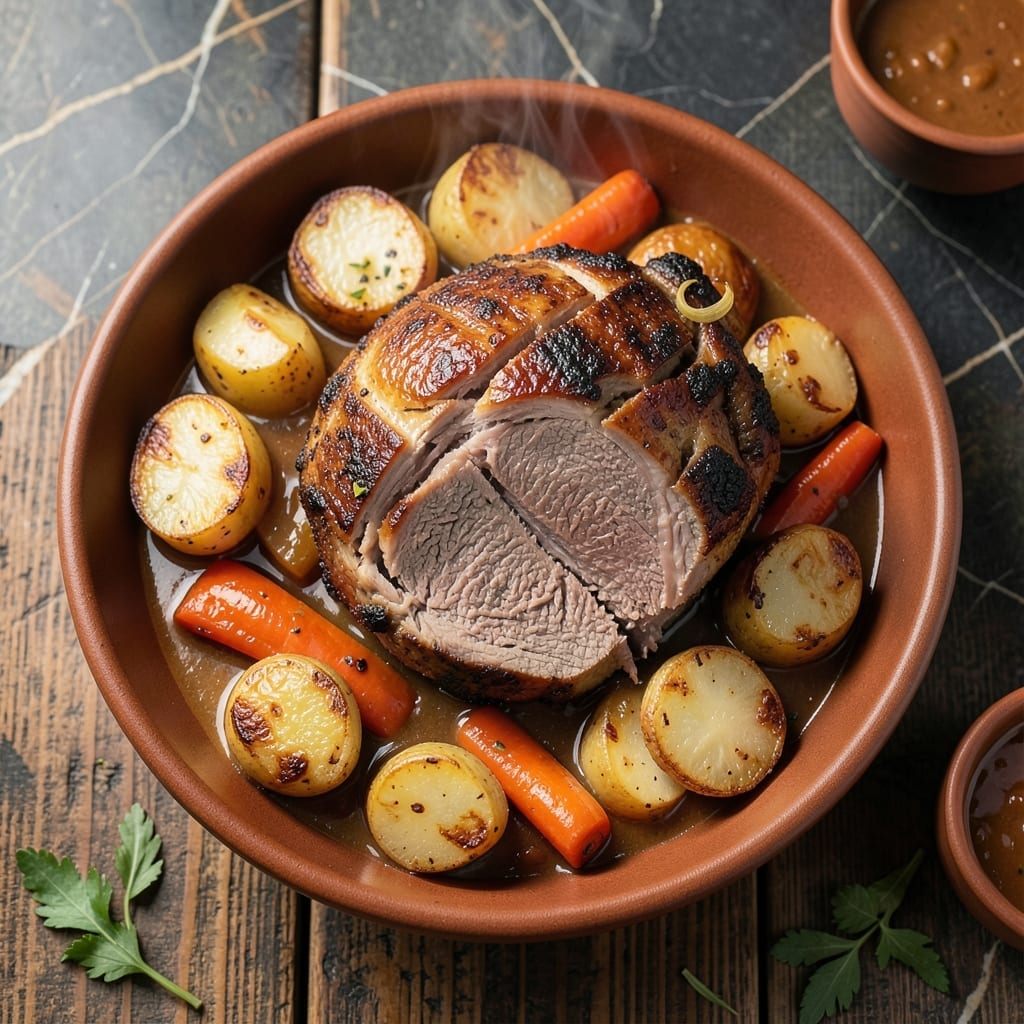
This rotisserie method transforms a humble pot roast into a showstopping centerpiece with minimal effort. The slow spin ensures even cooking and a perfectly juicy result every time.
I start with a bold spice crust that forms a flavorful bark as it rotates. The key is using a dry rub with robust spices that can stand up to the long cooking process without burning.
The rotisserie does most of the work, basting the meat in its own perfect juices for hours. You’ll end up with fall-apart tender beef that’s infused with deep, complex flavors from the spice blend.
This technique delivers restaurant-quality results at home. The meat emerges tender, aromatic, and ready to serve with its rich natural juices.
Ingredients for Pot Roast Rotisserie
Transform a chuck roast into a juicy masterpiece with these bold, aromatic ingredients.
| Ingredient | Amount | Notes |
|---|---|---|
| Beef Chuck Roast 🥩 | 3 lb | Well-marbled for tenderness |
| Kosher Salt 🧂 | 2 tbsp | Diamond Crystal preferred |
| Black Pepper 🌶️ | 1 tbsp | Freshly ground coarse |
| Smoked Paprika 🌶️ | 1 tbsp | For depth in dry rub |
| Garlic Powder 🧄 | 1 tbsp | Not garlic salt |
| Onion Powder 🧅 | 1 tbsp | Balances spice blend |
| Dried Thyme 🍃 | 1 tbsp | Crushed for better adhesion |
| Dried Rosemary 🌿 | 1 tbsp | Finely chopped if whole |
| Brown Sugar 💛 | 1 tbsp | Caramelizes during cooking |
| Olive Oil 🫒 | 2 tbsp | For binding dry rub |
| Yellow Onion 🧅 | 1 whole | Quartered for rotisserie basket |
| Carrots 🥕 | 3 whole | Peeled and cut into chunks |
| Russet Potatoes 🥔 | 2 whole | Cubed for even cooking |
| Beef Broth 💧 | 1 cup | For moisture in drip pan |
The beef is everything here. Chuck roast with heavy marbling (look for white fat streaks) stays moist during the long cook. Most butchers at Whole Foods or Costco will cut it to rotisserie-friendly sizes if you ask. Avoid lean cuts like sirloin—they dry out. The dry rub spices should be fresh; old spices lose potency and won’t form that flavorful bark. Penzeys is my go-to for bulk spices that stay vibrant.
No smoked paprika? Regular paprika plus a pinch of chipotle powder works. Fresh herbs can substitute dried at triple the amount, but dried are better for dry rubs—they adhere. Adobo seasoning can replace the garlic/onion powder combo in a pinch. For the veggies, sweet potatoes swap in easily for russets. The broth can be vegetable or chicken if you’re not strict about beef flavor.
Store unused spices in airtight containers away from light—they’ll keep for 6-12 months. The beef can marinate with the rub overnight (worth the extra minute), but even 30 minutes makes a difference. Leftovers stay good for 4-5 days in the fridge, or freeze for 3 months.
Why You’ll Love This Recipe
- Set It and Forget: I rub the chuck roast with salt, pepper, smoked paprika, and garlic powder, pop it on the rotisserie, and walk away.
- Smoky Depth: That combo of smoked paprika and garlic turns the beef into something crave-worthy.
- Feeds the Week: One roast gives me sandwiches, tacos, and stew for days without extra cooking.
- Budget Hero: A chuck roast is cheap, but the rotisserie makes it taste like a fancy Sunday dinner.
Step-by-Step Instructions for Pot Roast Rotisserie
This method guarantees perfectly juicy results with a flavorful crust every time.
Step 1: Prepare and Season the Beef Chuck Roast
Pat the 3 lb Beef Chuck Roast dry with paper towels to ensure the dry rub adheres properly. In a small bowl, combine the 2 tbsp Kosher Salt, 1 tbsp Black Pepper, 1 tbsp Smoked Paprika, 1 tbsp Garlic Powder, 1 tbsp Onion Powder, 1 tbsp Dried Thyme, 1 tbsp Dried Rosemary, and 1 tbsp Brown Sugar.
Rub the mixture evenly over all surfaces of the beef, pressing firmly to create a thick crust. Drizzle the 2 tbsp Olive Oil over the roast and massage it into the spice blend. This step ensures a deep, caramelized exterior as it spins on the rotisserie.
Step 2: Prepare Vegetables and Drip Pan
Quarter the 1 whole Yellow Onion, peel and cut the 3 whole Carrots into thick chunks, and cube the 2 whole Russet Potatoes. These vegetables will cook alongside the roast, absorbing the rendered juices and enhancing the flavor.
Place the vegetables in the rotisserie basket or directly in the drip pan beneath the spit. Pour the 1 cup Beef Broth into the drip pan to create moisture, which prevents the meat from drying out during the long cooking process.
Step 3: Secure the Roast on the Rotisserie
Thread the seasoned 3 lb Beef Chuck Roast onto the rotisserie spit, ensuring it is balanced and securely fastened with forks or ties. This step is critical for even cooking and consistent rotation.
Attach the spit to the rotisserie mechanism of your grill or oven, ensuring it is centered and stable. The rotation allows the meat to self-baste in its own juices, which is key to achieving tender, juicy results.
Step 4: Cook Low and Slow to Perfection
Preheat your grill or oven to 300°F for indirect heat. Insert a meat thermometer into the thickest part of the roast, avoiding the spit rod. Cook with the lid closed for 3 to 4 hours, or until the internal temperature reaches 195-200°F.
The low-and-slow method breaks down the connective tissues in the chuck roast, resulting in fall-apart tenderness. Baste the roast occasionally with the drippings from the pan to enhance moisture and flavor.
Step 5: Rest and Serve
Once the roast reaches the desired temperature, carefully remove it from the rotisserie and transfer it to a cutting board. Tent loosely with foil and let it rest for 15-20 minutes before slicing. This resting period allows the juices to redistribute throughout the meat.
Serve the sliced pot roast with the roasted vegetables and pan juices. The vegetables will be tender and infused with the rich, savory flavors of the beef, creating a complete and satisfying meal.
Pro Tips For Making Pot Roast Rotisserie
- Season Overnight: Rub the chuck roast with kosher salt, black pepper, smoked paprika, and garlic powder the night before. I learned this the hard way—it lets the spices penetrate deep and the salt draws out moisture that reabsorbs for better flavor.
- Tie It Tight: Use kitchen twine to bind the roast into a uniform shape before rotisserie cooking. Sounds weird, but it works: this keeps it from flopping around and ensures even cooking.
- Skip the High Heat: Start at 250°F and resist the urge to crank it up. After burning the outside of three roasts, I finally figured out that low and slow is the only way to get tender, fall-apart meat.
- Rest Under Foil: Pull it off the rotisserie and tent it with foil for at least 15 minutes before slicing. My grandmother swore by this, and she was right: it redistributes the juices so every bite is moist.
Wine and Beer Pairings for This pot roast rotisserie
Bold Red Wines
A full-bodied Cabernet Sauvignon from Napa Valley stands up to the rich, spiced crust. The tannins cut through the fat while dark fruit notes complement the beef. I prefer Caymus or Silver Oak for this pairing. 🍷
Malbec Magic
An Argentine Malbec offers a more affordable option with its plush texture and blackberry flavors. The smoky notes from the rotisserie method align beautifully with the wine’s earthy undertones. Try Catena Zapata for reliable quality.
Syrah/Shiraz
A Syrah from the Rhône Valley or an Australian Shiraz brings peppery spice that echoes the dry rub. The wine’s boldness matches the intensity of the dish. Penfolds Bin 28 is a crowd-pleaser.
Beer Pairings
A robust Porter or Stout complements the deep flavors of the pot roast. The roasted malt notes harmonize with the caramelized crust. I recommend Guinness or Founders Porter. 🍺
Lighter Red Option
For those preferring less tannin, a Pinot Noir from Oregon’s Willamette Valley offers red fruit and earthiness. Domaine Serene or Eyrie Vineyards are excellent choices that won’t overpower the meal.
Nutrition Facts
Frequently Asked Questions
What’s the best cut for rotisserie cooking?
Use a well-marbled chuck roast for best results. The fat keeps it moist during the long cook. Avoid lean cuts like sirloin—they dry out.
How do I keep the roast from drying out?
Cook at 300°F with a drip pan of beef broth underneath. Baste occasionally with the juices for extra moisture.
Do I need to marinate the beef first?
A dry rub applied 30 minutes before cooking is enough. For deeper flavor, let it sit overnight in the fridge.
How can I tell when it’s done?
Use a meat thermometer—it’s ready at 195-200°F internally. The meat should pull apart easily with a fork.

- 4C Bread Crumbs Meatballs Recipe: Crispy Crust and Juicy Centers - September 25, 2026
- 6 Oz Chocolate Chip Cookie Recipe: Perfectly Balanced Crispy Edges and Chewy Hearts - September 25, 2026
- 6-Inch Coffee Cake Recipe: Vanilla Bean Swirls and Buttery Streusel Topping - September 25, 2026