
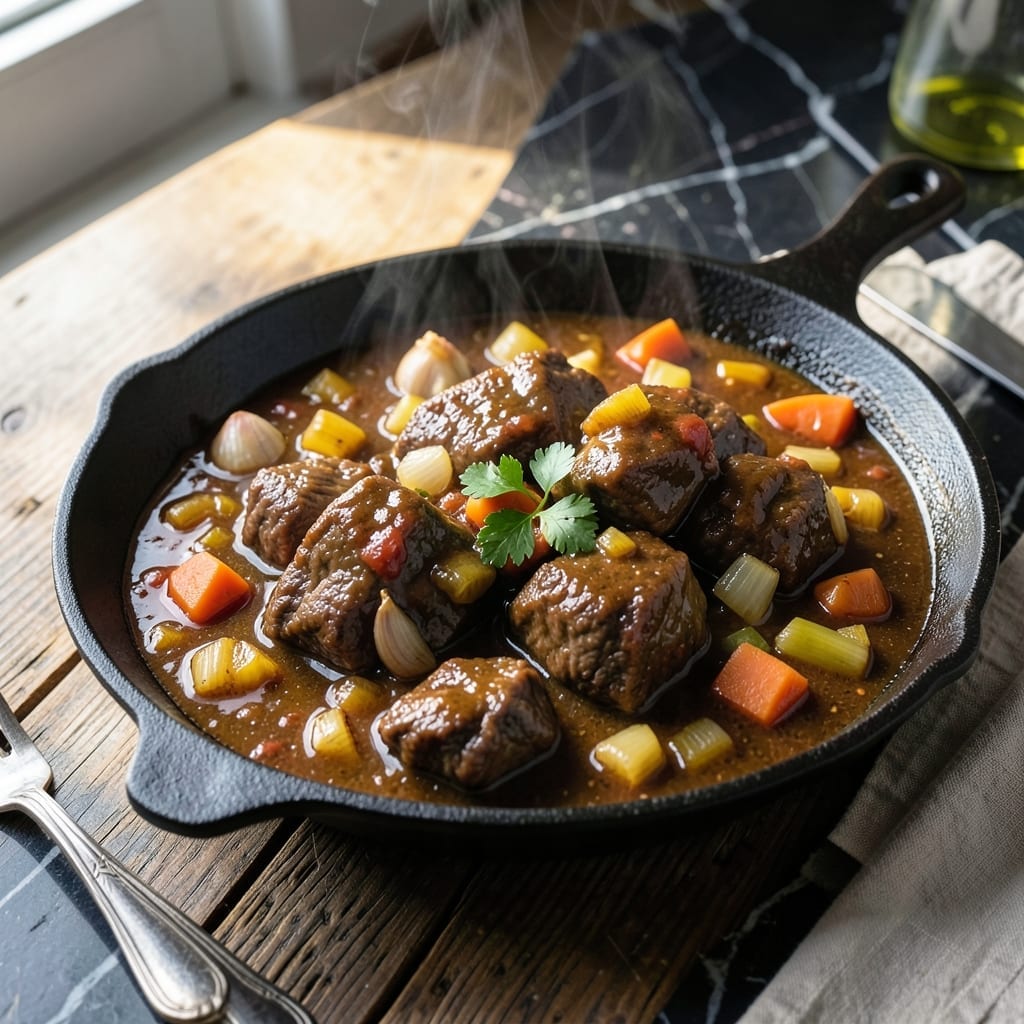
This sauce transforms ordinary pot roast into an extraordinary meal with its rich, deep umami flavor profile. I developed this recipe to elevate slow-cooked meats without masking their natural taste.
The secret lies in a carefully balanced blend of beef stock, red wine, and aromatic vegetables. Simmered until reduced, it creates a velvety texture that clings beautifully to every bite of meat.
What you get is a restaurant-quality sauce that enhances rather than overpowers. The slow reduction process concentrates the flavors, making each spoonful intensely satisfying.
Use it to baste your roast during cooking or serve it on the side for dipping. This sauce keeps well and reheats beautifully.
Ingredients for Pot Roast Sauce
A dozen ingredients build that deep, velvety sauce for your slow-cooked meat.
| Ingredient | Amount | Notes |
|---|---|---|
| Beef Stock 💧 | 3 cups | Low-sodium preferred for control |
| Dry Red Wine 🍷 | 1 cup | Bold variety like Cabernet |
| Yellow Onion 🧅 | 1 whole | Medium, finely diced |
| Carrots 🥕 | 2 whole | Medium, finely diced |
| Celery Stalks 🥬 | 2 whole | Finely diced for mirepoix |
| Garlic Cloves 🧄 | 4 cloves | Minced for depth of flavor |
| Tomato Paste 🍅 | 2 tbsp | Concentrated for umami boost |
| Worcestershire Sauce 💧 | 1 tbsp | Adds savory complexity |
| Fresh Thyme Sprigs 🌿 | 2 whole | Stems removed before serving |
| Bay Leaf 🍃 | 1 whole | Dried is fine here |
| Unsalted Butter 🧈 | 2 tbsp | For finishing richness |
| All-Purpose Flour 🌾 | 1 tbsp | For slight thickening |
The beef stock is non-negotiable here—look for low-sodium at Whole Foods or Costco so you control the salt. I always grab a bold Cabernet Sauvignon for the wine (the same bottle I drink with dinner). The aromatic vegetables should be fresh—vibrant color means they haven’t been sitting in your crisper too long. For the butter, Plugrá or Kerrygold give that restaurant-quality finish (worth the extra buck).
No red wine? Substitute with an extra cup of beef stock plus 1 tbsp balsamic vinegar—not identical but solid. Fresh thyme is ideal, but dried at one-third the amount works. Worried about the Worcestershire? Anchovy paste or soy sauce can stand in. The tomato paste can come from those squeeze tubes at Trader Joe’s—no waste, and they keep forever.
This sauce actually improves overnight—make it a day ahead if you can. Keeps 4-5 days in the fridge, freezes for 3 months. Reheat gently (don’t boil) to preserve that silky texture.
Why You’ll Love This Recipe
- One Pot Wonder: I just toss the onion, carrots, celery, and liquids into a pot and let it simmer—no fancy techniques required.
- Rich and Deep: The red wine and beef stock reduce into this incredibly savory sauce that coats the back of a spoon.
- Sunday Dinner Ready: I make a big batch for pot roast night, then use leftovers to braise veggies or pour over mashed potatoes.
- Stretches the Budget: A little wine and stock go a long way, turning humble ingredients into a sauce that tastes like a restaurant special.
Step-by-Step Instructions for Pot Roast Sauce
Transform pan drippings into a rich, velvety sauce with these simple steps.
Step 1: Sauté the Mirepoix Base
Heat a large saucepan over medium heat and add the 2 tbsp Unsalted Butter. Once melted and bubbling, add the finely diced Yellow Onion, Carrots, and Celery Stalks. Cook for 8-10 minutes, stirring occasionally, until the vegetables soften and develop a light golden color.
This classic mirepoix forms the aromatic foundation of your sauce. The butter enhances their natural sweetness while ensuring they don’t stick. You’ll know they’re ready when the onions appear translucent and the carrots begin to caramelize at the edges.
Step 2: Build Depth with Tomato Paste and Garlic
Stir in the 2 tbsp Tomato Paste and cook for 2-3 minutes until it darkens slightly. This step intensifies its umami richness. Add the 4 cloves Garlic Cloves and cook for 30 seconds until fragrant—just long enough to soften the raw edge without burning.
Tomato paste adds body and a concentrated savory note that balances the sauce’s depth. Garlic should perfume the air but never brown, as burnt garlic turns bitter. Keep the heat steady and stir constantly during this stage.
Step 3: Deglaze with Wine and Stock
Pour in the 1 cup Dry Red Wine and scrape the bottom of the pan to release any browned bits. Simmer for 3-4 minutes until the liquid reduces by half. Then add the 3 cups Beef Stock, 1 tbsp Worcestershire Sauce, 2 whole Fresh Thyme Sprigs, and 1 whole Bay Leaf.
Bring the mixture to a boil, then reduce the heat to medium-low and let it simmer for 20-25 minutes until the liquid reduces by a third. The wine deglazes the pan, lifting all the caramelized flavors into the sauce, while the stock builds its base.
Step 4: Thicken and Finish the Sauce
Create a slurry by mixing the 1 tbsp All-Purpose Flour with 2 tablespoons of the hot sauce liquid. Stir this back into the pan and simmer for 3-5 minutes until the sauce thickens enough to coat the back of a spoon. The flour should dissolve smoothly without forming lumps.
Taste and adjust seasoning if needed, though the Worcestershire and stock may provide enough salt. Remove the Fresh Thyme Sprigs and Bay Leaf before serving. The sauce should be glossy and rich, with a deep, savory complexity that enhances any slow-cooked meat.
Pro Tips For Making Pot Roast Sauce
- Reduce the Wine First: Simmer the dry red wine for 3-4 minutes before adding beef stock—this burns off the alcohol and deepens the flavor, so your sauce doesn’t taste raw or harsh.
- Sear the Veggies: After removing the pot roast, toss the onion, carrots, and celery in the same pan and let them brown for 5 minutes; those caramelized bits add serious body to your sauce.
- Skip the Salt Early: I learned this the hard way—wait until the sauce reduces by at least a third before seasoning, since beef stock and wine concentrate and can turn unpleasantly salty.
- Strain and Skim: Strain the finished sauce through a fine-mesh sieve and skim off the fat that rises to the top—it’s a 2-minute step that turns a good sauce into a silky, restaurant-worthy one.
Pro Cooking Tips for This Recipe
Perfect Reduction Control
I always use a wide, heavy-bottomed saucepan for even heat distribution. The wide surface area speeds up reduction while preventing scorching. Keep the heat at a gentle simmer—you should see small bubbles, not a rolling boil. 🌡️
Deglazing Like a Pro
When adding the red wine, use a wooden spoon to scrape up every browned bit from the pan bottom. These fond bits contain concentrated flavor that transforms good sauce into great. I learned this trick working in a French bistro kitchen.
Thyme Management
Bundle the thyme sprigs with kitchen twine or use a cheesecloth sachet with the bay leaf. This makes removal easier and prevents stray leaves in your final sauce. Simmer them for the full 20-25 minutes to extract maximum flavor.
Slurry Success
Always mix your flour slurry with cold liquid first to prevent lumps. I use a small whisk in a ramekin for perfect dispersion. Add it slowly while stirring constantly, then let it simmer for 3-5 minutes to cook out the raw flour taste.
Final Texture Check
The sauce should coat the back of a spoon but still be pourable. If it’s too thick, thin with a splash of warm beef stock. If too thin, extend the reduction time. I aim for the consistency of heavy cream. ✨
Nutrition Facts
Frequently Asked Questions
Can I make this without wine?
Substitute with 1 cup extra beef stock plus 1 tbsp balsamic vinegar. The vinegar adds the missing acidity that wine provides.
How do I fix a sauce that’s too thin?
Simmer longer to reduce further, or mix 1 tsp cornstarch with 1 tbsp cold water and stir in. Let it cook for 2 minutes to thicken.
What’s the best way to store leftovers?
Cool completely, then transfer to an airtight container. It keeps 4-5 days refrigerated or 3 months frozen. Reheat gently on low heat.
Can I use dried herbs instead of fresh?
Yes! Use 1/3 the amount of dried thyme. Add it with the stock rather than at the end, as dried herbs need time to rehydrate.

- 3 Dozen Deviled Eggs Recipe: Classic Bites With Creamy Yolk Magic - September 25, 2026
- 3-Ingredient Baked Chicken Wings Recipe: Crispy, Juicy, and Ready in 25 Minutes - September 25, 2026
- 1950s Deviled Eggs Recipe: Nostalgic Creamy Yolk Magic - September 25, 2026