
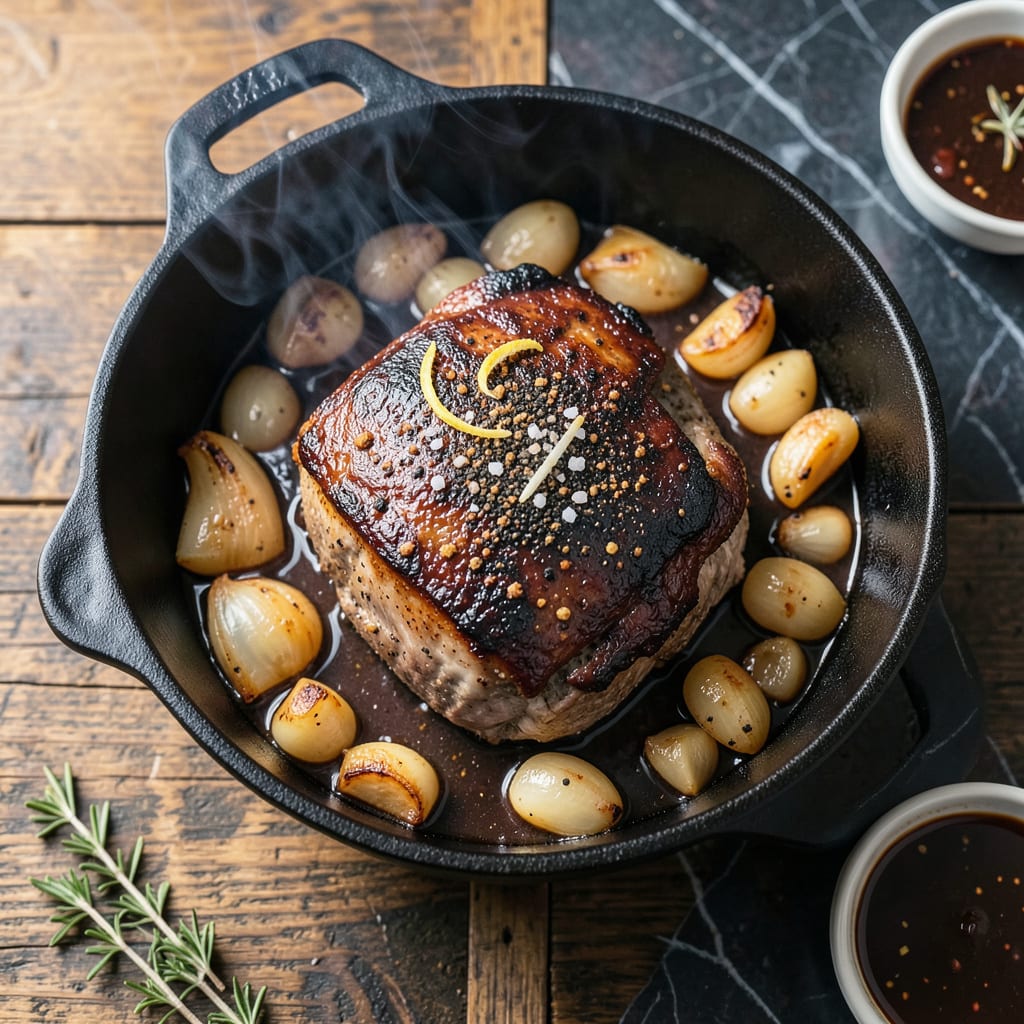
There’s nothing quite like pot roast cooked low and slow in a smoker, where the wood smoke infuses every bite with deep, rich flavor. This method transforms tough cuts into fall-apart tender meat that’s juicy and packed with smoky complexity.
With a few hours in the smoker, you’ll achieve results that rival any barbecue joint—tender beef with a perfect bark, surrounded by vegetables that soak up all that incredible flavor. The process is straightforward, but the payoff is extraordinary.
Ingredients for Pot Roast Smoker
Simple, bold ingredients transform this dish into a smoky masterpiece with minimal effort.
| Ingredient | Amount | Notes |
|---|---|---|
| Chuck Roast 🥩 | 3 lb | Well-marbled, trimmed of excess fat |
| Kosher Salt 🧂 | 1 ½ tbsp | Diamond Crystal preferred |
| Coarse Black Pepper 🌶️ | 1 tbsp | Freshly ground for best flavor |
| Garlic Powder 🧄 | 1 tbsp | Not garlic salt |
| Onion Powder 🧅 | 1 tbsp | Enhances depth of flavor |
| Smoked Paprika 🌶️ | 1 tsp | Adds smoky complexity |
| Dried Thyme 🍃 | 1 tsp | Rubbed between fingers to release oils |
| Dried Rosemary 🍃 | 1 tsp | Crushed lightly before using |
| Beef Broth 💧 | 2 cups | Low-sodium preferred for control |
| Yellow Onions 🧅 | 2 whole | Quartered, skin on for color |
| Carrots 🥕 | 4 whole | Peeled, cut into large chunks |
| Russet Potatoes 🥔 | 3 whole | Peeled, quartered for even cooking |
| Olive Oil 🫒 | 2 tbsp | For searing and moisture |
| Worcestershire Sauce 💧 | 2 tbsp | Adds umami depth to the rub |
| Apple Cider Vinegar 🍏 | ¼ cup | Balances richness with acidity |
The chuck roast is non-negotiable here—look for heavy marbling (those white fat streaks) at the butcher counter or Costco. Avoid lean cuts like round or sirloin; they dry out. Most butchers will cube it for you if you ask. For the rub, Diamond Crystal kosher salt dissolves better than table salt, so don’t substitute unless you measure by weight. Freshly ground black pepper makes a noticeable difference in the bark formation.
No smoked paprika? Regular paprika plus a pinch of liquid smoke works in a pinch. Dried herbs losing their aroma? Use half the amount of fresh—thyme and rosemary hold up well in the smoker. Out of beef broth? Water plus a bouillon cube (like Better Than Bouillon) is a solid backup. The Worcestershire can be swapped for soy sauce, but reduce the salt in the rub slightly to compensate.
The roast can rest in the fridge overnight after seasoning—12 to 24 hours actually deepens the flavor. Leftovers keep for 4-5 days refrigerated or freeze for up to 3 months. Reheat gently with a splash of broth to revive the juiciness.
Why You’ll Love This Recipe
- Set and Forget: I rub the chuck roast with salt, pepper, garlic and onion powders, pop it in the smoker and let the low heat do the work—no babysitting required.
- Smoky Depth: That slow-smoked chuck roast soaks up every bit of the dry rub, giving you a crust so rich it’ll have everyone asking for the recipe.
- Feeds the Crew: One big chuck roast means I can serve a weekend crowd or pack leftovers for lunches all week without extra effort.
- Budget Hero: Chuck roast is cheap, the seasonings are pantry staples, and my smoker turns them into a meal that tastes like it cost way more.
Step-by-Step Instructions for Smoked Pot Roast
This method delivers melt-in-your-mouth meat with rich, smoky flavor every single time.
Step 1: Season and Prepare the Chuck Roast
Pat the 3 lb Chuck Roast completely dry with paper towels. This ensures the rub adheres properly and creates a beautiful bark. In a small bowl, combine the 1.5 tbsp Kosher Salt, 1 tbsp Coarse Black Pepper, 1 tbsp Garlic Powder, 1 tbsp Onion Powder, 1 tsp Smoked Paprika, 1 tsp Dried Thyme, and 1 tsp Dried Rosemary.
Rub this mixture evenly over all sides of the chuck roast, pressing firmly to create a thick crust. Drizzle the 2 tbsp Olive Oil and 2 tbsp Worcestershire Sauce over the meat, massaging it into the surface. Let the seasoned roast sit at room temperature for 30 minutes while you prepare the smoker.
Step 2: Set Up the Smoker and Add Vegetables
Preheat your smoker to 275°F using your preferred wood (hickory or oak work beautifully). While it heats, prepare the vegetables: quarter the 2 whole Yellow Onions (skin on for color), peel and cut the 4 whole Carrots into large chunks, and peel and quarter the 3 whole Russet Potatoes.
Place the vegetables in a disposable aluminum pan. Pour the 2 cups Beef Broth and 0.25 cup Apple Cider Vinegar over them—the liquid will create steam that keeps the roast moist during the long cook. Position the pan on the smoker grate where the chuck roast will go, allowing the meat to sit directly on top of the vegetables.
Step 3: Smoke the Roast to Perfection
Place the seasoned chuck roast on top of the vegetables in the pan. Insert a meat probe into the thickest part of the roast, avoiding fat pockets. Smoke at 275°F until the internal temperature reaches 200-205°F, which typically takes 6-8 hours.
Resist the urge to check or move the roast during cooking. The bark forms best with undisturbed, consistent heat. You’ll know it’s ready when a probe slides in with no resistance, like butter. The vegetables will be tender and infused with smoky flavor, soaking up the cooking liquids.
Step 4: Rest and Serve
Carefully remove the pan from the smoker. Transfer the chuck roast to a cutting board, leaving the vegetables in the pan. Tent the meat loosely with foil and let it rest for 20-30 minutes. This crucial step allows the juices to redistribute, ensuring every bite is succulent.
While the roast rests, use a spoon to skim excess fat from the cooking liquids in the pan. Serve the pot roast sliced or pulled, with the vegetables and pan juices spooned over the top. The meat should be so tender it falls apart effortlessly, with a rich, smoky depth in every bite.
Pro Tips For Making Pot Roast Smoker
- Season Overnight: Rub the chuck roast with kosher salt, black pepper, garlic powder, and onion powder the night before smoking—this gives the spices time to penetrate deep into the meat.
- Smoke Low and Slow: Keep your smoker between 225°F and 250°F, and plan for 1.5 to 2 hours per pound. I learned this the hard way—rushing it with higher heat just dries out the roast.
- Skip the Lean Cuts: Chuck roast works because of its fat and connective tissue; leaner cuts like sirloin turn out tough and dry in the smoker.
- Rest Before Slicing: Pull the roast off at 195°F–203°F internal temp, tent it with foil, and let it rest 30 minutes—this keeps all the juices inside where they belong.
Essential Equipment for This Recipe
Quality Smoker
A reliable smoker is non-negotiable. I use a Traeger Pro 575 for its precise temperature control and Wi-Fi monitoring. For beginners, the Weber Smokey Mountain offers excellent results at a lower price point. Avoid cheap electric smokers—they struggle to maintain consistent heat.
Accurate Thermometer
Don’t trust your smoker’s built-in thermometer. I swear by the ThermoWorks Smoke with its dual probes—one for the smoker and one for the meat. A leave-in probe lets you monitor the roast’s internal temperature without opening the lid. 🌡️
Heat-Resistant Gloves
Handling hot pans and meat requires protection. I recommend Ove Glove or similar heat-resistant gloves rated to 500°F. They give you the dexterity to move the roast safely while maintaining control.
Disposable Aluminum Pans
These are perfect for catching drippings and making cleanup a breeze. Use heavy-duty pans (like those from Webake) to prevent buckling under the weight of the roast and vegetables. The 12×20-inch size works ideal for a 3 lb chuck roast.
Meat Probe
An instant-read thermometer is essential for checking doneness. The ThermoWorks MK4 gives accurate readings in 2-3 seconds. For this recipe, you’re aiming for an internal temperature of 200-205°F in the thickest part of the roast. 💡
Wood Pellets or Chunks
Your choice of wood impacts the flavor significantly. For this dish, hickory or oak provide the best balance of smoke intensity. I use Traeger signature blend pellets. Soak wood chunks for 30 minutes if using a charcoal smoker to prevent them from burning too quickly.
Nutrition Facts
Frequently Asked Questions
What’s the ideal wood for smoking?
Hickory or oak deliver the best balance of bold smoke flavor without overpowering the beef. Fruit woods like apple or cherry add a sweeter note if you prefer milder smoke.
Can I use a different cut of beef?
Stick with well-marbled cuts like brisket or short ribs for similar results. Lean cuts like sirloin will dry out during the long cook. The fat is what makes it tender!
How do I prevent the meat from drying out?
Keep the smoker at a consistent 275°F and avoid peeking. The pan of liquid underneath creates steam that keeps the roast moist throughout the 6-8 hour cook.
Can I make this in an oven instead?
Yes, but you’ll miss the smoky flavor. Use 325°F and add 1 tsp liquid smoke to the broth for a similar profile. The texture will be just as tender though!

- 4C Bread Crumbs Meatballs Recipe: Crispy Crust and Juicy Centers - September 25, 2026
- 6 Oz Chocolate Chip Cookie Recipe: Perfectly Balanced Crispy Edges and Chewy Hearts - September 25, 2026
- 6-Inch Coffee Cake Recipe: Vanilla Bean Swirls and Buttery Streusel Topping - September 25, 2026