
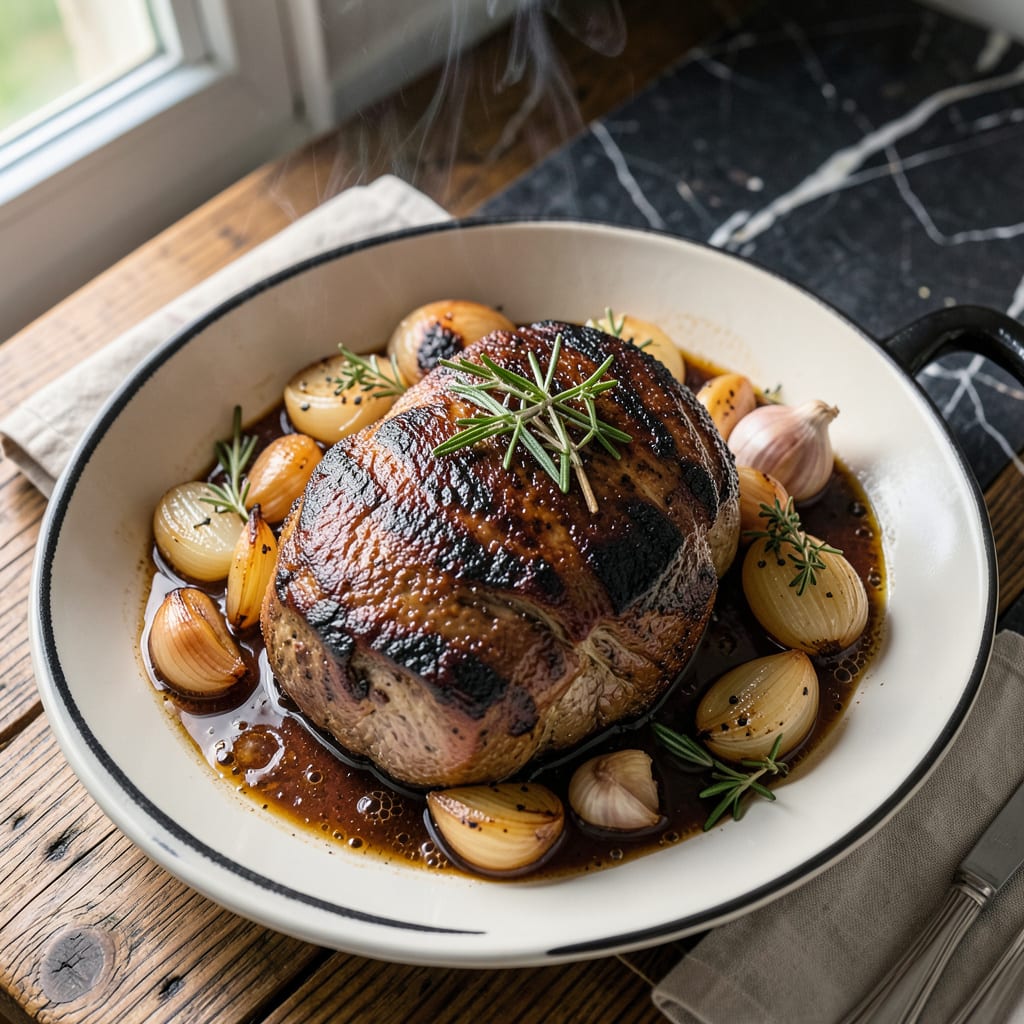
This traditional pot roast transforms tough cuts of beef into fork-tender perfection through a slow, gentle cooking process. The method ensures rich, deeply flavored meat and vegetables that absorb the savory broth.
With a few simple ingredients and low, steady heat, you’ll achieve a comforting, one-pot meal that’s ideal for family dinners or Sunday suppers. The results speak for themselves.
Ingredients for Pot Rost
A handful of hearty ingredients deliver rich, comforting flavors in this classic dish.
| Ingredient | Amount | Notes |
|---|---|---|
| Chuck Roast 🥩 | 3 lb | Well-marbled, trimmed of excess fat |
| Kosher Salt 🧂 | 2 tsp | Diamond Crystal preferred for even seasoning |
| Freshly Ground Black Pepper 🌶️ | 1 tsp | Coarse grind for texture |
| Olive Oil 🫒 | 2 tbsp | Extra-virgin for searing |
| Yellow Onions 🧅 | 2 whole | Large, peeled and quartered |
| Garlic Cloves 🧄 | 6 cloves | Peeled and smashed |
| Carrots 🥕 | 4 whole | Large, peeled and cut into chunks |
| Russet Potatoes 🥔 | 4 whole | Medium, peeled and quartered |
| Celery Stalks 🌿 | 3 whole | Cut into 2-inch pieces |
| Beef Stock 💧 | 2 cups | Low-sodium preferred for control |
| Red Wine 🍷 | 1 cup | Dry variety like Cabernet Sauvignon |
| Tomato Paste 🍅 | 2 tbsp | For depth of flavor |
| Dried Thyme 🍃 | 1 tsp | Crushed between fingers |
| Bay Leaves 🌿 | 2 whole | Fresh or dried |
| Fresh Rosemary Sprigs 🌿 | 2 whole | Optional but recommended |
The beef selection is paramount. Opt for chuck roast with visible marbling—this fat renders down during the long cook, basting the meat from within. Whole Foods or Costco typically offer high-quality cuts. For the vegetables, organic root produce (carrots, potatoes, onions) provides superior depth, though conventional works perfectly fine for a weekday meal.
No red wine on hand? Substitute with an additional cup of beef stock plus 1 tbsp balsamic vinegar for acidity. Dried rosemary can replace fresh at one-third the amount. If avoiding alcohol entirely, beef broth with a splash of apple cider vinegar mimics the complexity. For the stock, Better Than Bouillon makes a robust base if using concentrated paste.
Pot roast tastes even better the next day once flavors meld. Store leftovers in an airtight container in the fridge for up to 4 days, or freeze for 3 months. Reheat gently on the stovetop with a splash of water to prevent drying out.
Why You’ll Love This Recipe
- One Pot Wonder: I love throwing everything in, letting the chuck roast and onions work their magic with just salt, pepper, and olive oil.
- Deep Rich Flavor: The slow-cooked beef soaks up all the caramelized onion goodness—honestly, it’s the kind of taste that lingers.
- Feeds a Crowd: Between us, this is my go-to for Sunday dinners or when I need to prep meals for the week.
- Budget Stretcher: A tough cut like chuck turns into melt-in-your-mouth perfection, and it’s way easier on the wallet than pricier cuts.
Step-by-Step Instructions for Pot Roast
Master the art of slow-cooked beef with this precise, professional approach to a classic dish.
Step 1: Sear and Season the Chuck Roast
Pat the 3 lb Chuck Roast dry with paper towels, then season all sides generously with the 2 tsp Kosher Salt and 1 tsp Freshly Ground Black Pepper. This ensures a well-seasoned crust and tender interior. Heat the 2 tbsp Olive Oil in a Dutch oven over medium-high heat until shimmering.
Sear the roast on all sides for 4-5 minutes per side until deeply browned. You want a rich, caramelized crust that will form the flavor base of the dish. Don’t rush this step—proper searing develops complex flavors through the Maillard reaction.
Step 2: Build the Aromatic Foundation
Remove the roast and set it aside. In the same Dutch oven, add the 2 whole Yellow Onions, 6 cloves Garlic Cloves, 4 whole Carrots, 3 whole Celery Stalks, and 4 whole Russet Potatoes. Cook for 5 minutes, stirring occasionally, until the vegetables begin to soften and develop color.
Add the 2 tbsp Tomato Paste and cook for another 2 minutes, stirring constantly to prevent burning. This step deepens the flavor and ensures the tomato paste integrates fully into the dish. The mixture should become fragrant and slightly darkened.
Step 3: Deglaze and Add Liquids
Pour in the 1 cup Red Wine, scraping the bottom of the pot to release all the browned bits—this is where much of the flavor resides. Let the wine reduce by half, about 3-4 minutes, before adding the 2 cups Beef Stock, 1 tsp Dried Thyme, 2 whole Bay Leaves, and 2 whole Fresh Rosemary Sprigs.
Return the roast to the pot, nestling it among the vegetables. The liquid should come about halfway up the roast. This ensures even cooking and prevents the top from drying out during the long braise.
Step 4: Braise to Perfection
Cover the Dutch oven and transfer it to a preheated 325°F oven. Braise for 3 to 3½ hours, or until the chuck roast is fork-tender and easily pulls apart. Check the roast occasionally, turning it once halfway through for even cooking.
The roast is done when a fork slides in with no resistance and the internal temperature reaches 195-200°F. The vegetables should be tender but not mushy, having absorbed the rich, savory flavors of the braising liquid.
Remove the roast and vegetables from the pot and cover loosely with foil. Skim any excess fat from the braising liquid if desired. Serve the pot roast with the vegetables and some of the braising liquid spooned over the top.
Pro Tips For Making Pot Rost
- Sear the Roast Hard: Get your pan screaming hot before adding the chuck roast—I use 2 tablespoons of olive oil and wait until it shimmers. A deep, dark crust on all sides means flavor that carries through the entire pot.
- Salt the Meat Overnight: I learned this the hard way—dry-brine the chuck roast with kosher salt at least 12 hours before cooking. It seasons deep into the meat and keeps it juicy, even with the long braise.
- Don’t Crowd the Onions: Slice those yellow onions thick and give them room in the pan. If you dump them all in at once, they’ll steam instead of caramelizing, and you’ll miss that sweet, rich base for your pot roast.
- Use a Heavy Pot: Sounds obvious, but a thin pan burns the bottom layer. A Dutch oven distributes heat evenly and holds it steady, so your roast cooks low and slow without hot spots ruining the onions.
Wine and Beer Pairings for This Dish
Bold Red Wines
For this hearty dish, I reach for a full-bodied red that can stand up to the rich, savory flavors. A Cabernet Sauvignon from Napa Valley, with its dark fruit notes and firm tannins, complements the beef beautifully. Robert Mondavi or Caymus are reliable choices. 🍷
Smooth Malbec
An Argentine Malbec offers a slightly softer approach with its plush texture and jammy fruit. The wine’s moderate acidity cuts through the meat’s richness. I love Catena for its consistent quality and approachable price point.
Old World Elegance
A French Côtes du Rhône brings earthy, peppery notes that harmonize with the herbs in this recipe. Look for Guigal or Châteauneuf-du-Pape for a special occasion. These wines have enough structure to match the dish’s depth.
Beer Pairings
For beer lovers, a dark lager like Negra Modelo offers roasted malt flavors that complement the beef. A porter, such as Deschutes Black Butte, adds chocolatey notes that pair wonderfully with the caramelized edges. 🍺
Ale Alternatives
A brown ale like Alesmith Nautical Nut Brown provides nutty, caramel undertones that enhance the dish’s savory character. For a lighter option, an amber ale with its balanced malt and hop profile works surprisingly well.
Nutrition Facts
Frequently Asked Questions
What’s the best cut of beef for this?
Use a well-marbled chuck roast for the most tender results. The fat renders slowly, keeping the meat moist during the long cook. Avoid lean cuts like sirloin, which can become dry.
Can I make this in a slow cooker?
Sear the roast first, then transfer everything to the slow cooker. Cook on low for 8-10 hours or high for 5-6 hours. The texture will be slightly different but just as flavorful.
Why is my pot roast tough?
Undercooking is the most common cause. The beef needs time to break down its connective tissue, so ensure it reaches 195-200°F internally. Also, avoid boiling—the liquid should barely simmer.
How do I thicken the gravy?
Remove the meat and vegetables, then simmer the liquid on the stovetop. Mix 2 tbsp cornstarch with 2 tbsp cold water, then stir into the gravy until thickened.

- 4C Bread Crumbs Meatballs Recipe: Crispy Crust and Juicy Centers - September 25, 2026
- 6 Oz Chocolate Chip Cookie Recipe: Perfectly Balanced Crispy Edges and Chewy Hearts - September 25, 2026
- 6-Inch Coffee Cake Recipe: Vanilla Bean Swirls and Buttery Streusel Topping - September 25, 2026