
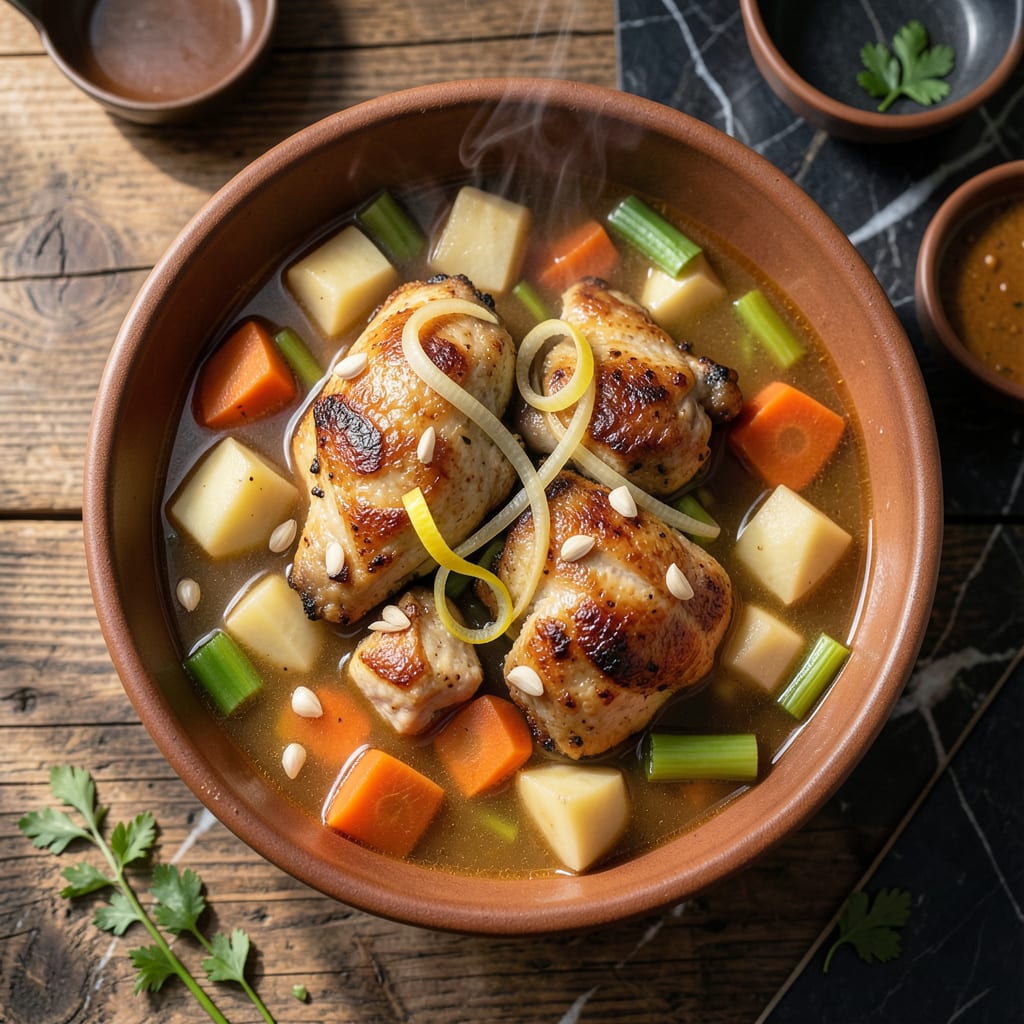
There’s something deeply satisfying about a hearty soup simmering in a single pot, filling your kitchen with warmth and rich aromas. This rustic recipe brings together simple ingredients for a meal that’s both comforting and one-pot easy.
With minimal effort and a handful of pantry staples, you’ll create a dish that tastes like it’s been cooking all day. The key is layering flavors slowly, letting each ingredient shine without complication.
Ingredients for Pot Soup
Pantry staples and a few fresh picks come together for this rustic, hearty dish.
| Ingredient | Amount | Notes |
|---|---|---|
| Chicken Thighs 🍗 | 1 ½ lb | Boneless, skinless preferred |
| Russet Potatoes 🥔 | 4 whole | Medium-sized, peeled and cubed |
| Yellow Onion 🧅 | 1 whole | Medium, finely diced |
| Carrots 🥕 | 3 whole | Medium, sliced into rounds |
| Celery Stalks 🌿 | 3 whole | Sliced thinly |
| Garlic Cloves 🧄 | 4 cloves | Minced for depth of flavor |
| Chicken Broth 🍲 | 6 cups | Low-sodium preferred |
| Diced Tomatoes 🍅 | 1 can | 14.5 oz, with juices |
| Fresh Thyme 🍃 | 2 tsp | Chopped, or 1 tsp dried |
| Bay Leaves 🌿 | 2 whole | Dried, for aromatic base |
| Olive Oil 🫒 | 2 tbsp | Extra-virgin for sautéing |
| Salt 🧂 | 1 tsp | Kosher or sea salt |
| Black Pepper 🌶️ | ½ tsp | Freshly ground preferred |
| Fresh Parsley 🌿 | ¼ cup | Chopped, for garnish |
The chicken is the foundation here. Thighs stay juicy through the long simmer—breasts can dry out. Most supermarkets carry them bone-in or boneless; either works, but boneless saves time. Look for organic or free-range at Whole Foods if you want to splurge. The potatoes should be starchy—Russets break down just enough to thicken the broth naturally.
No chicken broth? Vegetable broth with a splash of soy sauce adds depth. Fresh thyme can be swapped for dried at one-third the amount. If you’re missing celery, add extra carrots or a diced bell pepper. The diced tomatoes can be fresh (about 3 medium) if canned aren’t handy. San Marzano tomatoes elevate the flavor if you’re feeling fancy.
This soup tastes even better the next day. Store in the fridge for up to 4 days or freeze for 3 months. Reheat gently to avoid breaking the potatoes. Always remove the bay leaves before serving (they’re not edible).
Why You’ll Love This Recipe
- One Pot Wonder: I just dump everything in, let it simmer, and the chicken thighs and potatoes do all the work.
- Rich Comfort: The carrots and celery soak up the broth, making every bite ridiculously hearty. Honestly, it’s my cold-weather lifesaver.
- Feeds the Week: I make a big batch on Sunday and it tastes even better reheated for lunch all week.
- Budget Stretcher: Chicken thighs and russets are cheap, and this pot fills my family of four with leftovers to spare.
Step-by-Step Instructions for Pot Soup
This one-pot method streamlines the process while maximizing flavor in every spoonful.
Step 1: Sear the Chicken Thighs
Heat the 2 tbsp olive oil in a large Dutch oven or heavy pot over medium-high heat. Pat the 1.5 lb chicken thighs dry with paper towels and season both sides with the 1 tsp salt and 0.5 tsp black pepper.
Sear the chicken for 4-5 minutes per side until golden brown and cooked through. The fond that develops on the bottom of the pot will add depth to the soup. Remove the chicken and set aside on a plate.
Step 2: Sauté the Aromatic Base
In the same pot, add the 1 whole yellow onion, 3 whole carrots, and 3 whole celery stalks. Cook for 5-6 minutes, stirring occasionally, until the vegetables soften and the onion becomes translucent.
Add the 4 cloves garlic cloves and cook for 30 seconds until fragrant. This base builds the foundation of flavor for the soup. Stir in the 2 tsp fresh thyme and 2 whole bay leaves to infuse the oil with their aromatics.
Step 3: Simmer the Soup to Perfection
Pour in the 6 cups chicken broth and 1 can diced tomatoes with their juices. Use a wooden spoon to scrape up any browned bits from the bottom of the pot. Bring the mixture to a boil, then reduce the heat to medium-low.
Return the chicken to the pot and add the 4 whole russet potatoes. Simmer for 20-25 minutes until the potatoes are fork-tender and the chicken is fully cooked. This step allows all the flavors to meld together beautifully.
Step 4: Shred Chicken and Finish
Remove the chicken from the pot and shred it into bite-sized pieces using two forks. Return the shredded chicken to the soup and stir to combine. Taste and adjust the seasoning if needed.
Let the soup simmer for an additional 5 minutes to allow the flavors to deepen. The potatoes should be soft, and the broth should be rich and flavorful. Discard the bay leaves before serving.
Step 5: Garnish and Serve
Ladle the soup into bowls and garnish each serving with the 0.25 cup fresh parsley. The parsley adds a pop of color and a fresh, herbal note to each bite.
Serve the soup hot with crusty bread or a simple side salad. The one-pot method ensures easy cleanup, and the hearty ingredients make this a satisfying meal for any occasion.
Pro Tips For Making Pot Soup
- Brown the Chicken: Sear the chicken thighs in batches until deeply golden—about 4-5 minutes per side. I learned this the hard way: skipping this step leaves the soup bland and the meat rubbery.
- Uniform Potato Cuts: Chop the russet potatoes into 1-inch chunks so they cook evenly. Sounds obvious, but I used to end up with half mushy, half crunchy bites before I standardized the size.
- Skip the Skinning: Leave the skin on the chicken thighs while browning for extra flavor, then remove it before serving if you prefer. Sounds weird, but it works: the fat renders into the broth for richer taste.
- Sauté the Veggies: Cook the onion, carrots, and celery in the same pot after the chicken—about 5 minutes until softened. This isn’t the prettiest method, but it’s the tastiest way to build a deep, savory base.
Flavor Customization for These Flavors
Spicy Kick
Add ½ tsp cayenne pepper or 1 diced jalapeño with the garlic for heat. For smoky depth, stir in 1 tsp smoked paprika while sautéing the vegetables. I love how this transforms the soup into a Southwestern-inspired creation. 🌶️
Creamy Twist
Stir in ½ cup heavy cream or coconut milk at the end for richness. A 2 oz block of cream cheese melted in also works beautifully. This makes the broth velvety without overpowering the rustic charm.
Herb Variations
Swap the thyme for 2 tsp rosemary or 1 tbsp Italian seasoning to change the flavor profile completely. Fresh sage adds an earthy note that pairs wonderfully with chicken. I keep dried herbs from Penzeys on hand for this.
Vegetable Boost
Add 1 cup chopped kale or spinach in the last 5 minutes of cooking for greens. 1 cup green beans or zucchini also work well. These additions keep the soup light while adding nutrition.
Umami Depth
Boost flavor with 1 tbsp soy sauce or 1 tsp fish sauce stirred in before serving. A splash of Worcestershire sauce adds complexity too. These small amounts make a surprising difference. 💡
Citrus Brightness
Finish with 1 tbsp lemon juice or zest from 1 lemon for a bright contrast. The acidity cuts through the richness and lifts all the other flavors. I always have Meyer lemons in winter for this.
Nutrition Facts
Frequently Asked Questions
Can I use chicken breasts instead of thighs?
You can, but thighs stay juicier during long simmering. If using breasts, reduce cooking time to 15-18 minutes to prevent dryness. Consider brining them first for extra moisture.
How do I store leftovers?
Cool completely, then refrigerate in an airtight container for up to 4 days. For longer storage, freeze for 3 months. Reheat gently on the stove, adding a splash of broth if needed.
Why remove the bay leaves before serving?
Bay leaves are added for flavor but aren’t meant to be eaten. Their sharp edges can be unpleasant or even a choking hazard. Discard them after simmering to keep the soup safe and enjoyable.

- 4C Bread Crumbs Meatballs Recipe: Crispy Crust and Juicy Centers - September 25, 2026
- 6 Oz Chocolate Chip Cookie Recipe: Perfectly Balanced Crispy Edges and Chewy Hearts - September 25, 2026
- 6-Inch Coffee Cake Recipe: Vanilla Bean Swirls and Buttery Streusel Topping - September 25, 2026