
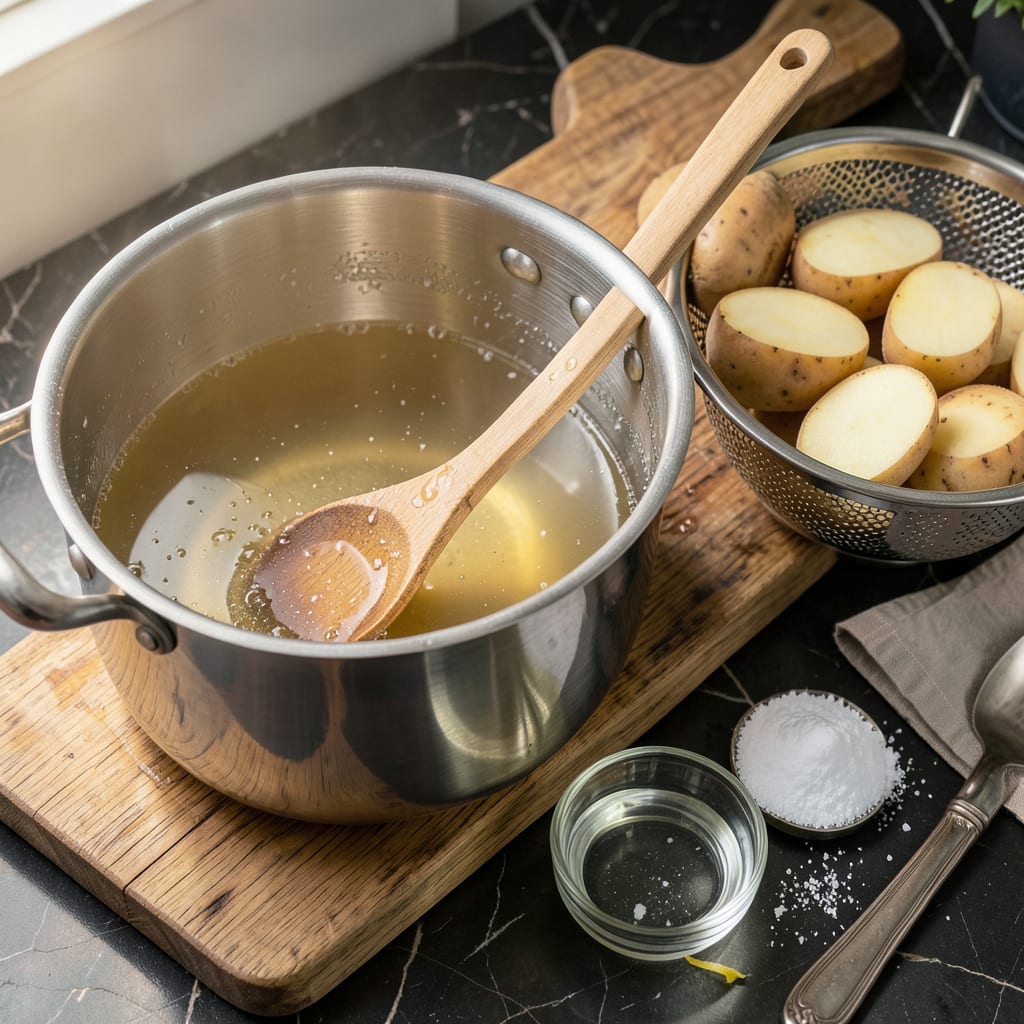
This simple potato brine transforms ordinary spuds into extra-crispy masterpieces with minimal effort. The secret lies in the precise salt-to-water ratio, which seasons the potatoes from within while altering their starch structure for superior texture. Whether you’re prepping fries, roasted potatoes, or hash browns, this 30-minute soak makes all the difference.
Use this versatile solution as your go-to preparation step before cooking. The brine enhances flavor absorption and creates that coveted crispy exterior when cooked at high heat. For best results, maintain consistent ratios and soak potatoes for the recommended time—no shortcuts needed for restaurant-quality results at home.
Ingredients for Potato Brine
Seven ingredients transform your potatoes into crispy perfection—no fancy equipment needed.
| Ingredient | Amount | Notes |
|---|---|---|
| Cold Water 💧 | 4 cups | Filtered or distilled preferred |
| Diamond Crystal Kosher Salt 🧂 | ½ cup | Non-iodized for purity |
| White Vinegar 🍶 | 2 tbsp | Or apple cider vinegar |
| Granulated Sugar 🍚 | 1 tbsp | Balances saltiness |
| Baking Soda 🧪 | ½ tsp | Alkalizes for crispiness |
| Russet Potatoes 🥔 | 2 lb | Peeled and cut uniformly |
| Ice Cubes ❄️ | 1 cup | For rapid cooling (optional) |
The salt is everything here. Diamond Crystal kosher salt dissolves cleanly without clouding the brine (Morton’s works too, but use 25% less by volume). Water quality matters—filtered or distilled prevents off-flavors. I grab my salt in bulk from Costco (cheaper than grocery stores) and store it in an airtight container. The vinegar isn’t just for tang—it helps break down pectin for that glass-like crust. Don’t skip the sugar; it caramelizes during cooking for extra crunch (and balances the salt).
No kosher salt? Table salt at half the amount (but it’s harder to control). Swap vinegar for lemon juice if that’s what’s open. Sugar can be omitted, but you’ll lose some browning. For Yukon Golds instead of Russets, reduce soak time to 20 minutes—they’re waxier. The baking soda is non-negotiable though; it’s what gives you that pub-style crunch. Pro move: add a smashed garlic clove or rosemary sprig to the brine for subtle flavor (remove before cooking).
Brine keeps 24 hours refrigerated in a sealed container, but use it immediately for best results. Potatoes can soak up to 12 hours ahead (they’ll darken slightly—rinse before cooking). I make double batches in glass pitchers (easier to pour) and reuse the brine once if cooking the same day. For fries, pat the potatoes bone-dry post-brine—this is where most home cooks mess up.
Why You’ll Love This Recipe
- No-Chop Magic: I just dump everything—salt, sugar, vinegar, baking soda—into cold water and stir. No knives, no measuring cups beyond teaspoons, and honestly, it’s the least fussy prep I do all week.
- That Crispy-Alchemy Taste: Here’s what sold me—the baking soda in the brine breaks down the potato starches just enough that when they hit the oil? You get this shatter-crisp crust with a center that’s still fluffy. The vinegar adds this subtle tang that makes them impossible to stop eating.
- Meal Prep’s Secret Weapon: I brine a big batch of spuds on Sunday, and suddenly I’ve got the start of hash for breakfast, roasted sides for dinner, or even crispy smashed potatoes for a snack. Between us, it’s how I fake being an organized cook.
- Pennies per Pound: A five-pound bag of potatoes plus these pantry staples costs less than a fancy side dish at the store. And because the brine keeps them from browning, I can prep potatoes two days ahead without wasting a single one. My wallet (and my Tuesday-night self) thank me.
Step-by-Step Instructions for Potato Brine
This simple process transforms ordinary potatoes into perfectly crispy, golden-brown masterpieces every time.
Step 1: Prepare the Brine Solution
In a large pot or container, combine the 4 cups cold water with 0.5 cup Diamond Crystal kosher salt, 2 tbsp white vinegar, 1 tbsp granulated sugar, and 0.5 tsp baking soda. Whisk vigorously until the salt and sugar fully dissolve—this might take a minute or two. You’re looking for a completely clear solution with no visible granules at the bottom.
The vinegar helps break down the potato’s surface for better crisping, while the baking soda alkalizes the exterior, creating that coveted golden crust. I’ve found this particular combination delivers the perfect balance of flavor and texture without making the potatoes taste salty.
Step 2: Prep and Submerge the Potatoes
Peel and cut the 2 lb russet potatoes into your desired shape—whether that’s fries, wedges, or roasted cubes. The key is uniformity: aim for pieces that are roughly the same size so they brine and cook evenly. Immediately submerge the cut potatoes in the brine solution, making sure they’re completely covered.
If your container isn’t large enough to fully submerge all the potatoes, you can brine them in batches. The potatoes will float initially, so I like to place a small plate on top to keep them submerged. This ensures every surface gets equal exposure to the brine’s magic.
Step 3: Brine for Optimal Texture
Let the potatoes soak in the brine for at least 30 minutes, but for maximum crispiness, I recommend 1-2 hours. You’ll notice the potatoes become slightly translucent around the edges—that’s how you know the brine is working its magic. The longer they soak (up to 4 hours), the crispier your final result will be.
For an extra boost, add the 1 cup ice cubes to the brine after the first 15 minutes. This rapid cooling helps the potatoes absorb the brine more effectively. The ice will melt completely within about 10 minutes, at which point you can remove any remaining ice cubes to maintain the proper brine concentration.
Step 4: Drain and Dry Thoroughly
After brining, drain the potatoes in a colander and rinse briefly under cold water to remove any excess salt from the surface. Shake the colander vigorously to remove as much water as possible. Then, spread the potatoes on a clean kitchen towel or paper towels and pat them completely dry.
This drying step is crucial—any remaining moisture will create steam when cooking, which is the enemy of crispiness. I like to let them air-dry for an additional 5-10 minutes after patting. The potatoes should feel completely dry to the touch before moving to the cooking stage.
Step 5: Cook for Perfect Results
Now your potatoes are ready for their final transformation. Whether you’re frying, roasting, or air-frying, you’ll notice they cook up with a beautifully crisp exterior and fluffy interior. For frying, they’ll develop that perfect golden crust in about 2-3 minutes less time than unbrined potatoes. For roasting, you can reduce the oven time by about 10-15 minutes since the brine helps them cook more efficiently.
The real test comes when you take that first bite—the exterior should have an audible crunch that gives way to a perfectly seasoned, tender interior. This brine method consistently delivers that ideal texture combination that makes potatoes truly irresistible. The flavor will be well-balanced, with just enough saltiness to enhance the natural potato flavor without overpowering it.
Essential Equipment for Perfect Results
Large Non-Reactive Container
You’ll need a container big enough to hold 2 lb of potatoes plus 4 cups of brine. I use a 6-quart Cambro container—it’s BPA-free, stackable, and the measurements on the side make mixing easy. Glass or stainless steel works too, but avoid aluminum (it reacts with salt). The container should be deep enough to fully submerge all potato pieces. 💧
Digital Kitchen Scale
Precision matters with brine ratios. My OXO Good Grips 11lb scale ensures I hit the 0.5 cup salt mark perfectly every time. Even small variations in salt concentration can affect texture. Weigh your salt if you’re using a different brand—Diamond Crystal is lighter by volume than Morton’s. A scale removes all guesswork.
Fine-Mesh Strainer
After brining, you need to drain potatoes without losing pieces down the sink. A 12-inch fine-mesh strainer (like the Cuisinox model) catches even small fry cuts. I place mine over a bowl to collect brine for disposal. The mesh also helps when rinsing off excess salt—just swirl under cold water for 10 seconds.
Clean Kitchen Towels
Drying is 50% of the crispiness battle. I keep a stack of flour sack towels (they’re lint-free) just for potatoes. After straining, spread potatoes in a single layer and pat thoroughly. The towels absorb moisture better than paper. For extra insurance, let them air-dry 5-10 minutes before cooking.
Long-Tongued Tongs
When transferring wet potatoes to hot oil or a baking sheet, 12-inch stainless steel tongs keep your hands safe. I use the OXO spring-loaded version—it locks for storage and has silicone tips to prevent scratching. The length prevents oil splatter burns. Never use your hands; residual brine can cause painful steam burns when hitting hot surfaces. ⚡
Optional: Brine Dispenser
For frequent briners, a 1-gallon drink dispenser with spigot makes life easier. I fill mine with brine and store in the fridge between uses. The spigot lets you pour precisely without lifting heavy containers. Look for one with an airtight lid—I like the Takeya Patented Airtight Pitcher for its leak-proof seal.
Nutrition Facts
Frequently Asked Questions
How long should potatoes soak in the brine?
For best results, soak potatoes for 1-2 hours at room temperature. A minimum of 30 minutes works in a pinch, but longer soaking yields maximum crispiness. Don’t exceed 4 hours or the texture may become mealy.
Can I reuse the brine for multiple batches?
You can reuse brine once if cooking the same day, but discard after 24 hours. The potatoes absorb salt and starches, weakening the solution. For fresh batches, always make new brine to maintain proper salt concentration and flavor.
Why add baking soda to the brine?
The 0.5 tsp baking soda alkalizes the potato surface, creating that golden-brown crust when cooked. It breaks down pectin in the potato skin for extra crispiness. Skip it only if you prefer a softer exterior—though you’ll lose that restaurant-quality crunch.
What’s the best way to dry potatoes after brining?
Pat potatoes completely dry with clean kitchen towels, then let air-dry for 5-10 minutes. Any remaining moisture creates steam during cooking, preventing crispiness. For fries, use a salad spinner first to remove excess water before patting.
Can I brine sweet potatoes with this recipe?
Use the same brine but reduce soaking time to 20 minutes max. Sweet potatoes absorb liquid faster and can become mushy. Add 1 tbsp brown sugar to complement their natural sweetness. Test one piece first to adjust timing.

- 8 Bean Soup Recipe Crock Pot: Hearty Vegetable Medley in One Pot - September 25, 2026
- 4C Bread Crumbs Meatballs Recipe: Crispy Crust and Juicy Centers - September 25, 2026
- 6 Oz Chocolate Chip Cookie Recipe: Perfectly Balanced Crispy Edges and Chewy Hearts - September 25, 2026