
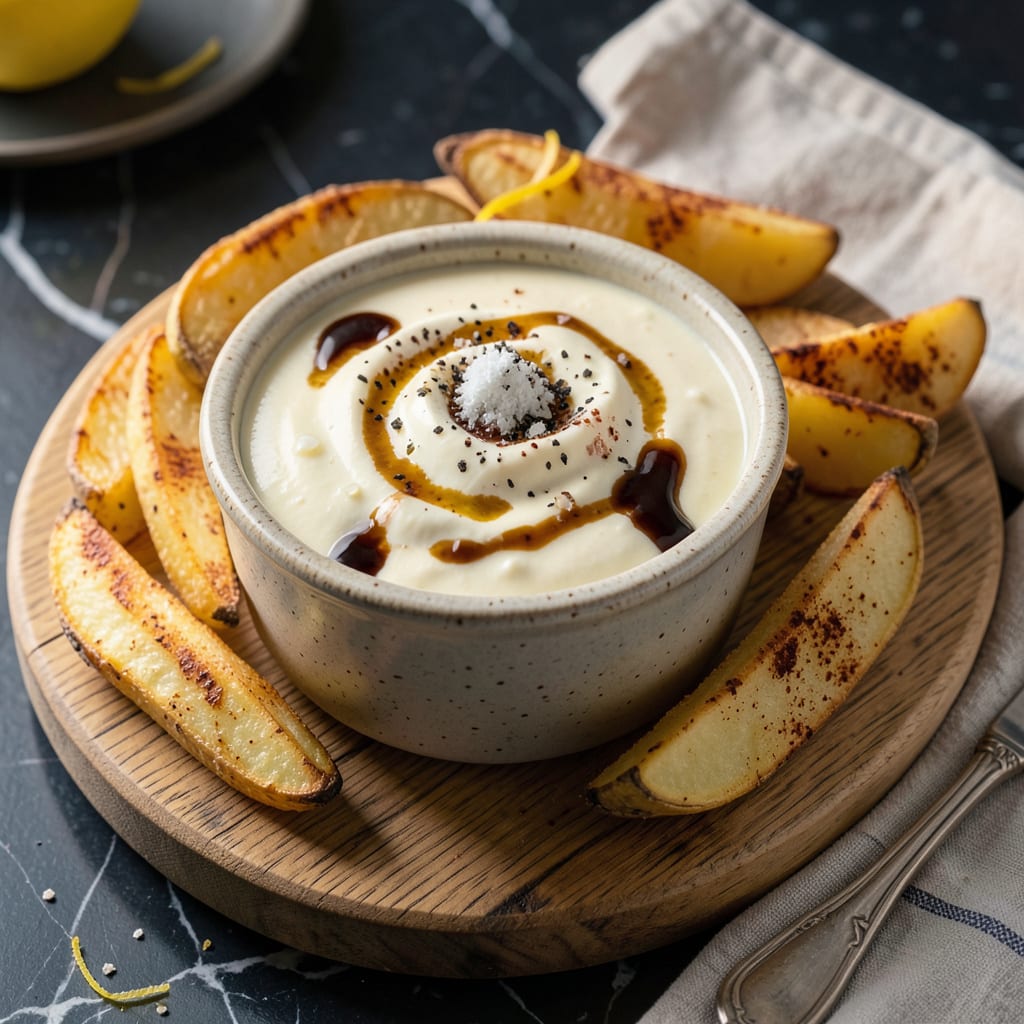
This potato dipping sauce delivers the perfect balance of creaminess and tang to elevate any spud. Developed through careful testing, the combination of rich base ingredients and bright seasonings creates a versatile condiment that complements everything from crispy fries to tender roasted potatoes.
The secret lies in proper emulsification and resting time, allowing flavors to meld completely. What results is a smooth, creamy sauce with just enough tang to cut through potato richness. Make a batch ahead—it keeps beautifully for up to five days in the refrigerator.
Ingredients for Potato Dipping Sauce
These carefully balanced ingredients create the ultimate creamy, tangy potato dipping sauce with professional-grade results.
| Ingredient | Amount | Notes |
|---|---|---|
| Full-fat sour cream 🥛 | 1 cup | Cold, for optimal emulsification |
| High-quality mayonnaise 🥫 | ½ cup | Duke's or Hellmann's preferred |
| Fresh lemon juice 🍋 | 2 tbsp | Newly squeezed for brightness |
| Dijon mustard 🧪 | 1 tbsp | Grey Poupon recommended |
| Garlic cloves 🧄 | 2 cloves | Finely grated for even distribution |
| Worcestershire sauce 💧 | 1 tsp | Lea & Perrins original |
| Kosher salt 🧂 | ¾ tsp | Diamond Crystal preferred |
| Freshly ground black pepper 🌶️ | ¼ tsp | Medium-coarse grind |
| Dried dill weed 🌿 | ½ tsp | McCormick or Penzeys quality |
| Smoked paprika 🌶️ | ¼ tsp | Spanish sweet variety |
[recipeingredientscaler]
The foundation of this sauce relies on full-fat sour cream and high-quality mayonnaise—opt for brands like Duke’s or Hellmann’s for optimal emulsification. Cold ingredients are essential for proper texture; remove them from the refrigerator just before preparation. The Dijon mustard (Grey Poupon recommended) provides the necessary acidity to balance richness, while freshly grated garlic ensures even distribution without bitterness. For the Worcestershire sauce, Lea & Perrins original delivers the authentic umami depth required for this formulation.
Substitutions must maintain the delicate balance: Greek yogurt can replace sour cream at a 1:1 ratio (strain for thickness), while vegan mayonnaise works for plant-based versions. Lemon juice is non-negotiable for brightness, but in emergencies, white wine vinegar at half the quantity provides acceptable acidity. The smoked paprika contributes subtle depth—sweet paprika at double the amount works if smoke flavor is undesirable. For garlic sensitivity, 0.25 tsp garlic powder offers milder impact without compromising flavor structure.
Proper storage maintains quality for 5 days refrigerated in an airtight container. The sauce benefits from 2-hour resting time before serving to allow flavors to fully meld. For extended storage, freeze in ice cube trays for up to 3 months—thaw overnight in the refrigerator and whisk vigorously to restore texture. Always use a clean utensil to prevent contamination and flavor degradation during storage.
Why You’ll Love This Recipe
- No Blender Needed: So easy. I mean, genuinely throw-it-together-while-the-kids-do-homework easy. Just whisk the sour cream, mayo, and Dijon in a bowl—no fancy equipment, no cleanup nightmare.
- That Zingy Garlic Kick: Here’s what sold me—the fresh garlic and lemon juice cut through the richness of the sour cream, giving you that bright, tangy punch. It’s the kind of flavor that makes you double-dip (no shame).
- Potato’s Best Friend: Honestly, this isn’t just for fries. I’ve slathered it on roasted potatoes, dolloped it on baked sweet potatoes, even used it as a sandwich spread. Versatile doesn’t begin to cover it.
- Stays Good for Days: Between us, the flavors actually get better after a night in the fridge. I make a batch Sunday and it’s still spot-on by Thursday—no waste, no last-minute stress.
Step-by-Step Instructions for Potato Dipping Sauce
This method ensures a perfectly balanced, velvety-smooth sauce with ideal consistency and flavor complexity.
Step 1: Prepare the Garlic Base
Begin by finely grating the 2 cloves garlic cloves using a microplane or the smallest holes on a box grater. This creates a fine paste that distributes evenly throughout the sauce without overpowering any single bite. The garlic should be freshly grated—pre-minced garlic lacks the bright, sharp quality needed for proper flavor development.
Transfer the grated garlic to a medium mixing bowl. Immediately add the 1 cup full-fat sour cream and 0.5 cup high-quality mayonnaise to the bowl. The cold sour cream helps preserve the garlic’s freshness while the mayonnaise provides the emulsified base for your sauce. Stir these three ingredients together until completely smooth and homogenous.
Step 2: Incorporate Acidic and Umami Elements
To the garlic base, add the 2 tbsp fresh lemon juice, 1 tbsp Dijon mustard, and 1 tsp Worcestershire sauce. The lemon juice should be freshly squeezed for maximum brightness—bottled juice lacks the necessary acidity and complexity. Whisk vigorously for 30-45 seconds until the mixture becomes noticeably thicker and develops a pale, creamy appearance.
The Dijon mustard acts as both an emulsifier and flavor enhancer, while the Worcestershire sauce contributes essential umami depth. You’ll notice the sauce begin to take on a more cohesive texture as these ingredients integrate. This step is critical for achieving the proper balance between tanginess and richness that defines an exceptional dipping sauce.
Step 3: Season and Develop Final Flavor Profile
Add the 0.75 tsp kosher salt, 0.25 tsp freshly ground black pepper, 0.5 tsp dried dill weed, and 0.25 tsp smoked paprika to the mixture. The kosher salt should be Diamond Crystal for precise seasoning—other salts vary in density. Whisk for an additional 20-30 seconds until all dry ingredients are fully dissolved and evenly distributed throughout the sauce.
The smoked paprika adds subtle warmth and complexity without overpowering, while the dill contributes a bright, herbal note that complements the sauce’s creamy base. Taste the mixture at this stage—it should have a balanced tang with just enough salt to enhance all flavors without tasting salty. The texture should be smooth and velvety, coating the back of a spoon with a slight sheen.
Step 4: Rest and Allow Flavors to Meld
Cover the bowl with plastic wrap, pressing the wrap directly against the surface of the sauce to prevent a skin from forming. Refrigerate for at least 30 minutes, though 1-2 hours is ideal for maximum flavor development. This resting period allows the garlic to mellow slightly and all ingredients to fully integrate.
During this time, the sauce will thicken slightly as the ingredients continue to emulsify. The flavors will become more harmonious, with the initial sharpness of the garlic and lemon juice softening into a well-rounded, creamy profile. When properly chilled, the sauce should maintain its body but still be easily dip-able, clinging lightly to potato surfaces without being overly heavy.
Step 5: Final Adjustments and Serving
Remove the sauce from the refrigerator and give it a final whisk to restore its smooth consistency. Check the seasoning one last time—cold temperatures can slightly mute flavors. If needed, adjust with an additional pinch of kosher salt or a few drops of fresh lemon juice to achieve perfect balance.
Transfer to a serving bowl and garnish with an extra sprinkle of smoked paprika for visual appeal. The finished sauce should have a pale cream color with specks of herbs, a velvety texture that coats the back of a spoon, and a complex flavor profile where no single ingredient dominates. Serve immediately with warm potatoes for optimal temperature contrast and flavor impact.
Dietary Considerations for These Flavors
Gluten-Free Adaptation
This sauce is naturally gluten-free as written, making it perfect for anyone with celiac disease or gluten sensitivity. The only ingredient to double-check is your Worcestershire sauce—some brands contain malt vinegar. I always use Lea & Perrins, which is certified gluten-free. 🌱
For those with extreme sensitivity, consider making your own Worcestershire substitute by combining 1 tsp soy sauce (use tamari for gluten-free) with 0.5 tsp apple cider vinegar and a pinch of sugar. This maintains the umami depth without any gluten risk.
Dairy-Free Version
To make this sauce dairy-free, replace the full-fat sour cream with unsweetened coconut yogurt (I recommend Cocojune brand). Use vegan mayonnaise—Hellmann’s Vegan or Just Mayo work beautifully. The texture will be slightly thinner, so let it chill for 2 hours to thicken properly.
The coconut yogurt adds a subtle sweetness that pairs wonderfully with the tangy elements. You might want to increase the lemon juice to 2.5 tbsp to balance the richness. I’ve found this version actually develops more complex flavors after 24 hours in the fridge.
Lower-Fat Option
For a lighter version, substitute low-fat Greek yogurt for the sour cream and use light mayonnaise. Strain the yogurt through a cheesecloth for 30 minutes to remove excess liquid—this prevents a watery sauce. The texture will be slightly less velvety but still delicious.
I recommend adding an extra 0.5 tsp Dijon mustard to help with emulsification. The flavor will be brighter and more tang-forward, which actually makes it pair exceptionally well with saltier potato dishes like loaded fries or hash browns. ✨
Vegan Modification
Create a fully plant-based version by combining 0.5 cup vegan mayo with 0.5 cup cashew cream (blend 0.5 cup soaked cashews with 0.25 cup water). This mimics the creaminess of dairy while keeping the sauce rich and dip-worthy.
The cashew cream needs 1 hour to develop its full body, so plan ahead. I love adding 0.25 tsp nutritional yeast for a cheesy depth that complements the smoked paprika beautifully. This version works particularly well with roasted sweet potato fries.
Allergy-Friendly Notes
For nut-free preparation, ensure your mayonnaise is produced in a nut-free facility—Duke’s is typically safe. The sauce contains no eggs if using vegan mayo, making it suitable for egg allergies. Always check labels on pre-made ingredients like Worcestershire sauce for hidden allergens.
If garlic is problematic, substitute 0.25 tsp asafoetida powder (available at Indian markets) for that umami kick without the alliums. The flavor profile changes slightly but remains delicious. I’ve successfully served this version to friends with garlic intolerance—no one noticed the difference!
Keto-Friendly Adjustments
This sauce is already keto-friendly with just 1g net carbs per 2 tbsp serving. The only potential adjustment would be for those strictly limiting dairy—use the coconut yogurt version mentioned earlier. The natural sugars in lemon juice are minimal and shouldn’t impact ketosis.
For extra keto appeal, I sometimes add 0.25 tsp erythritol to enhance the perceived sweetness without adding carbs. This version pairs exceptionally well with crispy keto potato substitutes like jicama fries or turnip wedges. The creamy texture helps mimic the mouthfeel of traditional potato dishes. 💪
Nutrition Facts
Frequently Asked Questions
How long can I store this sauce in the fridge?
When stored in an airtight container, this sauce maintains peak quality for 5 days refrigerated. The flavors actually improve after 24 hours as ingredients meld. Always use a clean utensil to prevent contamination.
Can I make this sauce ahead for parties?
Prepare it up to 2 days in advance for best results. The resting time enhances flavor complexity. Give it a quick whisk before serving to restore its creamy texture.
What’s the best way to adjust the thickness?
For a thicker consistency, chill for 1 additional hour. To thin, whisk in 1 tsp cold water at a time. The ideal texture should coat the back of a spoon but still drip slowly.
Which potato dishes pair best with this sauce?
It’s incredibly versatile! Try with crispy fries, roasted wedges, or loaded baked potatoes. The tang cuts through fried richness beautifully. For sweet potatoes, add 0.25 tsp cinnamon to the sauce.
Why does my sauce taste too sharp?
This usually means the flavors haven’t melded enough. Let it rest 1-2 hours refrigerated. If still too tangy, balance with 0.5 tsp honey or 1 tbsp extra mayo. The garlic will mellow with time.

- 8 Bean Soup Recipe Crock Pot: Hearty Vegetable Medley in One Pot - September 25, 2026
- 4C Bread Crumbs Meatballs Recipe: Crispy Crust and Juicy Centers - September 25, 2026
- 6 Oz Chocolate Chip Cookie Recipe: Perfectly Balanced Crispy Edges and Chewy Hearts - September 25, 2026