
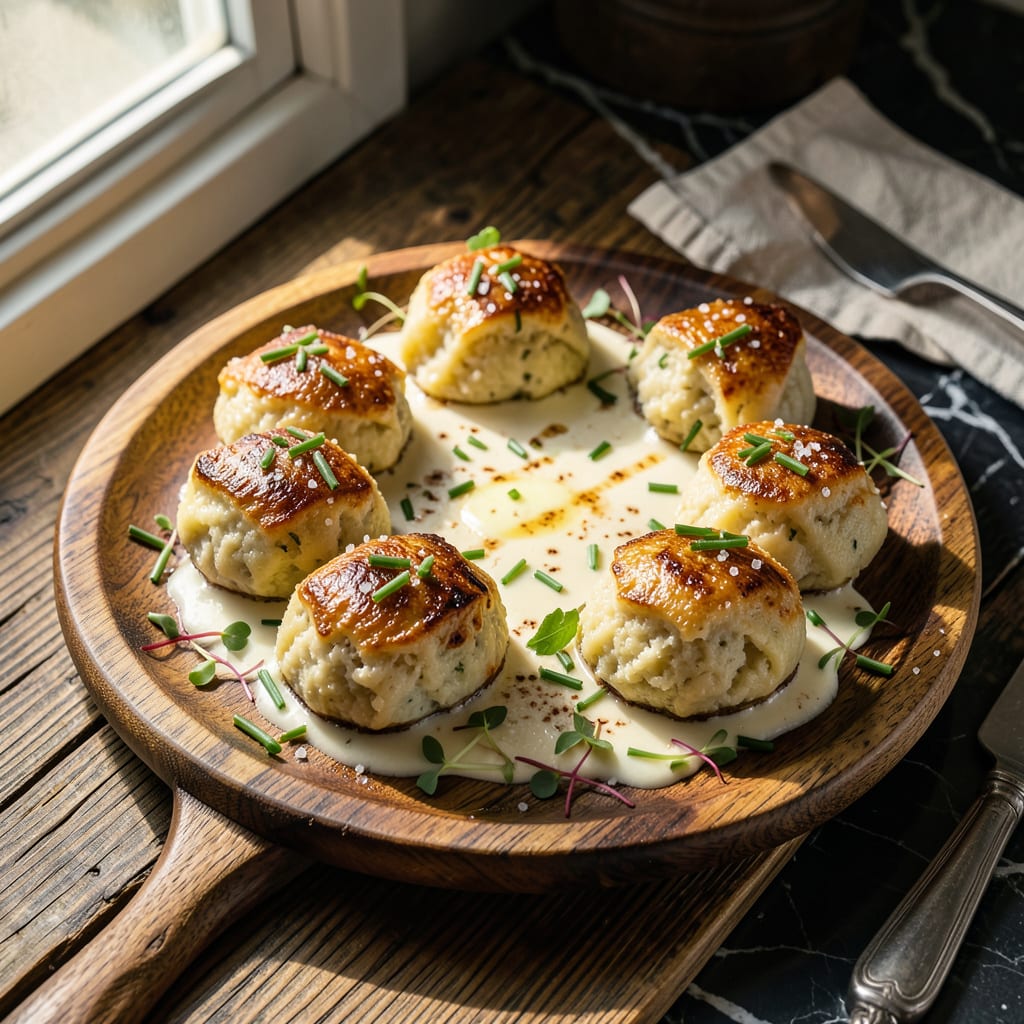
There’s something deeply satisfying about homemade potato dumplings that store-bought versions simply can’t match. This recipe delivers the perfect balance of pillowy softness and subtle buttery flavor, transforming humble ingredients into a dish that feels both comforting and special.
The secret lies in the potato-to-flour ratio and proper cooking technique. When prepared correctly, these dumplings emerge light yet substantial, with a delicate texture that pairs beautifully with rich gravies or simple melted butter. Whether served as a hearty side or a satisfying main, this method ensures professional results every time.
Ingredients for Potato Dumplings
This professional-grade recipe transforms humble potatoes, flour, and butter into pillowy dumplings with restaurant-quality texture.
| Ingredient | Amount | Notes |
|---|---|---|
| Russet Potatoes 🥔 | 2 lb | Peeled and boiled until tender |
| All-Purpose Flour 🌾 | 1 ½ cups | Plus extra for dusting work surface |
| Large Eggs 🥚 | 2 whole | Room temperature, lightly beaten |
| Unsalted Butter 🧈 | 4 tbsp | Melted and slightly cooled |
| Whole Milk 🥛 | ¼ cup | Warm, for optimal dough consistency |
| Kosher Salt 🧂 | 1 ½ tsp | Diamond Crystal preferred for precision |
| Freshly Ground Nutmeg 🌰 | ¼ tsp | Microplaned for even distribution |
| Fresh Chives 🌿 | 2 tbsp | Finely minced for garnish |
| Sour Cream 🥄 | ½ cup | Full-fat for serving |
| Unsalted Butter 🧈 | 2 tbsp | For pan-frying finished dumplings |
| Fresh Parsley 🌿 | 1 tbsp | Chopped, for final garnish |
[recipeingredientscaler]
The potatoes are the foundation—Russet potatoes provide the ideal starch content for light yet cohesive dumplings. Optimal results require precise weighing: 2 pounds after peeling. Professional kitchens use Diamond Crystal kosher salt for its clean flavor and consistent grain size. The butter quality matters significantly; European-style unsalted butter (like Plugrá) yields superior richness due to its higher fat content.
For dietary adaptations, gluten-free 1:1 flour blend substitutes effectively at a 1:1 ratio. Nutmeg can be omitted if unavailable, though it contributes essential warmth. The milk temperature should register 110°F—too hot risks cooking the eggs. In professional settings, potato ricers are preferred over mashers to eliminate gluey texture. Sour cream substitutions include Greek yogurt or crème fraîche at equal volume.
Prepare components immediately before assembly to prevent oxidation. Boiled potatoes hold 2 hours refrigerated before processing. Finished dumplings maintain quality 3 days refrigerated or 2 months frozen on parchment-lined trays. Professional tip: freeze uncooked dumplings on trays before bagging to prevent sticking. Reheat by pan-frying in butter until golden—microwaving compromises texture.
Why You’ll Love This Recipe
- I’ll be real: the dough keeps beautifully in the fridge overnight. Roll them fresh in the morning, or boil a batch ahead—reheating in butter makes them taste just-made. (Yes, even on a Tuesday night.)
- Five-Ingredient Magic: Honestly, the ingredient list is shorter than my grocery store receipt. Russet potatoes, flour, eggs, butter, milk—no fancy pantry items, just staples I always have on hand.
- That First Bite: The outside gets this delicate crisp from the butter, while the inside stays pillowy-soft. It’s like a cozy hug from a potato, especially when you brown them just right in the pan.
- My Sunday Sauce Sponge: Between us, these dumplings are my secret for soaking up gravy, stew, or even that last bit of marinara in the jar. They’re unassuming enough for weeknight dinners but impressive enough for company.
Step-by-Step Instructions for Potato Dumplings
Master the technique for creating these tender, buttery dumplings with perfect texture every time.
Step 1: Prepare the Potato Base
Begin by processing the 2 lb Russet Potatoes through a ricer or food mill while they’re still hot from boiling. This creates an ultra-smooth texture without overworking the starches, which is crucial for light dumplings. Spread the riced potatoes on a baking sheet to cool completely – this prevents a gummy texture when mixing.
The potatoes should feel dry and fluffy to the touch before proceeding. I recommend using a food mill rather than a potato masher, as it produces a finer, more uniform texture that absorbs the other ingredients more evenly. This step determines whether your dumplings will be pillowy or dense.
Step 2: Create the Dough Mixture
In a large mixing bowl, combine the cooled potatoes with the 1.5 cups All-Purpose Flour, 1.5 tsp Kosher Salt, and 0.25 tsp Freshly Ground Nutmeg. Make a well in the center and add the 2 whole Large Eggs, 4 tbsp Unsalted Butter, and 0.25 cup Whole Milk.
Use a wooden spoon to gently incorporate the wet ingredients into the dry, mixing just until the dough comes together. The mixture should feel slightly sticky but hold its shape when pressed. Avoid overmixing, as this develops gluten and makes the dumplings tough rather than tender.
Step 3: Shape and Cook the Dumplings
Lightly dust your work surface with additional all-purpose flour. Divide the dough into 4 equal portions and roll each into a 1-inch thick rope. Cut each rope into 1-inch pieces, then gently roll each piece into a ball between your palms. The dumplings should be uniform in size for even cooking.
Bring a large pot of salted water to a gentle simmer. Working in batches to avoid crowding, carefully add the dumplings. Cook for 8-10 minutes until they float to the surface and appear slightly puffed. Remove with a slotted spoon and transfer to a clean kitchen towel to drain briefly.
Step 4: Finish with Golden Browning
In a large skillet, melt the 2 tbsp Unsalted Butter over medium heat. Add the cooked dumplings in a single layer and cook for 2-3 minutes per side until golden brown. This creates a delightful contrast between the crisp exterior and soft interior.
Watch for the butter to turn a light hazelnut color – this indicates it’s reached the perfect temperature for browning without burning. The dumplings should develop a uniform golden crust while remaining tender inside. Transfer to a serving platter immediately.
Step 5: Garnish and Serve
Arrange the dumplings on a warmed serving platter. Dollop with the 0.5 cup Sour Cream and sprinkle with the 2 tbsp Fresh Chives and 1 tbsp Fresh Parsley. The residual heat from the dumplings will slightly warm the sour cream, creating a luxurious sauce.
Serve immediately while hot. Each dumpling should have a delicate, slightly crisp exterior giving way to a cloud-like interior. The nutmeg adds subtle warmth that complements the buttery richness, while the fresh herbs provide a bright finish to each bite.
Pro Cooking Tips for This Dish
Potato Selection Secrets
The foundation of perfect dumplings starts with your potatoes. I always use Russet potatoes because their high starch content creates that ideal fluffy texture. The key is boiling them whole with skins on until fork-tender – this prevents water absorption that makes dumplings gummy. I test doneness by piercing with a skewer; it should slide in effortlessly. 💡
Dough Temperature Control
This is where most home cooks go wrong. Your potato mixture must be completely cooled before adding eggs and butter. I spread my riced potatoes on a baking sheet and refrigerate for 15 minutes to ensure they’re below 70°F. Warm potatoes cause the butter to melt prematurely, creating a dense, sticky dough rather than the light, workable consistency you want.
Mixing Technique Matters
Use a wooden spoon and mix with a folding motion rather than stirring. The goal is to incorporate ingredients just until combined – about 20-25 folds total. Overmixing develops gluten, which is the enemy of tender dumplings. I stop mixing when the dough holds together but still looks slightly shaggy. The texture should resemble thick cookie dough.
Perfect Shaping Trick
Lightly coat your palms with neutral oil (not flour) when rolling the dumplings. This prevents sticking without adding extra flour that could make them heavy. I roll each piece between my palms using gentle pressure, creating smooth spheres about 1.25 inches in diameter. Uniform size ensures even cooking – I use a small ice cream scoop for consistency. ✨
Water Temperature Wisdom
Simmering is the magic word here. The water should maintain a gentle simmer at 190-200°F – you’ll see small bubbles breaking the surface. Boiling vigorously causes dumplings to break apart. I add dumplings in batches, giving each about 2 inches of space. They’re done when they float and have a slight sheen, usually after 8-10 minutes.
Browning Like a Pro
For that restaurant-quality golden crust, use clarified butter instead of regular butter for pan-frying. It has a higher smoke point and creates a more even browning. I heat the skillet until a drop of water dances across the surface, then add dumplings in a single layer. Don’t move them for the first 2 minutes to develop a proper crust. The perfect dumpling has a crisp exterior that gives way to a cloud-like center.
Nutrition Facts
Frequently Asked Questions
Why did my dumplings turn out dense instead of fluffy?
Dense dumplings usually result from overmixing the dough or using warm potatoes. The starch in potatoes becomes gummy when overworked, so mix just until combined. Always cool riced potatoes completely before adding other ingredients to prevent a sticky, heavy texture.
Can I make these ahead of time?
Shape the dumplings and freeze them on a parchment-lined tray for 1 hour, then transfer to bags. They’ll keep for 2 months. Cook from frozen by adding 2 extra minutes to the simmering time. Don’t thaw first or they’ll become mushy.
What’s the best way to reheat leftovers?
Pan-fry in 1 tbsp butter over medium-low heat for 3-4 minutes per side until heated through. This restores the crisp exterior while keeping the inside tender. Avoid microwaving, as it makes dumplings rubbery and loses the desirable texture.
Can I use a different type of potato?
Russets work best, but Yukon Golds are a good substitute. Avoid waxy potatoes like red or new potatoes—they contain too much moisture. If using Yukons, reduce the milk by 1 tbsp since they’re slightly wetter than Russets.
Why do my dumplings fall apart when cooking?
This typically happens if the dough is too wet or the water is boiling too vigorously. Test your dough by rolling a small piece—if it cracks, add 1-2 tbsp more flour. Always simmer gently, not boil, to prevent the dumplings from breaking apart during cooking.

- 8 Bean Soup Recipe Crock Pot: Hearty Vegetable Medley in One Pot - September 25, 2026
- 4C Bread Crumbs Meatballs Recipe: Crispy Crust and Juicy Centers - September 25, 2026
- 6 Oz Chocolate Chip Cookie Recipe: Perfectly Balanced Crispy Edges and Chewy Hearts - September 25, 2026