
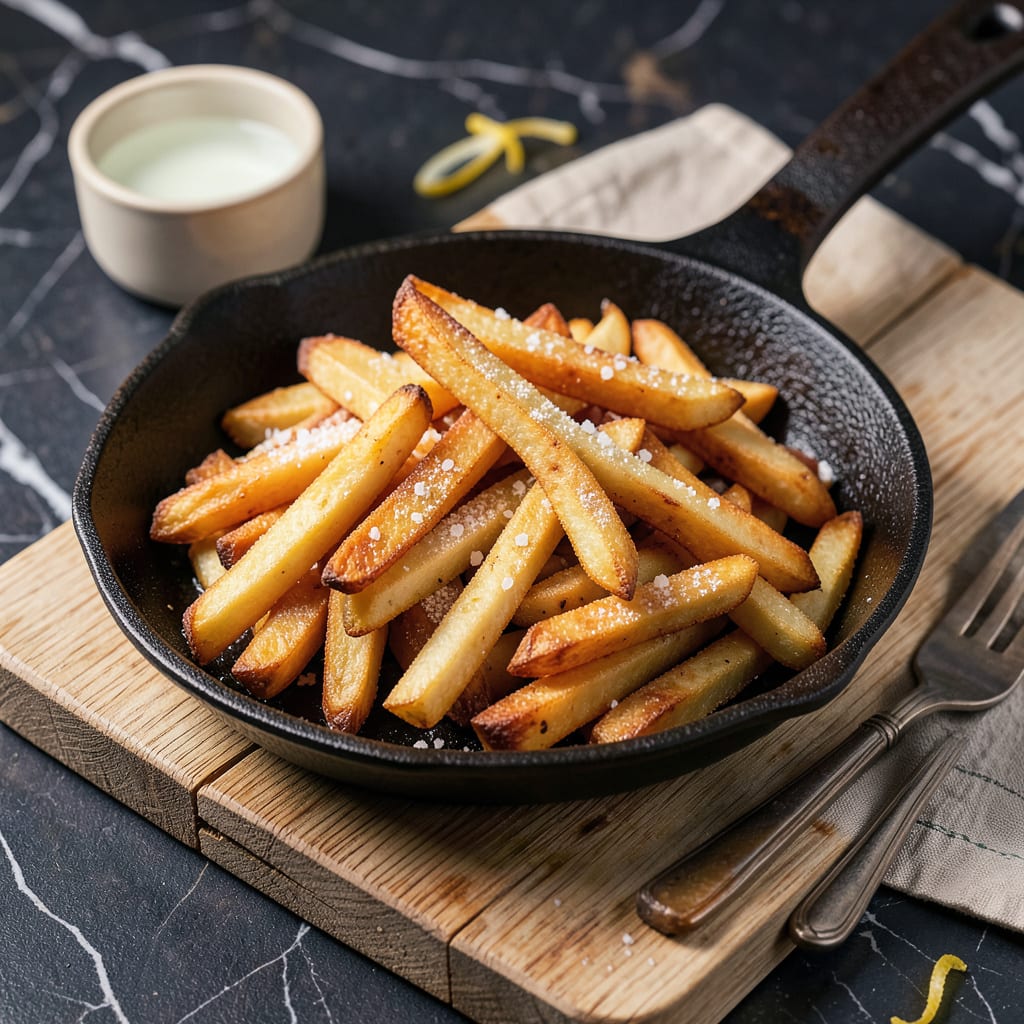
The secret to perfect homemade fries lies in two critical steps: selecting the right potatoes and mastering the cooking technique. Russet potatoes deliver the ideal balance of starch for crispiness and moisture for tenderness, while a double-fry method ensures that golden, shatteringly crispy exterior.
Whether you prefer deep-frying for classic results or air-frying for convenience, this method produces consistently excellent fries every time. The key is maintaining precise oil temperature and timing—no soggy centers or burnt edges. Serve immediately with your favorite dipping sauce for the ultimate snack experience.
Ingredients for Potato Fries
You’re just 12 ingredients away from the crispiest, golden fries you’ve ever made at home!
| Ingredient | Amount | Notes |
|---|---|---|
| Russet Potatoes 🥔 | 4 whole | Large, uniform size for even cooking |
| Cold Water 💧 | 4 cups | For soaking cut potatoes |
| Distilled White Vinegar 🍶 | 2 tbsp | Adds crispness to soaking water |
| Vegetable Oil 🫒 | 8 cups | For deep-frying (peanut oil works too) |
| Cornstarch 🌾 | 2 tbsp | For ultra-crispy coating |
| Sea Salt 🧂 | 1 ½ tsp | Fine grain for even seasoning |
| Freshly Ground Black Pepper 🌶️ | ½ tsp | Optional but recommended |
| Garlic Powder 🧄 | ½ tsp | For aromatic seasoning |
| Smoked Paprika 🌶️ | ¼ tsp | Adds depth and color |
| Ketchup 🍅 | ½ cup | For classic dipping (optional) |
| Vegan Mayonnaise 🥄 | ½ cup | For creamy dipping (optional) |
| Fresh Parsley 🌿 | 2 tbsp | Chopped, for garnish (optional) |
The potatoes are everything here—Russet potatoes are non-negotiable for that perfect crispy exterior and fluffy interior. Look for ones that feel heavy for their size with smooth, blemish-free skin. Costco or your local farmers market usually has the best selection. The vinegar in the soaking water is the secret weapon—it removes excess starch while keeping the fries extra crispy. Don’t skip this step! For oil, vegetable or peanut oil works best because of their high smoke points. Grab a fresh bottle if yours has been sitting around for months (oil degrades over time).
No cornstarch? Arrowroot powder or potato starch works in a pinch—just use the same amount. If you’re avoiding deep-frying, an air fryer at 400°F gets you 90% of the way there (toss with 1 tbsp oil first). For seasoning swaps, onion powder instead of garlic powder adds a different but delicious dimension. The smoked paprika is worth hunting down—it gives that classic fry-shop flavor. No fresh parsley? Dried parsley or chives work too, just use half the amount.
Cut potatoes will keep in cold water in the fridge for up to 24 hours—perfect for prepping ahead. Cooked fries are best eaten immediately but can be reheated in a 425°F oven for 5-8 minutes to revive crispiness. The oil can be strained and reused 2-3 times if stored in a cool, dark place. Pro tip: Keep a small fine-mesh strainer handy for removing potato bits between batches!
Why You’ll Love This Recipe
- I’ll be real: the vinegar soak does all the work. Just toss russets in cold water with a splash of white vinegar while the oil heats—no babysitting, no stress, and the starch rinses right off for that ideal crisp.
- No-Fuss Technique: I’ll be real: the vinegar soak does all the work. Just toss russets in cold water with a splash of white vinegar while the oil heats—no babysitting, no stress, and the starch rinses right off for that ideal crisp.
- That First Crunch: Honestly, the cornstarch is non-negotiable. It turns these from sad, soggy sticks into golden, crackly bites with a center so fluffy you’ll forget ketchup exists (okay, maybe not forget, but you’ll consider it optional).
- Snack or Side Hustle: Between us, I’ve served these with burgers, stuffed them in tacos, and even eaten them cold straight from the fridge at midnight. They’re my weeknight hero and my “I need a snack now” solution—no judgment.
Step-by-Step Instructions for Potato Fries
Here’s the foolproof method for achieving restaurant-quality fries with that coveted golden crunch at home.
Step 1: Prepare and Soak the Potatoes
Begin by scrubbing the russet potatoes thoroughly under cold running water to remove any dirt. I like to use a vegetable brush for this step to ensure every crevice is clean. Cut each potato lengthwise into ½-inch thick batons, keeping them as uniform as possible for even cooking.
Place the cut potatoes in a large bowl and cover with the 4 cups cold water and 2 tbsp distilled white vinegar. The vinegar is my secret weapon—it helps break down the potato starches while keeping them crisp. Let them soak for 30 minutes at room temperature. You’ll notice the water becomes cloudy as excess starch releases.
Step 2: Dry and Season the Potato Batons
After soaking, drain the potatoes in a colander and rinse briefly under cold water. Transfer them to a clean kitchen towel and pat them completely dry. I can’t stress this enough—any remaining moisture will cause the oil to splatter and prevent proper crisping.
Place the dried potatoes in a large bowl and sprinkle with the 2 tbsp cornstarch. Toss until every piece is evenly coated. The cornstarch creates that ultra-crispy exterior we’re after. Add 1.5 tsp sea salt, 0.5 tsp freshly ground black pepper, 0.5 tsp garlic powder, and 0.25 tsp smoked paprika, tossing again to distribute the seasonings evenly.
Step 3: Double-Fry for Perfect Texture
In a heavy-bottomed pot or Dutch oven, heat the 8 cups vegetable oil to 325°F. I use a deep-fry thermometer for precision, but you can test the oil by dropping in a small potato piece—it should bubble gently but not vigorously. Working in batches to avoid overcrowding, fry the potatoes for 4-5 minutes until they’re soft but not browned.
Remove the potatoes with a slotted spoon and transfer to a wire rack set over a baking sheet. Increase the oil temperature to 375°F. When ready, fry the potatoes again for 2-3 minutes until they’re deep golden brown and crispy. This double-fry technique ensures a creamy interior and shatteringly crisp exterior.
Step 4: Drain and Season While Hot
As each batch finishes frying, transfer the fries back to the wire rack. While they’re still hot, sprinkle with an additional pinch of sea salt—this final seasoning makes all the difference in flavor. The fries should be uniformly golden brown with a crisp exterior that gives way to a fluffy center.
Serve immediately while still hot and crispy. For the ultimate experience, pair with the 0.5 cup ketchup and 0.5 cup vegan mayonnaise for dipping. Garnish with the 2 tbsp fresh parsley for a pop of color and freshness. These fries are best enjoyed right away, though they’ll maintain their crispness for about 15 minutes after frying.
Serving Suggestions for Leftovers
Classic Dipping Duos
You can’t go wrong with the timeless combo of ketchup and vegan mayonnaise. I love serving them in small ramekins with a sprinkle of smoked paprika swirled into the mayo for extra depth. For a fun twist, mix 1 tbsp sriracha into the mayo—it adds just the right amount of heat. 🌶️
Gourmet Sauce Upgrades
Elevate your fries with homemade garlic aioli—just blend ½ cup vegan mayo with 2 minced garlic cloves and 1 tsp lemon juice. Another favorite is truffle mayo (add 1 tsp truffle oil to mayo). These sauces turn simple fries into a restaurant-worthy experience.
Perfect Pairing Plates
Serve your fries alongside a juicy veggie burger or crispy tofu nuggets for the ultimate comfort meal. The saltiness of the fries balances beautifully with the savory patty. For a lighter option, pair with a fresh avocado salad—the creamy texture contrasts perfectly with the crispy fries.
Bar-Style Presentation
Create a shareable platter by piling fries in a cast-iron skillet or wooden board. Top with melted vegan cheese, diced jalapeños, and a drizzle of BBQ sauce for loaded fries. I love using Daiya cheddar shreds—they melt beautifully under the broiler for 2 minutes. 🔥
Global Flavor Twists
Take your fries worldwide with toppings like za’atar and lemon wedges (Middle Eastern style) or furikake and kewpie mayo (Japanese-inspired). For Mexican flair, sprinkle with tajín and serve with avocado crema. These small additions transform your fries into an international snack adventure.
Kid-Friendly Fun
Make mealtime exciting by serving fries in colorful paper cones or with mini dipping cups of different sauces. Let kids customize their own seasoning blends—try parmesan (for non-vegan) or nutritional yeast for a cheesy flavor. The interactive experience makes fries even more enjoyable for little ones!
Nutrition Facts
Frequently Asked Questions
Why soak the potatoes in vinegar water?
The vinegar helps remove excess starch while keeping the fries extra crispy. Soaking for 30 minutes prevents them from sticking together and ensures even cooking. The water will turn cloudy as starch releases.
Can I use a different potato variety?
Russets are ideal for crispiness, but Yukon Golds work in a pinch. They’ll be slightly creamier rather than fluffy. Avoid waxy potatoes like red or new potatoes—they won’t crisp up properly. Stick with high-starch varieties for best results.
What’s the purpose of the double-fry method?
The first fry at 325°F cooks them through, while the second at 375°F creates that golden crust. This two-step process guarantees a creamy interior with a shatteringly crisp exterior—just like restaurant fries.
How do I keep fries crispy after cooking?
Drain on a wire rack, not paper towels, to prevent steam buildup. Serve immediately for maximum crispiness. If needed, reheat in a 425°F oven for 5 minutes to revive them—microwaving makes them soggy.
Can I make these in an air fryer?
Toss with 1 tbsp oil and cook at 400°F for 12-15 minutes, shaking halfway. They won’t be identical to deep-fried but still delicious. Work in batches to avoid overcrowding for even crispiness.

- 8 Bean Soup Recipe Crock Pot: Hearty Vegetable Medley in One Pot - September 25, 2026
- 4C Bread Crumbs Meatballs Recipe: Crispy Crust and Juicy Centers - September 25, 2026
- 6 Oz Chocolate Chip Cookie Recipe: Perfectly Balanced Crispy Edges and Chewy Hearts - September 25, 2026