
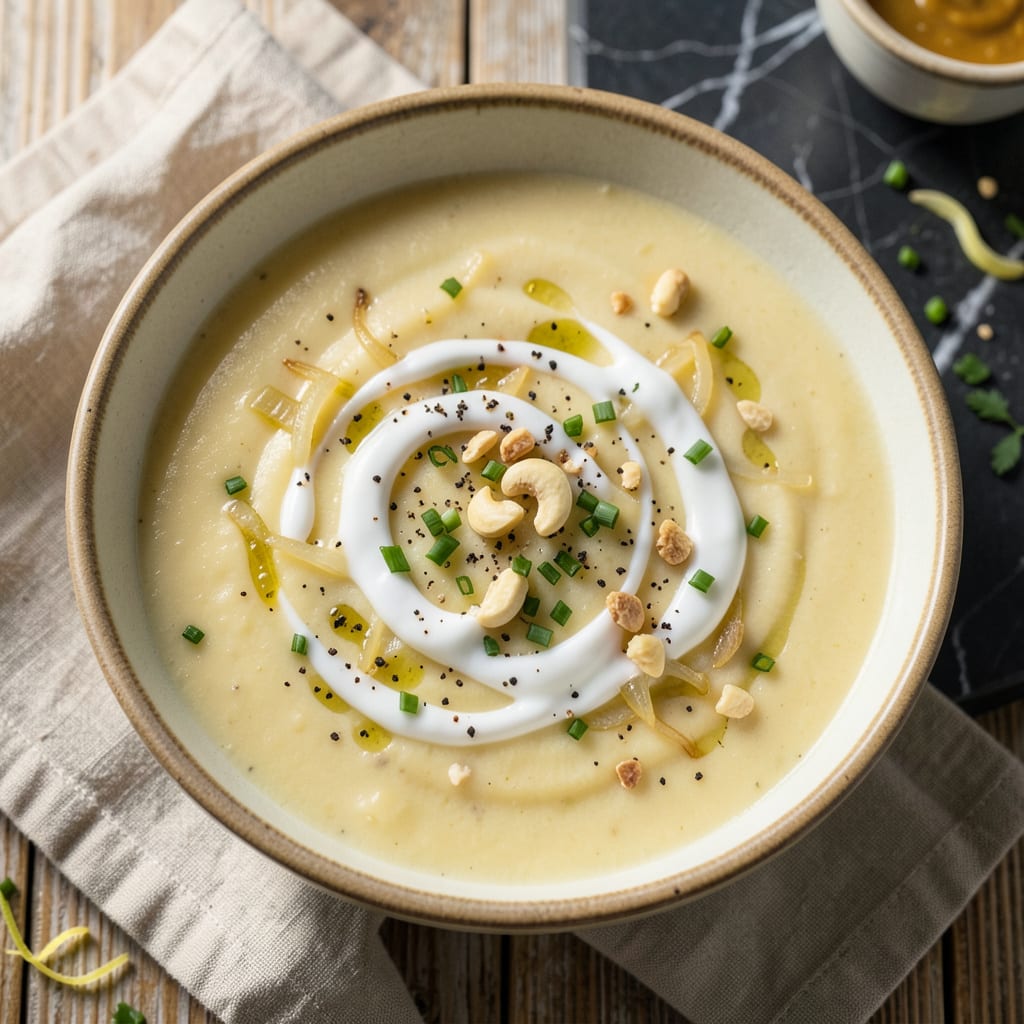
Creamy potato soup without dairy isn’t just possible—it’s a revelation for anyone seeking rich, velvety texture without traditional ingredients. This recipe transforms simple potatoes into a deeply satisfying bowl of comfort, proving that plant-based alternatives can deliver the same hearty warmth you crave. The secret lies in blending a portion of the soup and incorporating a clever dairy-free thickener that mimics cream’s luxurious mouthfeel.
What emerges is a bowl of soup that’s simultaneously velvety and hearty, with all the familiar comfort of classic potato soup but none of the dairy. Perfect for chilly evenings or when you need a meal that feels like a warm embrace, this version keeps the soul-satisfying qualities intact while making it accessible to everyone. Serve with crusty bread for the complete experience.
Ingredients for Potato Soup Recipe Without Milk
This dairy-free transformation relies on Yukon Golds, coconut milk, and cashews to achieve that signature creamy texture without compromise.
| Ingredient | Amount | Notes |
|---|---|---|
| Yukon Gold Potatoes 🥔 | 2 ½ lb | Peeled and diced into 1-inch cubes |
| Yellow Onion 🧅 | 1 whole | Medium, finely diced |
| Garlic Cloves 🧄 | 4 cloves | Minced for optimal flavor infusion |
| Vegetable Broth 💧 | 4 cups | Low-sodium preferred for control |
| Full-Fat Coconut Milk 🥥 | 1 can | 13.5 oz can, well-shaken |
| Raw Cashews 🌰 | ½ cup | Soaked in hot water 15 minutes |
| Nutritional Yeast 🧂 | ¼ cup | For cheesy, umami depth |
| Extra-Virgin Olive Oil 🫒 | 2 tbsp | First cold-press preferred |
| Dijon Mustard 🟡 | 1 tbsp | Smooth variety, not grainy |
| Smoked Paprika 🌶️ | 1 tsp | Spanish variety for authentic smoke |
| Dried Thyme 🍃 | 1 tsp | Crushed between fingers to release oils |
| Bay Leaves 🌿 | 2 whole | Fresh or dried, removed before serving |
| Sea Salt 🧂 | 1 ½ tsp | Diamond Crystal preferred for precision |
| Freshly Ground Black Pepper 🌶️ | ½ tsp | Coarse grind for texture |
| Fresh Chives 🌱 | ¼ cup | Thinly sliced for garnish |
The potatoes are fundamental—Yukon Golds offer the ideal waxy-creamy balance that breaks down beautifully when blended. For the coconut milk, Thai Kitchen or Native Forest brands provide consistent fat content critical for texture. Cashews must be raw and unsalted; Terrasoul Superfoods offers reliable quality in bulk. Nutritional yeast isn’t optional—Bragg or Bob’s Red Mill deliver the cheesy depth that replaces dairy’s richness. Optimal results require precise salt measurement; Diamond Crystal kosher salt allows for better control than table salt.
For those avoiding nuts, substitute the cashews with 0.5 cup silken tofu (blended smooth) or 0.33 cup raw sunflower seeds (soaked). Coconut milk allergies can use unsweetened oat milk plus 2 tbsp coconut cream for similar body. The smoked paprika is non-negotiable for depth, but regular paprika works in a pinch. Fresh thyme can replace dried at three times the volume. Vegetable broth should be robust—Imagine No-Chicken or Better Than Bouillon No-Chicken Base are superior choices for umami.
The blended soup base maintains quality for 4 days refrigerated in airtight containers, though texture may thicken slightly. Freeze portions for up to 3 months—thaw overnight in the refrigerator before reheating. Garnishes should be added fresh; chives wilt within 24 hours when stored. For optimal reheating, add a splash of broth and warm gently over medium-low heat, stirring frequently to prevent separation. The coconut milk may separate when frozen; re-blend after thawing for restored creaminess.
Why You’ll Love This Recipe
- One-Pot Magic: I love that this soup comes together in a single pot—no blender, no extra bowls, just chop, simmer, and stir. The Yukon Golds break down so nicely you barely need to mash them, which means less cleanup and more time to relax.
- Rich Without Dairy: Here’s what sold me—the full-fat coconut milk gives it this velvety texture that fools everyone into thinking there’s heavy cream in it. The garlic and onions caramelize just enough to add depth, so it’s cozy but never bland.
- Meal Prep Hero: This soup thickens up beautifully overnight, making it ideal for packing lunches or freezing in portions. I’ll be real: it tastes even better the next day when the flavors meld, and the coconut milk keeps it from separating weirdly like some dairy soups do.
- Budget Stretch: A 5-pound bag of Yukon Golds costs less than fancy ingredients, and this recipe turns them into something that feels indulgent. Honestly, I’ve served it to guests who assumed it was some gourmet restaurant trick—no one guesses it’s just potatoes and pantry staples.
Step-by-Step Instructions for Potato Soup Without Milk
This method delivers velvety texture and rich flavor through careful layering of ingredients and precise cooking techniques.
Step 1: Sauté Aromatics to Build Flavor Foundation
Heat the 2 tbsp extra-virgin olive oil in a large Dutch oven over medium heat until shimmering. Add the finely diced yellow onion and cook for 5-7 minutes, stirring occasionally, until translucent and just beginning to caramelize at the edges. This slow cooking develops the onion’s natural sweetness without burning.
Add the minced garlic cloves and cook for 1 minute until fragrant but not browned. Immediately stir in the 1 tsp smoked paprika, 1 tsp dried thyme (crushed between your fingers), 1.5 tsp sea salt, and 0.5 tsp freshly ground black pepper. The spices should bloom in the oil, releasing their essential oils and creating a robust aromatic base for the soup.
Step 2: Simmer Potatoes with Broth and Bay Leaves
Add the 2.5 lb diced Yukon Gold potatoes to the pot, stirring to coat them evenly with the spiced oil. Pour in the 4 cups vegetable broth and add the 2 whole bay leaves. Bring the mixture to a boil over high heat, then immediately reduce to a gentle simmer.
Cook uncovered for 15-18 minutes until the potatoes are fork-tender but not falling apart. You’ll know they’re ready when a knife slides through easily with minimal resistance. The broth should reduce slightly, concentrating the flavors while the potatoes absorb the aromatic liquid. Remove and discard the bay leaves before proceeding to the next step.
Step 3: Create Creamy Base with Cashews and Coconut Milk
Drain the 0.5 cup raw cashews (previously soaked in hot water for 15 minutes) and add them to the pot along with the 1 can full-fat coconut milk. The cashews should be soft and pliable. Stir in the 1 tbsp Dijon mustard and 0.25 cup nutritional yeast, which will contribute both creaminess and umami depth to compensate for the absence of dairy.
Using an immersion blender, purée the soup until completely smooth. For optimal texture, blend for 2-3 minutes, moving the blender continuously throughout the pot. The mixture should transform into a velvety, uniform consistency with no visible potato chunks remaining. If using a countertop blender, work in batches and return the puréed soup to the pot.
Step 4: Adjust Seasoning and Achieve Perfect Consistency
Return the soup to low heat and simmer gently for 5 minutes, stirring occasionally. This final cooking step allows the flavors to meld completely. Taste and adjust the seasoning if needed—the sea salt should enhance the natural potato sweetness without overpowering, and the smoked paprika should provide a subtle background warmth.
If the soup appears too thick, thin it with additional vegetable broth 1/4 cup at a time until reaching your desired consistency. The ideal texture should coat the back of a spoon while still pouring easily. For a perfectly smooth finish, strain through a fine-mesh sieve if any fibrous cashew pieces remain, though proper soaking and blending should eliminate this need.
Step 5: Serve with Fresh Garnishes
Ladle the hot soup into warmed bowls. Garnish each serving with a generous sprinkle of the 0.25 cup thinly sliced fresh chives, which provide a bright, oniony contrast to the rich soup base. For additional texture, consider a light drizzle of extra-virgin olive oil or a sprinkle of reserved smoked paprika.
Serve immediately while piping hot. The soup will maintain its creamy consistency for up to 3 days when refrigerated in an airtight container, though the flavor deepens considerably after 24 hours as the ingredients continue to meld. Reheat gently over low heat, stirring occasionally to prevent separation.
Troubleshooting potato soup recipe without milk
Soup Too Thin
If your potato soup ends up thinner than desired, don’t panic—this is easily fixable. Return the soup to the pot and simmer uncovered over medium-low heat for an additional 10-15 minutes. The liquid will reduce and concentrate naturally. For faster results, create a slurry by mixing 2 tbsp cornstarch with 2 tbsp cold water, then whisk it into the simmering soup. 💡
Grainy Texture Issues
A grainy texture usually means the cashews weren’t blended thoroughly. Return the soup to the blender and process for another 1-2 minutes until completely smooth. If you don’t have an immersion blender, strain the soup through a fine-mesh sieve to catch any remaining cashew particles. Soaking cashews in boiling water for 20 minutes (instead of 15) prevents this issue.
Coconut Flavor Overpowering
If the coconut taste is too prominent, balance it by adding 1 tbsp lemon juice or 1 tsp apple cider vinegar to brighten the flavors. You can also dilute the coconut intensity by stirring in ½ cup additional vegetable broth. For future batches, try using light coconut milk instead of full-fat, though the texture will be slightly less creamy.
Soup Too Thick
An overly thick soup is simple to adjust. Thin it gradually with ¼ cup warm vegetable broth at a time, stirring well after each addition. I prefer Imagine No-Chicken Broth for its neutral flavor. If you’ve already added the maximum broth, a splash of unsweetened almond milk works well without altering the taste profile significantly.
Lumpy Potatoes
Lumpy potatoes mean they weren’t cooked long enough before blending. Return the soup to a simmer and cook for another 5-7 minutes until the potatoes are completely soft. Test by mashing a piece against the pot’s side—it should dissolve easily. If you’re short on time, use a potato masher to break up larger chunks before blending again.
Separation When Reheating
When reheating leftovers, you might notice the soup separates. This happens because coconut milk naturally separates when cooled. Simply whisk vigorously while reheating over low heat to re-emulsify. For stubborn separation, blend briefly with an immersion blender. Adding 1 tsp cornstarch mixed with water when reheating helps stabilize the texture. ❄️
Nutrition Facts
Frequently Asked Questions
What can I use instead of cashews for creaminess?
For nut-free versions, try 0.5 cup silken tofu (blended smooth) or 0.33 cup raw sunflower seeds (soaked 20 minutes in hot water). Both create similar richness without altering flavor.
Why does my soup taste too coconutty?
Balance the flavor by adding 1 tbsp lemon juice or 1 tsp apple cider vinegar. You can also use light coconut milk next time for milder taste. The acidity brightens the soup beautifully.
Can I make this ahead for meal prep?
The soup keeps 4 days refrigerated in airtight containers. Flavor actually deepens after 24 hours. Reheat gently over low heat, stirring occasionally.
What’s the best potato variety to use?
Yukon Golds are ideal for their waxy-creamy balance. Russets work too but require 2 extra minutes simmering. Avoid red potatoes—they stay too firm.

- 8 Bean Soup Recipe Crock Pot: Hearty Vegetable Medley in One Pot - September 25, 2026
- 4C Bread Crumbs Meatballs Recipe: Crispy Crust and Juicy Centers - September 25, 2026
- 6 Oz Chocolate Chip Cookie Recipe: Perfectly Balanced Crispy Edges and Chewy Hearts - September 25, 2026