
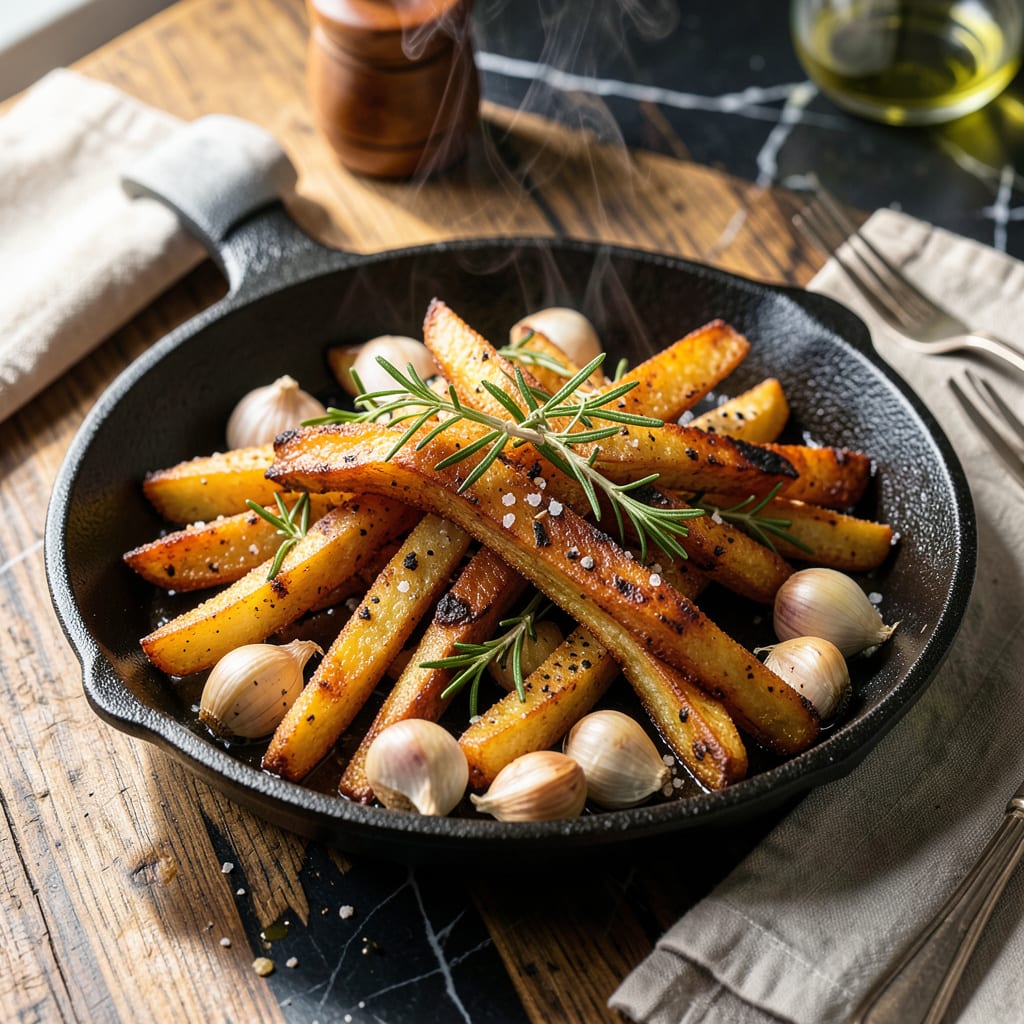
There’s nothing quite like potatoes fried in duck fat—rich, crispy, and packed with deep, savory flavor. This method transforms simple potatoes into a gourmet side dish worth savoring.
With just a few ingredients and careful attention to heat, you’ll achieve perfectly golden, crispy edges and tender centers. The duck fat adds a luxurious touch that elevates every bite.
Ingredients for Potatoes Fried in Duck Fat
Transform humble potatoes into a luxurious side with duck fat and fresh herbs.
| Ingredient | Amount | Notes |
|---|---|---|
| Russet Potatoes 🥔 | 2 lb | Peeled and cut into sticks |
| Duck Fat 🦆 | ¾ cup | Rendered for frying |
| Kosher Salt 🧂 | 1 ½ tsp | Diamond Crystal preferred |
| Freshly Ground Black Pepper 🌶️ | ½ tsp | Coarse grind for texture |
| Garlic Cloves 🧄 | 4 cloves | Minced for garnish |
| Fresh Rosemary 🌿 | 2 tbsp | Chopped, for aromatic finish |
| Fresh Thyme 🍃 | 2 tsp | Leaves stripped from stems |
| Neutral Oil 🫒 | 2 tbsp | For initial frying if needed |
| Lemon Wedges 🍋 | 4 pieces | For serving |
| Flaky Sea Salt 🧂 | ½ tsp | For finishing |
[recipeingredientscaler]
The duck fat is non-negotiable for that signature richness. Render it yourself from duck legs or purchase pre-rendered from D’Artagnan or Epicurious. Russet potatoes are ideal for their high starch content, which delivers maximum crispiness. Avoid waxy varieties like red or new potatoes—they won’t achieve the same golden edges. Look for duck fat with a deep amber color for the best flavor.
No duck fat on hand? Beef tallow comes closest in richness, though the flavor profile differs. Olive oil works in a pinch but lacks the depth. For herbs, fresh is essential—dried won’t provide the same aromatic punch. If rosemary isn’t available, sage or marjoram can substitute. The lemon wedges add a bright contrast to the richness—don’t skip them.
Rendered duck fat keeps in the fridge for 6 months or frozen for 1 year. Store potatoes in a cool, dark place—never refrigerate, as the starch converts to sugar. The fried potatoes are best served immediately but can be kept warm in a 200°F oven for up to 30 minutes without losing crispness.
Why You’ll Love This Recipe
- One Pan Magic: I toss the potatoes in duck fat, let them crisp up, and that’s it—no fuss, no extra dishes.
- Rich and Decadent: The duck fat gives them this deep, savory flavor that’s next-level compared to regular oil.
- Weeknight MVP: I serve these with eggs for breakfast or alongside steak for dinner. Honestly, they fit anywhere.
- Leftover Joy: They reheat beautifully in the oven, so I double the batch and save half for lazy lunches.
Step-by-Step Instructions for Potatoes Fried In Duck Fat
Master the technique for achieving the ultimate crispy texture with rich, savory depth in every bite.
Step 1: Prepare and Soak the Potatoes
Peel the 2 lb Russet Potatoes and cut them into even ½-inch thick sticks. Consistency in sizing ensures even cooking, so take your time with this step. I prefer a mandoline for perfectly uniform fries, but a sharp knife works just as well if you maintain steady pressure.
Place the cut potatoes in a bowl of cold water and let them soak for 30 minutes. This step removes excess starch from the surface, which is crucial for achieving maximum crispiness. You’ll notice the water turns cloudy—that’s the starch releasing. Drain and pat them completely dry with a clean kitchen towel before frying.
Step 2: Initial Fry in Neutral Oil
Heat the 2 tbsp Neutral Oil in a large, heavy-bottomed skillet or Dutch oven over medium-high heat until it reaches 325°F. Use a deep-fry thermometer for accuracy—this temperature is ideal for the first fry, which cooks the potatoes through without browning them.
Working in batches to avoid crowding, carefully add the dried potato sticks to the hot oil. Fry for 6-8 minutes until they’re soft and just beginning to turn pale gold but not brown. Crowding the pan lowers the oil temperature, resulting in soggy fries, so give them space to cook evenly. Remove with a slotted spoon and drain on a wire rack set over a baking sheet.
Step 3: Final Fry in Duck Fat
In the same skillet, heat the 0.75 cup Duck Fat over medium-high heat until it reaches 375°F. Duck fat has a lower smoke point than many oils, so monitor the temperature closely. The rendered fat should shimmer but not smoke. This is where the magic happens—the duck fat infuses the potatoes with its rich, savory depth.
Return the par-cooked potatoes to the hot duck fat in a single layer. Fry for 3-5 minutes, turning occasionally, until they’re deep golden brown and crispy. Listen for the sizzle—it should be vigorous but not violent. The fries are ready when they float and have a uniform, crispy exterior. Use the slotted spoon to transfer them to the wire rack again, allowing any excess fat to drain.
Step 4: Season and Garnish
While the potatoes are still hot, sprinkle them with the 1.5 tsp Kosher Salt and 0.5 tsp Freshly Ground Black Pepper. Toss gently to ensure even coverage. The salt will adhere better to the hot surface, so don’t wait for them to cool.
Add the 4 cloves minced Garlic Cloves, 2 tbsp chopped Fresh Rosemary, and 2 tsp Fresh Thyme leaves, tossing once more to distribute the aromatics. The residual heat from the fries will lightly cook the garlic and release the essential oils from the herbs. Finish with a sprinkle of 0.5 tsp Flaky Sea Salt for a final touch of texture and flavor contrast. Serve immediately with the 4 pieces Lemon Wedges on the side for a bright, citrusy note.
Pro Tips For Making Potatoes Fried In Duck Fat
- Parboil First: Soak cut russets in cold water for 10 minutes, then parboil for 5—this washes off excess starch so they crisp instead of gummy in the duck fat.
- Heat the Fat: Let the duck fat get screaming hot before adding potatoes, about 375°F; if it’s not shimmering, they’ll absorb grease instead of frying.
- Skip the Crowd: I learned this the hard way—fry in batches so each piece has room, or they’ll steam and turn soggy instead of golden.
- Smash the Garlic: Lightly crush the garlic cloves with the flat of your knife before frying—it infuses the fat with flavor without burning to a bitter crisp.
Wine and Beer Pairings for potatoes fried in duck fat
Crisp White Wines
A dry Sauvignon Blanc from Loire Valley or New Zealand cuts through the duck fat’s richness beautifully. The citrus notes and bright acidity refresh your palate between each crispy bite. I love Kim Crawford from New Zealand for its consistent quality. 🍷
Rich Red Wines
For red wine lovers, try a Pinot Noir from Oregon’s Willamette Valley. Its earthy undertones and moderate tannins complement the savory depth of the potatoes without overpowering them. Domaine Serene is a reliable choice.
Belgian Ales
A Belgian Tripel like Westmalle offers fruity esters and a crisp finish that pairs surprisingly well with the duck fat’s richness. The hint of spice in the beer enhances the rosemary and thyme garnishes. The carbonation cleanses your palate. 🍺
Dark Lager Options
Opt for a Munich Dunkel or Schwarzbier for a darker beer pairing. The toasted malt flavors mirror the golden crust of the potatoes, while the smooth finish balances the dish’s savory notes. Ayinger Altbairisch is a personal favorite.
Sparkling Alternatives
A dry Brut Champagne or Prosecco provides effervescence that lifts the richness. The bubbles scrub your palate clean, making each bite taste as fresh as the first. Veuve Clicquot Yellow Label is a crowd-pleaser for special occasions.
Nutrition Facts
Frequently Asked Questions
What’s the best potato type for frying?
Russets are ideal for their high starch content, delivering maximum crispiness. Avoid waxy varieties like red or new potatoes—they won’t achieve the same golden edges.
Can I reuse the duck fat?
Yes! Strain and store it in an airtight container in the fridge for up to 6 months. Reuse it for frying or roasting to add depth to other dishes.
Why soak potatoes before frying?
Soaking removes excess starch from the surface, which is crucial for achieving maximum crispiness. Skip this step, and you risk soggy results.
Can I bake these instead of frying?
Baking won’t replicate the same texture, but you can toss potatoes in melted duck fat and roast at 425°F for 40-45 minutes for a crispy alternative.

- 8 Bean Soup Recipe Crock Pot: Hearty Vegetable Medley in One Pot - September 25, 2026
- 4C Bread Crumbs Meatballs Recipe: Crispy Crust and Juicy Centers - September 25, 2026
- 6 Oz Chocolate Chip Cookie Recipe: Perfectly Balanced Crispy Edges and Chewy Hearts - September 25, 2026