
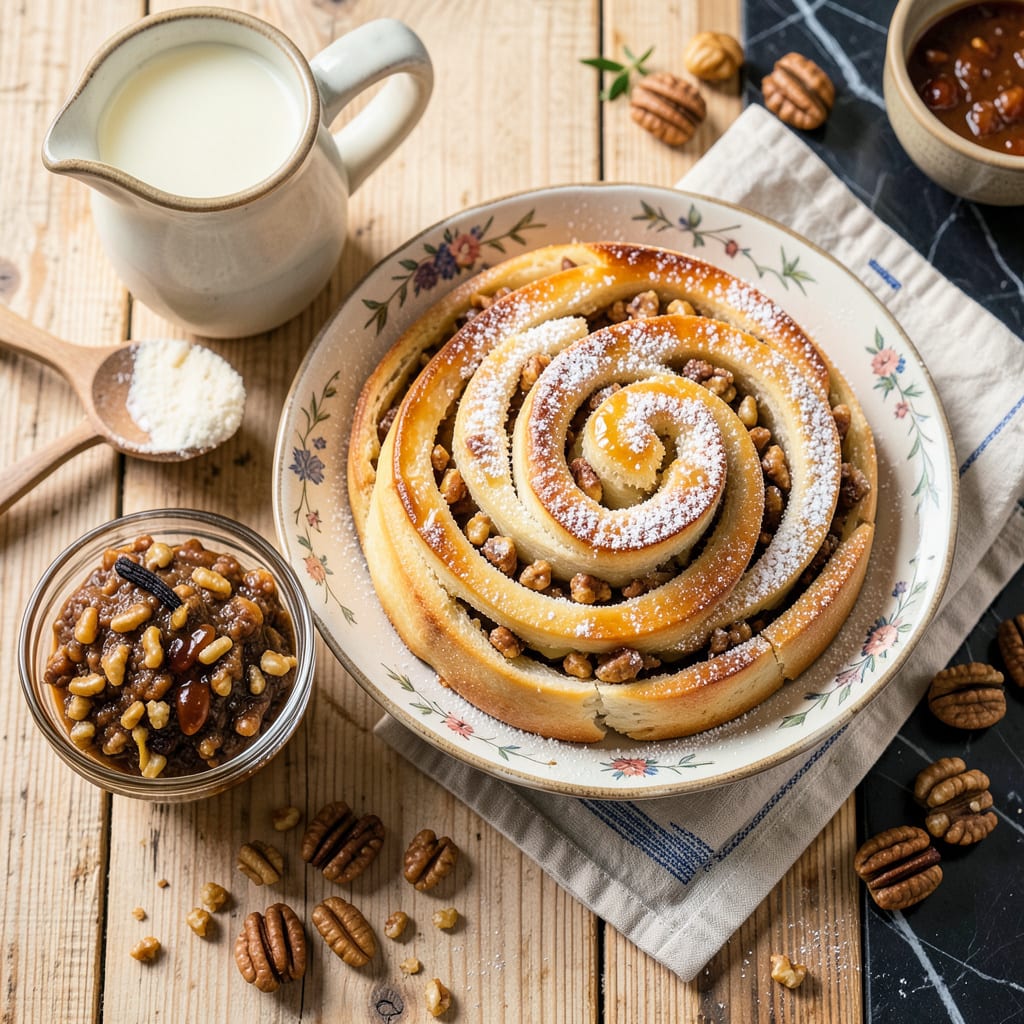
Potica represents the heart of Slovenian baking tradition, where delicate yeast dough swirls around rich nut filling to create a masterpiece of texture and flavor. This isn’t just bread—it’s a celebration of heritage, often gracing holiday tables and family gatherings across Slovenia. The contrast between tender, slightly sweet dough and the caramelized nut filling makes every slice unforgettable.
The art lies in perfect balance: dough rolled paper-thin yet sturdy enough to hold its shape, filling spread evenly without overpowering. While walnut remains classic, modern variations incorporate poppy seeds, tarragon, or even chocolate. What remains constant is the meticulous technique that transforms simple ingredients into something extraordinary—proof that patience in the kitchen yields remarkable results.
Ingredients for Potica
This traditional Slovenian masterpiece requires precise ingredients to achieve its signature delicate dough and rich nut filling balance.
| Ingredient | Amount | Notes |
|---|---|---|
| All-Purpose Flour 🌾 | 4 cups | Plus extra for dusting work surface |
| Active Dry Yeast 🍞 | 1 package | Equivalent to 2.25 tsp |
| Granulated Sugar 🍬 | ½ cup | Divided for dough and filling |
| Whole Milk 🥛 | 1 cup | Warm to 110°F for yeast activation |
| Unsalted Butter 🧈 | ½ cup | Melted and cooled to room temperature |
| Large Eggs 🥚 | 2 whole | Room temperature, divided for dough and glaze |
| Vanilla Extract 🌿 | 1 tsp | Pure extract for optimal flavor |
| Fine Sea Salt 🧂 | 1 tsp | Divided for dough and filling |
| Walnuts 🌰 | 3 cups | Finely ground for filling consistency |
| Honey 🍯 | ⅓ cup | Warm liquid for easier incorporation |
| Ground Cinnamon 🌶️ | 1 tbsp | Freshly ground preferred for potency |
| Heavy Cream 🥛 | ¼ cup | For final glaze before baking |
| Rum 🍹 | 2 tbsp | Dark rum for depth in filling |
| Lemon Zest 🍋 | 1 tbsp | Freshly grated for brightness |
| Confectioners' Sugar 🍚 | ¼ cup | For dusting finished potica |
The flour quality directly impacts dough elasticity. King Arthur All-Purpose provides consistent protein content (11.7%) for optimal structure. Yeast freshness is non-negotiable—verify expiration dates and store unopened packages in the refrigerator. For the walnuts, Diamond of California offers reliable quality; toast them briefly before grinding to intensify flavor. The honey should be raw and unfiltered (local farmers markets often carry superior varieties) for complex sweetness that complements the cinnamon’s warmth.
Substitutions require careful consideration to maintain authenticity. Almond milk with 1 tsp vinegar can replace whole milk in a pinch, though richness will diminish. For alcohol-free versions, substitute rum with apple cider reduced by half. Poppy seeds (2 cups) may replace walnuts, requiring additional 2 tbsp milk in the filling for proper consistency. The lemon zest is essential—bottled juice cannot replicate the aromatic oils in fresh zest, though orange zest at half quantity offers an acceptable variation.
Dough components should be at room temperature (70°F) before combining. Store ground walnuts in an airtight container for up to 3 days before use to prevent rancidity. The assembled potica keeps well wrapped at room temperature for 48 hours, though flavor develops further after 24 hours. For longer storage, refrigerate for 5 days or freeze slices between parchment for 3 months—reheat briefly at 300°F to restore texture.
Why You’ll Love This Recipe
- I’ll be real: I’ve served this at Christmas brunch and packed slices in school lunches. It’s fancy enough for guests but unfussy enough for a random weekday treat—especially since the dough rises while you’re doing other things.
- Dough Hook Magic: Honestly, the stand mixer does 90% of the work here. Just toss in the flour, yeast, warm milk, and butter—let it knead while you prep the filling. No hand-cramps, no mess.
- Buttery Layers Win: That first bite where the crispy golden crust gives way to the swirled, buttery-sweet filling? I’ve made this a dozen times and still pause to savor it. The whole milk and extra butter in the dough make it ridiculously tender.
- Holiday or Tuesday: I’ll be real: I’ve served this at Christmas brunch and packed slices in school lunches. It’s fancy enough for guests but unfussy enough for a random weekday treat—especially since the dough rises while you’re doing other things.
Step-by-Step Instructions for Potica
This traditional Slovenian swirl bread requires careful attention to dough texture and filling distribution for optimal results.
Step 1: Activate Yeast and Prepare Dough Base
Begin by warming the whole milk to precisely 110°F—this temperature activates the yeast without killing it. In a stand mixer bowl, combine the warm milk with the active dry yeast and 1 tablespoon of the granulated sugar. Let stand for 5-7 minutes until the mixture becomes foamy and bubbly.
Add the remaining granulated sugar, melted unsalted butter, one large egg, vanilla extract, and ½ teaspoon of the fine sea salt to the yeast mixture. Using the dough hook attachment, mix on low speed until just combined. Gradually incorporate the all-purpose flour, increasing speed to medium as the dough comes together.
Step 2: Knead and Proof the Dough
Continue kneading the dough for 8-10 minutes until it becomes smooth, elastic, and slightly tacky to the touch. The dough should cleanly pull away from the sides of the bowl but still stick slightly to your finger when pressed. If it’s too sticky, add additional flour 1 tablespoon at a time; if too dry, incorporate water 1 teaspoon at a time.
Transfer the dough to a lightly oiled bowl, turning to coat all sides. Cover with a damp kitchen towel and let rise in a warm, draft-free environment for 1-1.5 hours or until doubled in volume. The dough is properly proofed when it springs back slowly when gently pressed with two fingers.
Step 3: Prepare Walnut Filling
While the dough proofs, prepare the filling by finely grinding the walnuts in a food processor until they resemble coarse sand. In a medium bowl, combine the ground walnuts with honey, the remaining ½ teaspoon of fine sea salt, ground cinnamon, rum, and lemon zest. The mixture should hold together when pressed between your fingers but not be overly wet.
If the filling appears too dry, add warm water 1 teaspoon at a time until it reaches the proper consistency. This filling should be spreadable but not runny, as excess moisture will make the potica difficult to roll. Set aside until ready to use.
Step 4: Assemble and Shape the Potica
Once doubled, turn the dough onto a lightly floured surface and roll into a 16×12-inch rectangle, about ⅛-inch thick. The dough should be thin enough to see through slightly when held to light. Spread the walnut filling evenly over the dough, leaving a ½-inch border on all sides.
Beginning with the long side, tightly roll the dough into a log, using the border to seal the edge. Transfer the log to a parchment-lined baking sheet, seam-side down. Shape into a horseshoe or spiral, tucking the ends under slightly to prevent unrolling during baking. Cover loosely and let rise for 30-45 minutes until noticeably puffy.
Step 5: Bake and Finish
Preheat oven to 350°F. Brush the proofed potica with heavy cream mixed with the remaining large egg. Bake for 35-40 minutes until the crust is deep golden brown and the internal temperature reaches 190°F when tested with an instant-read thermometer.
Remove from oven and cool on a wire rack for 20 minutes before dusting with confectioners’ sugar. The potica should have a crisp exterior with visible swirls of filling when sliced. Allow to cool completely before serving to ensure clean slices and optimal texture.
Make-Ahead Tips for potica
Dough Preparation Ahead
You can prepare the potica dough up to 24 hours in advance to streamline your baking day. After kneading, place the dough in an oiled bowl, cover tightly with plastic wrap, and refrigerate. The cold fermentation actually enhances flavor development. When ready to use, let it sit at room temperature for 1 hour before rolling out. 💡
Filling Make-Ahead
The walnut filling keeps beautifully for 3 days in an airtight container at room temperature. I prefer glass jars to prevent any moisture absorption. If you notice the filling drying out, simply mix in 1-2 teaspoons warm water before spreading. This gives you flexibility to bake fresh potica on short notice.
Pre-Rolled Assembly
For ultimate convenience, you can roll and shape the potica up to 12 hours ahead. After assembling the filled log, place it on a parchment-lined tray, cover with oiled plastic wrap, and refrigerate. The slow final proof in the fridge develops incredible depth of flavor while saving you morning prep time.
Freezing Unbaked Potica
Assembled but unbaked potica freezes exceptionally well for up to 2 months. Wrap the shaped log tightly in plastic wrap, then in heavy-duty aluminum foil. When ready to bake, thaw overnight in the refrigerator, then let rise at room temperature for 2-3 hours before baking as directed. The texture remains remarkably close to fresh.
Baked Potica Storage
Once baked and completely cooled, potica stays fresh at room temperature for 3 days when wrapped in a clean kitchen towel. For longer storage, slice and freeze individual pieces between parchment paper in a freezer bag. Reheat slices at 300°F for 8-10 minutes to restore that just-baked quality. ✨
Make-Ahead Glaze
The egg wash can be prepared 1 day ahead and stored in a small airtight container in the refrigerator. Give it a quick whisk before using. For the confectioners’ sugar dusting, I keep a small shaker ready in my pantry—it stays fresh for 6 months and makes last-minute finishing effortless.
Nutrition Facts
Frequently Asked Questions
Why is my dough tearing when I roll it out?
This usually happens if the dough hasn’t rested enough or is too dry. Let it rest for 10 minutes at room temperature if it resists rolling. If tearing persists, knead in 1 teaspoon warm water and rest again. The dough should be soft but not sticky.
Can I substitute another nut for walnuts?
Pecans or hazelnuts work beautifully. Use the same 3 cups measurement, but toast them first to intensify flavor. For allergies, try sunflower seeds or pumpkin seeds—just add 1 extra tablespoon honey for moisture balance.
How do I prevent the filling from leaking out?
Seal the edges tightly by brushing the dough border with water before rolling. Don’t overfill—keep it within ½-inch of the edges. Chilling the filled log for 15 minutes before baking helps set the filling.
What’s the best way to get clean slices?
Use a serrated knife and saw gently without pressing down. For perfect presentation, chill the baked potica for 2 hours before slicing. Wipe the knife clean between cuts for sharp, defined swirls.

- 8 Bean Soup Recipe Crock Pot: Hearty Vegetable Medley in One Pot - September 25, 2026
- 4C Bread Crumbs Meatballs Recipe: Crispy Crust and Juicy Centers - September 25, 2026
- 6 Oz Chocolate Chip Cookie Recipe: Perfectly Balanced Crispy Edges and Chewy Hearts - September 25, 2026