
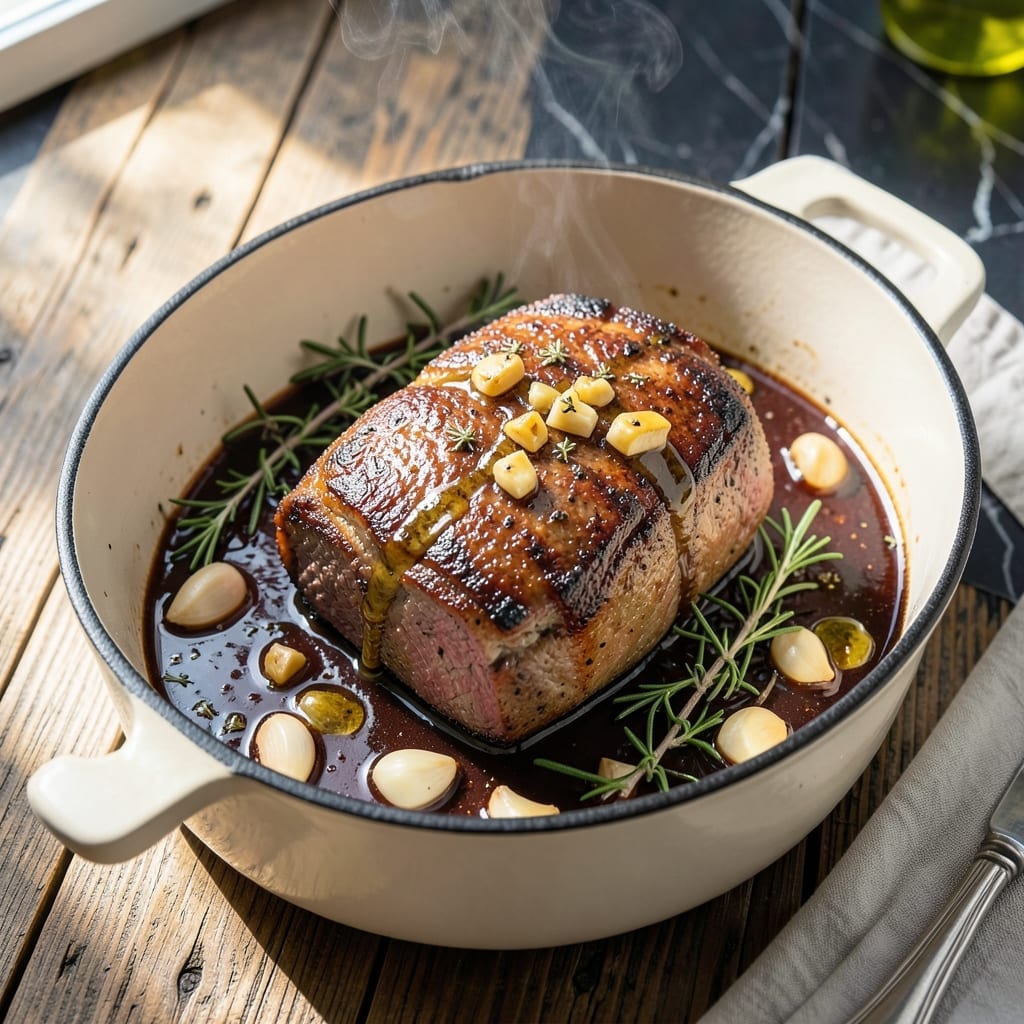
This prime rib pot roast transforms a luxurious cut into a melt-in-your-mouth meal with minimal effort. The wine braise infuses deep, complex flavors while keeping the meat impossibly tender.
A simple herb crust adds texture and aroma, creating a perfect balance of crispy and tender in every bite. The slow cooking process allows the flavors to develop fully over several hours.
What emerges from the oven is a centerpiece-worthy dish with fall-apart meat, rich sauce, and the unmistakable elegance of prime rib. The wine reduces into a glossy, flavorful braising liquid that pairs beautifully with the beef.
Serve with roasted vegetables or mashed potatoes to soak up every drop of the savory sauce. This dish proves that extraordinary results can come from simple, proven techniques.
Ingredients for Prime Rib Pot Roast
Luxurious cut meets simple pantry staples for this elegant braised dish.
| Ingredient | Amount | Notes |
|---|---|---|
| Prime Rib Roast 🥩 | 3 lb | Bone-in, well-marbled preferred |
| Kosher Salt 🧂 | 2 tsp | Diamond Crystal brand preferred |
| Black Pepper 🌶️ | 1 tsp | Freshly ground for best flavor |
| Dried Thyme 🍃 | 1 tbsp | Rubbed between fingers to release aroma |
| Dried Rosemary 🌿 | 1 tbsp | Crushed lightly before using |
| Garlic Cloves 🧄 | 6 cloves | Minced for herb crust |
| Olive Oil 🫒 | 2 tbsp | Extra-virgin for searing |
| Dry Red Wine 🍷 | 2 cups | Bold variety like Cabernet |
| Beef Stock 🍲 | 2 cups | Low-sodium preferred |
| Yellow Onion 🧅 | 1 whole | Large, roughly chopped |
| Carrots 🥕 | 3 whole | Peeled, cut into chunks |
| Celery Stalks 🥬 | 2 whole | Cut into large pieces |
| Tomato Paste 🍅 | 2 tbsp | For depth of flavor |
| Fresh Parsley 🌿 | ¼ cup | Chopped, for garnish |
The prime rib is the star here. Look for bone-in with good marbling—it stays juicier during the long braise. Most butchers at Whole Foods or Local grocery stores will cut it to your preferred thickness (3-4 inches is ideal). The wine matters too: a bold Cabernet or Merlot adds depth. Don’t use cooking wine; it’s too harsh. Fresh herbs work if you’ve got them, but dried are totally fine here.
No red wine? Extra beef stock with a splash of balsamic gets you 90% there. Short on fresh garlic? Garlic powder at one-third the amount works in the crust. The tomato paste can be swapped for 1/4 cup crushed tomatoes, but reduce it first to thicken. For the stock, Better Than Bouillon paste is a great backup—just dissolve it in hot water before adding.
Leftovers taste even better the next day. Store in the fridge for up to 4 days or freeze for 3 months. The braising liquid thickens as it cools—perfect for gravy. Reheat gently on the stove to keep the meat tender.
Why You’ll Love This Recipe
- One Pan Wonder: I toss the prime rib with salt, pepper, thyme, and rosemary, then let the oven do the work—minimal prep, maximum payoff.
- Herb Infused Bliss: The rosemary and thyme crust forms this incredible aromatic seal that makes every bite ridiculously good.
- Sunday Supper Star: Honestly, it’s my go-to for feeding a crowd or just meal prepping lunches for the week.
- Leftover Magic: That rich, herby prime rib tastes even better the next day in sandwiches or over mashed potatoes.
Step-by-Step Instructions for Prime Rib Pot Roast
This method transforms your roast into a melt-in-your-mouth masterpiece with rich wine sauce.
Step 1: Sear and Season the Prime Rib
Pat the 3 lb Prime Rib Roast dry with paper towels—this ensures a perfect sear. Season generously with the 2 tsp Kosher Salt, 1 tsp Black Pepper, 1 tbsp Dried Thyme, and 1 tbsp Dried Rosemary. I rub the herbs between my fingers to release their oils.
Heat the 2 tbsp Olive Oil in a Dutch oven over medium-high heat. Sear the roast on all sides for 3-4 minutes per side until deeply browned. Don’t rush this—you want a rich crust. Transfer the roast to a plate and set aside.
Step 2: Sauté Aromatics and Build the Braising Base
In the same Dutch oven, add the roughly chopped 1 whole Yellow Onion, 3 whole Carrots, and 2 whole Celery Stalks. Cook for 5-7 minutes until softened and lightly browned. Stir in the minced 6 cloves Garlic Cloves and cook for 30 seconds until fragrant.
Push the vegetables to the sides and add the 2 tbsp Tomato Paste to the center. Cook for 1-2 minutes, stirring constantly, until it darkens slightly. This deepens the flavor base for your braising liquid.
Step 3: Deglaze and Braise the Roast
Pour in the 2 cups Dry Red Wine and scrape up all the browned bits from the bottom of the pot with a wooden spoon. Let it simmer for 3-4 minutes until reduced by half. This step captures all that caramelized flavor.
Return the roast to the pot and add the 2 cups Beef Stock. The liquid should come about halfway up the roast. Bring to a simmer, then cover tightly and transfer to a preheated 325°F oven.
Step 4: Slow Cook to Tender Perfection
Braise for 2.5 to 3 hours, turning the roast every 45 minutes to ensure even cooking. You’ll know it’s ready when the meat pulls apart easily with a fork and reaches an internal temperature of 195-200°F.
The vegetables should be tender and the liquid reduced to a rich, flavorful sauce. If the braising liquid gets too low, add a splash of water or stock to maintain the level.
Step 5: Rest and Serve
Carefully transfer the roast to a cutting board and tent with foil. Let it rest for 15-20 minutes—this allows the juices to redistribute. Skim any excess fat from the sauce and adjust seasoning if needed.
Slice the roast against the grain and arrange on a platter. Spoon the sauce and vegetables over the top, garnish with the 0.25 cup Fresh Parsley, and serve immediately. The meat should be fork-tender with a rich, wine-infused sauce that soaks into every bite.
Pro Tips For Making Prime Rib Pot Roast
- Sear High Heat: Crank your pan to smoking hot before searing the prime rib—this builds a deep crust that locks in juices. I learned this the hard way after too many gray, steamed roasts.
- Salt Generously Night Before: Coat the entire roast with kosher salt at least 12 hours ahead; it penetrates deep and seasons evenly. Sounds like overkill, but it’s the only way to get flavor all the way through.
- Skip Cold Meat: Let the prime rib sit at room temperature for 1-2 hours before cooking. Resist the urge to rush—cold meat cooks unevenly and dries out at the edges.
- Use Fresh Herbs: Swap dried thyme and rosemary for fresh if you can; they brighten the flavor. If not, crush the dried herbs between your fingers to wake them up before rubbing on the meat.
Dietary Considerations for This Dish
Gluten-Free Friendly
This dish is naturally gluten-free as written, with no wheat-based ingredients. Just double-check your beef stock and wine labels—some brands add gluten-containing additives. I always use San Pellegrino stock for peace of mind.
Low-Carb Option
With only 12g net carbs per serving (mostly from vegetables), this fits perfectly into keto or low-carb diets. Skip the mashed potatoes and serve with cauliflower mash instead. The meat and sauce are rich enough to satisfy without extra carbs.
Dairy-Free Naturally
No dairy appears in the recipe, making it safe for lactose-intolerant diners. The olive oil and natural beef juices create plenty of richness. Just ensure your garnish doesn’t include cheese or butter.
Lower Sodium Version
To reduce sodium, use low-sodium beef stock and cut the kosher salt to 1 tsp. The wine and herbs still deliver bold flavor. I find Diamond Crystal salt has less sodium by volume than other brands. 💪
Paleo Adaptation
This recipe is already paleo-compliant with its focus on meat and vegetables. The only adjustment is using ghee instead of olive oil for searing if you avoid all seed oils. The wine is optional for strict paleo followers.
Allergen Notes
The only potential allergens are celery and carrots for those with sensitivities. The dish contains no nuts, eggs, or soy. Always verify wine processing methods for sulfite allergies. 💡
Nutrition Facts
Frequently Asked Questions
Can I use a different cut of beef?
Chuck roast works well as a budget-friendly alternative. It has more connective tissue but becomes tender with the long braise. Avoid lean cuts like sirloin—they dry out during cooking.
How do I know when it’s done?
The meat should reach 195-200°F internally and pull apart easily with a fork. Plan for 2.5-3 hours total cooking time at 325°F.
What if my sauce is too thin?
Remove the meat and simmer the sauce uncovered for 5-10 minutes to reduce. For quicker results, mix 1 tbsp cornstarch with water and stir in.
Can I make this in a slow cooker?
Yes! Sear the meat first, then cook on low for 8-10 hours. The flavors develop beautifully, though the crust won’t be as pronounced.

- 4C Bread Crumbs Meatballs Recipe: Crispy Crust and Juicy Centers - September 25, 2026
- 6 Oz Chocolate Chip Cookie Recipe: Perfectly Balanced Crispy Edges and Chewy Hearts - September 25, 2026
- 6-Inch Coffee Cake Recipe: Vanilla Bean Swirls and Buttery Streusel Topping - September 25, 2026