
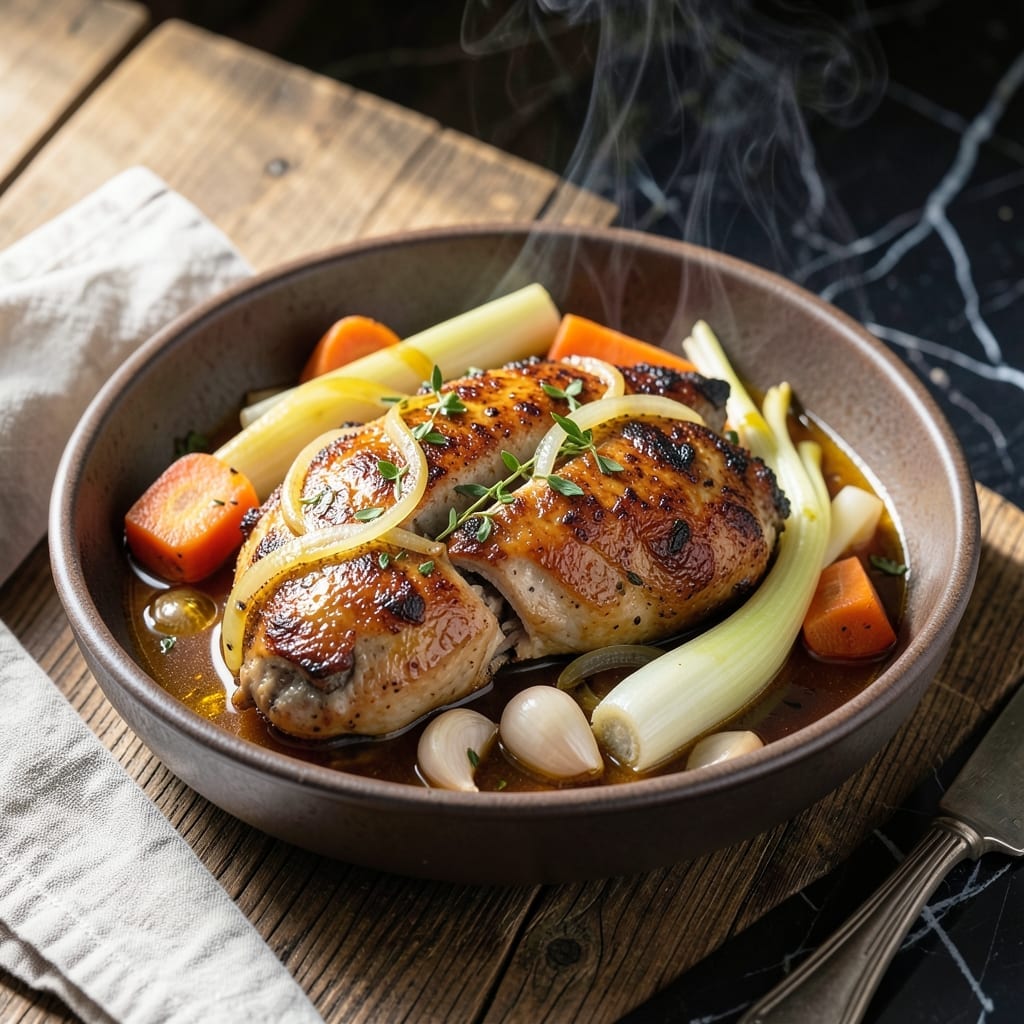
Slow cooking transforms rabbit into tender, fall-off-the-bone perfection with minimal effort. This method preserves the meat’s natural richness while allowing flavors to develop deeply over time.
The crock pot does all the work, gently breaking down the rabbit into succulent pieces. A simple blend of herbs and vegetables enhances the dish without overpowering its delicate flavor.
You’ll end up with meat that’s impossibly tender and infused with aromatic notes from the slow simmer. The result is a dish that tastes like it required hours of attention.
Ideal for special occasions or a comforting weekend meal. This recipe delivers restaurant-quality results with hands-off convenience.
Ingredients for Rabbit Crock Pot
A few fresh herbs, vegetables, and rabbit are all it takes for this slow-cooked dish.
| Ingredient | Amount | Notes |
|---|---|---|
| Rabbit 🐇 | 3 lb | Cut into pieces, skin-on or off |
| Olive Oil 🫒 | 2 tbsp | Extra-virgin for richness |
| Yellow Onion 🧅 | 1 whole | Large, roughly chopped |
| Carrots 🥕 | 3 whole | Peeled, sliced into rounds |
| Celery Stalks 🌿 | 3 whole | Sliced into chunks |
| Garlic Cloves 🧄 | 4 cloves | Peeled, smashed |
| Fresh Rosemary 🌿 | 2 tbsp | Chopped, stems removed |
| Fresh Thyme 🍃 | 2 tbsp | Chopped, stems removed |
| Bay Leaves 🍂 | 2 whole | Dried, whole |
| Chicken Stock 🥣 | 2 cups | Low-sodium preferred |
| White Wine 🍷 | ½ cup | Dry variety, like Sauvignon Blanc |
| Tomato Paste 🍅 | 2 tbsp | For depth of flavor |
| Salt 🧂 | 1 ½ tsp | Diamond Crystal kosher preferred |
| Black Pepper 🌶️ | 1 tsp | Freshly ground |
The rabbit is the foundation here. Source from a reputable butcher or specialty grocer like Whole Foods—freshness is non-negotiable. Look for young rabbit (under 1 lb each) for the most tender result. The herbs should be vibrant and aromatic; if they smell like dust, they’ve lost their potency. Rosemary and thyme from Trader Joe’s are consistently reliable.
No white wine? Substitute chicken stock with a splash of apple cider vinegar. Fresh herbs unavailable? Dried at one-third the amount. For the stock, homemade is ideal, but high-quality store-bought (like Better Than Bouillon) works in a pinch. If rabbit is hard to find, chicken thighs (bone-in, skin-on) are a serviceable alternative, though the flavor profile will differ slightly.
Store raw rabbit in the coldest part of your fridge for up to 2 days, or freeze for 6 months. Leftovers keep for 4 days refrigerated or 3 months frozen. Always thaw frozen rabbit in the fridge overnight before cooking.
Why You’ll Love This Recipe
- Set It and Forget: I toss in rabbit, veggies, and olive oil before work, and come home to a house that smells like a cozy cabin.
- Rich and Rustic: The rabbit falls off the bone, and the carrots, onion, and celery soak up every bit of that deep, savory flavor.
- Feed a Crowd: Honestly, this makes enough for a Sunday supper with leftovers for my lunch the next day.
- Budget Stretcher: Rabbit is lean and affordable, and this pot of goodness costs less than takeout for the family.
Step-by-Step Instructions for Rabbit Crock Pot
This method delivers fall-off-the-bone results with minimal active cooking time.
Step 1: Sear the Rabbit for Depth of Flavor
Pat the 3 lb rabbit pieces dry with paper towels to ensure a good sear. Heat the 2 tbsp olive oil in a large skillet over medium-high heat until shimmering. Working in batches to avoid crowding, sear the rabbit pieces until golden brown on all sides, about 3-4 minutes per side.
This initial sear develops a deep, caramelized crust that will enrich the final dish. Don’t rush this step—proper browning creates the fond that will dissolve into the cooking liquid. Transfer the seared rabbit to your crock pot as you work.
Step 2: Build the Aromatic Base
In the same skillet, add the roughly chopped yellow onion, peeled and sliced carrots, and chunked celery stalks. Cook for 4-5 minutes until the vegetables begin to soften and develop color. Add the 4 peeled, smashed garlic cloves, 2 tbsp fresh rosemary, and 2 tbsp fresh thyme, stirring for 30 seconds until fragrant.
Deglaze the pan with the 0.5 cup white wine, scraping up all the browned bits from the bottom. Stir in the 2 tbsp tomato paste and cook for 1 minute to mellow its raw flavor. This aromatic mixture will form the flavor foundation of your dish.
Step 3: Combine and Slow Cook
Transfer the vegetable mixture to the crock pot with the rabbit. Add the 2 whole bay leaves, 2 cups chicken stock, 1.5 tsp salt, and 1 tsp black pepper. Stir to combine, ensuring the liquid covers about three-quarters of the rabbit pieces.
Cover and cook on low heat for 6-7 hours or on high heat for 3-4 hours. The rabbit is done when the meat pulls away from the bone easily with a fork. This hands-off cooking method transforms tougher cuts into tender, succulent morsels.
Step 4: Rest and Serve
Once the cooking time is complete, remove the 2 bay leaves and discard. Let the rabbit rest in the cooking liquid for 10-15 minutes before serving. This allows the juices to redistribute throughout the meat for maximum tenderness.
Serve the rabbit with its cooking liquid spooned over the top. The vegetables will have softened into the sauce, creating a rich, flavorful broth that complements the tender meat perfectly. The result is a dish where every component contributes to the overall succulence.
Pro Tips For Making Rabbit Crock Pot
- Brown the Rabbit: Sear the rabbit pieces in olive oil until golden before adding to the crock pot—I learned this the hard way after ending up with bland, pale meat that lacked depth.
- Cut Evenly: Chop the onions, carrots, and celery into uniform, 1-inch pieces so they cook at the same rate and don’t turn to mush while the rabbit finishes.
- Skip the Overcrowding: Don’t cram all the rabbit in at once when browning; give each piece space or it’ll steam instead of sear, and you’ll lose that crucial crust.
- Deglaze the Pan: After browning, pour a splash of water or broth into the hot pan to lift those browned bits, then add it all to the crock pot—sounds small, but it packs in serious flavor.
Essential Equipment for This Recipe
Crock Pot Selection
I swear by my 6-quart programmable crock pot from Crock-Pot—it’s the perfect size for this recipe. Look for one with a removable stoneware insert for easy cleanup. A tight-fitting lid is crucial to trap steam and maintain consistent low heat for those 6-7 hours. 🔥
Searing Skillet
A heavy-bottomed 12-inch skillet is essential for properly searing the rabbit. My go-to is a Lodge cast iron skillet—it retains heat beautifully and develops a perfect sear on the meat. Avoid nonstick pans, as they won’t get hot enough for proper browning.
Quality Knives
You’ll need a sharp 8-inch chef’s knife to break down the rabbit if it isn’t pre-cut. I use a Wüsthof Classic—it handles the job with precision. A good paring knife helps with trimming any excess fat or silver skin.
Wooden Spoons
For stirring the aromatic base and deglazing the pan, wooden spoons are my tool of choice. They won’t scratch your skillet’s surface and can handle the high heat needed for caramelization. I keep a 12-inch bamboo spoon in my kitchen for this exact purpose.
Measuring Tools
Accurate measurements matter for the herbs and liquids. I use stainless steel measuring spoons and a glass measuring cup for the 2 cups chicken stock and 0.5 cup white wine. A kitchen scale is handy if your rabbit isn’t pre-portioned.
Thermometer
While the crock pot does most of the work, a instant-read thermometer ensures the rabbit reaches 160°F internal temperature. I trust my ThermoWorks ThermoPop for quick, accurate readings. It’s a small but vital tool for safety and perfection. 🌡️
Nutrition Facts
Frequently Asked Questions
Is it safe to cook rabbit in a crock pot?
Cooking rabbit to 160°F internal temperature for 6-7 hours on low ensures it’s fully done. The slow cooker’s consistent heat eliminates bacteria while keeping the meat tender.
Can I skip searing the rabbit first?
You can, but searing adds depth of flavor. The 3-4 minutes per side creates a caramelized crust that enhances the final dish. Skipping saves time but sacrifices some richness.
What can I use instead of white wine?
Substitute with extra chicken stock plus 1 tbsp apple cider vinegar. This mimics the acidity and depth that 0.5 cup white wine provides in the original recipe.
How do I know when it’s done?
The meat should pull away from the bone easily with a fork. For precision, use a thermometer to confirm it reaches 160°F internally.

- 4C Bread Crumbs Meatballs Recipe: Crispy Crust and Juicy Centers - September 25, 2026
- 6 Oz Chocolate Chip Cookie Recipe: Perfectly Balanced Crispy Edges and Chewy Hearts - September 25, 2026
- 6-Inch Coffee Cake Recipe: Vanilla Bean Swirls and Buttery Streusel Topping - September 25, 2026