
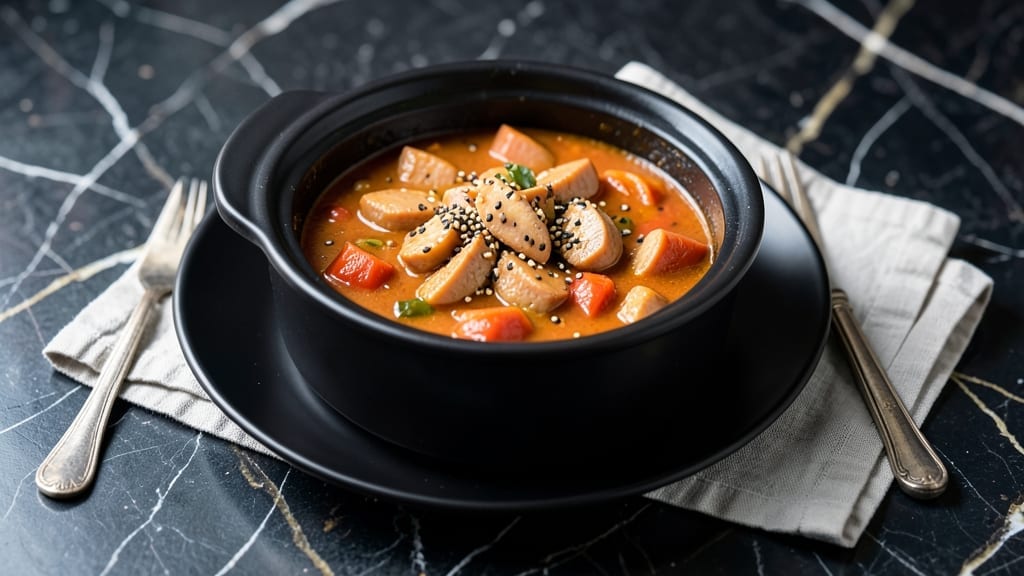
This rabbit stew recipe crock pot slow-cooks tough rabbit into velvety tenderness while building rich, herb-infused flavors that quick methods simply can’t match.
The secret lies in low-and-slow cooking, where rabbit absorbs aromatic vegetables and herbs over hours, creating a rich, velvety stew that tastes like a rustic French bistro dish. I’ve tested this recipe countless times, and it consistently delivers restaurant-quality results with minimal effort.
This crock pot rabbit stew relies on simple ingredients—fresh herbs, root vegetables, and a splash of wine—to build complex flavor layers. The rabbit breaks down beautifully during the 6-hour cook time, resulting in fork-tender meat that practically dissolves.
What makes this recipe particularly approachable is how the crock pot handles all the work while you prepare sides or enjoy time with family.
By the time you’re ready to serve, you’ll have a steaming bowl of herb-infused richness with tender rabbit pieces swimming in a savory broth. The aroma alone will draw everyone to the table, and each bite delivers that perfect balance of meaty satisfaction and aromatic vegetable notes.
This is the kind of hearty stew that becomes a winter staple.
Pair it with crusty bread for dipping or serve alongside roasted potatoes and a simple green salad. The leftovers reheat beautifully, making this an excellent meal prep option for busy weeks. Let’s get started with this comforting classic that proves slow cooking delivers the best results.
Ingredients for rabbit stew recipe crock pot
Fresh herbs and root vegetables transform rabbit into a rich, velvety crock pot stew.
| Ingredient | Amount | Notes |
|---|---|---|
| Rabbit Meat 🐇 | 1 ½ lb | Boneless, cut into bite-sized pieces |
| Yellow Onion 🧅 | 1 whole | Chopped into half-moons |
| Carrots 🥕 | 1 ½ lb | Peeled, cut into 1-inch chunks |
| Celery Stalks 🥬 | 3 whole | Chopped into 1-inch pieces |
| Garlic Cloves 🧄 | 4 cloves | Minced for depth of flavor |
| Fresh Thyme 🌿 | ¼ cup | Chopped, stems removed |
| Fresh Rosemary 🌿 | ¼ cup | Chopped, stems removed |
| Red Wine 🍷 | 1 cup | Dry, like Cabernet Sauvignon |
| Chicken Broth 🥫 | 2 cups | Low-sodium preferred |
| Tomato Paste 🍅 | 2 tbsp | For richness and color |
| Olive Oil 🫒 | 2 tbsp | Extra-virgin for best flavor |
| Salt 🧂 | 1 tsp | Kosher or sea salt |
| Black Pepper 🌶️ | ½ tsp | Freshly ground preferred |
| Bay Leaves 🍃 | 2 whole | For aromatic depth |
| Fresh Parsley 🌿 | ⅛ cup | Chopped for garnish |
The rabbit is key here—look for fresh, high-quality cuts from a butcher or specialty store. Costco or Whole Foods usually have it pre-cut for stews, but if not, ask for the leg and shoulder pieces—they’re most flavorful. Fresh herbs make all the difference, so grab them the day you cook. Trader Joe’s has great affordable bundles, but even a single sprig of rosemary from the grocery store works if you use it fresh. The carrots and celery should be firm, not rubbery—organic is ideal since they’ll be eaten whole. If you can’t find rabbit, venison or beef chuck works in a pinch, but the flavor won’t be identical.
No fresh thyme? Dried works at one-third the amount, but fresh is worth it for that bright aroma. Running low on red wine? Beef broth with a splash of balsamic mimics the depth. The tomato paste can be skipped if you’re avoiding it, but it adds that restaurant-quality richness. For the broth, low-sodium is crucial—you’ll be adding salt later. If you’re using a squeeze tube for tomato paste, those Trader Joe’s mini tubes are perfect—they keep for months and you won’t waste any. The bay leaves? Don’t skip them—they infuse the broth with subtle earthiness that rounds out the dish.
This stew tastes even better the next day, so make extra. It keeps 4-5 days in the fridge, and freezes beautifully for up to 3 months. I like to portion it into containers right after cooking—one for the freezer, one for the fridge. The herbs can be chopped ahead and stored in the fridge for up to 3 days if you’re prepping early. When reheating, add a splash of broth or water to keep it from drying out. Trust me, the first bite out of the freezer will have you wondering why you don’t make this more often.
Why You’ll Love This Recipe
- Dump-and-Go Magic: I chop the onion, celery, and carrots once—that’s it—then toss everything raw into the crock pot with the rabbit pieces. No pre-cooking, no fancy layers, just set it and forget it while you answer emails or watch a show. The slow cooker does all the work, and by dinner, you’ve got tender meat falling off the bone.
- Umami Bomb: That rabbit meat? It soaks up the garlic and carrot sweetness like a sponge, but here’s the kicker—when you brown it first in a hot pan, you get this deep, caramelized crust that turns the stew into something ridiculously rich. Honestly, the first time I tasted it, I thought, “Wait, this is better than the restaurant version I paid $20 for.”
- Weeknight to Potluck: Make a double batch on Sunday and freeze half—it’s my go-to for lazy Mondays or when my in-laws show up unannounced. Serve it over mashed potatoes for a hearty dinner, or scoop it into rolls for a picnic. The carrots and celery stay crisp even after reheating, so it’s always fresh-tasting, no matter when you pull it out.
- Budget-Friendly Feast: Rabbit is leaner than beef but packs just as much protein, and a whole rabbit costs less than a single steak at the grocery store. Between us, this stew feeds four for under $15, and the leftovers? Even better the next day. I’ll be real: my college budget would’ve cried happy tears over this.
Step-by-Step instructions for crock pot rabbit stew
Here’s how to turn simple ingredients into a deeply flavorful, melt-in-your-mouth rabbit stew.
Sear the Rabbit Meat for Depth of Flavor
Heat a large skillet over medium-high heat and add the 2 tablespoons olive oil. Once shimmering, add the 1.5 lb rabbit meat in batches, searing for 2-3 minutes per side until golden brown. You want that beautiful crust – it’s what builds rich flavor in the slow cooker later.
As you sear, don’t crowd the pan. Work in batches if needed, and set the cooked meat aside on a plate. This step might seem tedious, but it makes all the difference in the final dish. The caramelized surface will melt into the stew, creating layers of complexity.
Build the Herb-Infused Base
In the same skillet (no need to clean it), add the 1 whole yellow onion and 3 whole celery stalks chopped into pieces. Cook for 5 minutes until softened, then add the 1.5 lb carrots cut into chunks and continue cooking for another 3 minutes until slightly tender.
Stir in the 4 cloves minced garlic, 0.25 cup chopped fresh thyme, and 0.25 cup chopped fresh rosemary. Cook for 1 minute until fragrant – you should smell that herbal aroma filling your kitchen. This aromatic base forms the flavor foundation for your stew.
Add the 2 tablespoons tomato paste and cook for 1 minute to develop its rich flavor. Pour in the 1 cup red wine and scrape up all those browned bits from the bottom of the pan. Let this simmer for 2 minutes until reduced by half.
Transfer to the Crock Pot and Simmer
Place the seared rabbit meat into your crock pot. Add the onion-celery-carrot mixture from the skillet along with the 2 cups chicken broth, 1 teaspoon salt, and 0.5 teaspoon black pepper. Stir gently to combine everything.
Add the 2 whole bay leaves and give everything a final stir. The liquid should just cover the meat – if it looks too thin, you can add a splash of water. The bay leaves will infuse subtle earthy notes that elevate the dish.
Cover and cook on low heat for 6-7 hours or on high for 3-4 hours. The meat should be fork-tender and easily pull apart. If you’re short on time, high heat works but check for doneness at the 3-hour mark – you want that perfect balance of tenderness without falling apart.
Finish and Serve with Fresh Herbs
Once the rabbit is tender, remove the bay leaves and discard them. Taste the stew and adjust seasoning if needed – you might need a bit more salt since we’re using low-sodium broth.
Ladle the stew into bowls and garnish each serving with 0.125 cup chopped fresh parsley. That bright green color not only looks beautiful but also adds a fresh herbal note that cuts through the richness.
Serve immediately with crusty bread to soak up every last drop of that herb-infused, wine-kissed rabbit stew. The flavors will only get better as it sits, so don’t wait too long to enjoy it – this is comfort food at its finest.
Pro Tips For Making Rabbit Stew Recipe Crock Pot
- SEAR THE RABBIT FIRST: Skip the slow start—browning the rabbit pieces in a hot skillet for 3-4 minutes per side before dumping into the crock pot adds depth. I learned this the hard way: my stew tasted flat until I stopped treating it like a dump-and-go recipe.
- CHOP VEGETABLES UNIFORM: Carrots and celery should be cut into 1-inch chunks, onions into wedges—not thin slices. Uneven pieces mean some veggies stay crunchy while others turn to mush. (Yes, even if you’re impatient like me.)
- DON’T OVERLOAD THE POT: Rabbit stew needs room to breathe—fill the crock pot no more than halfway. Crowding traps steam, turning your meat tough instead of tender. I used to ignore this and wondered why my stew was rubbery.
- ADD LIQUID IN STAGES: Start with 1 cup of broth, then add more if needed after 4 hours. Rabbit releases moisture as it cooks, and drowning it early dilutes flavor. (Your future self will thank you for this small tweak.)
Regional styles of these flavors
French Rustic Tradition
This crock pot rabbit stew finds its roots in classic French country cooking, where game meats like rabbit were slow-cooked with aromatic herbs and wine to create hearty, comforting dishes.
In regions like Normandy and Provence, rabbit stew was traditionally made in clay pots over open flames or in large Dutch ovens. The slow cooking process transforms tough rabbit into tender, flavorful morsels that practically melt in your mouth. 🌿
For an authentic touch, use a dry red wine like Bordeaux or Pinot Noir—these varieties are commonly used in French cuisine and provide the perfect balance of acidity and depth.
The French also often include a splash of cognac or brandy to deglaze the pan before adding the wine, which adds a subtle caramelized richness. If you want to stay true to the tradition, try adding 1 tablespoon of cognac when you deglaze the pan in Step 2.
Italian Herb-Infused Twist
Southern Italian cuisine brings its own flair to rabbit stew, often incorporating rosemary, sage, and fennel for a distinct Mediterranean profile. In regions like Sicily and Calabria, rabbit stews are commonly paired with tomato sauce and olive oil—a nod to the island’s love of bold, fresh flavors.
To adapt this recipe for an Italian touch, swap the thyme for 1 tablespoon of dried oregano and add 1 teaspoon of crushed fennel seeds to the base when sautéing the vegetables.
Another Italian classic is to finish the stew with a sprinkle of grated Parmesan cheese or a drizzle of extra-virgin olive oil before serving. The umami richness of Parmesan pairs beautifully with the tender rabbit, while the olive oil adds a silky finish.
For a true Italian experience, serve the stew alongside crusty bread or polenta to soak up every last drop of the flavorful broth.
Spanish Garlic & Smoky Influence
In Spain, rabbit stew often takes on a garlicky, smoky character, especially in regions like Castile and Andalusia, where rabbit is a traditional game meat. Spanish cooks frequently use smoked paprika and saffron to infuse the stew with depth and a subtle earthiness.
To give this recipe a Spanish twist, add 1 teaspoon of smoked paprika when sautéing the vegetables and a pinch of saffron threads (soaked in 2 tablespoons of warm water) to the crock pot before cooking. 🌶️
For an extra layer of flavor, Spanish cooks often include roasted red peppers or piquillo peppers in their stews. If you have access to these, add 2 roasted red peppers, chopped, along with the other vegetables in Step 2.
The smoky, slightly sweet notes of the peppers will complement the rabbit beautifully and add a vibrant color to the dish.
Modern American Adaptation
In the United States, rabbit stew has been adapted to suit local tastes, often with a focus on bold spices and hearty vegetables. Many American cooks add corn kernels or potatoes to the stew for extra heartiness, turning it into a one-pot meal that’s perfect for family dinners.
To give this recipe an American twist, add 1 cup of corn kernels (fresh, frozen, or canned) and 1 pound of baby potatoes, halved, to the crock pot along with the other ingredients in Step 3.
Another popular American adaptation is to finish the stew with a creamy touch, such as a dollop of sour cream or crème fraîche on top. This adds a tangy contrast to the rich, savory flavors of the rabbit and herbs.
For an extra layer of texture, sprinkle the stew with toasted breadcrumbs or crushed tortilla chips before serving. This modern take keeps the dish comforting while adding a fun, crunchy element.
Nutrition facts
Frequently asked questions
Can I use frozen rabbit instead of fresh for this crock pot stew?
Yes, but thaw it completely first in the refrigerator for 24 hours. Never thaw at room temperature as it can promote bacterial growth. Pat the meat dry before searing to ensure a good crust forms. The texture will be slightly different but still tender when slow-cooked.
How do I adjust this recipe for a larger group?
Double all ingredients for 8 servings, but use a 6-quart crock pot instead of the standard 4-6 quart size. Cook time remains the same (6-7 hours on low) since the ratio of meat to liquid stays balanced. For parties, serve with extra crusty bread or rice to accommodate the increased volume.
What if I don’t have red wine? Can I substitute something else?
Use 1 cup beef broth plus 1 tablespoon balsamic vinegar for depth, or 1 cup apple cider for a sweeter alternative. If using dry white wine, add ½ teaspoon smoked paprika to mimic red wine’s richness. The wine adds acidity that tenderizes the meat – these substitutes work in a pinch.
Is this stew safe to make ahead for meal prep?
Perfect for meal prep! Store in an airtight container in the fridge for 4-5 days or freeze for up to 3 months. Reheat gently on the stove with a splash of broth to prevent drying. The flavors actually improve overnight as the meat absorbs more liquid. Portion into individual containers for easy grab-and-go meals.
Why does my rabbit stew turn out too watery?
This usually happens when using too much broth or not enough meat. For a richer stew, reduce the broth to 1.5 cups and cook uncovered for the last 30 minutes to thicken. Alternatively, mash some cooked vegetables against the pot sides to release starches. Always start with properly seared meat – the crust helps thicken the sauce naturally.

- Crock Pot Round Steak Recipe: Slow-Sear Crust With Juicy Center - November 6, 2026
- Candied Sweet Potatoes Crock Pot Recipe: Caramelized Sweetness With Zero Effort - November 6, 2026
- Steak Recipe Crock Pot: Juicy, Caramelized Crust in 4 Hours - November 6, 2026