
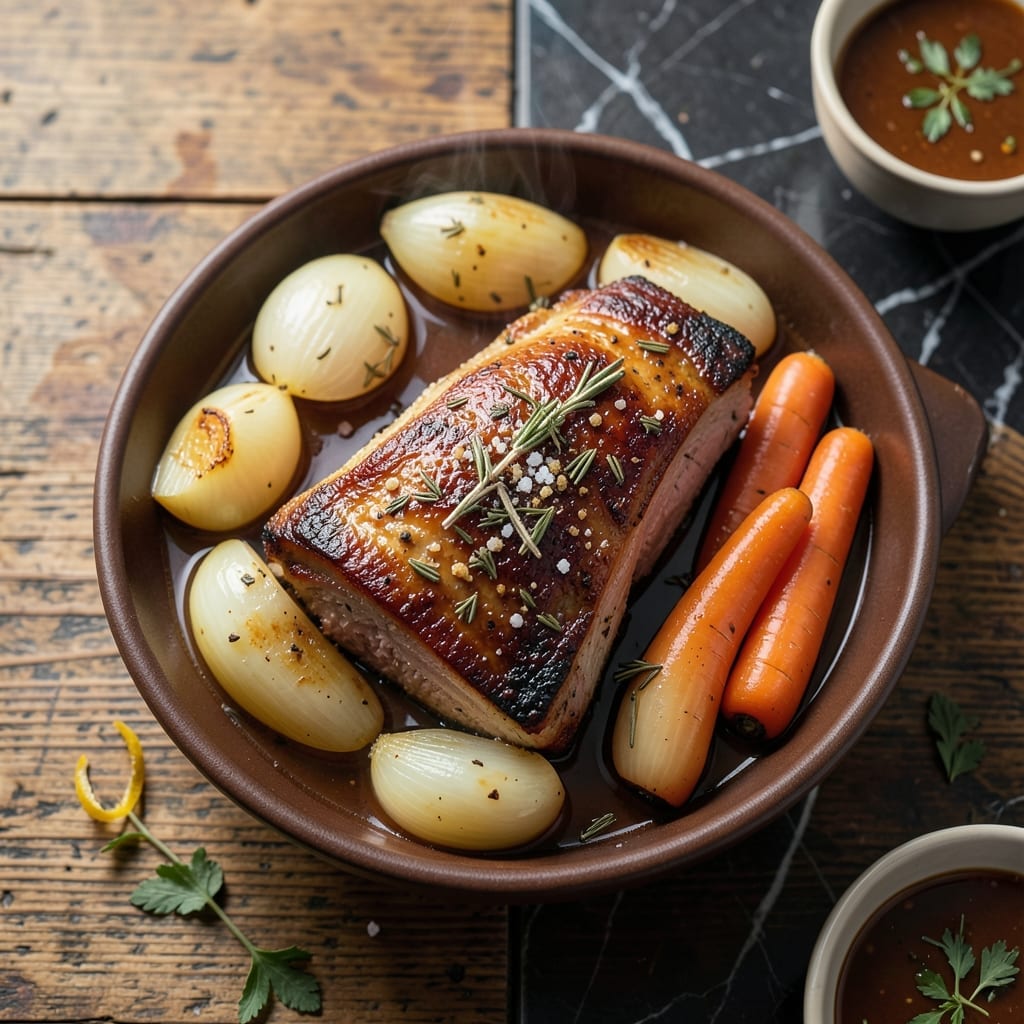
This slow cooker method transforms an elegant rack of pork into a tender, flavorful centerpiece with minimal effort. The low, steady heat ensures the meat stays juicy while allowing the herb infusion to penetrate deeply.
I developed this technique to bring restaurant-quality results to home cooks. The key is a simple dry rub and fresh herbs that create complex flavors without complicated steps.
After 6-8 hours on low, the pork becomes fall-off-the-bone tender with a rich, aromatic crust. The natural juices combine with the herbs to create a built-in sauce.
Serve with roasted vegetables or mashed potatoes to soak up every drop. This dish proves elegant meals don’t require constant attention.
Ingredients for Rack of Pork Crock Pot
Transform a rack of pork into elegant slow-cooked perfection with these quality ingredients.
| Ingredient | Amount | Notes |
|---|---|---|
| Bone-In Pork Rib Roast 🥩 | 3 lb | Frenched, center-cut preferred |
| Kosher Salt 🧂 | 2 tsp | Diamond Crystal brand recommended |
| Black Pepper 🌶️ | 1 tsp | Freshly cracked for best flavor |
| Garlic Powder 🧄 | 1 tsp | Not garlic salt substitute |
| Dried Thyme 🌿 | 1 tsp | Rubbed between fingers to release oils |
| Dried Rosemary 🌿 | 1 tsp | Crushed lightly before using |
| Fresh Sage Leaves 🍃 | 8 whole | Lightly bruised to intensify aroma |
| Fresh Thyme Sprigs 🌿 | 4 whole | Tied with kitchen twine |
| Olive Oil 🫒 | 2 tbsp | Extra-virgin for rub application |
| Chicken Stock 💧 | ½ cup | Low-sodium preferred for control |
| Dijon Mustard 🟡 | 2 tbsp | For herb crust binding |
| Yellow Onion 🧅 | 1 whole | Quartered for aromatic base |
| Carrots 🥕 | 3 whole | Cut into 2-inch chunks |
| Celery Stalks 🌿 | 2 whole | Cut into large pieces |
The pork roast is paramount—opt for center-cut, bone-in rib roast with even marbling. Whole Foods or ButcherBox offer consistently high-quality options. For herbs, fresh sage and thyme from a farmers market or well-stocked grocery store provide superior aroma. The dry rub ingredients should be freshly purchased for maximum potency, as spices lose their punch after six months.
No fresh herbs? Dried at one-third the amount works in a pinch, though the flavor won’t be as vibrant. For the pork, a bone-in loin roast is the closest substitute. If you don’t have Dijon, whole-grain mustard offers similar tang. The chicken stock can be swapped for vegetable stock without issue, but avoid bouillon cubes—they’re too salty and lack depth.
Store fresh herbs wrapped in damp paper towels for up to 5 days. The pork should be cooked immediately or refrigerated for no more than 2 days before cooking. Leftovers keep beautifully for 4-5 days and freeze well for 3 months.
Why You’ll Love This Recipe
- I’ll be real: a pork rib roast is cheaper than brisket but tastes like a million bucks slow-cooked in its own juices.
- Set It and Forget: I toss the pork roast in with salt, pepper, and garlic powder in the morning, and by dinner, it’s fall-off-the-bone tender.
- Herb-Crusted Heaven: The thyme and garlic powder form this ridiculous crust that makes every bite crave-worthy, even the leftovers.
- Feeds the Gang: Honestly, this one bone-in roast stretches to feed six with enough for sandwiches the next day.
Step-by-Step Instructions for Slow-Cooked Rack of Pork
This method ensures tender, herb-infused pork with minimal hands-on time.
Step 1: Prepare the Herb Rub and Sear the Pork
In a small bowl, combine the 2 tsp Kosher Salt, 1 tsp Black Pepper, 1 tsp Garlic Powder, 1 tsp Dried Thyme, and 1 tsp Dried Rosemary. Rub this mixture evenly over the 3 lb Bone-In Pork Rib Roast, pressing it into the meat to adhere.
Heat the 2 tbsp Olive Oil in a large skillet over medium-high heat. Sear the pork on all sides for 2-3 minutes per side until deep golden brown. This step builds a flavorful crust and enhances the final dish’s depth.
Step 2: Build the Aromatic Base in the Crock Pot
Place the 1 whole Yellow Onion, quartered, along with the 3 whole Carrots (cut into 2-inch chunks) and 2 whole Celery Stalks (cut into large pieces) in the bottom of your crock pot. These vegetables will create a natural rack for the pork while infusing the cooking liquid with flavor.
Add the 4 whole Fresh Thyme Sprigs and 8 whole Fresh Sage Leaves to the crock pot. Lightly bruise the sage leaves between your fingers to release their aromatic oils before adding them.
Step 3: Combine All Elements and Begin Slow Cooking
Place the seared pork rib roast on top of the vegetables in the crock pot, bone-side down. In a small bowl, whisk together the 2 tbsp Dijon Mustard and 0.5 cup Chicken Stock until smooth. Pour this mixture over the pork.
Cover the crock pot and cook on low heat for 6-7 hours or on high heat for 3-4 hours. The pork is done when it reaches an internal temperature of 145°F and the meat pulls away from the bone easily.
Step 4: Rest and Serve
Once cooked, carefully transfer the pork to a cutting board and tent loosely with foil. Let it rest for 10-15 minutes before carving. This allows the juices to redistribute throughout the meat, ensuring each slice is moist and flavorful.
Carve the pork between the bones into individual chops. Serve with the cooked vegetables and pan juices spooned over the top. The herbs will have infused the cooking liquid with a fragrant, savory depth that complements the tender meat perfectly.
Pro Tips For Making Rack Of Pork Crock Pot
- Sear the Roast First: I learned this the hard way—browning the bone-in pork rib roast in a hot pan for 2-3 minutes per side before it goes into the crock pot locks in juices and adds depth that slow cooking alone can’t.
- Season Generously: Use more kosher salt than you think, especially on the fat cap, and don’t forget the ends of the bones. After under-seasoning my first few racks, I finally realized how much the flavor depends on that initial heavy hand.
- Skip the Liquid: Resist the urge to add broth or water—the pork rib roast releases plenty of moisture as it cooks, and extra liquid just dilutes the concentrated garlic and thyme flavors.
- Rest Before Serving: Pull the roast out, tent it loosely with foil, and give it a solid 10 minutes to rest before carving—this keeps the juices inside the meat instead of all over your cutting board.
Common Mistakes When Making Perfect Results
Skipping the Sear
I know it’s tempting to skip this step, but searing the pork for 2-3 minutes per side in olive oil is non-negotiable. It develops the Maillard reaction, creating deep, complex flavors that slow cooking alone can’t achieve. The caramelized crust also makes the final dish visually appealing. 🔥
Overcrowding the Crock Pot
Don’t cram too many vegetables or liquids into your crock pot. The pork needs space for heat to circulate evenly. Stick to the onion, carrots, and celery as a base, and use just ½ cup chicken stock to avoid steaming the meat instead of slow-cooking it.
Using Old Spices
Dried herbs like thyme and rosemary lose potency after 6 months. If your spices have been sitting in the cupboard for a while, double-check their aroma. Freshly purchased spices ensure the rub packs the flavor punch this dish deserves.
Ignoring Internal Temperature
Don’t rely on cooking time alone. The pork is done at 145°F internal temperature, not after 6-8 hours. Use a meat thermometer to check—overcooking even by 10°F can dry out the meat, ruining its tenderness.
Skipping the Rest
Letting the pork rest for 10-15 minutes after cooking allows juices to redistribute. Slicing too soon causes those precious juices to spill onto the cutting board, leaving your meat dry. Tent it loosely with foil to keep it warm.
Wrong Cut of Pork
Avoid substituting with a lean cut like tenderloin. The bone-in rib roast has the marbling and fat cap needed for slow cooking. The bone also adds flavor and helps the meat retain moisture during the long cook.
Nutrition Facts
Frequently Asked Questions
Can I use a boneless pork roast instead?
It’s best to stick with bone-in for flavor and moisture. Boneless can dry out during the 6-7 hours of slow cooking. If you must substitute, reduce cooking time by 1 hour and check temperature often.
Do I need to brown the meat first?
Yes! Searing for 2-3 minutes per side adds crucial flavor. The Maillard reaction creates a depth that slow cooking alone can’t achieve. Don’t skip this step.
How do I know when it’s done?
Use a meat thermometer to check for 145°F internally. The meat should pull away from the bone easily. Time alone isn’t reliable—always verify temperature.
Can I add more liquid to the crock pot?
Stick to ½ cup chicken stock maximum. Too much liquid will steam the pork instead of slow-cooking it, resulting in less flavorful meat.

- 4C Bread Crumbs Meatballs Recipe: Crispy Crust and Juicy Centers - September 25, 2026
- 6 Oz Chocolate Chip Cookie Recipe: Perfectly Balanced Crispy Edges and Chewy Hearts - September 25, 2026
- 6-Inch Coffee Cake Recipe: Vanilla Bean Swirls and Buttery Streusel Topping - September 25, 2026