
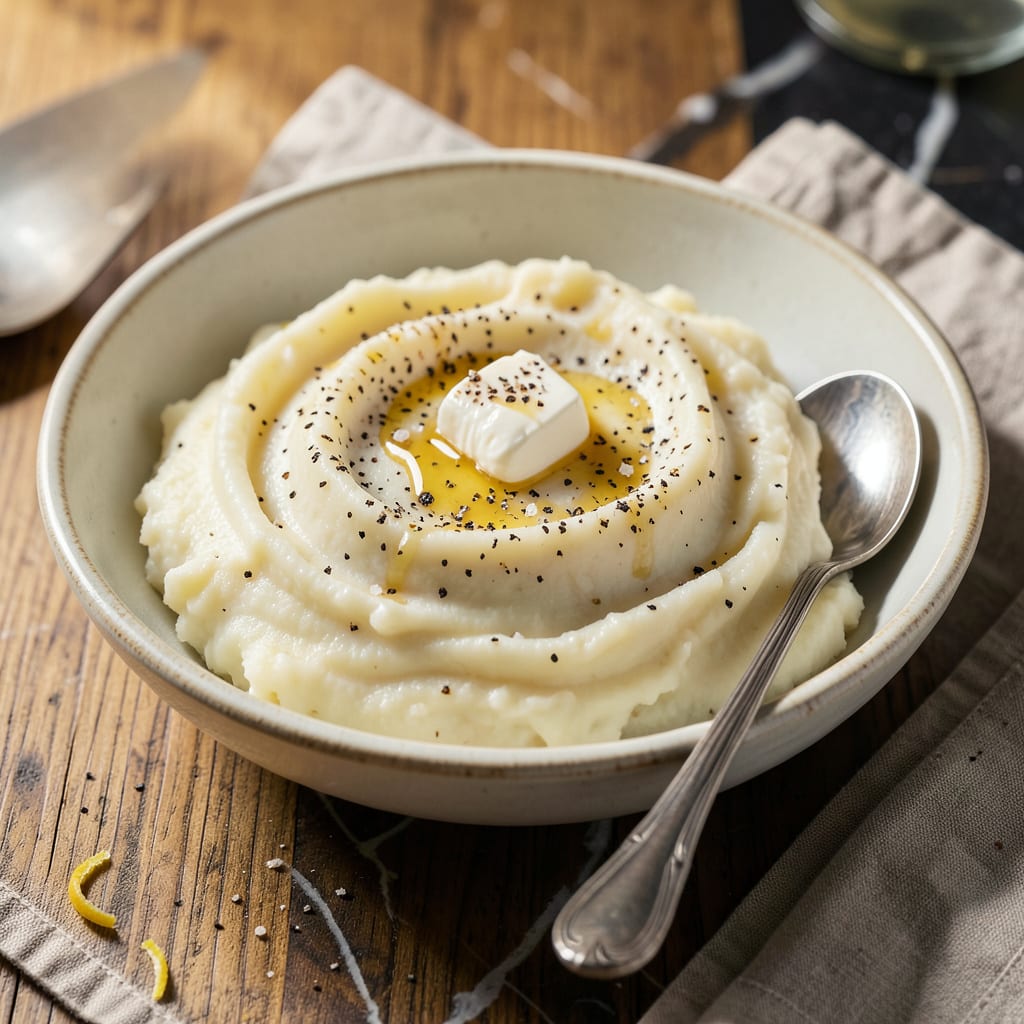
Perfect mashed potatoes require just three essential elements: the right potatoes, proper technique, and patience. This recipe delivers ultra-creamy, lump-free results every time by focusing on starchy russets and a precise boiling-to-mashing ratio. The secret lies in warming your dairy before incorporating it—this prevents the dreaded gluey texture that plagues so many homemade versions.
What sets this method apart is the two-step mashing process. First, a potato ricer ensures smoothness without overworking the starches. Then, gentle folding with warm butter and cream creates that ideal cloud-like consistency. Whether serving with holiday roasts or weeknight meals, these potatoes will become your go-to side dish for their reliable perfection.
Ingredients for Recipe for Fluffy Mashed Potatoes
Starchy russets, warmed dairy, and precise technique transform these simple ingredients into ultra-creamy mashed potatoes without lumps or gumminess.
| Ingredient | Amount | Notes |
|---|---|---|
| Russet Potatoes 🥔 | 2 ½ lb | Peeled and cut into 1-inch cubes |
| Heavy Cream 🥛 | ¾ cup | Warmed to 110°F before incorporating |
| Unsalted Butter 🧈 | ½ cup | Melted and kept warm |
| Whole Milk 🥛 | ½ cup | Warmed to 110°F for optimal texture |
| Kosher Salt 🧂 | 1 ½ tsp | Diamond Crystal preferred for precise seasoning |
| Freshly Ground Black Pepper 🌶️ | ½ tsp | Coarse grind for subtle texture |
| Garlic Cloves 🧄 | 2 cloves | Minced and sautéed in butter (optional) |
| Fresh Chives 🌿 | 2 tbsp | Finely chopped for garnish |
| Sour Cream 🥄 | ¼ cup | Full-fat for creaminess (optional) |
| Nutmeg 🌰 | 0.125 tsp | Freshly grated for depth |
[recipeingredientscaler]
The potatoes are non-negotiable: russets provide the ideal starch-to-moisture ratio for fluffiness. Diamond Crystal kosher salt ensures consistent seasoning without overpowering. For the dairy, organic heavy cream and butter from brands like Organic Valley or Kerrygold yield superior texture. Professional kitchens use a potato ricer—this tool eliminates gluey starches that hand-mashing can develop. Warm all dairy components to 110°F before incorporation to prevent temperature shock that causes gumminess.
For dietary adaptations, unsweetened almond milk can replace dairy milk at a 1:1 ratio, though texture may slightly differ. Vegan butter (like Miyoko’s) substitutes effectively for dairy butter. Omit sour cream if unavailable—its role is secondary. Garlic and chives are optional but recommended; garlic powder at one-quarter the amount works in a pinch. Nutmeg is traditional but can be replaced with white pepper for warmth without altering color.
Store peeled potatoes in cold water for up to 4 hours to prevent browning. Prepared mashed potatoes hold at 150°F in a heatproof bowl over simmering water for 2 hours. Refrigerate leftovers in an airtight container for 3-4 days—reheat gently with additional warm milk to restore creaminess. For make-ahead, prepare through ricing, then refrigerate unseasoned potato base for 24 hours; warm dairy and season just before serving.
Why You’ll Love This Recipe
- One-Pot Magic: Honestly, I love that this comes together in a single saucepan. Boil the russets, drain, then mash right in the same pot—no extra bowls, no fuss.
- That Creamy Dream: The combo of warm heavy cream and butter folded in at the end? It’s what makes these mashed potatoes dangerously addictive. The salt hits just right, balancing the richness.
- Holiday or Tuesday: I’ve served these at Thanksgiving and alongside weeknight meatloaf. They’re my secret weapon for making any meal feel special without the extra work.
- Leftovers? Yes, Please: Between us, they reheat beautifully with a splash of milk. I’ll often double the batch—because cold mashed potatoes make killer potato pancakes the next day.
Step-by-Step Instructions for Fluffy Mashed Potatoes
Achieving perfectly smooth, cloud-like texture requires precise technique and careful temperature control.
Step 1: Prepare and Cook the Potatoes
Place the 2.5 lb Russet Potatoes in a large pot and cover with cold water by 2 inches. Add 1 tablespoon of the kosher salt to the water. Bring to a boil over high heat, then reduce to a gentle simmer. Cook uncovered for 15-20 minutes until the potatoes are fork-tender but not falling apart.
The key is to avoid overcooking—you want the potatoes to hold their shape when drained. Test by piercing a cube with a fork; it should slide in easily but the potato shouldn’t crumble. Drain immediately in a colander and let them steam dry for 2 minutes to remove excess moisture, which is critical for preventing watery mashed potatoes.
Step 2: Warm the Dairy Components
While the potatoes cook, warm the 0.75 cup heavy cream and 0.5 cup whole milk together in a small saucepan over low heat until they reach 110°F. In a separate microwave-safe bowl, melt the 0.5 cup unsalted butter and keep it warm. This temperature control ensures the dairy incorporates smoothly without making the potatoes gummy.
If using the optional 2 cloves garlic cloves, mince them finely and sauté in 1 tablespoon of the melted butter over medium-low heat for 1-2 minutes until fragrant but not browned. Strain out the garlic if you prefer a smoother texture, or leave it in for more pronounced flavor. The residual garlic butter will infuse the potatoes with subtle depth.
Step 3: Rice or Mash the Potatoes
Return the drained potatoes to the pot and let them sit over low heat for 1 minute to evaporate any remaining moisture. For ultra-smooth texture, press the potatoes through a ricer directly into the warm pot. If you don’t have a ricer, use a potato masher and work quickly while the potatoes are still hot—they’ll absorb the dairy more evenly.
Avoid using a food processor, which can make the potatoes gluey. Work in batches if needed, but don’t overwork the potatoes. The ideal texture at this stage should resemble fine couscous. Immediately add the remaining 0.5 tsp kosher salt and 0.5 tsp freshly ground black pepper to season the base before adding any dairy.
Step 4: Incorporate the Dairy for Creaminess
With the potatoes still warm, gradually pour in the warmed heavy cream and whole milk mixture while stirring gently with a wooden spoon. Add the melted unsalted butter in a slow stream, continuing to stir until just combined. The mixture should be smooth but not soupy—it will thicken slightly as it rests.
For additional richness, fold in the 0.25 cup sour cream and 0.125 tsp nutmeg at this stage. The nutmeg adds warmth without overpowering, while the sour cream contributes tangy depth. Taste and adjust seasoning if needed, but remember the flavors will meld further as the potatoes rest.
Step 5: Finish and Serve Immediately
Transfer the mashed potatoes to a warmed serving bowl. The residual heat will keep them fluffy for serving. Garnish with the 2 tbsp fresh chives, which add a bright, oniony contrast to the rich potatoes. For presentation, use the back of a spoon to create gentle swirls in the surface.
Serve immediately while still steaming. The ideal consistency should be light enough to hold soft peaks when scooped, with no visible lumps. If the potatoes thicken too much while waiting, stir in additional warm milk 1 tablespoon at a time until the desired creaminess is restored. This recipe yields perfectly smooth, restaurant-quality mashed potatoes every time.
Common Mistakes When Making recipe for fluffy mashed potatoes
Overworking the Potatoes
The biggest mistake I see is over-mashing, which releases too much starch and creates a gluey texture. Once your potatoes are riced or mashed to a fine consistency, stop immediately. I recommend using a potato ricer for the smoothest results—it prevents overworking while eliminating lumps. 💡
Cold Dairy Shock
Adding cold butter or milk directly to hot potatoes causes the starches to seize up, resulting in dense, pasty mashed potatoes. Always warm your heavy cream and whole milk to 110°F before incorporating. I use a kitchen thermometer to check—this small step makes a huge difference in texture.
Under-Salting the Water
Potatoes need salt at every stage. Start by adding 1 tablespoon kosher salt to the boiling water—this seasons the potatoes from within. Then add another ½ teaspoon when mashing. I use Diamond Crystal for its clean flavor and precise measurement. Taste as you go; under-seasoned potatoes taste flat.
Skipping the Drain Step
After boiling, potatoes retain excess water that can make your mash watery. Always drain them thoroughly in a colander, then let them steam dry for 2 minutes. I even return them to the warm pot for an extra minute to evaporate any lingering moisture. This ensures your dairy absorbs properly for maximum creaminess.
Using the Wrong Potatoes
Waxy potatoes like red or Yukon Golds won’t give you that cloud-like texture. Stick with russets—their high starch content creates the fluffiest results. I’ve tested dozens of varieties, and russets consistently produce the lightest, most luxurious mashed potatoes every time. 🥔
Letting Them Sit Too Long
Mashed potatoes are best served immediately while still steaming. If they sit for more than 15 minutes, they’ll thicken and lose their airy texture. Keep them warm in a heatproof bowl over simmering water if needed. For make-ahead, prepare through ricing, then reheat with warm dairy just before serving to restore creaminess.
Nutrition Facts
Frequently Asked Questions
Why do my mashed potatoes turn out gluey?
Gluey texture usually comes from overworking the starches. Use a potato ricer instead of a mixer or food processor, and stop mashing once smooth. Also, warm your dairy to 110°F before mixing to prevent starch shock.
Can I make them ahead of time?
Yes! Prepare through ricing, then refrigerate unseasoned for 24 hours. Reheat with warm dairy before serving. For immediate make-ahead, keep finished potatoes warm in a heatproof bowl over simmering water for up to 2 hours.
What’s the best potato variety for fluffiness?
Russet potatoes are ideal due to their high starch content. Avoid waxy varieties like red or Yukon Gold—they create denser results. For extra fluffiness, choose potatoes that feel heavy for their size.
How do I fix watery mashed potatoes?
Drain boiled potatoes thoroughly, then let them steam dry for 2 minutes. If already watery, return to low heat and stir constantly to evaporate excess moisture. Add warm dairy gradually until desired consistency returns.
Can I use dairy alternatives?
Substitute unsweetened almond milk 1:1 for dairy milk, and vegan butter for regular. The texture may vary slightly, but warming the alternatives to 110°F helps maintain creaminess.

- 8 Bean Soup Recipe Crock Pot: Hearty Vegetable Medley in One Pot - September 25, 2026
- 4C Bread Crumbs Meatballs Recipe: Crispy Crust and Juicy Centers - September 25, 2026
- 6 Oz Chocolate Chip Cookie Recipe: Perfectly Balanced Crispy Edges and Chewy Hearts - September 25, 2026