
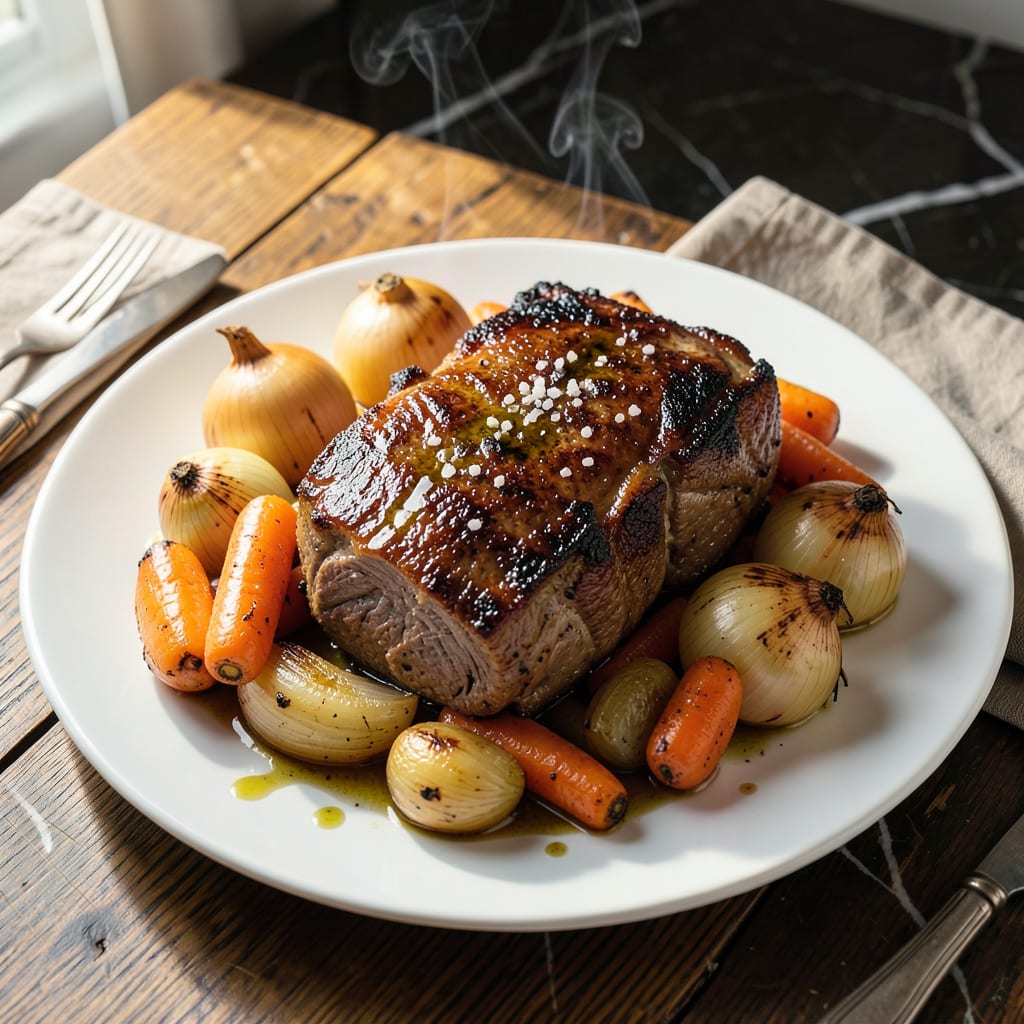
This slow-braised beef rib pot roast transforms tough cuts into fall-apart tender perfection with minimal effort. The long cooking time allows the meat to absorb deep, rich flavors from the root vegetables and aromatic herbs.
What emerges is a melt-in-your-mouth centerpiece with a velvety sauce that soaks into every bite. Perfect for Sunday supper or special occasions, this dish delivers restaurant-quality results at home.
Ingredients for Rib Pot Roast
Nothing exotic here—just quality beef and a few pantry staples for restaurant results.
| Ingredient | Amount | Notes |
|---|---|---|
| Beef Rib Roast 🥩 | 3 lb | Bone-in, well-marbled preferred |
| Kosher Salt 🧂 | 2 tsp | Diamond Crystal preferred |
| Black Pepper 🌶️ | 1 tsp | Freshly ground for best flavor |
| Olive Oil 🫒 | 2 tbsp | Extra-virgin for searing |
| Yellow Onion 🧅 | 1 whole | Large, roughly chopped |
| Carrots 🥕 | 3 whole | Peeled, cut into chunks |
| Celery Stalks 🌿 | 3 whole | Cut into large pieces |
| Garlic Cloves 🧄 | 6 cloves | Smashed, peeled |
| Fresh Rosemary 🌿 | 2 tbsp | Chopped, stems discarded |
| Fresh Thyme 🌿 | 2 tbsp | Leaves stripped from stems |
| Bay Leaves 🍃 | 2 whole | Dried or fresh |
| Red Wine 🍷 | 2 cups | Dry variety like Cabernet |
| Beef Stock 💧 | 2 cups | Low-sodium preferred |
| Tomato Paste 🍅 | 2 tbsp | For depth of flavor |
The beef rib roast is non-negotiable here. Look for bone-in, well-marbled cuts—they stay juicier through the long braise. I grab mine from Whole Foods or a good butcher (ask for the chuck-end rib roast, it’s got more connective tissue for that fall-apart texture). The root veggies? Organic if possible—they’re soaking up all that flavor for hours.
No red wine? Beef broth with a splash of balsamic vinegar works in a pinch. Fresh herbs are ideal but dried at one-third the amount gets the job done (rosemary and thyme hold up better than delicate herbs). Short on time? Pre-chopped mirepoix from the grocery store saves a step. The tomato paste adds depth—don’t skip it (those squeeze tubes are perfect for small amounts).
This actually tastes better the next day—4-5 days in the fridge, 3 months frozen. Reheat gently to keep the meat tender. The sauce thickens as it cools, so just stir in a splash of stock when reheating.
Why You’ll Love This Recipe
- Five Ingredient Magic: I love that this only needs beef rib roast, salt, pepper, olive oil, and an onion—no fancy shopping required.
- Unbeatable Flavor: The simple rub of kosher salt and black pepper lets the beef’s natural richness shine through.
- Sunday Dinner Star: It’s my go-to for family gatherings, yet unfussy enough for a quiet weekend meal.
- Leftovers for Days: I always make extra—sliced thin, it turns into incredible sandwiches all week long.
Step-by-Step Instructions for Rib Pot Roast
Here’s the method that turns tough cuts into fall-apart tender perfection.
Step 1: Sear the Beef Rib Roast
Pat the 3 lb beef rib roast completely dry with paper towels—this is non-negotiable for a proper sear. Season aggressively with the 2 tsp kosher salt and 1 tsp black pepper on all sides, pressing it into the meat so it adheres.
Heat the 2 tbsp olive oil in a large Dutch oven over medium-high heat until shimmering but not smoking. Add the beef and sear for 4-5 minutes per side until deeply browned. Don’t move it—let it develop a crust. Remove and set aside.
Step 2: Sauté the Aromatics
In the same pot, add the 1 whole yellow onion, 3 whole carrots, and 3 whole celery stalks. Cook for 5-6 minutes over medium heat, stirring occasionally, until the vegetables start to soften and develop some color.
Stir in the 6 cloves garlic cloves, 2 tbsp fresh rosemary, 2 tbsp fresh thyme, and 2 tbsp tomato paste. Cook for 1-2 minutes until the tomato paste darkens slightly and the herbs become fragrant. This builds the flavor base that defines the dish.
Step 3: Deglaze and Braise
Pour in the 2 cups red wine and scrape up all those browned bits from the bottom of the pot with a wooden spoon. Let it simmer for 3-4 minutes until reduced by about half. This step is crucial—it captures all that concentrated beef flavor.
Return the beef to the pot along with the 2 cups beef stock and 2 whole bay leaves. The liquid should come about halfway up the roast. Bring to a simmer, then cover and transfer to a preheated 325°F oven.
Step 4: Slow-Braise to Tenderness
Braise for 2½ to 3 hours, turning the roast every 45 minutes to ensure even cooking. You’ll know it’s done when the meat pulls away easily from the bone and a fork slides in with no resistance. The vegetables should be fork-tender as well.
I pull mine out when the internal temperature hits 200°F—this guarantees that connective tissue has fully broken down. If the braising liquid reduces too much during cooking, add a splash of water to maintain the level.
Step 5: Rest and Serve
Carefully transfer the beef to a cutting board and tent loosely with foil. Let it rest for 15-20 minutes—this allows the juices to redistribute. Use this time to skim excess fat from the braising liquid if desired.
Slice the beef against the grain and arrange on a platter with the vegetables. Spoon the rich, reduced braising liquid over the top. The sauce should be thick enough to coat the back of a spoon, with intense beef and wine flavor in every bite.
Pro Tips For Making Rib Pot Roast
- Salt Generously Overnight: Coat the beef rib roast with kosher salt at least 12 hours before cooking—it penetrates deep and seasons evenly. I learned this the hard way after my first few roasts tasted bland on the inside.
- Sear Then Slow: Sear the roast in olive oil on all sides until deeply browned, then drop the oven temp to 275°F for even cooking. After burning the edges once, I finally realized patience wins every time.
- Skip Cold Meat: Pull the roast from the fridge 1-2 hours before cooking so it starts at room temperature. Sounds weird, but it cooks more evenly and prevents tough edges.
- Use Onion as Rack: Slice the yellow onion thick and place it under the roast in the pan to lift it slightly—it adds flavor and prevents the bottom from steaming. My grandmother swore by this, and she was right.
Storing and Reheating This Recipe
Refrigerator Storage
Let this dish cool for no more than 2 hours before transferring to airtight containers. I use glass containers with locking lids to preserve the sauce. Store in the fridge at 40°F or below for up to 4-5 days. The flavors actually deepen overnight. ❄️
Freezer Storage
For longer storage, freeze portions in heavy-duty freezer bags or vacuum-sealed containers. Leave 1 inch of headspace for expansion. This keeps beautifully for up to 3 months without quality loss. I always label with the date.
Stovetop Reheating
My preferred method is gentle stovetop reheating. Transfer portions to a saucepan, add ¼ cup beef stock to prevent drying, and warm over low heat for 10-15 minutes. Stir occasionally and taste before serving.
Oven Reheating
For larger portions, preheat oven to 300°F. Place in an oven-safe dish with 2 tbsp beef stock, cover tightly with foil, and heat for 20-25 minutes. This method maintains the meat’s tenderness best. 🔥
Microwave Option
For quick meals, microwave individual portions covered with a damp paper towel. Use 50% power in 1-minute intervals, stirring between each, until reaching 165°F. Add a splash of stock if the sauce thickens too much.
Nutrition Facts
Frequently Asked Questions
What’s the best cut for this?
Use a bone-in beef rib roast for the juiciest results. The chuck-end rib roast works particularly well because it has more connective tissue that breaks down during braising.
Can I make this in a slow cooker?
Yes! Sear the meat first, then transfer everything to the slow cooker. Cook on low for 8-10 hours or high for 5-6 hours until fork-tender.
How do I know when it’s done?
The meat should pull away easily from the bone and reach an internal temperature of 200°F. A fork should slide in with no resistance.
What if my sauce is too thin?
Simmer uncovered for 5-10 minutes after removing the meat. For faster results, mix 1 tbsp cornstarch with cold water and stir into the sauce.

- 4C Bread Crumbs Meatballs Recipe: Crispy Crust and Juicy Centers - September 25, 2026
- 6 Oz Chocolate Chip Cookie Recipe: Perfectly Balanced Crispy Edges and Chewy Hearts - September 25, 2026
- 6-Inch Coffee Cake Recipe: Vanilla Bean Swirls and Buttery Streusel Topping - September 25, 2026