
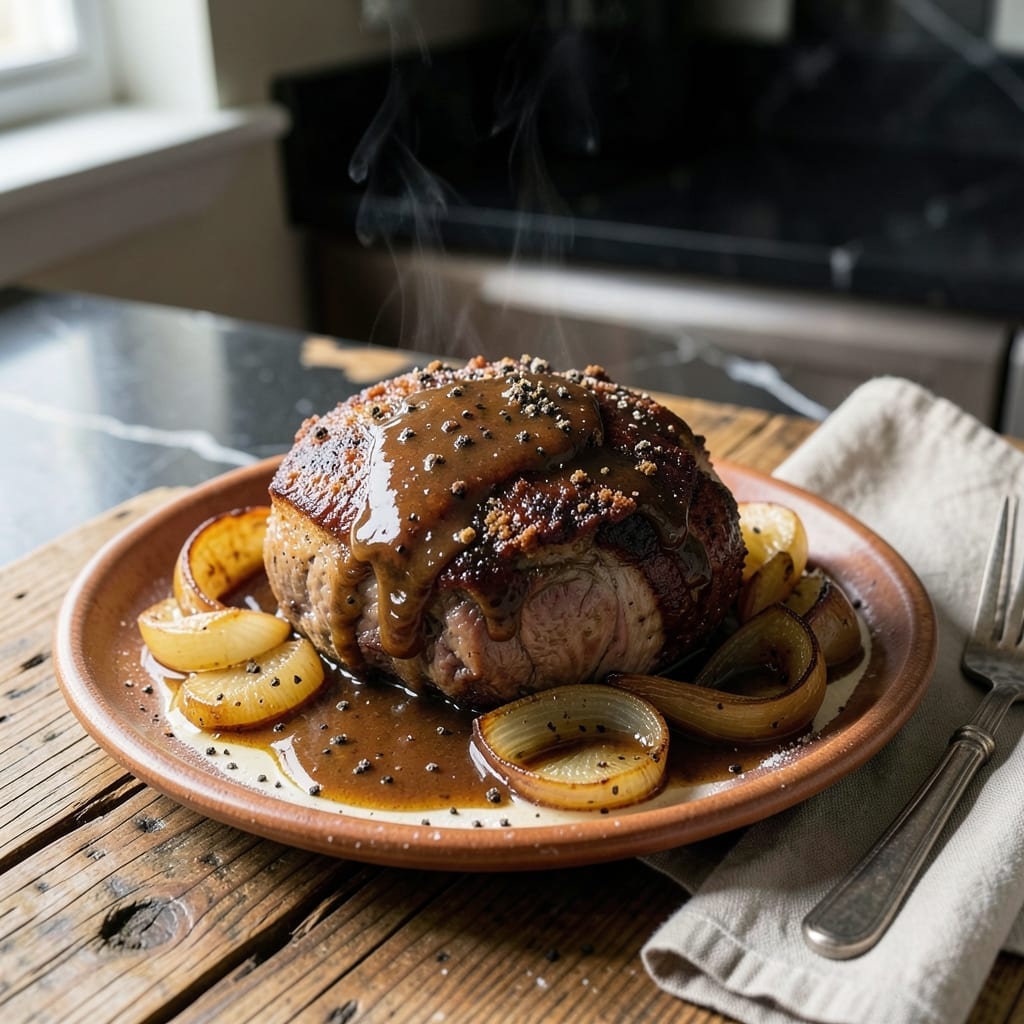
There’s something magical about a pot roast that turns Sunday dinner into an event. I’ve perfected this method over years of weekend cooking, and it never fails to fill the house with warmth.
The secret is low and slow cooking—3 to 4 hours in the oven lets tough cuts of beef melt into tender, fall-apart perfection. A rich gravy, built from the pan drippings, ties everything together with deep, savory flavor.
What you get is a meal that feels like a hug on a plate: tender beef, root vegetables softened to buttery perfection, and a sauce so good you’ll want to drink it straight from the pot.
This is the kind of dish that brings everyone to the table, ready to share stories and seconds.
Ingredients for Robin Williams Favorite Pot Roast
Sunday dinner starts with this cozy list of hearty, comforting ingredients.
| Ingredient | Amount | Notes |
|---|---|---|
| Chuck Roast 🥩 | 3 lb | Well-marbled, boneless preferred |
| Kosher Salt 🧂 | 2 tsp | Plus more to taste |
| Black Pepper 🌶️ | 1 tsp | Freshly ground preferred |
| All-Purpose Flour 🌾 | ¼ cup | For thickening gravy |
| Olive Oil 🫒 | 2 tbsp | Divided for searing and drizzling |
| Large Yellow Onion 🧅 | 1 whole | Chopped into large chunks |
| Garlic Cloves 🧄 | 6 cloves | Minced for deep flavor |
| Carrots 🥕 | 4 whole | Peeled, cut into thick pieces |
| Russet Potatoes 🥔 | 4 whole | Peeled, quartered |
| Beef Broth 🥣 | 2 cups | Low-sodium preferred |
| Red Wine 🍷 | 1 cup | Dry variety like Cabernet |
| Tomato Paste 🍅 | 2 tbsp | For umami depth |
| Fresh Thyme Sprigs 🌿 | 3 pieces | Or 1 tsp dried thyme |
| Bay Leaf 🍃 | 1 whole | Dried, for aroma |
The beef is the star here—chuck roast (well-marbled, not lean) is non-negotiable for that fall-apart texture. Costco has great quality at a good price, but most grocery stores carry it. Look for pieces with visible fat streaks; that’s what keeps it moist during the long cook. If you’re buying from a butcher, ask for a cut from the shoulder. Trust me, it’s worth the extra few bucks.
No red wine? Extra beef broth with a splash of balsamic vinegar gets you 90% there. Out of thyme? Rosemary or oregano work in a pinch (use half the amount, they’re stronger). The carrots and potatoes can be swapped for parsnips or turnips—whatever root veggies you’ve got. Low-sodium broth lets you control the salt, which matters for that rich, balanced gravy.
Leftovers taste even better the next day—4-5 days in the fridge, or freeze for 3 months. The gravy thickens as it cools, so just reheat with a splash of water. Perfect for Sunday dinner with enough for Monday lunch (or that late-night snack you won’t regret).
Why You’ll Love This Recipe
- One Pan Wonder: I love that I can sear the chuck roast in olive oil, then let it simmer—all in the same pot.
- Rich and Hearty: The flour crust on the beef creates this incredible, savory depth that’s just irresistible.
- Feeds a Crowd: Honestly, it’s my go-to for Sunday dinners when the whole family’s over.
- Leftovers for Days: Between us, the flavors taste even better the next day in sandwiches or stews.
Step-by-Step Instructions for Sunday Pot Roast
Here’s the method I use for melt-in-your-mouth results every single time.
Step 1: Sear and Season the Chuck Roast
Pat the 3 lb Chuck Roast completely dry with paper towels—this is non-negotiable for a good sear. Season it generously with the 2 tsp Kosher Salt and 1 tsp Black Pepper on all sides. I like to press the seasoning in gently so it adheres.
Heat 1 tbsp Olive Oil in a large Dutch oven over medium-high heat until shimmering. Sear the roast for 4-5 minutes per side until deeply browned. You’ll see a dark crust form—that’s the flavor foundation. Transfer the roast to a plate and set aside.
Step 2: Build the Aromatic Base
In the same pot, add the remaining 1 tbsp Olive Oil and reduce heat to medium. Add the chopped Large Yellow Onion and cook for 3-4 minutes until softened and translucent. Stir in the minced 6 cloves Garlic Cloves and cook for 30 seconds until fragrant—don’t let it burn.
Next, add the 2 tbsp Tomato Paste and cook for 1-2 minutes, stirring constantly. This step deepens the flavor and prevents a raw tomato taste. You’ll notice the paste darken slightly, which means it’s ready.
Step 3: Deglaze and Add Vegetables
Pour in the 1 cup Red Wine to deglaze the pan, scraping up all the browned bits with a wooden spoon. Let it simmer for 2-3 minutes until reduced by half. This step ensures every bit of flavor is incorporated into the sauce.
Add the 4 whole Carrots, 4 whole Russet Potatoes, 2 cups Beef Broth, 3 pieces Fresh Thyme Sprigs, and 1 whole Bay Leaf. Stir to combine and bring to a gentle simmer. The liquid should just cover the vegetables.
Step 4: Braise to Tender Perfection
Return the seared chuck roast to the pot, nestling it into the vegetables. Cover and transfer to a preheated 325°F oven. Braise for 3-4 hours until the meat is fork-tender. You’ll know it’s ready when it shreds easily with a fork.
I always check the pot every hour to ensure the liquid isn’t reducing too much. If it looks low, add a splash of water or broth. The roast is done when the internal temperature reaches 195-200°F.
Step 5: Thicken and Serve
Remove the roast and vegetables to a serving platter and cover to keep warm. Skim any excess fat from the surface of the cooking liquid. In a small bowl, whisk the 0.25 cup All-Purpose Flour with ¼ cup of the cooking liquid until smooth, then stir it back into the pot.
Simmer for 5-7 minutes until the gravy thickens to your desired consistency. Taste and adjust seasoning if needed. Serve the pot roast with the vegetables and gravy ladled over the top. This is Sunday dinner at its finest.
Pro Tips For Making Robin Williams Favorite Pot Roast
- Sear it Hard: I learned this the hard way—get that oil smoking hot before adding the floured chuck roast, and don’t touch it for at least 3-4 minutes per side. That’s how you get the deep brown crust Robin Williams loved.
- Salt the Night Before: After a few tough pot roasts, I started dry-brining the chuck with kosher salt 12 hours ahead. The meat stays juicier and seasons all the way through.
- Don’t Crowd the Pan: Resist the urge to rush—sear the roast in batches if needed, or the flour coating will steam instead of crisp. Steaming means sad, pale meat.
- Use the Fond: Sounds weird, but it works: after searing, pour a little hot water in the pan to scrape up those browned bits before adding your liquid. That’s pure flavor you’d otherwise waste.
Storing and Reheating This robin williams favorite pot roast
Refrigerator Storage
Let your pot roast cool for no more than 2 hours before transferring to airtight containers. I use glass containers with locking lids to keep everything fresh. Store in the fridge at 40°F or below for up to 4-5 days. The flavors deepen overnight, making leftovers even more delicious. ❄️
Freezer Storage
This dish freezes beautifully for up to 3 months without losing quality. I recommend portioning into individual servings in quart-sized freezer bags—they stack efficiently and thaw quickly. Leave 1 inch of headspace for expansion, and squeeze out excess air to prevent freezer burn.
Stovetop Reheating
My preferred method for best texture: pour the pot roast and gravy into a heavy-bottomed pot. Add ¼ cup water or beef broth to prevent sticking, then heat over medium-low heat for 10-15 minutes. Stir occasionally and adjust seasoning if needed. 🔥
Microwave Reheating
For quick meals, microwave individual portions covered with a damp paper towel. Heat on 70% power for 2-3 minutes, stir, then continue in 1-minute intervals until reaching 165°F. Add a splash of water if the gravy looks too thick.
Pro Storage Tip
If storing with potatoes, note they may absorb more liquid over time. I often store the meat and gravy separately from the vegetables to maintain the best texture. When reheating, combine them and add a little extra broth to refresh the dish.
Nutrition Facts
Frequently Asked Questions
What cut of beef works best?
Chuck roast is ideal for its marbling and connective tissue, which break down into tender perfection during the 3-4 hour braise. Avoid lean cuts like sirloin, as they’ll dry out. A well-marbled 3 lb piece ensures juicy results every time.
Can I skip the red wine?
Yes! Substitute with 1 cup extra beef broth and 1 tbsp balsamic vinegar for similar depth. The acidity helps tenderize the meat and balance the flavors, just like wine would.
How do I know it’s done?
The meat should reach 195-200°F internally and pull apart easily with a fork. If it resists, give it another 30-60 minutes in the oven. Patience is key for that fall-apart texture.
Why is my gravy thin?
Simmer the cooking liquid longer after removing the meat, or whisk in a bit more flour slurry. If it’s still thin, reduce it on the stovetop for 5-10 minutes until it coats the back of a spoon.

- 6 Oz Chocolate Chip Cookie Recipe: Perfectly Balanced Crispy Edges and Chewy Hearts - September 25, 2026
- 6-Inch Coffee Cake Recipe: Vanilla Bean Swirls and Buttery Streusel Topping - September 25, 2026
- 1 Hour Soup Recipe: Velvety Richness Without the Wait - September 25, 2026