
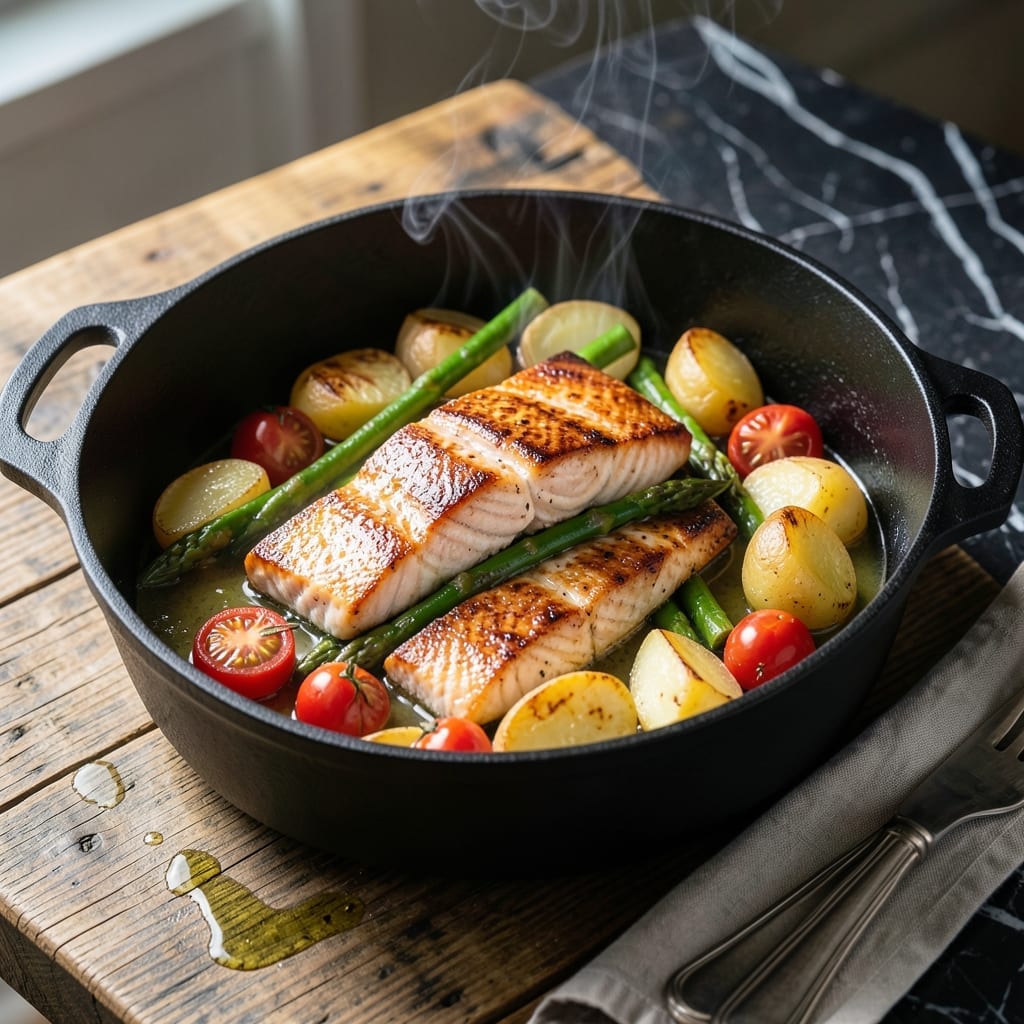
Weeknight dinners demand efficiency, and this one-pot salmon delivers both elegance and simplicity in 30 minutes. The method combines protein, vegetables, and sauce in a single vessel, minimizing cleanup without sacrificing flavor.
I developed this approach after too many evenings spent scrubbing multiple pans. The salmon cooks gently alongside tender vegetables, all infused with aromatic herbs and a light, tangy sauce that ties everything together.
What emerges is a complete, balanced meal with perfectly cooked salmon, crisp-tender vegetables, and a light broth that’s ready to soak into crusty bread. The flavors meld beautifully, creating a dish that feels special enough for guests.
This is the kind of recipe that proves weeknight cooking can be both practical and delicious. The process is streamlined, the results impressive, and the cleanup nearly effortless.
Ingredients for Salmon One Pot
A single pot holds salmon, vegetables, and sauce for effortless elegance.
| Ingredient | Amount | Notes |
|---|---|---|
| Salmon Fillets 🐟 | 1 ½ lb | Skin-on or skinless, boneless |
| Baby Potatoes 🥔 | 1 ½ lb | Halved, Yukon Gold preferred |
| Asparagus Spears 🌱 | 1 lb | Trimmed, tough ends removed |
| Cherry Tomatoes 🍅 | 1 cup | Halved, for brightness |
| White Wine 🍷 | ½ cup | Dry variety like Sauvignon Blanc |
| Chicken Broth 🥣 | 1 cup | Low-sodium preferred |
| Fresh Dill 🌿 | ¼ cup | Chopped, for garnish |
| Garlic Cloves 🧄 | 4 cloves | Minced, for depth |
| Shallots 🧅 | 2 whole | Thinly sliced, for sweetness |
| Extra-Virgin Olive Oil 🫒 | 2 tbsp | For sautéing aromatics |
| Dijon Mustard 🟡 | 1 tbsp | For tangy depth |
| Lemon 🍋 | 1 whole | Zested and juiced |
| Fresh Thyme Sprigs 🌿 | 4 pieces | For aromatic infusion |
| Kosher Salt 🧂 | 1 tsp | Diamond Crystal preferred |
| Black Pepper 🌶️ | ½ tsp | Freshly ground |
The salmon quality is paramount. Wild-caught sockeye or coho from Whole Foods or Trader Joe’s deliver consistent flavor and texture. Look for fillets with vibrant color and minimal browning. Baby potatoes should be firm and unblemished—Yukon Golds hold their shape better than waxy reds. For the wine, any dry white works, but avoid cooking wines with added salt.
No white wine? Substitute with extra broth and a splash of lemon juice. Asparagus can be swapped for green beans or zucchini (cut into chunks). Fresh dill not available? Fresh parsley or tarragon work well, though the flavor profile shifts slightly. The Dijon mustard adds complexity—whole-grain mustard offers a rustic alternative. Shallots can be replaced with red onion if needed.
This dish reheats gently—store leftovers in the fridge for up to 2 days. The potatoes absorb flavors over time, making them even more delicious. Freezing isn’t recommended due to the salmon’s texture. Prep the vegetables ahead to streamline the 30-minute cooking process.
Why You’ll Love This Recipe
- One Pan Magic: I toss everything in—salmon, potatoes, asparagus—and let the oven do the work. No stacking dishes, no stress.
- Wine-Kissed Flavor: The white wine and cherry tomatoes melt together into this bright, juicy sauce that soaks into every bite.
- Weeknight Hero: Honestly, it’s my Tuesday lifesaver—dinner for four with barely any prep.
- Leftovers? Yes Please: The potatoes soak up even more flavor overnight, so lunch the next day tastes just as good.
Step-by-Step Instructions for Salmon One Pot Meal
This streamlined process ensures everything cooks together perfectly with minimal effort.
Step 1: Sear the Salmon Fillets
Heat the 2 tbsp extra-virgin olive oil in a large Dutch oven or heavy pot over medium-high heat. Season the 1.5 lb salmon fillets with 1 tsp kosher salt and 0.5 tsp black pepper on all sides. When the oil shimmers, add the fillets skin-side down if they have skin.
Sear undisturbed for 3-4 minutes until the edges turn opaque and the bottom develops a golden crust. Flip carefully and cook for another 2 minutes until just barely cooked through. Transfer to a plate and set aside—the residual heat will finish the cooking.
Step 2: Sauté Aromatics and Par-Cook Potatoes
In the same pot, reduce heat to medium and add the 2 whole shallots (thinly sliced) and 4 cloves garlic cloves (minced). Sauté for 1-2 minutes until fragrant. Stir in the 1.5 lb baby potatoes (halved) and 1 cup chicken broth, scraping up any browned bits from the bottom.
Bring to a simmer, then cover and cook for 10 minutes. The potatoes should be partially tender but not fully cooked at this stage. This head start ensures they finish perfectly alongside the other ingredients.
Step 3: Add Remaining Vegetables and Build Flavor
Stir in the 1 lb asparagus spears, 1 cup cherry tomatoes (halved), 0.5 cup white wine, 1 tbsp Dijon mustard, and 4 pieces fresh thyme sprigs. Add the juice and zest of the 1 whole lemon. The liquid should come about halfway up the potatoes—add a splash of water if needed.
Return the salmon fillets to the pot, nestling them into the vegetables. Cover and simmer over medium-low heat for 8-10 minutes until the asparagus is tender-crisp and the potatoes are fork-tender. The salmon should flake easily with a fork.
Step 4: Garnish and Serve
Remove the pot from heat. Discard the thyme sprigs and sprinkle the 0.25 cup fresh dill (chopped) over the top. Let rest covered for 5 minutes to allow the flavors to meld. The dill adds a bright, fresh finish that complements the rich salmon.
Serve directly from the pot, ensuring each portion includes salmon, potatoes, and a generous helping of the vegetables bathed in the fragrant broth. The wine and mustard create a tangy sauce that ties all the components together beautifully.
Pro Tips For Making Salmon One Pot
- Start with cold potatoes: Toss the baby potatoes in cold, salted water and bring to a boil—this guarantees even cooking so they’re tender by the time the salmon finishes.
- Pat salmon dry: I learned this the hard way—blot the fillets with a paper towel before seasoning to get that golden crust instead of steamed fish.
- Add tomatoes last: Cherry tomatoes turn to mush if cooked too long, so throw them in during the last 5 minutes just to warm through.
- Deglaze with wine: After removing the salmon, pour in the white wine and scrape up those browned bits—it turns the pan sauce into something worth soaking up with bread.
Make-Ahead Tips for Leftovers
Prep Ahead Steps
You can chop all vegetables the night before—1.5 lb baby potatoes, 1 lb asparagus, and 2 shallots—and store them in airtight containers with damp paper towels to maintain freshness. This cuts active prep time to just 5 minutes on cooking day. 💡
Marinate Salmon
Combine 1 tbsp Dijon mustard, lemon zest, and 2 tbsp olive oil in a bowl, then coat the salmon fillets. Let them sit in the fridge for up to 4 hours to absorb extra flavor before cooking.
Pre-Cook Potatoes
Parboil the halved potatoes for 5 minutes, then shock in ice water to stop cooking. This ensures they finish perfectly in the final simmer without turning mushy.
Assemble Components
Arrange all prepped ingredients near your pot: vegetables in one bowl, salmon on a plate, and liquids measured. This mise en place approach makes the 30-minute cook time seamless.
Sauce Prep
Mix the 0.5 cup white wine, 1 cup chicken broth, and lemon juice in a measuring cup. Having this ready means you won’t scramble mid-recipe.
Storage Note
If making fully ahead, undercook the salmon by 2 minutes—it’ll finish when reheated. Store in the pot, covered, in the fridge for up to 1 day. 🔥
Nutrition Facts
Frequently Asked Questions
Can I use frozen salmon instead of fresh?
Yes, but thaw it completely in the fridge overnight first. Pat it dry to ensure a good sear in the medium-high heat oil.
What if I don’t have white wine?
Substitute with extra chicken broth and a splash of lemon juice. The acidity mimics wine’s role in balancing flavors.
How do I know when the salmon is done?
It should flake easily with a fork and reach 145°F internally. Overcooking dries it out, so check at 8 minutes.
Can I add other vegetables?
Try green beans, zucchini, or bell peppers. Add heartier veggies with the potatoes, delicate ones later.

- 4C Bread Crumbs Meatballs Recipe: Crispy Crust and Juicy Centers - September 25, 2026
- 6 Oz Chocolate Chip Cookie Recipe: Perfectly Balanced Crispy Edges and Chewy Hearts - September 25, 2026
- 6-Inch Coffee Cake Recipe: Vanilla Bean Swirls and Buttery Streusel Topping - September 25, 2026