
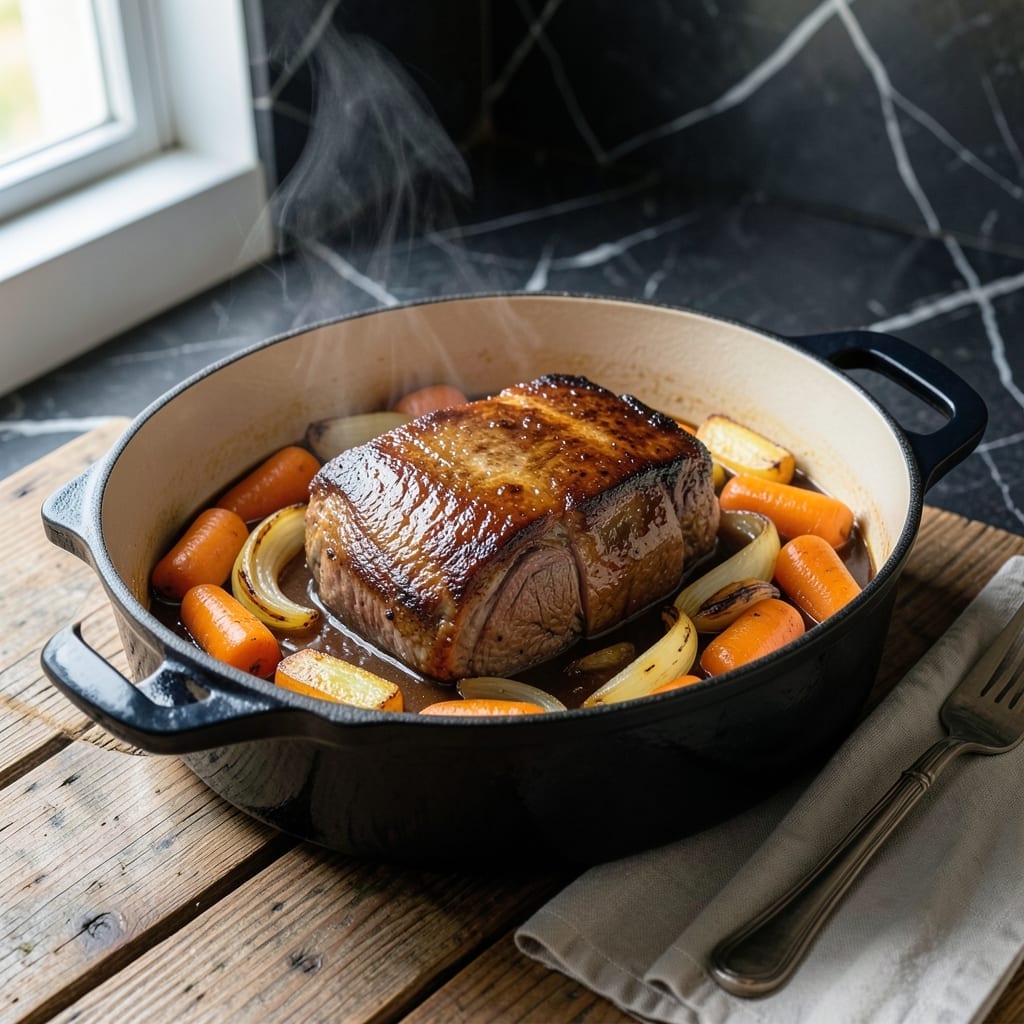
This wine-braised pot roast transforms tough cuts of beef into melt-in-your-mouth tenderness through slow oven cooking. The key is searing the meat first to develop deep, complex flavors before adding aromatic vegetables and red wine.
The combination of root vegetables, fresh herbs, and rich braising liquid creates a hearty, savory dish that fills the kitchen with irresistible aromas. Each component cooks together in the same pot, allowing flavors to meld beautifully over time.
By the time it emerges from the oven, you’ll have fall-apart beef surrounded by caramelized vegetables in a velvety sauce. The result is a comforting, restaurant-quality meal that’s perfect for Sunday dinners or special occasions.
Serve with mashed potatoes or crusty bread to soak up every last drop of the flavorful braising liquid.
Ingredients for Savory Pot Roast Recipe Oven
Hearty beef, root vegetables, and rich wine come together for this oven-braised classic.
| Ingredient | Amount | Notes |
|---|---|---|
| Beef Chuck Roast 🥩 | 3 lb | Well-marbled, boneless preferred |
| Kosher Salt 🧂 | 1 ½ tsp | Divided for seasoning |
| Black Pepper 🌶️ | 1 tsp | Freshly ground preferred |
| Olive Oil 🫒 | 2 tbsp | Divided for searing and sautéing |
| Yellow Onion 🧅 | 1 whole | Large, roughly chopped |
| Carrots 🥕 | 3 whole | Peeled, cut into large chunks |
| Celery Stalks 🌿 | 3 pieces | Cut into large chunks |
| Garlic Cloves 🧄 | 4 cloves | Smashed, peeled |
| Dry Red Wine 🍷 | 2 cups | Bold, full-bodied variety |
| Beef Stock 🥣 | 2 cups | Low-sodium preferred |
| Tomato Paste 🍅 | 2 tbsp | For depth of flavor |
| Fresh Thyme Sprigs 🌿 | 3 pieces | Plus extra for garnish |
| Bay Leaf 🍃 | 1 whole | Dried or fresh |
| All-Purpose Flour 🌾 | 2 tbsp | For thickening braising liquid |
| Unsalted Butter 🧈 | 1 tbsp | Optional, for finishing sauce |
The beef is everything here. Chuck roast with good marbling gives that fall-apart texture—avoid lean cuts like sirloin. Most butchers will cube it for you if you ask nicely (or Costco sells it pre-cut in bulk). Look for meat that’s bright red with visible fat streaks. The wine should be something you’d actually drink—a bold Cabernet Sauvignon or Merlot works perfectly.
No red wine? Beef broth with a splash of balsamic vinegar gets you close. Fresh out of thyme? Dried thyme at one-third the amount works in a pinch. Tomato paste can be swapped with 1 tbsp ketchup plus 1 tbsp water (not ideal, but it’ll do). For the stock, Better Than Bouillon paste is a great pantry staple. The flour is just for thickening—cornstarch slurry (1 tbsp cornstarch + 2 tbsp water) is a gluten-free alternative.
This actually tastes better the next day once the flavors meld. Keeps in the fridge for 4-5 days or freezes beautifully for 3 months. Portion leftovers with some braising liquid for easy reheating—just warm on the stove over medium-low heat (don’t microwave, it dries out the meat).
Why You’ll Love This Recipe
- I’ll be real: it tastes even better the next day in sandwiches or over mashed potatoes.
- Set It and Forget It: I just sear the chuck roast, toss in onions, salt, pepper, and let the oven do the work for hours.
- Rich, Deep Flavor: The beef soaks up the caramelized onions and olive oil, making every bite ridiculously tender and savory.
- Sunday Dinner, Anytime: Honestly, this feels fancy enough for company but simple enough for a regular Tuesday.
Step-by-Step Instructions for Wine-Braised Beef With Root Veggies
This method delivers fall-apart tender beef with vegetables soaked in rich, wine-infused sauce.
Step 1: Sear the Beef Chuck Roast to Build Flavor
Pat the 3 lb Beef Chuck Roast dry with paper towels and season generously with 1.5 tsp Kosher Salt and 1 tsp Black Pepper. Heat 1 tbsp Olive Oil in a large Dutch oven over medium-high heat until it shimmers.
Add the roast and sear undisturbed for 4-5 minutes per side until deeply browned. This creates a flavorful crust and fond that will enrich the braising liquid. Don’t rush this step—if the roast sticks, it’s not ready to flip yet.
Step 2: Sauté Aromatics and Deglaze with Wine
Remove the roast and reduce heat to medium. Add the remaining 1 tbsp Olive Oil to the pot, then stir in the chopped Yellow Onion, Carrots, and Celery Stalks. Cook for 5-6 minutes until the onion softens and edges brown.
Add the Garlic Cloves and 2 tbsp Tomato Paste, stirring constantly for 1-2 minutes until the tomato paste darkens slightly. Pour in the 2 cups Dry Red Wine and scrape up all browned bits from the bottom of the pot.
Bring to a simmer and cook for 3-4 minutes until the liquid reduces by about half.
Step 3: Braise the Roast Low and Slow
Return the roast to the pot and add the 2 cups Beef Stock, 3 pieces Fresh Thyme Sprigs, and 1 whole Bay Leaf. The liquid should come about halfway up the roast. If needed, add a splash of water.
Cover and transfer to the oven preheated to 325°F. Braise for 2.5 to 3 hours until the beef is fork-tender. Check occasionally and add a little water if the liquid reduces too much. You’ll know it’s ready when a fork slides in with no resistance.
Step 4: Thicken the Sauce and Finish
Transfer the roast and vegetables to a serving platter. Place the Dutch oven on the stovetop over medium heat and whisk in the 2 tbsp All-Purpose Flour to thicken the braising liquid.
Simmer for 3-4 minutes until the sauce coats the back of a spoon. For extra richness, stir in the 1 tbsp Unsalted Butter until melted. Taste and adjust seasoning with more Kosher Salt or Black Pepper if needed.
Pour the sauce over the roast and vegetables before serving. The sauce should be glossy and thick enough to cling to the beef and veggies.
Pro Tips For Making Savory Pot Roast Recipe Oven
- Sear the Chuck: I learned this the hard way—browning the beef chuck roast in olive oil on all sides over medium-high heat before roasting adds depth that skipping this step just can’t match.
- Use Kosher Salt: Sounds weird, but it works: kosher salt clings better to the meat than table salt, and its larger grains let you control the seasoning without overdoing it.
- Don’t Rush the Onions: After burning three batches, I finally figured out that letting the yellow onions caramelize slowly in the same pot after searing the meat builds the base flavor for the entire dish.
- Rest Before Slicing: Give the roast a solid 15-20 minutes under foil after pulling it from the oven—it keeps the juices from running all over the cutting board when you slice it.
Health Benefits of savory pot roast recipe oven
Rich in Iron
This dish is a powerhouse of heme iron, the most easily absorbed form, with a 3 lb beef chuck roast providing about 7mg per serving. That covers nearly 40% of your daily needs for men and 30% for women. 💪
Protein Powerhouse
You’ll get approximately 50g of high-quality protein per serving from the beef alone. This supports muscle repair and growth, and keeps you feeling full for hours. The slow cooking preserves all the natural amino acids.
Vitamin B Complex
Beef is packed with B vitamins, including B12 for nerve function and B6 for metabolism. A single serving delivers over 100% of your daily B12 needs. These nutrients help your body convert food into energy.
Zinc Boost
Each serving contains about 8mg of zinc, which is over 70% of your daily requirement. Zinc supports immune function and wound healing. The root vegetables add complementary nutrients like vitamin A.
Collagen Benefits
Slow cooking breaks down connective tissue into gelatin, which supports joint and skin health. The 2.5 to 3 hour braise maximizes this transformation. You’ll actually see the collagen turn into a rich, velvety sauce.
Antioxidant Vegetables
The carrots and celery contribute beta-carotene and vitamin C, while the onion provides quercetin. These antioxidants help combat oxidative stress. Together with the beef, they create a nutritionally balanced meal. 🥕
Nutrition Facts
Frequently Asked Questions
What’s the best cut for oven braising?
Chuck roast is ideal for its marbling and connective tissue. This breaks down beautifully during the 2.5 to 3 hour cook time, creating that signature fall-apart texture. Avoid lean cuts like sirloin.
Can I use a different cooking liquid?
Swap the red wine for extra beef stock with 1 tbsp balsamic vinegar for acidity. The result won’t be as complex but still delicious.
How do I know when it’s done?
The beef is ready when a fork slides in with zero resistance. This usually happens at an internal temperature of 195-205°F. Don’t rely on time alone—check for tenderness.
Can I make this in a slow cooker?
Yes, but sear the meat first on the stovetop. Then transfer everything to the slow cooker on low for 7-8 hours. The oven method gives better browning and flavor development.

- 6 Oz Chocolate Chip Cookie Recipe: Perfectly Balanced Crispy Edges and Chewy Hearts - September 25, 2026
- 6-Inch Coffee Cake Recipe: Vanilla Bean Swirls and Buttery Streusel Topping - September 25, 2026
- 1 Hour Soup Recipe: Velvety Richness Without the Wait - September 25, 2026