
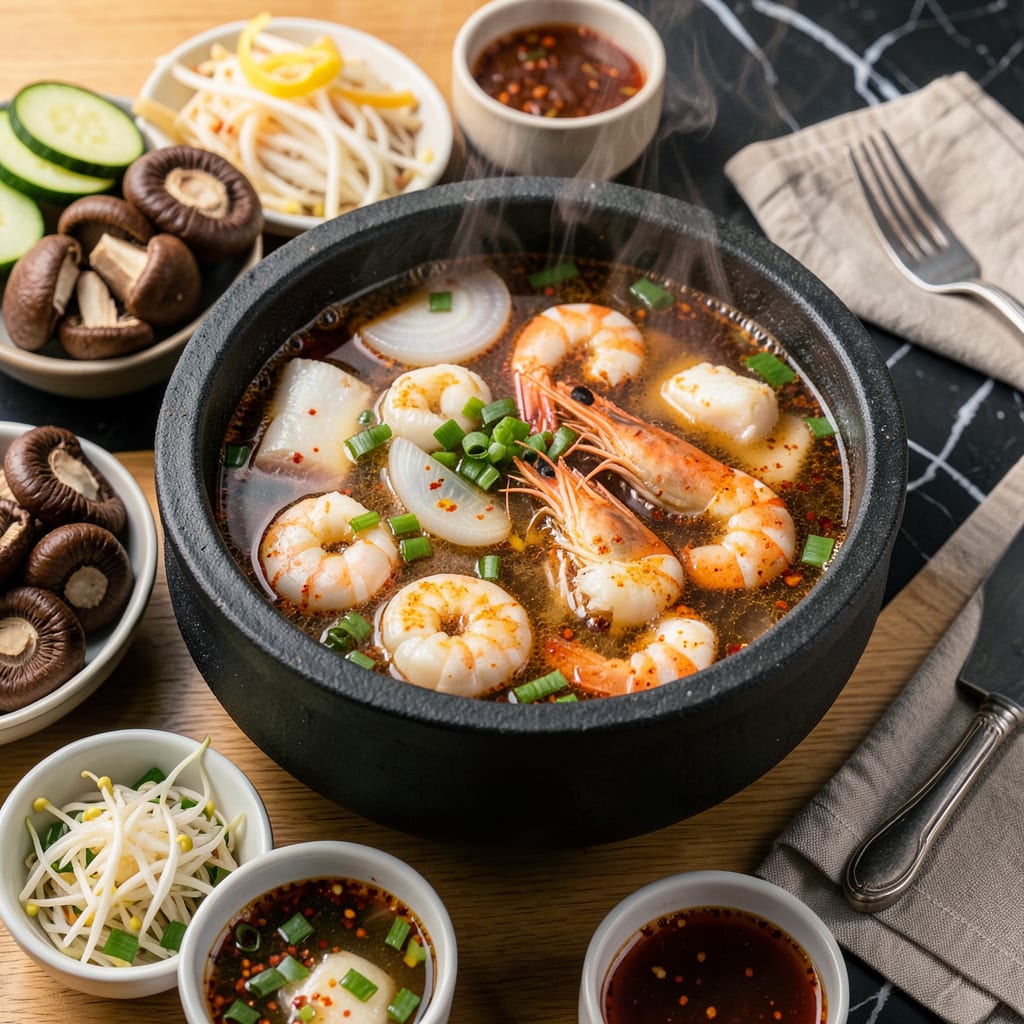
This seafood hotpot transforms dinner into an interactive feast, where a rich, spicy broth becomes the centerpiece for fresh ocean treasures. The beauty lies in its customization—each diner cooks their preferred seafood to perfection right at the table, ensuring every bite is exactly as desired.
What sets this recipe apart is the carefully balanced broth, infused with aromatic spices and just enough heat to complement the natural sweetness of shrimp, mussels, and fish. The preparation is straightforward, but the result is a restaurant-quality experience that brings people together for a shared, memorable meal.
Ingredients for Seafood Hotpot
Optimal quality requires these carefully selected ingredients to create the signature spicy broth and seafood selection.
| Ingredient | Amount | Notes |
|---|---|---|
| Dried Kelp Sheets 🌊 | 2 sheets | For umami broth base |
| Dried Shiitake Mushrooms 🍄 | ½ oz | Rehydrated for depth |
| Gochujang (Korean Chili Paste) 🌶️ | 2 tbsp | Fermented for complexity |
| Gochugaru (Korean Chili Flakes) 🌶️ | 1 tbsp | Mild or hot variety |
| Soy Sauce 🫙 | ¼ cup | Low-sodium preferred |
| Mirin (Sweet Rice Wine) 🍶 | 2 tbsp | Authentic Japanese brand |
| Sesame Oil 🫒 | 1 tbsp | Toasted for aroma |
| Garlic Cloves 🧄 | 6 cloves | Thinly sliced for infusion |
| Fresh Ginger 🌿 | 1 piece | 2-inch knob, julienned |
| Green Onions 🧅 | 4 whole | White and green parts separated |
| Large Shrimp 🦐 | 1 lb | Peeled, deveined, tails on |
| Mussels 🐚 | 1 lb | De-bearded, scrubbed clean |
| White Fish Fillets 🐟 | ¾ lb | Cod or halibut recommended |
| Soft Tofu 🧈 | 8 oz | Silken variety preferred |
| Enoki Mushrooms 🍄 | 4 oz | Rinsed, roots trimmed |
| Napa Cabbage 🥬 | ½ whole | Thinly sliced for quick cooking |
| Rice Noodles 🍜 | 4 oz | Vermicelli or udon style |
| Limes 🍋 | 2 whole | For serving and garnish |
| Fresh Cilantro 🌿 | ½ cup | Leaves and tender stems |
The broth foundation requires specific ingredients for authentic flavor. Dried kelp sheets and shiitake mushrooms from Asian markets (H Mart or 99 Ranch) provide essential umami depth. Gochujang and gochugaru must be Korean brands—Sempio or Chung Jung One for proper fermentation quality. Freshness in seafood is non-negotiable; source shrimp, mussels, and white fish from reputable seafood counters with high turnover, ideally the day of preparation. The tofu should be silken variety for proper texture absorption.
Substitutions must maintain flavor balance and structural integrity. Miso paste can replace gochujang at a 1:1 ratio for less heat, though fermentation notes will differ. Fish sauce (3 tbsp) with sriracha (1 tbsp) approximates the gochujang profile when unavailable. Clams or scallops may substitute for mussels at equal weight. For vegetarian adaptation, king oyster mushrooms mimic scallop texture when seared. The rice noodles are essential for authenticity, though udon or soba work in a pinch—adjust cooking times accordingly.
Proper storage ensures ingredient integrity. Refrigerate all seafood components at 32-34°F until use, consuming within 24 hours of purchase. The kelp and shiitake keep indefinitely in sealed containers away from moisture. Prepared broth maintains optimal flavor for 3 days refrigerated or 2 months frozen. The gochujang and gochugaru retain potency for 6-12 months in cool, dark conditions. Always bring refrigerated seafood to room temperature 15 minutes before cooking for even doneness.
Why You’ll Love This Recipe
- Dump-and-Simmer Easy: Honestly, this might be the laziest impressive meal I make. Toss dried kelp and shiitake into cold water, bring to a simmer, then let the gochujang and gochugaru do all the heavy lifting while I set the table. No babysitting required.
- Umami Bomb Alert: That first sip of broth—rich from the kelp, earthy from the mushrooms, then bam—the gochujang’s sweet heat and soy sauce’s saltiness hit like a flavor firework. I’ve caught people slurping straight from the pot. (No judgment.)
- Weeknight and Weekend Hero: I’ve served this to last-minute guests and also eaten it alone in sweatpants. The broth’s bold enough for a dinner party but unfussy enough for a Tuesday when I’m too tired to think. Leftovers? Even better the next day over rice.
- Stretches Like Magic: Here’s what sold me—a handful of shrimp and some tofu turn into a feast with this broth. The dried ingredients cost pennies per serving, and the gochugaru’s heat makes every bite feel luxurious. My wallet (and my seafood budget) thank me.
Step-by-Step Instructions for Seafood Hotpot
This method ensures a deeply flavorful broth and perfectly cooked seafood every time.
Step 1: Prepare the Umami Broth Base
Begin by rehydrating the 2 sheets dried kelp sheets and 0.5 oz dried shiitake mushrooms in 8 cups cold water for 30 minutes. I use a large pot so there’s ample room for the ingredients to expand. After rehydration, remove the kelp (it will have served its purpose) but keep the shiitake mushrooms for the broth.
Bring the soaking liquid to a gentle simmer over medium heat. Add the 6 cloves garlic cloves (thinly sliced), 1 piece fresh ginger (julienned), and the white parts of 4 whole green onions. Simmer uncovered for 20 minutes to develop a rich, aromatic foundation. The broth should take on a golden hue and smell deeply savory.
Step 2: Build the Spicy Broth Profile
Strain the broth through a fine-mesh sieve into a clean pot, discarding the solids. Return the broth to medium-low heat and whisk in the 2 tbsp gochujang (korean chili paste), 1 tbsp gochugaru (korean chili flakes), 0.25 cup soy sauce, and 2 tbsp mirin (sweet rice wine). Stir constantly for 3-4 minutes until fully dissolved and the broth turns a rich reddish-brown.
Add the 1 tbsp sesame oil and the rehydrated shiitake mushrooms (sliced). Simmer for an additional 10 minutes to allow the flavors to meld. The broth should be fragrant with a balance of heat, sweetness, and umami. Taste and adjust seasoning if needed, though the flavors will intensify as it simmers with the seafood.
Step 3: Cook the Seafood in Stages
Begin with the 0.75 lb white fish fillets, cutting them into 2-inch pieces. Add to the simmering broth and cook for 3-4 minutes until the fish turns opaque and flakes easily. Use a slotted spoon to transfer the fish to serving bowls, keeping it warm.
Next, add the 1 lb large shrimp and 1 lb mussels to the broth. Cover and cook for 4-5 minutes until the shrimp turn pink and the mussels open. Discard any mussels that remain closed. Add the 8 oz soft tofu (cut into cubes) and 4 oz enoki mushrooms during the last 2 minutes of cooking—they only need brief heating to warm through.
Step 4: Assemble and Serve with Fresh Elements
Divide the 4 oz rice noodles (pre-soaked in warm water for 5 minutes and drained) among four large bowls. Ladle the hot broth over the noodles, ensuring each bowl gets an equal distribution of seafood. The broth should be steaming hot when served to fully cook the noodles.
Garnish each bowl with the thinly sliced green onion tops, 0.5 whole napa cabbage (thinly sliced), and 0.5 cup fresh cilantro. Serve immediately with 2 whole limes cut into wedges for squeezing. The contrast of fresh, crisp vegetables against the rich broth creates the perfect balance in every spoonful.
Common Mistakes When Making Great seafood hotpot
Overcooking Delicate Seafood
The biggest mistake I see is leaving shrimp or fish in the broth too long. Remember, shrimp only need 2-3 minutes once they turn pink, and white fish should flake easily after 3-4 minutes. I set a timer to avoid rubbery seafood—trust me, it’s worth it. 🌡️
Skipping Broth Straining
Those aromatic bits like garlic and ginger are for infusion, not eating. Always strain your broth through a fine-mesh sieve after simmering. I use a Chinois strainer for ultra-smooth results. Leaving particles in makes the broth gritty and overpowers the delicate seafood flavors.
Ignoring Mussel Safety
Never force open mussels before cooking, and discard any that stay closed after 5 minutes. This isn’t just about texture—it’s a safety issue. I learned this the hard way after a bad batch ruined an otherwise perfect hotpot. When in doubt, throw it out.
Underseasoning the Broth
The broth should taste 20% saltier than you’d normally prefer because the seafood and noodles will dilute it. I add an extra ½ tsp salt during the final simmer. Taste as you go—it’s easier to add than to fix a bland broth later.
Overcrowding the Pot
Adding all ingredients at once drops the broth temperature dramatically. Cook in stages: fish first, then shrimp/mussels, finally tofu/mushrooms. This ensures everything cooks evenly without turning your hotpot into a lukewarm stew.
Forgetting the Fresh Garnishes
Those green onions, cilantro, and lime wedges
Nutrition Facts
Frequently Asked Questions
Can I make this ahead of time?
Prepare the broth up to 2 days in advance and store it refrigerated. Keep seafood raw until serving to maintain freshness. Reheat the broth gently before adding ingredients—this actually deepens the flavors.
What’s the best way to adjust spice levels?
Start with half the gochugaru if you’re sensitive to heat. You can always add more later! For extra kick, include 1 tsp sriracha or ½ tsp cayenne when building the broth. Serve with cooling sides like cucumber slices.
Can I use frozen seafood?
Yes, but thaw it completely in the fridge overnight first. Pat dry before adding to prevent watery broth. Frozen shrimp and mussels work well, but avoid previously frozen fish fillets—they can become mushy when cooked in liquid.
What are good vegetarian substitutions?
Swap seafood for king oyster mushrooms (sliced thick), extra-firm tofu, and lotus root. Use vegetable stock instead of water for the broth base. The mushrooms absorb flavors beautifully and mimic seafood texture!

- 4-Ingredient Meatloaf Recipe No Bread: Moist and Savory Without a Single Crumb - September 25, 2026
- 3 Lb Potato Salad Recipe: Bold Mustard & Herb Crunch in One Bowl - September 25, 2026
- 5 Cheese Grilled Cheese Recipe: Triple-Melted Layers With Crispy Bread Crusts - September 25, 2026