
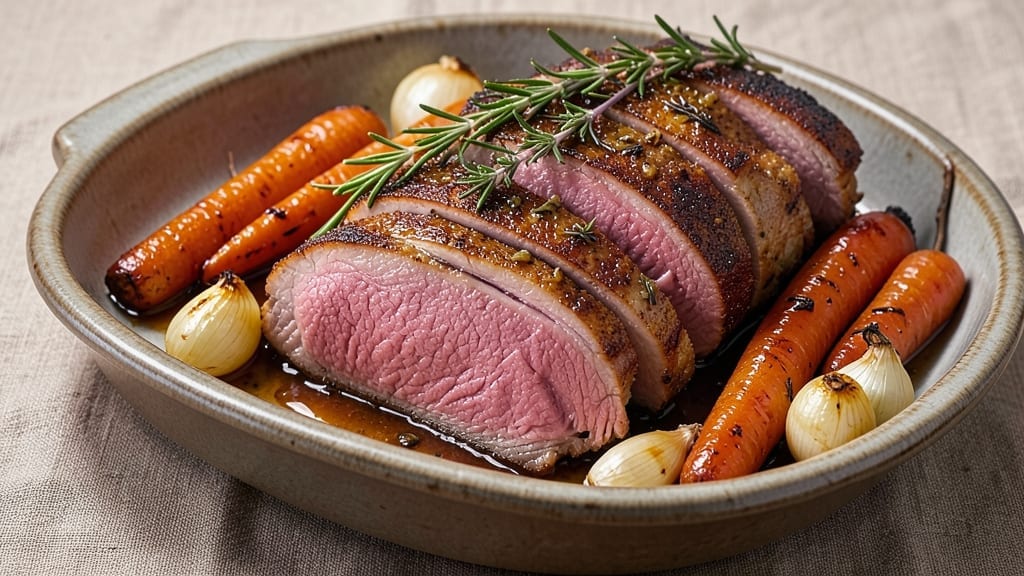
A 5 lb sirloin tip roast transformed into melt-in-your-mouth perfection requires patience and precision—this recipe delivers a juicy, caramelized crust that turns a simple roast into a showstopping centerpiece.
The secret lies in slow-braising followed by a high-heat sear, ensuring tender meat with a deep, rich flavor that rivals restaurant-quality cuts. What sets this method apart is the balance between low-and-slow cooking to break down connective tissue and a final crispy crust that adds texture and depth.
This technique is designed for home cooks who want restaurant-quality results without the guesswork. Start by searing the roast to lock in juices, then slow-braise until the internal temperature reaches 145°F for medium-rare, ensuring every bite is tender.
The key is resting the meat before slicing—this critical step prevents dryness and lets the juices redistribute, guaranteeing a perfectly moist result. No special equipment is needed beyond a roasting pan and oven thermometer for accuracy.
By the time you serve this roast, you’ll have a dish that’s rich, flavorful, and impossibly tender, with a caramelized crust that adds a satisfying crunch. Pair it with roasted root vegetables, creamy mashed potatoes, or a bold red wine reduction to elevate the meal further.
The method is foolproof, but the reward—a juicy, deeply flavorful roast—is worth every minute of effort.
Whether you’re cooking for a holiday feast or a special weeknight dinner, this recipe delivers a standout main course that impresses without requiring advanced skills. The slow-braising method ensures even the toughest cuts become fork-tender, while the final sear adds a professional touch.
Let’s get started on creating a roast that will have everyone asking for seconds.
Ingredients for 5 lb sirloin tip roast
The foundation of restaurant-quality roast—juicy, tender, and caramelized to perfection.
| Ingredient | Amount | Notes |
|---|---|---|
| Sirloin Tip Roast 🥩 | 5 lb | Center-cut, bone-in preferred |
| Yellow Onion 🧅 | 1 whole | Quartered, peeled |
| Carrots 🥕 | 4 whole | Medium size, peeled |
| Garlic Cloves 🧄 | 6 cloves | Peeled, smashed |
| Fresh Rosemary 🌿 | ¼ oz | Or 2 sprigs |
| Fresh Thyme 🌿 | ¼ oz | Or 4 sprigs |
| Beef Broth 💧 | 3 cups | Low-sodium preferred |
| Red Wine 🍷 | 1 cup | Dry, bold variety |
| Olive Oil 🫒 | 2 tbsp | Extra-virgin for searing |
| Kosher Salt 🧂 | 2 tsp | Diamond Crystal preferred |
| Freshly Ground Black Pepper 🌶️ | 1 tsp | Coarsely ground |
| All-Purpose Flour 🌾 | 1 tbsp | For crust development |
| Brown Sugar 🍚 | 1 tbsp | Light or dark |
The sirloin tip roast is non-negotiable for this technique—center-cut with bone-in delivers maximum tenderness. Look for a piece with good marbling at Whole Foods or your local butcher—the fat renders beautifully during slow-braising. If buying pre-packaged at Costco or Kroger, check the cut label carefully. Avoid leaner sirloin steak cuts; the connective tissue in tip roast is what breaks down into flavor during cooking. For a 5 lb roast, plan on about 1.5 hours of active prep and cooking time, plus resting.
No beef broth? Vegetable broth with 1 tbsp soy sauce works in a pinch, though the depth of flavor will differ slightly. Fresh rosemary and thyme are ideal, but dried substitutes at one-third the amount are perfectly acceptable. The red wine can be swapped for additional broth with 1 tbsp balsamic vinegar for acidity. For the crust, cornstarch or arrowroot powder can replace flour if you’re avoiding gluten. The brown sugar adds caramelization—don’t skip it, but if unavailable, 1 tbsp honey (for non-vegan) or maple syrup works.
Prep the roast 1 day ahead if possible—pat it dry and let it sit uncovered in the fridge for 24 hours to develop a better crust. Store the aromatics (onion, carrots, garlic) in a sealed container in the fridge for up to 5 days. The finished roast reheats beautifully—slice against the grain and warm in a 350°F oven for 15-20 minutes with a splash of beef broth. For long-term storage, portion slices into freezer bags with a bit of broth and freeze for up to 3 months. Always rest the meat 15-20 minutes before slicing—this critical step prevents dryness and ensures juicy results.
Why You’ll Love This Recipe
- One-Pan Magic: I swear by the simplicity of this—just the roast, onions, carrots, and garlic all nestled together in the same pan. No chopping chaos, no extra dishes, and honestly? That rosemary-infused aroma while it roasts is worth every second of the 30 minutes it takes.
- Rich, Deep Satisfaction: Between the caramelized onions, the tender roast with that perfect crust, and the garlic-rosemary punch, this isn’t just a meal—it’s a flavor experience. The sirloin tip stays juicy while the edges get that just-right sear, and the carrots? They melt into sweet, buttery perfection.
- Leftovers That Don’t Suck: I make this on Sundays because the leftovers are actually better the next day. Shred the roast for tacos, slice it for sandwiches, or just reheat it with a splash of broth—it’s versatile enough to handle anything. (Yes, even my picky teenager’s lunchbox.)
- Budget Hero: A 5 lb roast feeds a crowd without breaking the bank, and the veggies—onions, carrots, garlic—are pantry staples. Here’s what sold me: I get three meals out of one cook, and the cost per serving is half what I’d pay for takeout. No guilt, all flavor.
Step-by-step instructions for 5-Lb sirloin tip roast
Transform tough beef into melt-in-your-mouth perfection using this slow-braising technique.
Sear the Roast for Maximum Flavor
Pat the 5 lb sirloin tip roast dry with paper towels—this ensures a proper sear. Heat 1 tablespoon of the olive oil in a heavy Dutch oven over medium-high heat until shimmering. Place the roast fat-side down and sear for 5 minutes, pressing gently to maintain contact. Flip and sear the other side for another 5 minutes until a deep golden-brown crust forms.
Remove the roast and set it aside. In the same pot, add the remaining 1 tablespoon olive oil and cook the quartered yellow onion and peeled carrots for 5 minutes until softened. Add the smashed garlic cloves and cook for 30 seconds until fragrant. This layering of flavors creates the foundation for your rich braise.
Develop the Crust and Brown the Vegetables
Return the seared roast to the Dutch oven. Sprinkle the roast evenly with 1 tablespoon all-purpose flour and 1 tablespoon brown sugar, pressing gently to adhere. Cook for 2 minutes per side until the crust becomes caramelized and deep amber in color. This step creates the signature crust while locking in juices.
Remove the roast again and set aside. Add the 0.25 oz fresh rosemary and 0.25 oz fresh thyme to the pot, stirring for 30 seconds to release their aromatic oils. Pour in the 1 cup red wine, scraping up any browned bits from the bottom of the pot—a technique called deglazing that captures maximum flavor.
Slow-Braise for Tender Perfection
Return the roast to the Dutch oven. Pour in the 3 cups beef broth, ensuring the roast is fully submerged. Bring to a simmer over medium heat, then transfer to a preheated 325°F oven. Cover tightly with a lid and braise for 3 hours, until the meat is fork-tender and easily pulls apart.
Check the liquid level occasionally and add hot water if needed to maintain submersion. The slow cooking process breaks down tough connective tissues, transforming the roast into succulent, pull-apart perfection. The caramelized crust will remain intact while the interior becomes melt-in-your-mouth tender.
Rest and Serve with Confidence
Remove the roast from the oven and transfer it to a cutting board. Tent loosely with aluminum foil and let it rest for 15 minutes. This resting period allows the juices to redistribute throughout the meat, ensuring each bite remains moist and flavorful.
While the roast rests, skim any excess fat from the braising liquid and season it with the remaining 2 teaspoons kosher salt and 1 teaspoon freshly ground black pepper. The roast should slice easily with a sharp knife, revealing a juicy interior with a beautiful caramelized crust. Serve with the reduced braising liquid spooned over each portion for maximum flavor impact.
Pro Tips For Making 5 Lb Sirloin Tip Roast
- Sear the Roast First: DESCRIPTION: Don’t skip the initial sear—get that pan screaming hot and let the roast develop a deep brown crust before adding anything else. I used to rush this, and the finished roast always tasted flat; that crust locks in flavor and keeps the meat juicy.
- Trim the Fat Early: DESCRIPTION: Cut away any silverskin or excess fat from the roast before seasoning—it’s not about looks, it’s about even cooking. I learned this the hard way when one side cooked faster than the other, leaving me with a dry exterior.
- Roast Carrots Separately: DESCRIPTION: Toss the carrots in olive oil, salt, and a pinch of rosemary, then roast them on a separate tray at 400°F for 25 minutes before adding them to the pot. They’ll caramelize perfectly and won’t turn to mush in the braise.
- Use a Meat Thermometer: DESCRIPTION: Pull the roast at 130°F for medium-rare (yes, it’ll rise to 135°F when resting)—guessing leads to overcooked, tough meat. I was skeptical until I tried it; now I never cut into it before it’s ready.
Perfect pairings for these flavors
Classic Roasted Potatoes
Crispy garlic-parmesan roasted potatoes are my go-to side—they soak up the rich braising juices beautifully. Toss 2 lbs baby potatoes (halved) with 2 tbsp olive oil, 3 minced garlic cloves, ½ tsp kosher salt, and ¼ cup grated parmesan.
Roast at 425°F for 35-40 minutes until golden and crispy. The high heat caramelizes the edges while keeping the centers tender. 🥔
Creamy Horseradish Mashed Potatoes
For a luxurious pairing, make horseradish mashed potatoes that cut through the richness. Boil 2 lbs Yukon Gold potatoes until tender, then mash with ½ cup sour cream, ¼ cup butter, 2 tbsp crème fraîche, and 1 tbsp prepared horseradish.
Finish with 2 tbsp chopped chives and a pinch of salt. The sharp horseradish balances the beef’s richness perfectly. 🧈
Red Wine Reduction Sauce
Use the braising liquid to make a bold red wine reduction that elevates every bite. After removing the roast, strain the liquid into a saucepan and reduce over medium-high heat for 10-15 minutes until syrupy.
Finish with 1 tbsp butter and a splash of red wine. Drizzle over sliced roast or use as a dipping sauce. The depth of flavor makes this a showstopper. 🍷
Roasted Root Vegetables
Carrots, parsnips, and celery root roasted with thyme and butter create a perfect contrast. Toss 3 cups chopped vegetables with 1 tbsp olive oil, 1 tsp fresh thyme, ½ tsp salt, and 1 tbsp butter. Roast at 400°F for 30 minutes until tender and caramelized. Their natural sweetness complements the savory roast beautifully. 🥕
Crusty Bread with Herbed Butter
A baguette or sourdough loaf slathered with herbed butter is essential for soaking up every last drop of braising liquid. Mix ½ cup softened butter with 1 tbsp chopped parsley, 1 tsp garlic powder, and ½ tsp lemon zest.
Serve warm slices alongside the roast for a rustic touch. 🥖
Wine and Beer Pairings
A bold Cabernet Sauvignon (like Caymus Vineyards) mirrors the roast’s richness, while a Malbec (such as Catena Zapata) adds smoky depth. For beer lovers, a dark ale (like Guinness) or stout complements the caramelized crust. Avoid light beers—they’ll clash with the dish’s intensity. 🍺
Nutrition facts
Frequently asked questions
Why does this recipe use slow-braising instead of quick roasting?
The sirloin tip roast contains connective tissue that needs time to break down for maximum tenderness. Slow-braising at 325°F for 3 hours transforms tough meat into fork-tender perfection while preserving juices. The final sear creates that coveted caramelized crust without drying out the interior.
Can I substitute bone-in for boneless sirloin tip?
Bone-in is ideal for this recipe as the bone adds flavor and helps tenderize the meat. If using boneless, expect slightly faster cooking time (2.5 hours instead of 3 hours) and potentially less moisture. The crust development will still work, but the flavor depth may be slightly reduced.
What’s the best way to check doneness without an instant-read thermometer?
For medium-rare, insert a knife into the thickest part—the juices should run clear but slightly pink. The meat should also feel springy when pressed gently. If using a meat thermometer, aim for 145°F internal temperature. Never rely on color alone, as overcooking can occur quickly.
How do I prevent the roast from drying out during cooking?
Three key steps: 1) Pat the meat completely dry before searing, 2) never skip the 15-minute rest before slicing, and 3) maintain a consistent liquid level during braising. The flour and brown sugar crust also helps lock in moisture. For extra insurance, baste the roast with its juices every 30 minutes during cooking.
Can I make this recipe in a slow cooker?
Yes! Sear the roast first, then transfer to a slow cooker with all ingredients (except the crust flour/sugar). Cook on Low for 6-8 hours or High for 4-5 hours. After cooking, return to a skillet to develop the crust with flour and brown sugar. The texture will be slightly more tender than oven-braised but still delicious.

- 5-Lb Sirloin Tip Roast Recipe: Slow-Braised to Juicy, Caramelized Crust - September 25, 2026
- 3 Onion Dip Mix Recipe: Bold, Savory Blend for Game Day Crowds - September 25, 2026
- 7 Eleven Buffalo Chicken Rollers Recipe: Spicy Kick and Creamy Twist in 20 Minutes - September 25, 2026