
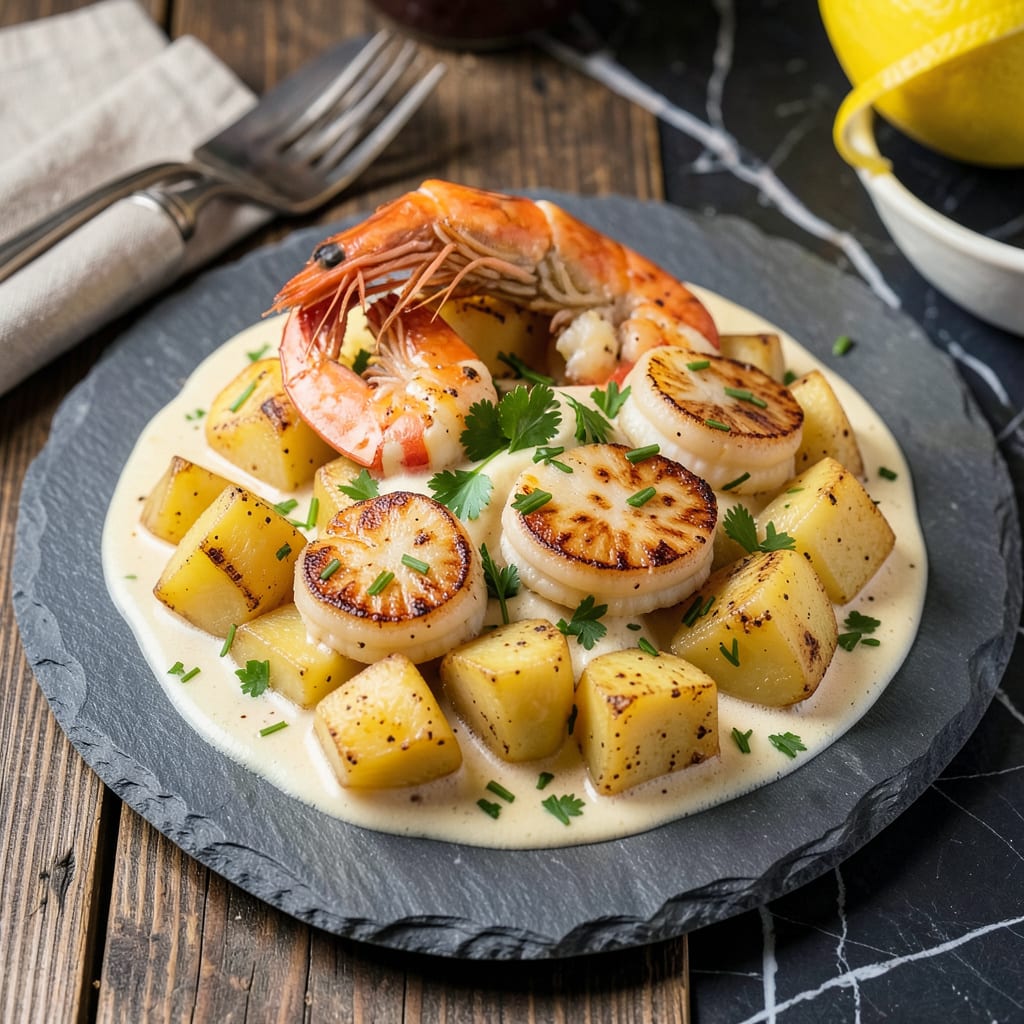
This seafood and potato dish brings coastal flavors to your home kitchen with a professional yet approachable technique. The combination of tender seafood and creamy garlic-herb potatoes creates a meal that’s elegant enough for entertaining but simple enough for weeknight dining.
The key lies in balancing textures—sautéing shrimp until just opaque while simmering potatoes in a fragrant broth until perfectly tender. A final drizzle of lemon-butter sauce ties everything together, enhancing the natural sweetness of the seafood and the rich, velvety potatoes beneath. The result is a harmonious plate where every component complements the next.
Ingredients for Seafood Potatoes
This elegant combination of fresh seafood and Yukon Gold potatoes delivers coastal sophistication with professional-grade ingredients.
| Ingredient | Amount | Notes |
|---|---|---|
| Yukon Gold potatoes 🥔 | 2 lb | Peeled, cut into 1-inch cubes |
| Large shrimp 🦐 | 1 lb | Peeled, deveined, tails removed |
| Sea scallops 🐚 | ½ lb | Pat dry before cooking |
| Heavy cream 🥛 | 1 ½ cups | Full-fat for optimal creaminess |
| Seafood stock 🍲 | 2 cups | Low-sodium preferred |
| Unsalted butter 🧈 | ½ cup | Divided for cooking and sauce |
| Garlic cloves 🧄 | 6 cloves | Minced for maximum flavor infusion |
| Fresh thyme sprigs 🌿 | 4 sprigs | Leaves stripped, stems discarded |
| Fresh flat-leaf parsley 🍃 | ¼ cup | Chopped for garnish |
| Lemon 🍋 | 1 whole | Zested and juiced |
| Dijon mustard 🟡 | 1 tbsp | Smooth variety for sauce |
| Kosher salt 🧂 | 1 ½ tsp | Diamond Crystal preferred |
| Freshly ground black pepper 🌶️ | ¾ tsp | Coarse grind recommended |
| Old Bay seasoning 🌊 | 1 tsp | Classic seafood seasoning blend |
[recipeingredientscaler]
The potatoes and seafood quality are paramount for this dish. Yukon Gold potatoes provide the ideal creamy texture when simmered—avoid waxy varieties like red potatoes. For seafood, wild-caught shrimp and dry-packed scallops (available at Whole Foods or Fresh Market) yield superior flavor and texture. The heavy cream should be full-fat (36-40% butterfat) to achieve the velvety consistency described in the introduction. Professional kitchens typically use Diamond Crystal kosher salt for its clean flavor and precise measurement control.
Substitutions require careful consideration to maintain balance. Baby potatoes (halved) can replace Yukon Golds, though texture will differ slightly. Cod or halibut (cut into 2-inch pieces) may substitute for scallops—adjust cooking time accordingly. For dairy-free adaptations, coconut cream (not milk) provides comparable richness, though flavor profile will shift. The Old Bay seasoning is non-negotiable for authentic coastal flavor; Celery salt plus paprika at 1:1 ratio can substitute in emergencies.
Storage demands attention to preserve quality. Cooked potatoes absorb flavors best when consumed immediately but may be refrigerated for up to 48 hours in an airtight container. Raw seafood requires same-day use for optimal freshness. The lemon-butter sauce separates when chilled; reheat gently with constant whisking. For make-ahead preparation, cook potatoes 80% through, cool completely, and refrigerate—finish with seafood and sauce just before serving.
Why You’ll Love This Recipe
- I’ll be real: this looks (and tastes) like a restaurant dish, but it’s my go-to when I need to impress without stressing. Swap the shrimp for lobster tails if you’re feeling extra, or keep it simple with just scallops—either way, it’s a showstopper.
- One-Pan Magic: Honestly, I love that this comes together in a single skillet. The shrimp and scallops sear right alongside the potatoes—no extra pots, no fuss, just layer flavors and let the stove do the work.
- That Creamy-Seafood Balance: Here’s what sold me—the Yukon Golds soak up the heavy cream and seafood stock like a sponge, turning buttery-soft, while the shrimp and scallops stay sweet and briny. It’s rich but not heavy, like a cozy hug with a splash of ocean.
- Fancy Enough for Guests: I’ll be real: this looks (and tastes) like a restaurant dish, but it’s my go-to when I need to impress without stressing. Swap the shrimp for lobster tails if you’re feeling extra, or keep it simple with just scallops—either way, it’s a showstopper.
Step-by-Step Instructions for Seafood Potatoes
This method ensures perfectly tender potatoes and succulent seafood in a velvety garlic-herb sauce.
Step 1: Prepare and Parboil the Potatoes
Place the 2 lb Yukon Gold potatoes (peeled and cut into 1-inch cubes) in a large pot and cover with cold water by 1 inch. Add 1 tsp Old Bay seasoning and 1 tsp Kosher salt to the water. This initial seasoning layers flavor into the potatoes from the start.
Bring to a boil over high heat, then reduce to a simmer and cook for 8-10 minutes until the potatoes are fork-tender but still hold their shape. Drain immediately and transfer to a large bowl. The potatoes should be tender enough to pierce with a fork but not so soft they fall apart when stirred later.
Step 2: Sear the Seafood to Perfection
Pat the 1 lb Large shrimp and 0.5 lb Sea scallops completely dry with paper towels. This ensures proper searing rather than steaming. Heat 2 tbsp of the unsalted butter in a large skillet over medium-high heat until the foam subsides and the butter just begins to turn golden.
Add the shrimp and scallops in a single layer, being careful not to overcrowd the pan. Cook the shrimp for 2-3 minutes per side until opaque and pink, and the scallops for 2 minutes per side until they develop a golden crust and are just translucent in the center. Transfer to a plate and tent with foil to keep warm.
Step 3: Build the Creamy Garlic-Herb Sauce
In the same skillet, reduce heat to medium and add the remaining 6 tbsp unsalted butter. When melted, add the 6 cloves minced garlic cloves and stripped fresh thyme leaves. Sauté for 1-2 minutes until the garlic is fragrant but not browned—burnt garlic will make the sauce bitter.
Pour in the 2 cups seafood stock and 1.5 cups heavy cream, then whisk in the 1 tbsp Dijon mustard, zest of 1 lemon, 0.5 tsp Kosher salt, and 0.75 tsp freshly ground black pepper. Simmer for 8-10 minutes until the sauce reduces slightly and can coat the back of a spoon. The sauce should be velvety but not overly thick at this stage.
Step 4: Combine and Finish the Dish
Add the parboiled potatoes to the sauce and gently fold to coat. Simmer for 3-4 minutes to allow the potatoes to absorb some of the creamy sauce. The potatoes should become glossy and the sauce should thicken slightly from the potato starch.
Return the shrimp and scallops to the skillet along with any accumulated juices. Stir in the juice of 1 lemon and 0.25 cup chopped fresh flat-leaf parsley. Cook for an additional 2 minutes just to heat the seafood through—overcooking at this stage will make the seafood tough. The final dish should have a creamy, lightly thickened sauce that clings to the potatoes and seafood.
Troubleshooting This Dish
Sauce Too Thin
If your garlic-herb sauce isn’t thickening properly, don’t panic—this is easily fixed. First, let it simmer uncovered for 5-7 additional minutes over medium-low heat. The natural starch from the potatoes should help thicken it. If it’s still too thin, mix 1 tsp cornstarch with 1 tbsp cold water and whisk it into the sauce. Simmer for 2 more minutes until glossy. 💡
Overcooked Seafood
Seafood cooks quickly, and it’s easy to overdo it. If your shrimp or scallops turn rubbery, try this trick: Remove them from the pan 30 seconds earlier than the recipe suggests next time. They’ll continue cooking from residual heat. For already-overcooked seafood, serve it with extra lemon-butter sauce to mask the texture.
Potatoes Falling Apart
When your potatoes turn mushy instead of creamy, they’ve likely been overcooked. Next time, reduce the parboiling time to 6-7 minutes and test with a fork. For the current batch, gently fold them into the sauce at the very end to minimize further breaking. The sauce will help bind everything together visually.
Sauce Separating
If your cream sauce breaks or looks greasy, it’s often due to high heat. Remove the pan from heat immediately and whisk vigorously while adding 1-2 tbsp hot water to help emulsify. To prevent this, keep the heat at medium-low when adding cream and avoid boiling. A splash of lemon juice at the end can also help bring it back together.
Bland Flavors
When the dish tastes underseasoned, start by adding 0.5 tsp Kosher salt and 0.25 tsp Old Bay seasoning. Then stir in 1 tbsp lemon juice for brightness. Taste and adjust—remember that seafood needs less salt than you might expect. Fresh herbs like extra parsley or thyme can also elevate flavors without overpowering the delicate seafood. 🌿
Uneven Cooking
If some potatoes are undercooked while others are perfect, cut them into more uniform 1-inch cubes next time. For the current batch, remove the perfectly cooked pieces and continue simmering the firmer ones in the sauce for 3-4 additional minutes. Stir occasionally to prevent sticking. This often happens when potato pieces vary in size.
Nutrition Facts
Frequently Asked Questions
Can I use frozen seafood instead of fresh?
Yes, but thaw it properly first. Place frozen shrimp or scallops in the refrigerator overnight or submerge sealed bags in cold water for 30-60 minutes. Pat them completely dry before cooking to avoid steaming. Frozen seafood works best when it’s high-quality and hasn’t been previously thawed.
What’s the best potato substitute?
For similar creaminess, try red potatoes or fingerlings, though they hold shape better than Yukon Golds. Avoid russets—they’re too starchy and may turn gluey. For a low-carb option, substitute cauliflower florets (parboil for 5 minutes only).
How do I prevent the cream sauce from curdling?
Keep heat at medium-low and stir constantly once cream is added. Never let it boil. If curdling starts, remove from heat immediately and whisk in 1 tbsp cold butter or 1 tsp lemon juice to stabilize. Using room-temperature cream also helps prevent separation.
Can this be made ahead of time?
Prepare components separately. Cook potatoes 80% through, cool, and refrigerate. Store raw seafood on ice. Reheat potatoes gently in sauce, then cook seafood fresh. The sauce can be made 1 day ahead—reheat slowly while whisking. Avoid combining everything until ready to serve.

- 8 Bean Soup Recipe Crock Pot: Hearty Vegetable Medley in One Pot - September 25, 2026
- 4C Bread Crumbs Meatballs Recipe: Crispy Crust and Juicy Centers - September 25, 2026
- 6 Oz Chocolate Chip Cookie Recipe: Perfectly Balanced Crispy Edges and Chewy Hearts - September 25, 2026