
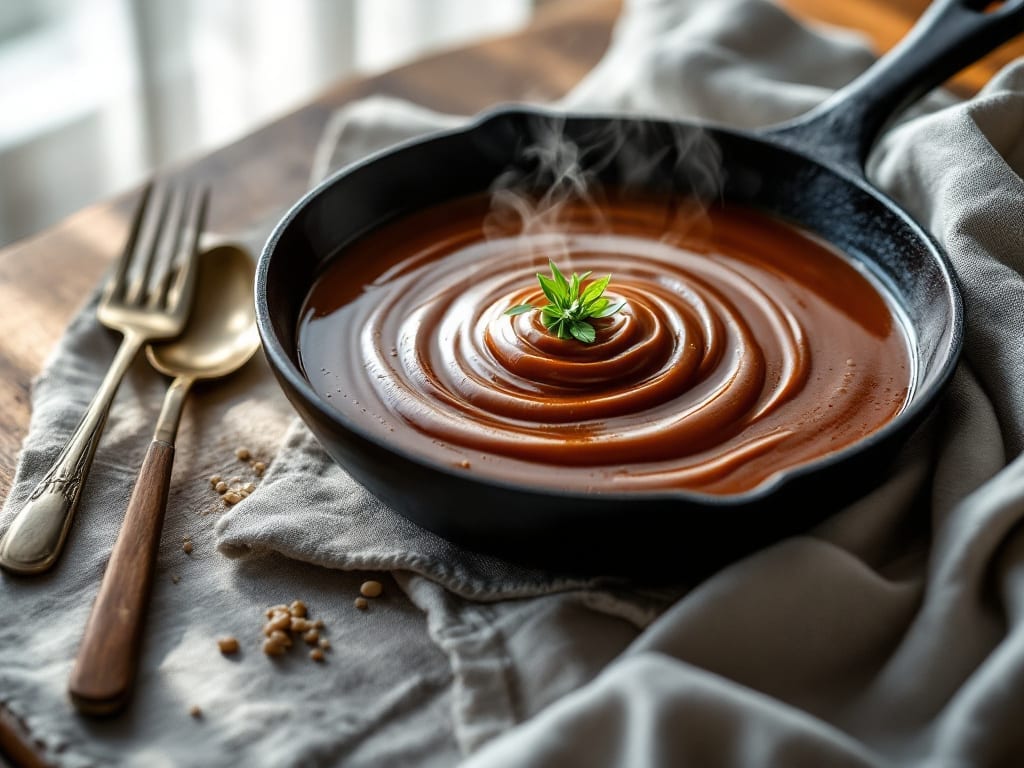
This sesame paste hot pot dipping sauce transforms any hot pot meal into a nutty-spicy umami experience that pairs perfectly with vegetables and tofu. The secret lies in balancing toasted sesame paste with aromatic garlic, ginger, and fermented bean paste for that signature depth without relying on meat.
I developed this vegetarian version after realizing how often sesame paste gets overlooked in favor of heavy soy-based sauces—until now.
The beauty of this sauce is its versatility and simplicity: just five core ingredients blend together in minutes, yet the flavors develop as you dip. The sesame paste provides that rich, toasty base while soy sauce and fermented bean paste deliver the umami punch.
For heat lovers, a touch of chili oil or sriracha elevates it to restaurant-quality intensity without overpowering the natural flavors of your hot pot broth.
What you’ll end up with is a thick, velvety sauce that clings to every bite of your vegetables or tofu, enhancing their natural sweetness while adding layers of savory warmth. The aroma alone will draw everyone to the table—this isn’t just a dipping sauce, it’s the star of the meal.
Ready in just 10 minutes, it’s perfect for last-minute prep or making ahead for gatherings.
Store it in an airtight container in the fridge for up to 5 days, or freeze for longer shelf life. The flavors actually improve overnight as the ingredients meld together.
Whether you’re hosting a hot pot night or craving that perfect dipping companion, this sauce delivers restaurant-quality results with minimal effort.
Ingredients for sesame paste hot pot dipping sauce
Five core ingredients transform into a restaurant-quality hot pot sauce with nutty-spicy depth.
| Ingredient | Amount | Notes |
|---|---|---|
| Toasted Sesame Paste 🥜 | ½ cup | High-quality, nutty aroma preferred |
| Light Soy Sauce 🥄 | ¼ cup | Use low-sodium for balance |
| Fermented Black Bean Paste 🌶️ | 2 tbsp | For deep umami flavor |
| Fresh Garlic Cloves 🧄 | 3 cloves | Minced for aromatic punch |
| Fresh Ginger Root 🌿 | 1 tbsp | Finely grated, not powdered |
| Sesame Oil 🫒 | 1 tbsp | Toasted for extra nutty depth |
| Chili Oil 🔥 | 1 tbsp | Optional for heat lovers |
| Water 💧 | ¼ cup | For thinning consistency |
The sesame paste is non-negotiable here—Kadoya or La Choy are my go-tos for that rich, toasty flavor. Fermented black bean paste (available at Asian markets) adds the umami backbone, but miso paste at half the amount works in a pinch. Fresh ginger and garlic? Always buy extra—you’ll want them for other dishes too. Trader Joe’s carries pre-grated ginger, which saves time. For the sesame oil, look for the toasted variety—it’s worth the extra few cents for that authentic aroma.
No fermented black bean paste? Double the soy sauce and add 1 tsp of soy sauce powder for depth. Fresh ginger powdered? Use half the amount, but fresh is ideal. Chili oil too strong? Swap for sriracha at half the quantity. The water is key—add it gradually to reach your desired consistency. For a smoother texture, blend briefly after combining. This sauce is all about balance, so taste as you go and adjust with more soy sauce for saltiness or water for thinness.
This sauce keeps beautifully in the fridge for 5 days in an airtight container, with flavors deepening overnight. Freeze for up to 3 months—thaw in the fridge before using. I like to portion it into small jars for easy dipping. The sesame paste will separate slightly if stored too long, so give it a quick stir before using. Perfect for hot pot nights or as a marinade for tofu and veggies.
Why You’ll Love This Recipe
- Five-Ingredient Magic: I swear by this recipe because it’s that simple—just toasted sesame paste, a splash of soy, black bean paste, and a quick minced garlic-ginger punch. No fancy techniques, no waiting for hours; just blend, taste, adjust. Honestly, my lazy nights thank me every time.
- Umami Bomb: That fermented black bean paste? It’s where the flavor really lives—deep, salty, slightly funky in the best way. Pair it with the nutty sesame and fresh garlic, and you’ve got a sauce that makes even the simplest hot pot feel like a restaurant experience. Between us, it’s the kind of taste that lingers.
- Hot Pot MVP: This sauce isn’t just for one meal—it’s my go-to for weeknight dinners, game-day snacks, or when friends drop by unannounced. Works with tofu, veggies, seafood, or thinly sliced meats. I’ll be real: I’ve made it three times this month already, and it’s never let me down.
- Pantry Goldmine: No last-minute grocery runs needed—everything you need is probably already hiding in your cupboard. A little sesame paste goes a long way, so you’re not just saving time, you’re saving money. Plus, it keeps for weeks in the fridge, so I can batch-make it and forget about it until the craving hits. Solid.
Step-by-step instructions for sesame paste hot pot dipping sauce
This sauce comes together faster than you can say “umami explosion”—just 10 minutes of hands-on work.
Mince Garlic and Grate Ginger with Precision
Start by finely mincing the 3 cloves fresh garlic cloves—you want them almost paste-like, not chunky. I like to use the flat side of my chef’s knife for this, pressing down firmly while rocking the blade. This ensures maximum surface area for flavor infusion.
Next, grate the 1 tablespoon fresh ginger root using a microplane or fine grater. The goal is a smooth, fine texture that will blend seamlessly into the sauce. Avoid using pre-ground ginger powder—its flavor is far less vibrant. Set both aside temporarily; we’ll use them in the next step.
Bloom the Aromatics in Toasted Sesame Paste
In a small saucepan, combine the 0.5 cup toasted sesame paste with the minced garlic and grated ginger. Place the pan over medium-low heat and stir continuously for 2-3 minutes until the mixture begins to sizzle gently and develop a deep, nutty aroma.
Here’s the thing—don’t rush this step. The sesame paste needs time to fully activate its flavors. You’ll see the mixture darken slightly and smell an intoxicating combination of garlic, ginger, and toasted sesame. This is when the magic starts happening. If it smells underwhelming, increase the heat just slightly—you want those aromatics to really sing.
Incorporate the Wet Ingredients
Remove the pan from heat and let it cool for 30 seconds—just enough to prevent a sudden temperature shock when adding liquids. Then, stir in the 0.25 cup light soy sauce and 2 tbsp fermented black bean paste. The sauce will thicken noticeably as these ingredients meld with the sesame base.
Return the pan to low heat and add the 1 tbsp sesame oil and 1 tbsp chili oil. Stir gently to combine, being careful not to let the mixture boil. The chili oil will add a subtle heat and vibrant color, while the sesame oil deepens the nutty profile. If you prefer less heat, reduce the chili oil to ½ tablespoon—but don’t skip it entirely, as it balances the richness.
Thin and Adjust the Consistency
Gradually whisk in the 0.25 cup water, one tablespoon at a time, until you achieve a smooth, pourable consistency. The sauce should coat the back of a spoon but still be fluid enough to drizzle easily. If it’s too thick, add a splash more water. If it’s too thin, simmer gently for 1-2 minutes to reduce.
Here’s where it gets fun—taste and adjust. The sauce should be a perfect balance of salty, nutty, and slightly spicy. If it needs more depth, add another ½ teaspoon of fermented black bean paste. If it’s too salty, a tiny bit more water helps dilute the flavor without losing intensity. The goal is a sauce that’s rich but not overpowering, with layers of umami that complement hot pot perfectly.
Rest and Serve for Maximum Flavor
Transfer the sauce to a small bowl and let it rest at room temperature for 5-10 minutes. This resting period allows the flavors to fully meld and the texture to stabilize. The sauce will thicken slightly as it cools, which is ideal for dipping.
Serve immediately while still warm, or store in an airtight container in the refrigerator for up to 5 days. When ready to use, gently reheat over low heat, stirring occasionally, until warmed through. The sauce should be smooth, glossy, and irresistibly aromatic—ready to elevate every bite of your hot pot.
Pro Tips For Making Sesame Paste Hot Pot Dipping Sauce
- Toast the Sesame First: If your sesame paste isn’t nutty enough, heat it dry in a small pan over medium-low for 2-3 minutes before mixing—just until it smells rich and toasty. I learned this the hard way when my sauce tasted flat; the extra warmth brings out the flavor without burning it.
- Mince Ginger Like Snow: Use a microplane or fine grater for ginger—no need to chop it into tiny cubes. This way, it dissolves smoothly into the sauce instead of sitting as lumps, and the texture stays silky. (Yes, even if you’re impatient like me.)
- Bloom the Black Beans: Warm the fermented black bean paste in the saucepan for 30 seconds before adding other ingredients—just enough to wake up its deep, salty aroma. Skipping this step makes the sauce taste muted, like someone forgot to season it.
- Garlic in Stages: Add half the garlic raw for sharpness, then cook the rest with the ginger until fragrant. Overcooking turns garlic bitter, and raw garlic alone can overpower the sauce. This balances the flavors without effort.
Regional styles of this sesame paste hot pot dipping sauce
Japanese Shabu-Shabu Style
In Japan, sesame paste dipping sauces often accompany shabu-shabu, a hot pot where thinly sliced meats and vegetables are swished in simmering broth.
For this version, reduce the fermented black bean paste to 1 tbsp and replace the remaining 1 tbsp with white miso paste for a lighter, more delicate flavor. Add 1 tsp mirin to sweeten slightly and balance the saltiness.
The sauce should be thinner—add 2 tbsp extra water—to create a silky, dippable consistency perfect for quick dips with scallions and mushrooms. 🍜
Korean Kimchi-Inspired Twist
For a Korean-inspired take, swap the fermented black bean paste for 1 tbsp gochujang (Korean chili paste) and add 1 tsp honey to balance the heat. Increase the chili oil to 2 tbsp and add 1 tbsp finely chopped green onions at the end.
This version pairs perfectly with kongnamul (sprouted soybean) hot pot or tofu. The gochujang adds a tangy, fermented depth that complements the nutty sesame beautifully. 🌶️
Thai-Inspired Spicy-Sweet
Transform this sauce into a Thai-inspired dipping sauce by adding 1 tbsp fish sauce (or soy sauce for vegetarian) and 1 tsp palm sugar (or brown sugar). Reduce the chili oil to ½ tbsp but add 1 tsp sriracha for extra heat.
Finish with 1 tsp lime juice and a pinch of white pepper. This version works wonderfully with Thai-style hot pot featuring morning glory, water spinach, and tofu. The lime brightens the sauce, cutting through the richness. 🍋
Chinese Sichuan Firepot
For a bold Sichuan-inspired sauce, replace the chili oil with 1 tbsp doubanjiang (Sichuan chili bean paste) and add ½ tsp ground Sichuan peppercorns (toasted and crushed). Use dark soy sauce instead of light for a deeper color.
This sauce is perfect for firepot hot pot with bok choy, mushrooms, and tofu. The Sichuan peppercorns add a numbing spice that pairs perfectly with the nutty sesame. Serve with extra chili oil on the side for those who love heat. 🔥
Malaysian Nasi Lemak Fusion
Give your hot pot a Malaysian twist by adding 1 tbsp sambal oelek (instead of chili oil) and ½ tsp ground coriander. Sweeten with 1 tsp coconut sugar and finish with 1 tsp toasted coconut flakes mixed in at the end.
This sauce is ideal for a vegetarian coconut milk hot pot with taro, eggplant, and tofu. The sambal adds a fruity heat, while the coconut sugar balances the saltiness. Garnish with cilantro for freshness. 🌴
Nutrition facts
Frequently asked questions
Can I make this sauce without fermented black bean paste?
Yes! For a vegetarian alternative, double the soy sauce to 0.5 cup and add 1 tsp soy sauce powder or 1 tbsp white miso paste to maintain umami depth. The texture will be slightly smoother but still rich. If you prefer a different flavor profile, 1 tbsp tahini also works as a sesame-forward substitute.
How do I adjust the spice level for sensitive eaters?
Reduce the chili oil to ½ tbsp or omit it entirely. For mild heat, replace it with ½ tbsp sriracha or a pinch of smoked paprika. If you want warmth without spice, add ½ tsp ground white pepper—it adds subtle heat without the burn. Always taste as you go!
Why did my sauce separate after refrigerating?
Sesame paste naturally thickens when cold, causing separation. Stir vigorously before using, or gently reheat over low heat while stirring until smooth. To prevent this, whisk in 1 extra tbsp water before storing. The sauce should remain velvety—never fully liquid—when served.
What’s the best way to reheat this sauce?
Reheat in a small saucepan over low heat for 1-2 minutes, stirring constantly to prevent scorching. Avoid microwaving—it can make the sauce grainy. For a smoother texture, add 1 tsp water while reheating. The sauce should be warm but not boiling.
Can I use this sauce for other dishes besides hot pot?
It’s perfect for dipping spring rolls, dumplings, or grilled tofu. Thin it with 2 tbsp water for a dipping sauce, or use it as a marinade for 15 minutes before grilling veggies like eggplant or bell peppers. The nutty-spicy profile also enhances noodle bowls or as a glaze for baked tofu.

- Crock Pot Round Steak Recipe: Slow-Sear Crust With Juicy Center - November 6, 2026
- Candied Sweet Potatoes Crock Pot Recipe: Caramelized Sweetness With Zero Effort - November 6, 2026
- Steak Recipe Crock Pot: Juicy, Caramelized Crust in 4 Hours - November 6, 2026