
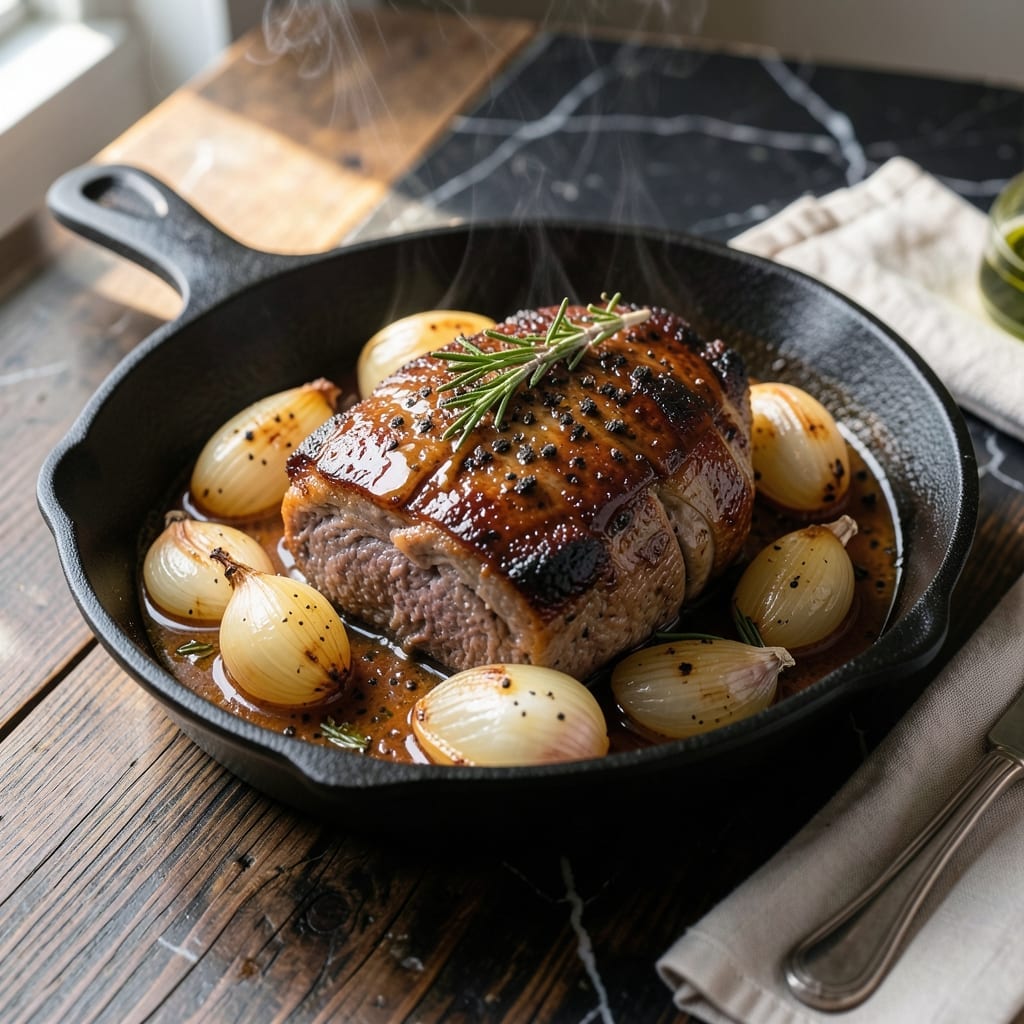
There’s a reason this braised beef dish has stood the test of time—it delivers classic comfort with every tender bite.
Low and slow cooking transforms tough cuts into fall-apart meat, while red wine builds deep, rich flavors that define this method. The technique is straightforward, but the results are anything but simple.
By the end, you’ll have a pot roast with melt-in-your-mouth texture and a sauce so velvety it deserves its own bread basket. The wine reduces into a glossy, savory glaze that clings to each piece.
Serve it with mashed potatoes or crusty bread to soak up every drop. This is the kind of dish that makes a house feel like home.
Ingredients for Silver Palate Pot Roast
Classic ingredients for a timeless braised beef dish with deep, rich flavor.
| Ingredient | Amount | Notes |
|---|---|---|
| Chuck Roast 🥩 | 3 lb | Well-marbled, trimmed of excess fat |
| Kosher Salt 🧂 | 2 tsp | Diamond Crystal preferred |
| Black Pepper 🌶️ | 1 tsp | Freshly ground |
| Olive Oil 🫒 | 2 tbsp | Divided for searing and cooking |
| Yellow Onions 🧅 | 2 whole | Large, coarsely chopped |
| Garlic Cloves 🧄 | 6 cloves | Smashed, peeled |
| Carrots 🥕 | 3 whole | Peeled, cut into chunks |
| Celery Stalks 🌿 | 3 whole | Cut into large pieces |
| Dry Red Wine 🍷 | 2 cups | Bold variety like Cabernet Sauvignon |
| Beef Stock 🥘 | 2 cups | Low-sodium preferred |
| Tomato Paste 🍅 | 2 tbsp | Double-concentrated preferred |
| Fresh Thyme Sprigs 🍃 | 4 whole | Plus extra for garnish |
| Bay Leaves 🌿 | 2 whole | Dried, whole |
| All-Purpose Flour 🌾 | 2 tbsp | For thickening sauce |
The chuck roast is non-negotiable here. Look for good marbling—it melts into the meat during the long cook, creating that signature tenderness. Whole Foods or butcher shops often have the best selection, but most supermarkets carry pre-cut chunks that work well. Avoid leaner cuts like sirloin; they won’t break down the same way. The red wine should be something you’d actually drink—a bold Cabernet Sauvignon or Merlot adds depth.
No red wine? Beef broth with a splash of balsamic vinegar works in a pinch. Out of fresh thyme? Dried thyme at one-third the amount is an acceptable substitute, though fresh is ideal. If you don’t have yellow onions, white onions are fine (just a touch milder). For the stock, homemade is best, but a quality low-sodium store-bought like Better Than Bouillon does the job.
This tastes even better the next day once the flavors meld. Store leftovers in an airtight container in the fridge for up to 5 days, or freeze for 3 months. Reheat gently on the stove to keep the meat tender.
Why You’ll Love This Recipe
- Set It and Forget: I just sear the chuck roast, toss in onions, salt, and pepper, then let the oven do the work for hours.
- Sunday Supper Star: Honestly, it’s my go-to for family dinners, potlucks, or even a fancy-ish weekend meal.
- Leftovers for Days: One roast feeds us for two nights—sandwiches the next day are even better.
Step-by-Step Instructions for Classic Braised Beef with Red Wine
This method delivers tender, fall-apart beef with a rich, deeply flavored sauce every time.
Step 1: Sear the Chuck Roast
Pat the 3 lb chuck roast completely dry with paper towels. This ensures a proper sear. Season all sides aggressively with the 2 tsp kosher salt and 1 tsp black pepper, pressing the seasoning into the meat so it adheres well.
Heat 1 tbsp olive oil in a large Dutch oven over medium-high heat until it shimmers. Add the chuck roast and sear for 4-5 minutes per side until deeply browned on all surfaces. You want a dark, caramelized crust—this builds the flavor foundation for the dish. Remove the roast and set aside on a plate.
Step 2: Sauté the Aromatics
In the same Dutch oven, add the remaining 1 tbsp olive oil. Add the 2 whole yellow onions, 3 whole carrots, and 3 whole celery stalks. Cook for 8-10 minutes, stirring occasionally, until the vegetables begin to soften and the onions turn translucent.
Add the 6 cloves garlic cloves, 2 tbsp tomato paste, 4 whole fresh thyme sprigs, and 2 whole bay leaves. Stir for 1-2 minutes until the tomato paste darkens slightly and coats the vegetables. This step deepens the umami flavor of the sauce.
Step 3: Deglaze and Braise
Pour in the 2 cups dry red wine, scraping the bottom of the pot to release all the browned bits. These fond bits are packed with flavor and will dissolve into the sauce. Let the wine simmer for 3-4 minutes until it reduces by about half.
Return the chuck roast to the pot and add the 2 cups beef stock. The liquid should come about halfway up the roast. Bring to a simmer, then cover and transfer to a preheated 325°F oven.
Step 4: Slow Cook to Tenderness
Braise the roast for 2.5 to 3 hours, turning it every 45 minutes to ensure even cooking. You’ll know it’s done when a fork slides in and out of the meat with no resistance. The braising liquid should be bubbling gently, not boiling vigorously.
Remove the roast from the pot and set aside. Skim any excess fat from the surface of the braising liquid, then place the pot on the stovetop over medium heat.
Step 5: Thicken the Sauce and Serve
Mix the 2 tbsp all-purpose flour with 2 tbsp of the braising liquid in a small bowl to create a slurry. Whisk this into the pot and simmer for 5-7 minutes until the sauce thickens enough to coat the back of a spoon.
Return the chuck roast to the pot to warm through, then serve the beef with the vegetables and sauce spooned over the top. The sauce should be rich, glossy, and full of the deep, wine-infused flavors from the braising process.
Pro Tips For Making Silver Palate Pot Roast
- Dry the Chuck First: Pat the chuck roast completely dry with paper towels before seasoning—this guarantees a proper sear instead of a steamed exterior. I learned this the hard way after my first few pot roasts came out gray and sad.
- Sear Until Dark: Don’t rush the searing step; let the meat develop a deep brown crust in the olive oil, about 4-5 minutes per side. Sounds obvious, but I used to pull it too soon and wondered why the flavor felt flat.
- Salt the Onions: Toss the yellow onions with a pinch of kosher salt while they’re cooking down—it draws out moisture faster and builds a sweeter base for the roast. My grandmother swore by this, and she was right.
- Low and Slow: After searing, drop the heat to 300°F and let it go for at least 3 hours—any higher and the chuck toughens up instead of turning fork-tender. I was skeptical until I tried it, but now I’d never go back.
Wine and Beer Pairings for This Dish
Red Wine Pairings
The bold Cabernet Sauvignon you braised with is my top choice—its full body and tannins mirror the wine in the dish. Try Napa Valley producers like Caymus or Robert Mondavi for that perfect balance. A Barolo from Italy offers earthy notes that complement the beef beautifully. 🍷
Alternative Reds
For a slightly lighter option, Merlot from Washington State brings plummy flavors that won’t overpower. I love Chateau Ste. Michelle for its approachable price and quality. Syrah from the Rhône Valley adds a peppery kick that cuts through the richness.
White Wine Option
If you prefer white, a bold Chardonnay with oak aging can stand up to this dish. Look for California producers like Kendall-Jackson or Rombauer. The buttery notes harmonize with the caramelized onions and carrots.
Craft Beer Pairings
A robust porter like Deschutes Black Butte brings chocolate and coffee notes that pair wonderfully. For hop lovers, an imperial IPA with 8% ABV or higher can cut through the fat. I recommend Russian River Pliny the Elder. 🍺
Lighter Beer Choices
An amber ale offers malty sweetness that balances the savory sauce. Fat Tire from New Belgium is widely available and reliable. For a Belgian twist, a dubbel like Chimay Red adds dark fruit complexity.
Nutrition Facts
Frequently Asked Questions
What’s the best cut for this braised beef?
Chuck roast is ideal due to its marbling and connective tissue. These break down during the 2.5 to 3 hours of slow cooking, creating tender, flavorful meat. Avoid leaner cuts like sirloin, which dry out.
Can I make this on the stovetop instead of the oven?
Yes! After searing and deglazing, cover and simmer on low heat for the same amount of time. Check occasionally to ensure gentle bubbling, not a rolling boil.
Why did my sauce turn out thin?
If the sauce is too thin, simmer uncovered for an extra 5-7 minutes after adding the flour slurry. For richer results, reduce the braising liquid slightly before thickening.

- 4C Bread Crumbs Meatballs Recipe: Crispy Crust and Juicy Centers - September 25, 2026
- 6 Oz Chocolate Chip Cookie Recipe: Perfectly Balanced Crispy Edges and Chewy Hearts - September 25, 2026
- 6-Inch Coffee Cake Recipe: Vanilla Bean Swirls and Buttery Streusel Topping - September 25, 2026