
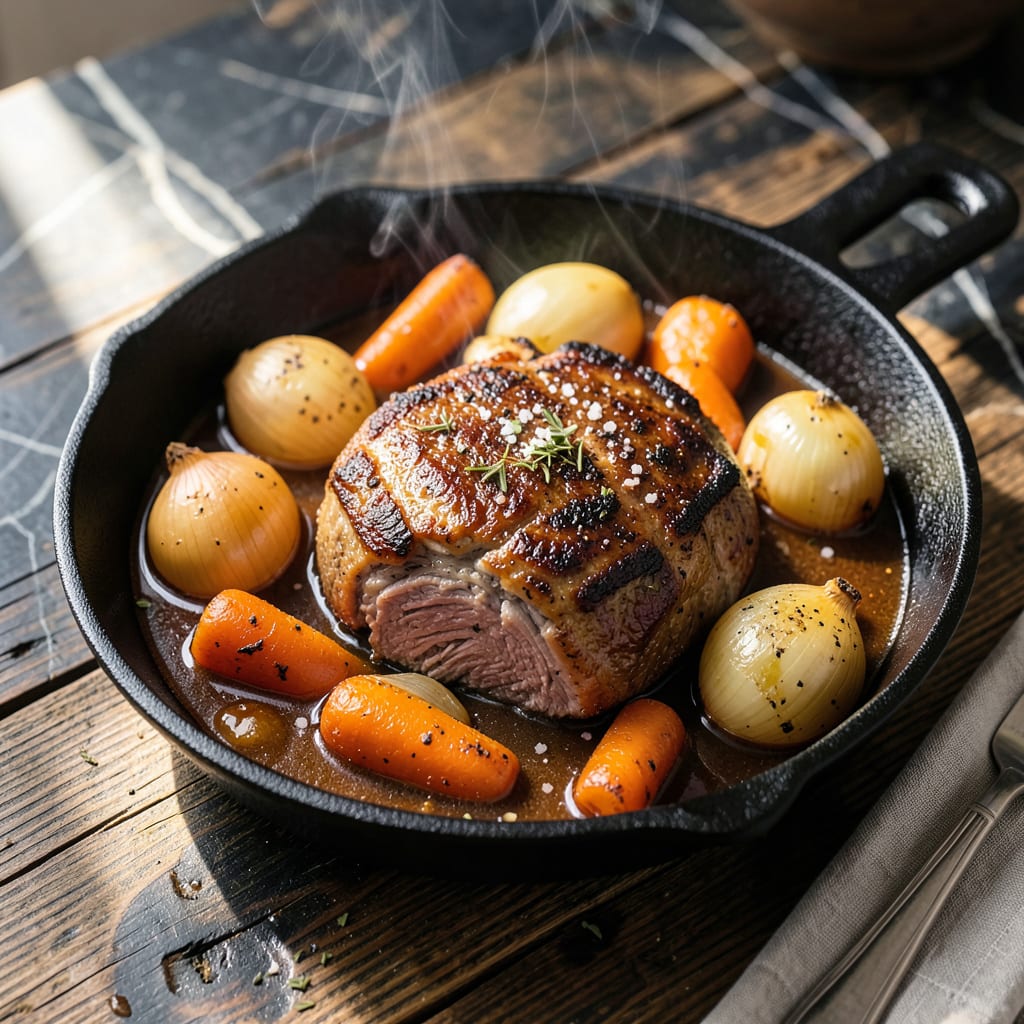
This cast iron method transforms tough cuts into fall-apart tender meat with deep, caramelized flavors. The skillet creates a perfect sear before the slow simmer works its magic.
You’ll get rich, velvety gravy and vegetables that soak up every bit of flavor. It’s a one-pan meal that delivers restaurant-quality results with minimal effort.
Ingredients for Skillet Pot Roast
Cast iron searing meets slow simmering for fall-apart meat and rich gravy in one pan.
| Ingredient | Amount | Notes |
|---|---|---|
| Chuck Roast 🥩 | 2 ½ lb | Well-marbled, trimmed of excess fat |
| Kosher Salt 🧂 | 2 tsp | Diamond Crystal preferred for even seasoning |
| Freshly Ground Black Pepper 🌶️ | 1 tsp | Coarsely ground for texture |
| All-Purpose Flour 🌾 | ¼ cup | For dredging meat |
| Extra-Virgin Olive Oil 🫒 | 2 tbsp | High smoke point for searing |
| Yellow Onions 🧅 | 2 whole | Large, halved and sliced |
| Carrots 🥕 | 4 whole | Peeled, cut into 3-inch chunks |
| Celery Stalks 🥬 | 3 whole | Cut into 2-inch pieces |
| Garlic Cloves 🧄 | 6 cloves | Smashed, skins removed |
| Low-Sodium Beef Broth 💧 | 2 cups | Homemade or quality store-bought |
| Dry Red Wine 🍷 | 1 cup | Bold variety like Cabernet Sauvignon |
| Tomato Paste 🍅 | 2 tbsp | Concentrated for depth of flavor |
| Fresh Thyme Sprigs 🌿 | 4 whole | Plus extra for garnish |
| Bay Leaves 🍃 | 2 whole | Dried, for aromatic depth |
| Unsalted Butter 🧈 | 2 tbsp | For enriching the gravy |
[recipeingredientscaler]
The chuck roast is non-negotiable here—look for good marbling at Whole Foods or your local butcher. Well-marbled cuts like Certified Angus break down beautifully during the long cook. Avoid lean cuts like sirloin—they’ll stay tough. If buying pre-cut, ask for chuck specifically. The flour for dredging should be all-purpose, nothing fancy (save your cake flour for baking).
No red wine? Substitute with an additional cup of beef broth plus 1 tbsp balsamic vinegar for acidity. Fresh thyme is ideal but dried thyme at one-third the amount works—just add it earlier to rehydrate. The tomato paste can be swapped for 1/4 cup crushed tomatoes reduced by half. For the broth, Better Than Bouillon makes a solid low-sodium option if you’re not making your own.
Leftovers taste even better the next day. Store in an airtight container for up to 4 days in the fridge or freeze for 3 months. The gravy may thicken when chilled—just reheat gently with a splash of broth to loosen. Always bring to a full simmer when reheating to ensure food safety.
Why You’ll Love This Recipe
- One Pan Wonder: I love that everything—from searing the chuck roast in olive oil to building the gravy with pan drippings—happens in a single skillet. No extra pots to wash.
- Feeds a Hungry Crowd: Between us, this is my go-to for Sunday suppers—it stretches for seconds, and the leftovers (if any) make incredible sandwiches the next day.
- Budget-Friendly Comfort: A chuck roast and a few pantry staples turn into a hearty meal that doesn’t break the bank. I’ll be real: it’s one of the most satisfying ways to feed my family without stress.
Step-by-Step Instructions for Skillet Pot Roast
Master the art of cast iron searing and slow simmering with this proven approach.
Step 1: Season and Sear the Chuck Roast
Pat the 2.5 lb chuck roast dry with paper towels, then season all sides generously with the 2 tsp kosher salt and 1 tsp freshly ground black pepper. I press the seasoning into the meat to ensure it adheres during cooking.
Dredge the roast in the 0.25 cup all-purpose flour, shaking off any excess. Heat the 2 tbsp extra-virgin olive oil in a large cast iron skillet over medium-high heat until shimmering. Sear the roast for 4-5 minutes per side until a deep brown crust forms. This creates the flavor foundation for your gravy.
Transfer the seared roast to a plate. The fond (browned bits) left in the skillet is pure flavor—don’t clean it yet.
Step 2: Sauté the Aromatic Vegetables
In the same skillet, add the 2 whole yellow onions, 4 whole carrots, and 3 whole celery stalks. Cook over medium heat for 6-8 minutes, stirring occasionally, until the onions soften and the carrots begin to caramelize.
Add the 6 cloves garlic cloves and cook for 1 minute until fragrant. Stir in the 2 tbsp tomato paste and cook for 2 minutes, allowing it to deepen in color. This builds a rich, concentrated base for your braising liquid.
Step 3: Deglaze and Begin the Braise
Pour in the 1 cup dry red wine and scrape up all the browned bits from the bottom of the skillet with a wooden spoon. Let the wine reduce by half, about 3-4 minutes. This deglazing step ensures no flavor is wasted.
Return the seared roast to the skillet along with any accumulated juices. Add the 2 cups low-sodium beef broth, 4 whole fresh thyme sprigs, and 2 whole bay leaves. The liquid should come about halfway up the roast. Bring to a gentle simmer.
Step 4: Slow Cook to Tender Perfection
Reduce heat to low, cover the skillet, and let the pot roast simmer gently for 2.5 to 3 hours. Check occasionally and add a splash of broth if the liquid reduces too much. The roast is done when it shreds easily with a fork.
Resist the urge to increase the heat—low and slow is the secret to melt-in-your-mouth tenderness. You’ll know it’s ready when the meat pulls apart with minimal resistance and the vegetables are fork-tender.
Step 5: Finish with Butter and Serve
Transfer the roast to a cutting board and tent with foil. Skim any excess fat from the braising liquid, then stir in the 2 tbsp unsalted butter until melted. This enriches the gravy and adds a silky finish.
Slice or shred the roast against the grain and serve with the vegetables and gravy. The gravy should coat the back of a spoon and have a deep, savory flavor from the braising process. Let the roast rest for 10 minutes before serving to allow the juices to redistribute.
Pro Tips For Making Skillet Pot Roast
- Sear the Meat Hard: I learned this the hard way—get that skillet screaming hot before adding the chuck roast, and don’t touch it for at least 3-4 minutes per side. A deep, dark crust on the flour-dusted meat is what builds the rich foundation for the whole dish.
- Salt Aggressively Early: Season the chuck roast with kosher salt at least 40 minutes before cooking, or even overnight. Sounds like overkill, but it actually changes the outcome by letting the salt penetrate deep into the meat.
- Skip the Crowded Pan: Resist the urge to cram everything in at once—sear the roast in batches if needed, or you’ll end up steaming it instead of browning. A crowded skillet drops the temperature fast, and that’s how you get pale, sad meat.
- Use the Fond: After searing, pour in a little water or broth and scrape up all those browned bits stuck to the pan. That’s pure flavor, and it’ll dissolve right into your pot roast as it braises—waste it, and you’re missing out.
Regional Styles of This Dish
Texas Style
This version swaps red wine for 1 cup beef broth plus 1 tbsp apple cider vinegar and adds 1 chopped chipotle in adobo for smoky heat. I also toss in 1 tsp smoked paprika with the flour for dredging. The result is a deeper, more robust flavor profile. 🔥
French Daube
Inspired by Provençal cooking, this uses 1 cup dry white wine instead of red and adds 1 tbsp herbes de Provence. I also include 8 oz mushrooms sautéed before the braise. The white wine gives a brighter acidity that cuts through the richness.
Mississippi Pot Roast
This regional favorite includes 1 packet ranch seasoning, 1 packet au jus mix, and 8 pepperoncini peppers. The ranch adds a tangy creaminess, while the pepperoncini bring a mild, briny kick. It’s a crowd-pleaser for sure.
Italian Sunday Gravy
Add 1 cup crushed tomatoes and ½ cup dry red wine to the braising liquid. I also include 1 lb Italian sausage browned and nestled alongside the roast. The tomatoes create a richer, more complex gravy that’s perfect over polenta. 💛
New England Style
This version incorporates 1 cup hard cider instead of wine and adds 1 tbsp maple syrup for a touch of sweetness. I also use parsnips in place of carrots for a slightly earthier flavor. It’s a cozy, comforting twist.
Southwest Flare
Stir in 1 tbsp cumin and 1 tbsp chili powder with the tomato paste, and add 1 diced poblano pepper with the onions. The spices give a warm, earthy depth, while the poblano adds a subtle smokiness. Serve with warm tortillas.
Nutrition Facts
Frequently Asked Questions
What cut of meat works best for this method?
Chuck roast is ideal due to its marbling and connective tissue. These break down during the 2.5 to 3 hours of slow cooking, creating tender, flavorful meat. Avoid lean cuts like sirloin, as they stay tough.
Can I make this in a Dutch oven instead?
Yes, a Dutch oven works perfectly and can go from stovetop to oven. Sear the meat on the stovetop, then cover and braise in a 325°F oven for the same time. The heat distribution is excellent.
How do I know when it’s done?
The roast is ready when it shreds easily with a fork. Check after 2.5 hours—it should pull apart with minimal resistance. The internal temperature should reach at least 195°F for perfect tenderness.
What if my gravy is too thin?
Simmer uncovered for 5-10 minutes to reduce and thicken. Alternatively, mix 1 tbsp cornstarch with 1 tbsp water and stir into the gravy, then simmer for 2 minutes. This creates a silky consistency.

- 4C Bread Crumbs Meatballs Recipe: Crispy Crust and Juicy Centers - September 25, 2026
- 6 Oz Chocolate Chip Cookie Recipe: Perfectly Balanced Crispy Edges and Chewy Hearts - September 25, 2026
- 6-Inch Coffee Cake Recipe: Vanilla Bean Swirls and Buttery Streusel Topping - September 25, 2026