
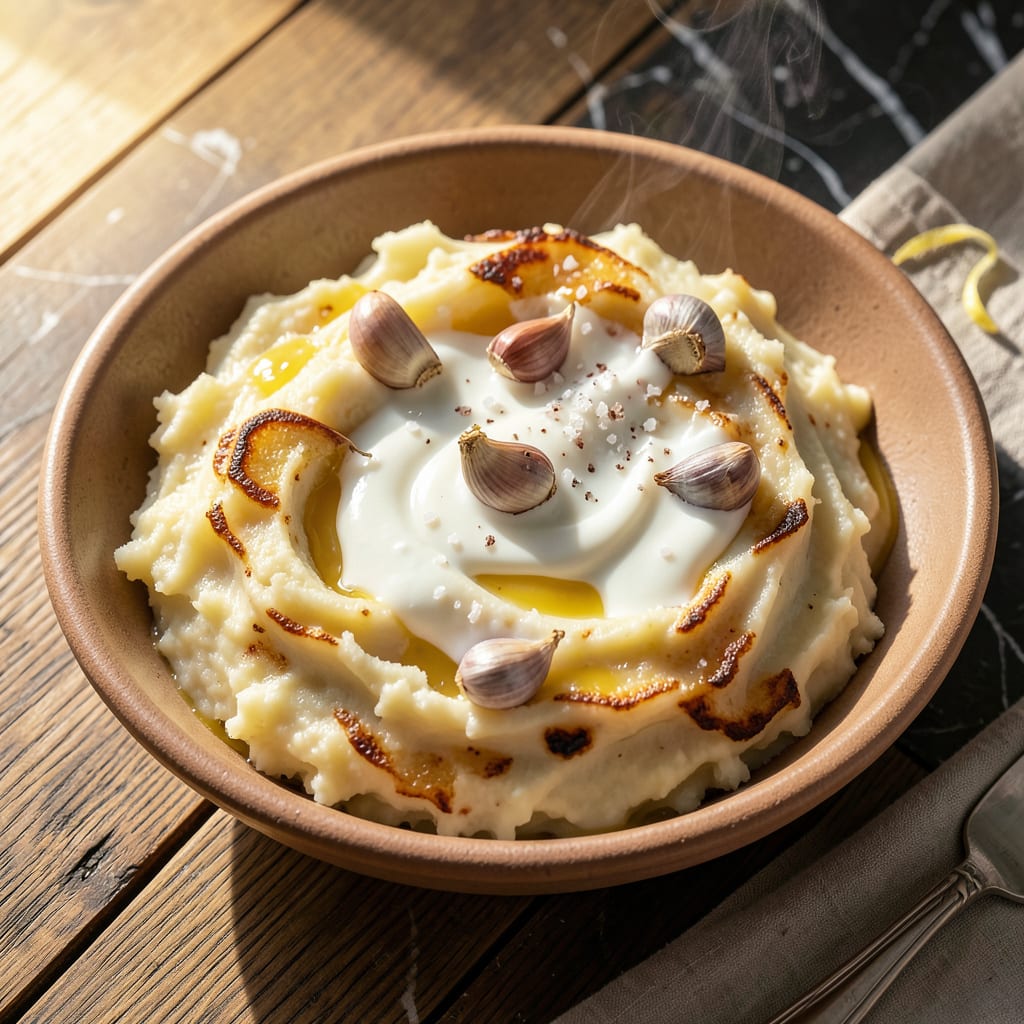
There’s a simple secret to achieving creamy mashed potatoes with rustic texture: leave the skins on. This method preserves nutrients while adding earthy flavor and satisfying bite. After years of testing, I’ve perfected the balance between smooth and hearty—no peeling required.
The technique is straightforward. Boil unpeeled potatoes until tender, then mash them with warm dairy for optimal creaminess. The skins integrate beautifully, creating flecks of color and texture throughout. This approach delivers restaurant-quality results with minimal effort and maximum flavor.
Ingredients for Skin Mashed Potatoes
These carefully selected ingredients create restaurant-quality mashed potatoes with rustic texture and unparalleled creaminess.
| Ingredient | Amount | Notes |
|---|---|---|
| Yukon Gold potatoes 🥔 | 2 ½ lb | Unpeeled, scrubbed clean |
| Heavy cream 🥛 | ¾ cup | Warm, for optimal creaminess |
| Unsalted butter 🧈 | 6 tbsp | European-style preferred |
| Garlic cloves 🧄 | 4 cloves | Minced for aromatic depth |
| Whole milk 🥛 | ½ cup | Warm, for balanced richness |
| Kosher salt 🧂 | 1 ½ tsp | Diamond Crystal preferred |
| Freshly ground black pepper 🌶️ | ½ tsp | Coarse grind for texture |
| Fresh chives 🌿 | 2 tbsp | Thinly sliced for garnish |
| Sour cream 🥛 | ¼ cup | Full-fat for creaminess |
| Grated Parmesan cheese 🧀 | ¼ cup | Freshly grated preferred |
The potatoes are fundamental to this dish. Yukon Golds offer the ideal balance of starch and moisture, ensuring creamy yet structured results. Optimal quality requires selecting firm, unblemished tubers with thin skins. Whole Foods and farmers markets typically stock superior varieties. For the dairy components, European-style butter (like Plugrá) and organic heavy cream yield noticeably richer flavor profiles than conventional alternatives. The garlic should be fresh, not pre-minced, to avoid bitter undertones during cooking.
Substitutions must maintain the dish’s textural integrity. Russet potatoes can replace Yukon Golds but require additional butter to compensate for lower moisture content. For dairy-free adaptations, full-fat coconut milk provides comparable richness, though with a subtle flavor shift. Vegan butter alternatives (like Miyoko’s) perform adequately when salt content is adjusted. The Parmesan can be omitted for a simpler profile, but Pecorino Romano offers a more assertive alternative. Fresh herbs like parsley or thyme may replace chives, though their flavor profiles differ markedly.
Storage considerations are straightforward. Prepared mashed potatoes maintain quality for 3 days refrigerated in airtight containers. Reheat gently with additional milk or cream to restore texture. Uncooked potatoes should be stored in a cool, dark location (not refrigerated) for up to 2 weeks. Dairy components should be kept at consistent refrigerator temperatures and used within 1 week of opening for peak freshness. The dish does not freeze well due to texture degradation upon thawing.
Why You’ll Love This Recipe
- I’ll be real: skipping the peeling saves me 10 minutes every time, and those Yukon Gold skins add the best rustic texture. The thin skins practically melt into the mash while keeping things interesting.
- No-Peel Perfection: I’ll be real: skipping the peeling saves me 10 minutes every time, and those Yukon Gold skins add the best rustic texture. The thin skins practically melt into the mash while keeping things interesting.
- Garlic Butter Luxury: Here’s what sold me—the warm garlic cloves steeped in melted butter and heavy cream. It’s not just creamy; it’s restaurant-rich with zero extra effort.
- My Thanksgiving Shortcut: I’ve served this at holiday dinners and random Tuesdays alike. The leftovers reheat beautifully with a splash of whole milk, and honestly? They taste even better the next day.
Step-by-Step Instructions for Skin-On Mashed Potatoes
This method preserves the rustic texture while delivering exceptional creaminess in every bite.
Step 1: Prepare and Cook the Potatoes
Cut the 2.5 lb Yukon Gold potatoes into 1½-inch chunks, leaving the skins on for texture. Place them in a large pot and cover with cold water by 1 inch. Add 1 tablespoon of the kosher salt to the water—this ensures the potatoes are seasoned from the start.
Bring to a boil over high heat, then reduce to medium and simmer for 15-20 minutes until the potatoes are fork-tender. You’ll know they’re done when a knife slides in effortlessly and the edges start to round slightly. Drain immediately in a colander and let them steam-dry for 2 minutes to remove excess moisture.
Step 2: Infuse the Dairy Mixture
While the potatoes cook, combine the 0.75 cup heavy cream, 0.5 cup whole milk, and 6 tbsp unsalted butter in a small saucepan. Warm over low heat until the butter melts completely and the mixture reaches 160°F—this prevents it from cooling the potatoes too quickly when combined.
Add the 4 cloves minced garlic cloves to the warm dairy mixture and let it steep off heat for 5 minutes. This gentle infusion extracts the garlic’s aromatic compounds without developing bitter notes. The mixture should remain warm but not simmering to preserve its creamy texture.
Step 3: Mash to Ideal Consistency
Return the drained potatoes to the pot and mash them with a potato masher or ricer. I prefer a masher for this preparation to maintain some rustic texture. Pour the warm garlic-infused dairy mixture over the potatoes and fold gently with a silicone spatula until just combined.
Add the remaining 0.5 tsp kosher salt and 0.5 tsp freshly ground black pepper, then incorporate the 0.25 cup sour cream and 0.25 cup grated Parmesan cheese. The mixture should be creamy but still show flecks of potato skin—this visual contrast is key to the dish’s character.
Step 4: Adjust and Finish
Taste and adjust seasoning if needed. The potatoes should have a velvety mouthfeel with occasional bursts of garlic flavor. For a smoother texture, you can add 1-2 tablespoons more warm milk, but be cautious—the skins will absorb liquid differently than peeled potatoes.
Transfer to a warmed serving bowl and garnish with the 2 tbsp fresh chives. The residual heat will slightly wilt the chives, releasing their delicate onion flavor. Serve immediately while the texture is at its peak—the skins will soften slightly upon standing but retain their rustic appeal.
Pro Cooking Tips for Great skin mashed potatoes
Potato Selection Secrets
I’ve tested every variety, and Yukon Gold potatoes are non-negotiable here. Their medium starch content and thin skins create that perfect balance of creaminess and texture. Look for potatoes about 2-3 inches in diameter—they cook more evenly than larger ones. Pro tip: Avoid any with green spots, which indicate solanine buildup and can taste bitter. 🥔
Boiling Water Chemistry
Start your potatoes in cold, salted water—this ensures even cooking from edge to center. I use 1 tablespoon Diamond Crystal kosher salt per quart of water, which seasons the potatoes throughout. Bring to a rolling boil, then immediately reduce to a gentle simmer. Aggressive boiling can cause the potatoes to break apart before they’re fully cooked.
Dairy Temperature Control
The secret to ultra-creamy results is warming your dairy to 160°F before combining. I use a thermometer to verify—this prevents the mixture from cooling the potatoes too quickly. For the butter, European-style (like Plugrá) has higher fat content, which creates a richer mouthfeel. Never let the dairy boil, or it may separate when mixed with the potatoes.
Mashing Technique Mastery
Use a potato masher (not a food processor) for ideal texture. Press down firmly but don’t overwork—you want some lumps for character. I make 5-6 complete rotations through the pot, then stop. The skins will naturally break into small pieces, creating those beautiful rustic flecks throughout your mash. 💪
Garlic Infusion Timing
Add your minced garlic to the warm dairy mixture and let it steep for exactly 5 minutes. This extracts maximum flavor without developing bitterness. If you’re using pre-minced garlic, reduce the steep time to 3 minutes—it’s more potent. Strain out the garlic pieces if you prefer a smoother texture in your final dish.
Final Texture Adjustments
After combining all ingredients, let the mash rest for 2-3 minutes before final adjustments. This allows the starches to fully absorb the liquid. If needed, add warm milk 1 tablespoon at a time—the skins make this version thirstier than traditional mash. The perfect consistency should hold its shape when spooned but still feel luxurious in your mouth.
Nutrition Facts
Frequently Asked Questions
What’s the best potato type for keeping skins in?
Yukon Gold potatoes are ideal due to their thin skins and creamy texture. Their medium starch content prevents graininess while maintaining structure. Avoid russets—their thick skins become tough when mashed.
How do I prevent the skins from getting stringy?
Cut potatoes into 1½-inch chunks before boiling and simmer gently for 15-20 minutes. Overcooking causes skins to separate. Use a potato masher instead of a mixer to maintain texture.
Can I make these ahead of time?
Prepare up to 2 days ahead and store in an airtight container. Reheat in a 350°F oven with 2 tbsp milk covered for 20 minutes, stirring halfway. The skins may soften slightly but retain flavor.
Why are my mashed potatoes gummy?
Overmixing releases too much starch. Mash just until combined—5-6 strokes max. Also ensure potatoes are fully drained and steamed dry before mashing to prevent excess moisture.
What’s the best dairy-free alternative?
Use full-fat coconut milk (warmed to 160°F) and vegan butter. Add 1 tbsp nutritional yeast for cheesy depth. The texture will be slightly denser but equally flavorful.

- 8 Bean Soup Recipe Crock Pot: Hearty Vegetable Medley in One Pot - September 25, 2026
- 4C Bread Crumbs Meatballs Recipe: Crispy Crust and Juicy Centers - September 25, 2026
- 6 Oz Chocolate Chip Cookie Recipe: Perfectly Balanced Crispy Edges and Chewy Hearts - September 25, 2026