
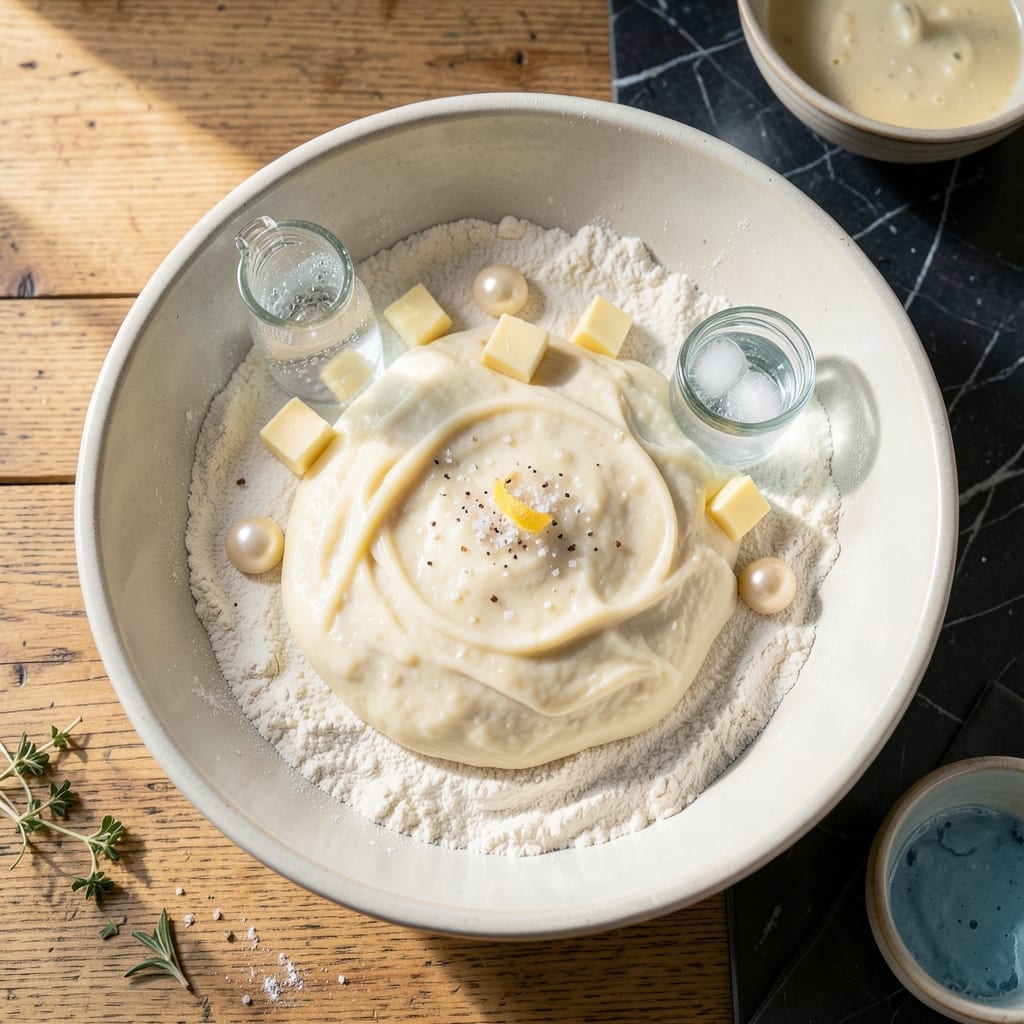
This no-roll pot pie dough delivers flaky results with minimal effort, solving the age-old problem of tough, dense crusts. The secret lies in a unique mixing method that creates layers without traditional rolling or folding.
By using cold ingredients and a specific fat-to-flour ratio, the dough comes together quickly in a bowl. The texture is tender yet sturdy enough to hold rich fillings without becoming soggy during baking.
You’ll achieve golden, flaky layers that rival traditional pie crusts, but with half the work. The technique ensures consistent results every time, even for beginners.
Perfect for pot pies, hand pies, or any dish requiring a reliable, tender crust. This method transforms dough-making from a chore into a simple, rewarding process.
Ingredients for Slippery Pot Pie Dough
Cold ingredients and precise ratios create tender, flaky layers without rolling or folding.
| Ingredient | Amount | Notes |
|---|---|---|
| All-Purpose Flour 🌾 | 2 ½ cups | Sifted for even texture |
| Unsalted Butter 🧈 | 1 cup | Cold, cut into small cubes |
| Ice Water 💧 | ½ cup | Plus extra as needed |
| Fine Sea Salt 🧂 | 1 tsp | Diamond Crystal preferred |
| White Vinegar 🍋 | 1 tbsp | Or lemon juice for acidity |
| Shortening 🥛 | ¼ cup | Cold, for extra flakiness |
| Baking Powder 🧂 | ½ tsp | For slight lift |
| Granulated Sugar 🍚 | 1 tsp | Optional, for subtle sweetness |
| Large Egg 🥚 | 1 whole | For binding and richness |
| Heavy Cream 🥛 | ¼ cup | Cold, for tenderness |
The butter and shortening must stay cold—cut into small cubes and chill before mixing. Use European-style butter for higher fat content (82% or more), which yields superior flakiness. All-purpose flour from King Arthur or Gold Medal provides consistent protein levels. Measure flour by spooning into the cup and leveling off to avoid compacting, which can make the dough tough.
No shortening? All butter works at a 1:1 ratio, though the texture will be slightly less flaky. Swap white vinegar for apple cider vinegar—same acidity, slightly fruitier taste. For a richer dough, replace the egg with an extra 2 tbsp heavy cream. The baking powder can be omitted if you prefer a denser crust, but it does help with lift in thicker applications like pot pies.
Dough can be wrapped tightly and refrigerated for up to 2 days or frozen for 1 month. Thaw overnight in the fridge before using. For best results, work in a cool kitchen—if your hands are warm, dip them in ice water between steps to keep the fat cold.
Why You’ll Love This Recipe
- I’ll be real: I always double the batch and freeze half for those nights I need a pie crust in a pinch.
- No-Fuss Mixing: I just dump flour, cold butter, ice water, salt, and a splash of vinegar in the bowl—no fancy steps, and it comes together in minutes.
- Buttery Layers: The vinegar keeps it tender while the butter gives that flaky, melt-in-your-mouth richness every pot pie deserves.
- Freezer Friendly: I’ll be real: I always double the batch and freeze half for those nights I need a pie crust in a pinch.
Step-by-Step Instructions for Slippery Pot Pie Dough
This no-roll method delivers exceptionally flaky layers with minimal effort and maximum consistency.
Step 1: Combine Dry Ingredients for Structure
In a large mixing bowl, whisk together the 2.5 cups All-Purpose Flour, 1 tsp Fine Sea Salt, 0.5 tsp Baking Powder, and 1 tsp Granulated Sugar until fully incorporated. This sifting step ensures even distribution of leavening agents and prevents dense spots in the finished dough.
The baking powder provides subtle lift while the salt enhances flavor and strengthens the gluten network. I always use Diamond Crystal fine sea salt for its clean taste and consistent grain size. The sugar, though optional, adds a touch of sweetness that balances savory fillings beautifully.
Step 2: Cut in Cold Fats for Flakiness
Add the 1 cup Unsalted Butter (cut into small cubes) and 0.25 cup Shortening to the dry ingredients. Using a pastry cutter or your fingertips, work the fats into the flour mixture until the largest pieces are about the size of peas. The butter should remain visible in distinct pieces—this creates the flaky layers we’re after.
I prefer working quickly with cold fats to prevent melting. The shortening contributes extra flakiness and a higher melting point than butter, which helps maintain structure during baking. You’ll notice the mixture starts to resemble coarse crumbs with some larger fat pieces remaining—this is exactly what you want.
Step 3: Bind with Liquid Ingredients
Create a well in the center of the flour mixture. Add the 1 whole Large Egg, 0.5 cup Ice Water, 1 tbsp White Vinegar, and 0.25 cup Heavy Cream. Using a fork, gently mix from the center outward until the dough just comes together. The vinegar tenderizes the gluten while the heavy cream adds richness and moisture.
The dough will appear shaggy and slightly sticky—that’s perfect. Avoid overmixing, as this develops gluten and results in tough dough. If the mixture seems too dry, add ice water 1 tablespoon at a time until it holds together when pressed. The cold liquids help keep the fats solid, which is crucial for flakiness.
Step 4: Chill and Shape the Dough
Turn the dough out onto a lightly floured surface and gently pat it into a rough rectangle about 1 inch thick. Fold the dough in thirds like a business letter, then rotate it 90 degrees and fold again. This lamination technique creates distinct layers without the need for rolling.
Wrap the dough tightly in plastic wrap and refrigerate for at least 1 hour, or up to 2 days. Chilling relaxes the gluten, makes the dough easier to handle, and allows the fats to firm up. When ready to use, the dough should feel cold and firm but not rock-hard. This resting period ensures the layers will separate beautifully during baking, delivering that promised flaky texture.
Pro Tips For Making Slippery Pot Pie Dough
- Chill the Butter: Cut the unsalted butter into small cubes and freeze for 10 minutes before mixing—I learned this the hard way after ending up with tough, flat crusts from butter that melted too soon.
- Use Ice Cold Water: Fill a glass with ice and water, then measure from that for the ice water. Sounds fussy, but it keeps the dough flaky instead of gummy.
- Skip Overworking: Mix just until the dough comes together, even if it looks shaggy. After burning three batches of tough pot pies, I finally figured out that less handling means a more tender crust.
- Add Vinegar Last: Stir the white vinegar into the ice water before adding it to the flour mixture. My grandmother swore by this, and she was right: it strengthens the dough without making it stiff.
Storing and Reheating This Recipe
Refrigerator Storage
After making this dough, wrap it tightly in plastic wrap and store in the fridge for up to 2 days. The cold environment keeps the fats solid, preserving those precious flaky layers we worked so hard to create. ❄️
Freezer Storage
For longer storage, freeze the tightly wrapped dough for up to 1 month. I recommend double-wrapping in plastic and foil to prevent freezer burn. The dough thaws overnight in the fridge without losing quality.
Thawing Tips
Move dough from freezer to fridge 12-24 hours before use. Never thaw at room temperature—this causes uneven warming and can melt the fats prematurely, ruining the flaky texture.
Re-rolling Scraps
If you have leftover dough pieces, gently press them together and chill for 30 minutes before reusing. Avoid overworking, as this develops gluten and makes the crust tough.
Pre-Baked Crusts
If you blind-bake this dough for pot pies, store cooled crusts in an airtight container at room temperature for 1 day, or freeze for 2 weeks. Re-crisp in a 350°F oven for 5-10 minutes before filling. 🔥
Nutrition Facts
Frequently Asked Questions
Why does the dough need to stay cold?
Cold fat creates steam during baking, which makes those perfect flaky layers. If the butter melts before baking, the crust becomes dense instead of light and airy.
Can I use all butter instead of shortening?
Yes, but the texture will be slightly less flaky. Shortening has a higher melting point, which helps maintain structure. Use the same amount of butter in place of shortening.
How do I fix dough that’s too sticky?
Chill it for 30 minutes to firm up the fats. Lightly flour your surface when shaping. Avoid adding more flour to the dough itself, which can make it tough.
Why include vinegar in the dough?
The acid tenderizes gluten, creating a more delicate crust. It also helps preserve the color. You can substitute lemon juice if you prefer.

- 4C Bread Crumbs Meatballs Recipe: Crispy Crust and Juicy Centers - September 25, 2026
- 6 Oz Chocolate Chip Cookie Recipe: Perfectly Balanced Crispy Edges and Chewy Hearts - September 25, 2026
- 6-Inch Coffee Cake Recipe: Vanilla Bean Swirls and Buttery Streusel Topping - September 25, 2026