
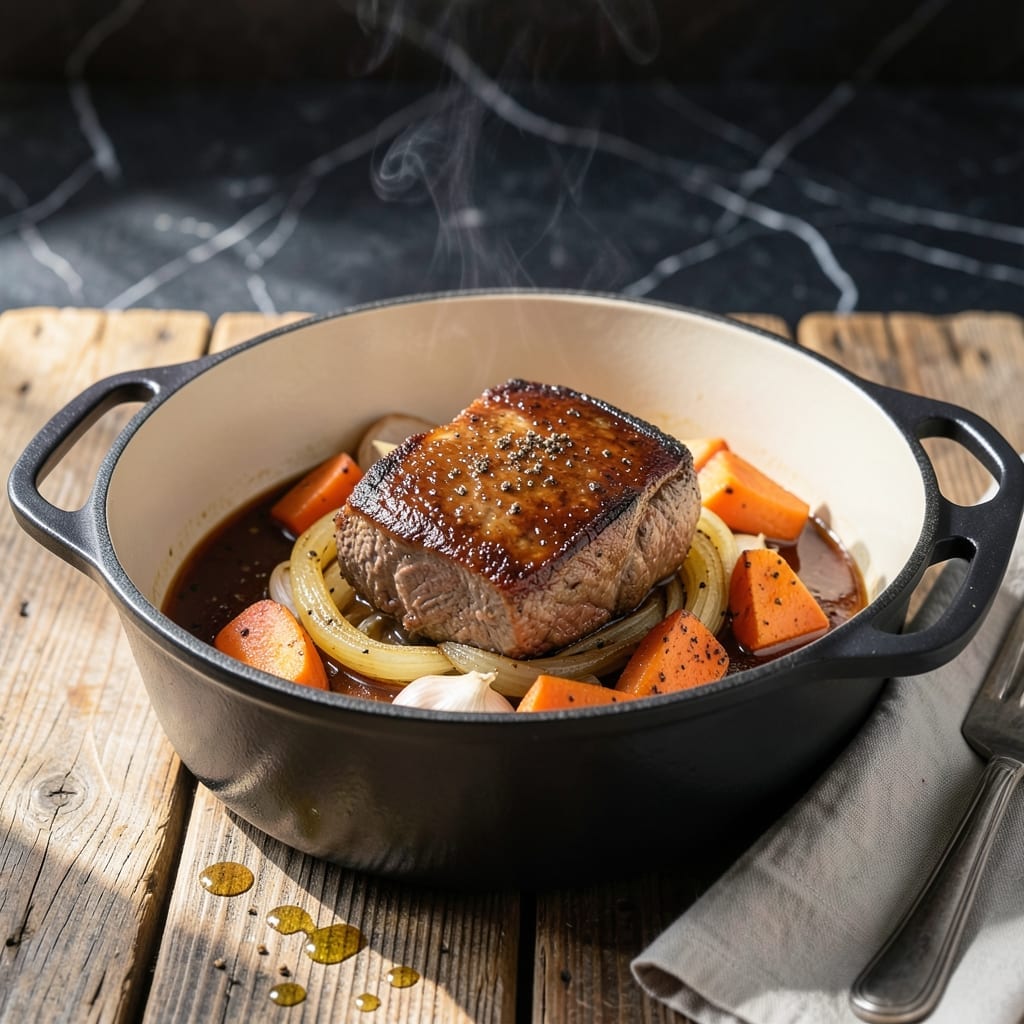
There’s something deeply satisfying about a perfectly cooked pot roast, even when making a smaller batch. This method delivers tender, fall-apart meat with rich, savory depth in every bite.
I’ve refined this approach to work beautifully with a 2-3 pound roast, ensuring the same melt-in-your-mouth texture without leftovers going to waste. The key is low and slow cooking, allowing the connective tissue to break down completely.
You’ll end up with a dish that’s hearty and comforting, with meat so tender it nearly collapses at the touch of a fork. The vegetables soak up all the rich, meaty juices, making every component irresistible.
Ideal for a cozy family dinner or a special weekend meal. Here’s how to make it right.
Ingredients for Small Pot Roast
Well-marbled beef and hearty vegetables slow-cook into something truly special here.
| Ingredient | Amount | Notes |
|---|---|---|
| Beef Chuck Roast 🥩 | 2 ½ lb | Well-marbled, boneless preferred |
| Kosher Salt 🧂 | 1 ½ tsp | Diamond Crystal preferred for even seasoning |
| Freshly Ground Black Pepper 🌶️ | 1 tsp | Coarse grind for texture |
| Garlic Cloves 🧄 | 6 cloves | Minced for robust flavor |
| Yellow Onion 🧅 | 1 whole | Large, sliced into chunks |
| Carrots 🥕 | 3 whole | Peeled, cut into 2-inch pieces |
| Celery Stalks 🥬 | 3 whole | Cut into 2-inch pieces |
| Yukon Gold Potatoes 🥔 | 1 lb | Quartered, skin-on for texture |
| Low-Sodium Beef Broth 🥣 | 2 cups | Homemade or quality store-bought |
| Red Wine 🍷 | 1 cup | Dry variety like Cabernet Sauvignon |
| Tomato Paste 🍅 | 2 tbsp | For depth of flavor |
| Dried Thyme 🌿 | 1 tsp | Rubbed between fingers to release aroma |
| Bay Leaves 🍃 | 2 whole | Removed before serving |
| Olive Oil 🫒 | 2 tbsp | For searing the roast |
| Fresh Rosemary 🌿 | 2 tbsp | Chopped, stems discarded |
The beef is everything here. Look for chuck roast with visible marbling—it breaks down into that melt-in-your-mouth texture. Most supermarkets carry it pre-cut into manageable sizes. I grab mine from Costco when I’m feeding a crowd, but a 2-3 pound roast from your local butcher works perfectly for this batch. Avoid lean cuts like sirloin; they won’t get tender no matter how long you cook them.
No red wine? Substitute with extra beef broth and a splash of balsamic vinegar. Fresh rosemary not on hand? Dried rosemary at half the amount works fine. If you’re missing tomato paste, a couple tablespoons of ketchup in a pinch (not ideal, but it’ll do). Trader Joe’s has great pre-cut mirepoix if you want to save time on the veggie prep.
This tastes even better the next day—3-4 days in the fridge, or freeze for 3 months. Portion the leftovers into containers for easy lunches. The broth thickens as it cools, so reheat with a splash of water or extra broth.
Why You’ll Love This Recipe
- One Pot Wonder: I toss everything in a single Dutch oven—beef, garlic, onions—and let the oven do the rest.
- Feeds Us Twice: We get a cozy dinner the first night, then I shred the leftovers for sandwiches or tacos the next day.
- Budget Stretch: A small chuck roast costs less than steak but delivers way more flavor and servings for the price.
Step-by-Step Instructions for Small Pot Roast
Here’s my proven method for achieving fall-apart tenderness with rich, deep flavors in every bite.
Step 1: Sear the Beef Chuck Roast
Pat the 2.5 lb Beef Chuck Roast dry with paper towels, then season generously with the 1.5 tsp Kosher Salt and 1 tsp Freshly Ground Black Pepper. This step is crucial—dry meat sears better, and proper seasoning builds flavor from the start.
Heat the 2 tbsp Olive Oil in a heavy pot over medium-high heat. When the oil shimmers, add the roast and sear for 4-5 minutes per side until deeply browned. You’re looking for a rich, caramelized crust—this adds immense depth to the final dish. Remove the roast and set aside.
Step 2: Sauté the Aromatics
In the same pot, add the sliced 1 whole Yellow Onion, 3 whole Carrots, and 3 whole Celery Stalks. Cook for 5 minutes until the vegetables begin to soften and brown slightly. Stir in the 6 cloves Garlic Cloves and cook for 30 seconds until fragrant.
Push the vegetables to the sides of the pot and add the 2 tbsp Tomato Paste to the center. Cook for 1-2 minutes, stirring constantly, until it darkens slightly. This step intensifies the tomato flavor and prevents a raw taste in the finished dish.
Step 3: Deglaze and Build the Braising Liquid
Pour in the 1 cup Red Wine, scraping up all the browned bits from the bottom of the pot with a wooden spoon. These bits, called fond, are packed with flavor and will dissolve into the liquid, creating a rich base for your braise.
Add the 2 cups Low-Sodium Beef Broth, 1 tsp Dried Thyme, 2 whole Bay Leaves, and 2 tbsp Fresh Rosemary. Stir to combine, then return the seared roast to the pot along with any accumulated juices. The liquid should come about halfway up the sides of the meat.
Step 4: Braise to Perfection
Bring the liquid to a simmer, then reduce the heat to low. Cover the pot and let it braise for 2.5 to 3 hours, turning the roast occasionally. The meat is done when it shreds easily with a fork and the internal temperature reaches 195-200°F.
About 1 hour into cooking, add the 1 lb Yukon Gold Potatoes to the pot, nestling them into the liquid. This ensures they cook through and absorb all the delicious flavors. If the liquid reduces too much during cooking, add a splash of water to maintain the level.
Step 5: Rest and Serve
Once the roast is tender, remove it from the pot and transfer to a cutting board. Tent loosely with foil and let it rest for 15 minutes. This allows the juices to redistribute, ensuring every slice is moist and flavorful.
Skim any excess fat from the surface of the braising liquid, then remove the 2 whole Bay Leaves before serving. Slice the roast against the grain and serve with the vegetables and potatoes, spooning the rich, aromatic sauce over the top.
Pro Tips For Making Small Pot Roast
- Sear the Chuck: Get your pan ripping hot before adding the beef chuck roast—about 2 minutes per side until deeply browned. I learned this the hard way after pulling out a pale, sad roast that lacked flavor.
- Use Big Chunks: Cut the yellow onion into large pieces instead of mincing, and leave garlic cloves whole. Sounds weird, but it works: they soften into sweet, melt-in-your-mouth bites instead of burning.
- Skip the Rush: Resist the urge to crank the heat after searing—keep it at a gentle simmer, around 325°F. After burning three batches, I finally figured out slow heat is what makes the meat fall apart.
- Rest Before Serving: Give it a solid 15-20 minutes under foil after cooking. My grandmother swore by this, and she was right: the juices redistribute, and every bite is juicier.
Health Benefits of small pot roast
Iron-Rich Protein
This dish packs a serious iron punch—3.5mg per serving, covering about 20% of your daily needs. Iron from beef is heme iron, which your body absorbs more efficiently than plant-based sources. I always feel more energized after a pot roast dinner. 💪
Complete Amino Acids
The 40 grams of protein in each serving contains all nine essential amino acids your body can’t produce. This makes it a complete protein, crucial for muscle repair and overall health. Perfect for active lifestyles.
B Vitamin Boost
You’ll get a significant dose of vitamin B12—about 50% of your daily value per serving. This vitamin supports nerve function and red blood cell production. The B6 and niacin also help metabolize all that delicious energy.
Zinc for Immunity
Beef is one of the best sources of zinc, with each serving providing roughly 30% of your daily requirement. This mineral plays a vital role in immune function and wound healing. I notice I stay healthier when I include zinc-rich foods regularly.
Collagen Benefits
The slow cooking process breaks down the roast’s connective tissue into gelatin, which contains collagen. This supports skin elasticity and joint health. That rich, silky sauce is doing more than just tasting amazing. ✨
Rich in Selenium
This dish provides about 40% of your daily selenium needs per serving. This powerful antioxidant helps protect cells from damage. Selenium also supports thyroid function, making it an all-around nutritional powerhouse.
Nutrition Facts
Frequently Asked Questions
What cut works best for a smaller batch?
Chuck roast is ideal for its marbling and flavor. A 2-3 lb piece will give you perfectly tender results. Avoid lean cuts like sirloin as they won’t break down as well.
Can I cook this in a slow cooker instead?
Yes! Sear the meat first, then transfer to your slow cooker with all ingredients. Cook on low for 8 hours or high for 5-6 hours. The flavors will still develop beautifully.
How do I know when it’s done?
The meat should shred easily with a fork and reach an internal temperature of 195-200°F. If it resists, give it more time—low and slow is key.
Can I make this ahead of time?
The flavors deepen overnight. Store in an airtight container in the fridge for up to 4 days or freeze for 3 months.

- 4C Bread Crumbs Meatballs Recipe: Crispy Crust and Juicy Centers - September 25, 2026
- 6 Oz Chocolate Chip Cookie Recipe: Perfectly Balanced Crispy Edges and Chewy Hearts - September 25, 2026
- 6-Inch Coffee Cake Recipe: Vanilla Bean Swirls and Buttery Streusel Topping - September 25, 2026