
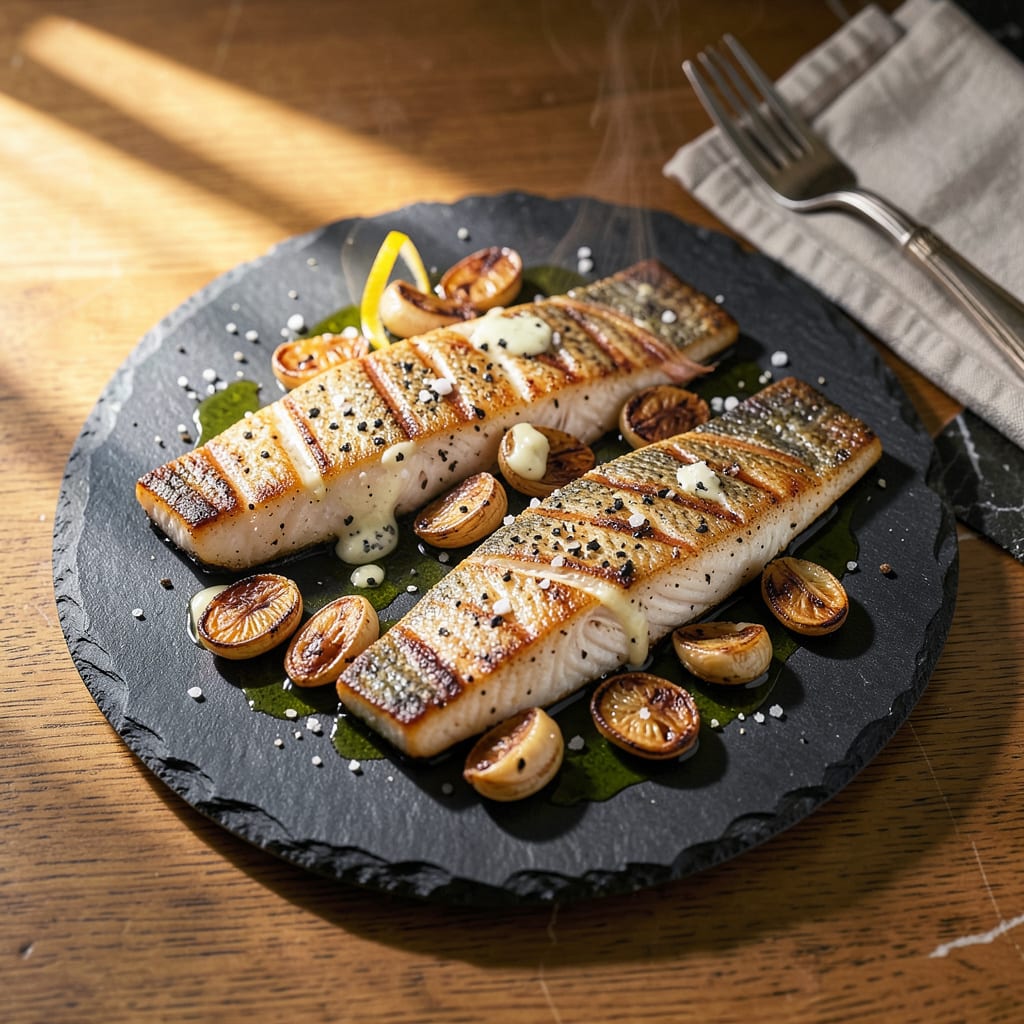
Freshwater fish deserves the same careful treatment as its saltwater cousins, and this spotted bass preparation delivers perfectly crispy skin with tender, flaky flesh every time. The key lies in proper scoring of the skin and precise heat control—techniques that ensure restaurant-quality results at home without specialized equipment.
Pan-searing at medium-high heat creates that coveted golden crust while keeping the interior moist. A simple lemon-herb butter basting during cooking adds brightness and depth, transforming this humble freshwater catch into an elegant centerpiece. Serve with roasted vegetables or a crisp salad for a complete meal that highlights the fish’s natural flavor.
Ingredients for Spotted Bass
Optimal ingredients for achieving restaurant-quality crispy-skinned spotted bass with tender, flaky interiors at home.
| Ingredient | Amount | Notes |
|---|---|---|
| Spotted Bass Fillets 🐟 | 4 whole | Skin-on, 6-8 oz each, scored diagonally |
| Diamond Crystal Kosher Salt 🧂 | 1 ½ tsp | Divided for seasoning and finishing |
| Freshly Ground Black Pepper 🌶️ | ½ tsp | Coarse grind preferred |
| Unsalted European-Style Butter 🧈 | 6 tbsp | Divided for cooking and basting |
| Extra-Virgin Olive Oil 🫒 | 2 tbsp | High smoke point variety |
| Garlic Cloves 🧄 | 3 cloves | Thinly sliced for infusion |
| Fresh Thyme Sprigs 🌿 | 4 sprigs | Leaves stripped, stems discarded |
| Fresh Flat-Leaf Parsley 🍃 | 2 tbsp | Finely chopped for garnish |
| Lemon 🍋 | 1 whole | Zested and juiced, divided |
| Shallot 🧅 | 1 whole | Minced for aromatic base |
| Dry White Wine 🍷 | ¼ cup | Sauvignon Blanc or Pinot Grigio |
| Capers 🌱 | 1 tbsp | Drained and rinsed |
The spotted bass fillets are paramount—sourcing from a reputable fishmonger ensures optimal freshness and skin integrity. Look for fillets with vibrant, translucent flesh and unblemished skin. European-style butter (such as Plugrá) provides superior browning capacity for basting, while Diamond Crystal kosher salt offers precise seasoning control due to its flake structure. The lemon should be unwaxed organic for clean zest without bitterness. Professional kitchens standardize on these components for consistent results.
Substitutions require careful consideration to maintain texture and flavor balance. Ghee can replace butter for higher smoke point, though it lacks milk solids for browning. Chardonnay substitutes adequately for the white wine, while vermouth adds herbal complexity. If thyme is unavailable, rosemary in moderation provides piney notes without overpowering. The capers are non-negotiable for briny contrast, but chopped cornichons offer similar acidity in emergencies. Always pat fillets thoroughly dry before seasoning—residual moisture sabotages crispness.
Storage demands immediate attention post-purchase. Keep fillets on ice if not using within 12 hours, or vacuum-seal for 3-day refrigeration. The compound butter (butter + herbs + lemon zest) can be rolled in parchment and frozen for 6 months. Prepared lemon-herb butter sauce holds 48 hours refrigerated—reheat gently to avoid separation. Never stack fillets in storage; lay flat on paper towels to preserve skin integrity. Professional practice dictates using all components within optimal freshness windows for peak performance.
Why You’ll Love This Recipe
- I’ll be real: when a recipe only needs salt, pepper, butter, olive oil, and fresh bass fillets, it’s basically cheating. No marinades, no fancy rubs—just pure, clean flavor with almost zero prep.
- Five-Ingredient Magic: I’ll be real: when a recipe only needs salt, pepper, butter, olive oil, and fresh bass fillets, it’s basically cheating. No marinades, no fancy rubs—just pure, clean flavor with almost zero prep.
- That Butter-Browned Crisp: The moment those fillets hit the hot butter and oil? The edges turn golden and crackly while the inside stays tender. It’s the kind of simple technique that makes you look like you’ve been cooking fish for years.
- Dinner in 15: Honestly, this is my go-to when I’ve got zero patience. Sear the bass, let it rest while I toss a salad, and we’re eating before the takeout guy could even pull into the driveway.
Step-by-Step Instructions for Spotted Bass
Mastering the technique ensures perfectly crisp skin and delicate, flaky flesh every time.
Step 1: Prepare and Season the Fillets
Pat the spotted bass fillets completely dry with paper towels, paying special attention to the skin side. This step is critical—any residual moisture will prevent the skin from achieving that desirable crispness. Using a sharp knife, make two or three diagonal scores on the skin side of each fillet, cutting just through the skin and not into the flesh. These scores prevent curling during cooking and help the skin crisp evenly.
Season both sides of the fillets with 1 tsp Diamond Crystal kosher salt and all of the 0.5 tsp freshly ground black pepper. The coarse grind of the pepper provides better texture and flavor distribution. Let the seasoned fillets rest at room temperature for 10 minutes while you prepare the remaining ingredients. This brief rest allows the salt to penetrate slightly, enhancing flavor throughout the flesh.
Step 2: Sear the Fillets Skin-Side Down
Heat 2 tbsp extra-virgin olive oil in a large, heavy skillet over medium-high heat until it shimmers but doesn’t smoke. Add 2 tbsp unsalted European-style butter and swirl to combine. Once the butter foam subsides, carefully place the fillets in the pan skin-side down, pressing gently with a fish spatula for 10 seconds to ensure full contact with the pan. This initial pressure prevents curling and promotes even browning.
Cook undisturbed for 4-5 minutes until the skin is deep golden brown and crisp. You’ll know it’s ready when the edges appear opaque about halfway up the fillet and the skin releases easily from the pan when gently tested with your spatula. Resist the urge to peek or move the fillets during this crucial crisping stage—the patience pays off in texture.
Step 3: Build the Aromatic Butter Sauce
Once the skin is crisp, flip the fillets and immediately add the minced shallot, thinly sliced garlic cloves, and stripped fresh thyme leaves to the pan. Reduce heat to medium and add the remaining 4 tbsp unsalted European-style butter. Tilt the pan slightly and spoon the foaming butter continuously over the fillets for 1-2 minutes until they’re just cooked through. The fillets should reach an internal temperature of 130°F and flake easily when tested with a fork.
Add the 0.25 cup dry white wine and 1 tbsp capers to the pan, scraping up any browned bits from the bottom. Let the wine reduce by half, about 1-2 minutes, then remove the pan from heat. The sauce should be slightly emulsified, with the butter creating a silky coating that clings to the fish. Stir in half of the lemon zest and 1 tbsp lemon juice at this stage for brightness.
Step 4: Plate and Garnish Professionally
Transfer the fillets to warmed plates, skin-side up, using a fish spatula to maintain the crisp skin’s integrity. Spoon the reduced butter sauce and capers over each fillet, ensuring each portion gets an equal distribution of the aromatic elements. Sprinkle the remaining 0.5 tsp Diamond Crystal kosher salt, remaining lemon zest, and all of the 2 tbsp chopped fresh flat-leaf parsley over the fillets. The final salt sprinkle enhances the crisp skin’s flavor, while the parsley adds freshness and color contrast.
Serve immediately with lemon wedges from the remaining lemon for those who prefer additional acidity. The ideal presentation shows the golden crisp skin contrasting with the pale, flaky flesh, all napped with the glossy butter sauce. Each bite should offer the textural contrast between the crisp skin and tender flesh, with the bright, briny capers cutting through the richness of the butter.
Storing and Reheating Leftovers
Short-Term Refrigeration
After cooking, let your spotted bass cool to room temperature—about 30 minutes—before storing. Place fillets in a single layer on a paper towel-lined plate, then cover tightly with plastic wrap. They’ll keep in the fridge for up to 2 days while maintaining good texture. I always store the butter sauce separately in a small glass jar to prevent sogginess. ❄️
Freezing for Later
For longer storage, wrap each cooled fillet individually in parchment paper, then place in a ziplock freezer bag with all air removed. They’ll maintain quality for up to 1 month. The butter sauce can be frozen in ice cube trays—just thaw 3 cubes per serving when needed. Freezing preserves that crispy skin texture surprisingly well!
Reheating in Skillet
My preferred method brings back that fresh-cooked quality. Heat 1 tbsp olive oil in a nonstick skillet over medium heat. Add fillets skin-side down and cook for 2-3 minutes until the skin recrisps. Flip gently and warm through for another 1 minute. The sauce reheats beautifully in the same pan afterward. 🔥
Microwave Revival
For quick lunches, place fillets on a microwave-safe plate with a damp paper towel covering. Use 50% power for 1-minute intervals, checking after each. The sauce reheats best in 10-second bursts, stirred between each. While not as crispy, this method keeps the fish moist when you’re short on time.
Sauce Storage Tips
The lemon-herb butter sauce actually improves with time! Store it in an airtight container for up to 3 days in the fridge. The flavors meld beautifully. When reheating, warm gently over low heat while whisking in 1 tsp water to maintain the silky texture. I often make extra sauce just for this reason.
Serving Leftovers
Reheated fillets make amazing tacos or salads the next day. Flake the fish and warm it gently in the sauce before serving on corn tortillas with avocado. For salads, serve the fish at room temperature over greens with a drizzle of the reheated sauce. The crispy skin even stays intact enough for sandwiches if reheated properly. 💛
Nutrition Facts
Frequently Asked Questions
What’s the best way to keep the skin crispy when cooking?
Pat the fillets completely dry before seasoning and scoring the skin lightly. Use medium-high heat with a mix of oil and butter, then press gently for 10 seconds after placing in the pan to ensure full contact.
Can I use frozen fillets instead of fresh?
Yes, but thaw them overnight in the fridge and pat extra dry before cooking. Frozen fillets may release more moisture, so increase cooking time by 1-2 minutes per side for best texture.
What’s a good substitute for white wine in the sauce?
Use 0.25 cup chicken or vegetable broth with 1 tsp lemon juice for similar acidity. For depth, add 1 tsp dry vermouth if available—it mimics wine’s complexity without alcohol.
How do I know when the fish is fully cooked?
Look for opaque flesh that flakes easily with a fork, reaching 130°F internally. The skin should release cleanly from the pan, and edges will appear slightly firm.
Can I make this recipe without capers?
Substitute with 1 tbsp chopped cornichons or 1 tsp brined green olives. These provide similar briny contrast, though capers offer the most balanced flavor.

- 8 Bean Soup Recipe Crock Pot: Hearty Vegetable Medley in One Pot - September 25, 2026
- 4C Bread Crumbs Meatballs Recipe: Crispy Crust and Juicy Centers - September 25, 2026
- 6 Oz Chocolate Chip Cookie Recipe: Perfectly Balanced Crispy Edges and Chewy Hearts - September 25, 2026