
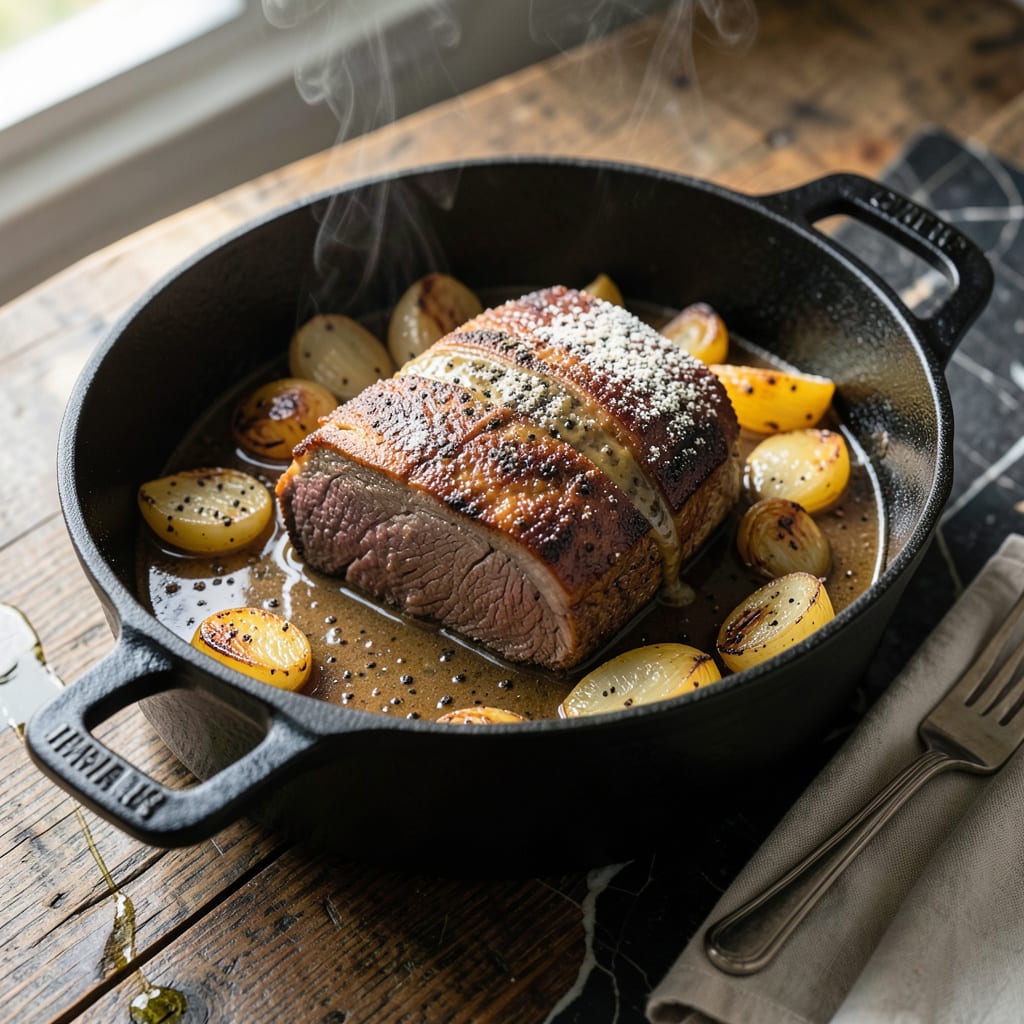
There’s nothing quite like a slow-braised pot roast to transform tough cuts of beef into tender, fall-apart perfection. This method, honed in a Staub Dutch oven, ensures even heat distribution for deep caramelization and rich flavor development.
The process begins with searing the meat to lock in juices, followed by a low-and-slow braise with root vegetables. The result is a hearty, comforting dish that’s as impressive as it is satisfying.
Ingredients for Staub Pot Roast
Transform tough beef into tender perfection with these essential ingredients for a rich, slow-braised dish.
| Ingredient | Amount | Notes |
|---|---|---|
| Beef Chuck Roast 🥩 | 3 lb | Boneless, well-marbled, cut into large chunks |
| Kosher Salt 🧂 | 2 tsp | Diamond Crystal preferred for even seasoning |
| Freshly Ground Black Pepper 🌶️ | 1 tsp | Coarsely ground for texture |
| All-Purpose Flour 🌾 | ¼ cup | For dredging beef |
| Neutral Oil 🫒 | 2 tbsp | High smoke point for searing |
| Yellow Onion 🧅 | 2 whole | Large, roughly chopped |
| Carrots 🥕 | 4 whole | Peeled, cut into 3-inch pieces |
| Celery Stalks 🌿 | 3 whole | Cut into 2-inch pieces |
| Garlic Cloves 🧄 | 6 cloves | Smashed, peeled |
| Tomato Paste 🍅 | 3 tbsp | Double-concentrated preferred |
| Dry Red Wine 🍷 | 2 cups | Bold variety like Cabernet Sauvignon |
| Beef Stock 🥘 | 2 cups | Low-sodium preferred |
| Fresh Thyme Sprigs 🌿 | 4 whole | Tied with kitchen twine |
| Bay Leaves 🍃 | 2 whole | Dried, whole leaves |
| Yukon Gold Potatoes 🥔 | 1 ½ lb | Peeled, cut into large chunks |
The beef chuck roast is non-negotiable here. Look for well-marbled pieces—this fat renders down during the long braise, creating that unctuous texture. Whole Foods or butcher shops often have the best selection, but most supermarkets carry pre-cut chuck perfect for this. The Staub Dutch oven’s heavy cast iron ensures even heat, so the meat sears uniformly without hot spots.
No red wine? Substitute with additional beef stock plus 1 tbsp balsamic vinegar for acidity. Fresh thyme can be swapped for 1 tsp dried thyme (added with other dry seasonings). If tomato paste isn’t on hand, 1/4 cup crushed tomatoes reduced briefly will work. The flour dredge is essential for thickening the sauce—don’t skip it, even if the meat looks dusty.
This dish actually improves overnight. Refrigerate in the Staub with the lid on for up to 4 days—the flavors deepen as it rests. Freezes beautifully for 3 months (portion into airtight containers). Always bring to room temperature before reheating to maintain texture.
Why You’ll Love This Recipe
- One Pot Wonder: I love that this cooks entirely in my Staub—sear the beef, then let it braise hands-off.
- Deep, Rich Flavor: The flour crust on the chuck roast locks in juices, creating a sauce so good I sop it up with bread.
- Sunday or Wednesday: Honestly, it’s just as fitting for a lazy weekend as a quick weeknight dinner.
- Leftovers for Days: I always make extra—the meat tastes even better reheated in sandwiches or over mashed potatoes.
Step-by-Step Instructions for Cast Iron Braised Beef with Root Vegetables
Master this technique and your Staub will deliver melt-in-your-mouth beef with deeply flavored vegetables.
Step 1: Sear and Develop Fond in the Staub
Pat the 3 lb beef chuck roast dry with paper towels, then season aggressively on all sides with the 2 tsp kosher salt and 1 tsp freshly ground black pepper. The dry surface ensures a proper sear rather than steaming. Dredge the beef in the 0.25 cup all-purpose flour, shaking off any excess.
Heat the 2 tbsp neutral oil in your Staub over medium-high heat until shimmering. Sear the beef in batches if needed to avoid crowding, turning occasionally, for 8-10 minutes total until deeply browned on all sides. This creates the fond—the browned bits—that will form the backbone of your sauce. Transfer the beef to a plate.
Step 2: Build the Aromatic Base
In the same Staub, add the roughly chopped 2 whole yellow onion, 4 whole carrots, and 3 whole celery stalks. Cook over medium heat for 5-7 minutes, stirring occasionally, until the vegetables begin to soften and develop color around the edges.
Add the 6 cloves garlic cloves and 3 tbsp tomato paste, stirring constantly for 1-2 minutes until the tomato paste darkens slightly and coats the vegetables. This step intensifies the umami depth of your braise. The mixture should be fragrant and beginning to stick to the bottom of the pot.
Step 3: Deglaze and Add Braising Liquid
Pour in the 2 cups dry red wine, using a wooden spoon to scrape up all the browned bits from the bottom of the Staub. This deglazing step dissolves the fond into the liquid, creating a rich, complex foundation for your braise. Bring to a simmer and cook for 3-4 minutes until reduced by about half.
Add the 2 cups beef stock, 4 whole fresh thyme sprigs, and 2 whole bay leaves. Return the seared beef to the pot along with any accumulated juices. The liquid should come about halfway up the beef—this ensures proper braising without boiling.
Step 4: Braise to Tender Perfection
Bring the mixture to a gentle simmer, then reduce heat to low. Cover the Staub and transfer to a 325°F oven. Braise undisturbed for 2 hours, then add the 1.5 lb Yukon Gold potatoes (peeled and cut into large chunks) to the pot. Continue braising for an additional 1 to 1.5 hours.
You’ll know it’s done when the beef shreds easily with a fork and the potatoes are tender. The sauce should be thick enough to coat the back of a spoon. If it’s too thin, simmer uncovered for a few minutes to reduce. The beef should be fork-tender and the vegetables should have absorbed the rich, wine-infused braising liquid.
Pro Tips For Making Staub Pot Roast
- Sear the Chuck Hard: Get your Staub screaming hot before adding the beef—this is where the deep, caramelized crust forms that defines a great pot roast. I learned this the hard way after too many pale, steamed-looking roasts.
- Dry the Meat First: Pat that chuck roast bone-dry with paper towels before seasoning and flouring. Sounds tedious, but it’s the only way to get that proper sear instead of a sad, soggy braise.
- Skip the Overcrowding: Don’t cram the pot with too many vegetables or liquid at the start—give the meat room to brown properly first. After burning two batches, I finally figured out the Staub needs space to work its magic.
- Use Extra Flour: Dust the chuck roast with a little more flour than you think you need—it thickens the braising liquid naturally as it cooks. My grandmother swore by this, and she was right.
Health Benefits of This Recipe
Rich Protein Source
This dish delivers about 60 grams of protein per serving from the beef chuck roast, supporting muscle repair and growth. Protein is essential for maintaining healthy bones, skin, and blood. I find this meal particularly satisfying after a long day. 💪
Iron and Zinc Boost
Beef is packed with hemin iron and zinc, nutrients that are more easily absorbed than those from plant sources. A 3-ounce serving provides about 20% of your daily iron needs, helping prevent fatigue and support immune function.
Vitamin B Complex
Pot roast is rich in B vitamins, particularly B12, B6, and niacin, which are vital for energy metabolism and nervous system health. The root vegetables add vitamin A and vitamin C, supporting vision and immune function.
Collagen for Joint Health
The slow cooking process breaks down connective tissues in the beef, releasing collagen into the braising liquid. Collagen supports joint health and skin elasticity. I notice my skin feels more hydrated when I eat collagen-rich meals regularly.
Antioxidant-Rich Vegetables
Carrots, celery, and onions in this recipe provide antioxidants like beta-carotene and quercetin. These compounds help combat oxidative stress and inflammation. The longer cooking time enhances their bioavailability. 🥕
Comfort with Nutrients
This hearty dish offers more than just comfort—it’s a nutritional powerhouse. The combination of protein, vitamins, and minerals makes it a balanced meal that fuels your body while satisfying your soul. Perfect for family dinners or meal prep.
Nutrition Facts
Frequently Asked Questions
What cut of beef works best for this method?
Use well-marbled beef chuck roast for the most tender results. The fat content renders down during the long braise, creating that melt-in-your-mouth texture. Avoid lean cuts like sirloin as they can become dry.
Can I make this on the stovetop instead?
Yes! After deglazing, cover and simmer on low heat for 3-4 hours instead of using the oven. Check occasionally to ensure the liquid doesn’t evaporate completely.
How do I thicken the sauce if it’s too thin?
Simmer uncovered for 5-10 minutes to reduce the liquid. For faster results, mix 1 tbsp cornstarch with 1 tbsp cold water and stir into the sauce.
When should I add the potatoes?
Add potatoes after the first 2 hours of braising to prevent them from turning mushy. This timing ensures they absorb flavors while staying intact.

- 4C Bread Crumbs Meatballs Recipe: Crispy Crust and Juicy Centers - September 25, 2026
- 6 Oz Chocolate Chip Cookie Recipe: Perfectly Balanced Crispy Edges and Chewy Hearts - September 25, 2026
- 6-Inch Coffee Cake Recipe: Vanilla Bean Swirls and Buttery Streusel Topping - September 25, 2026