
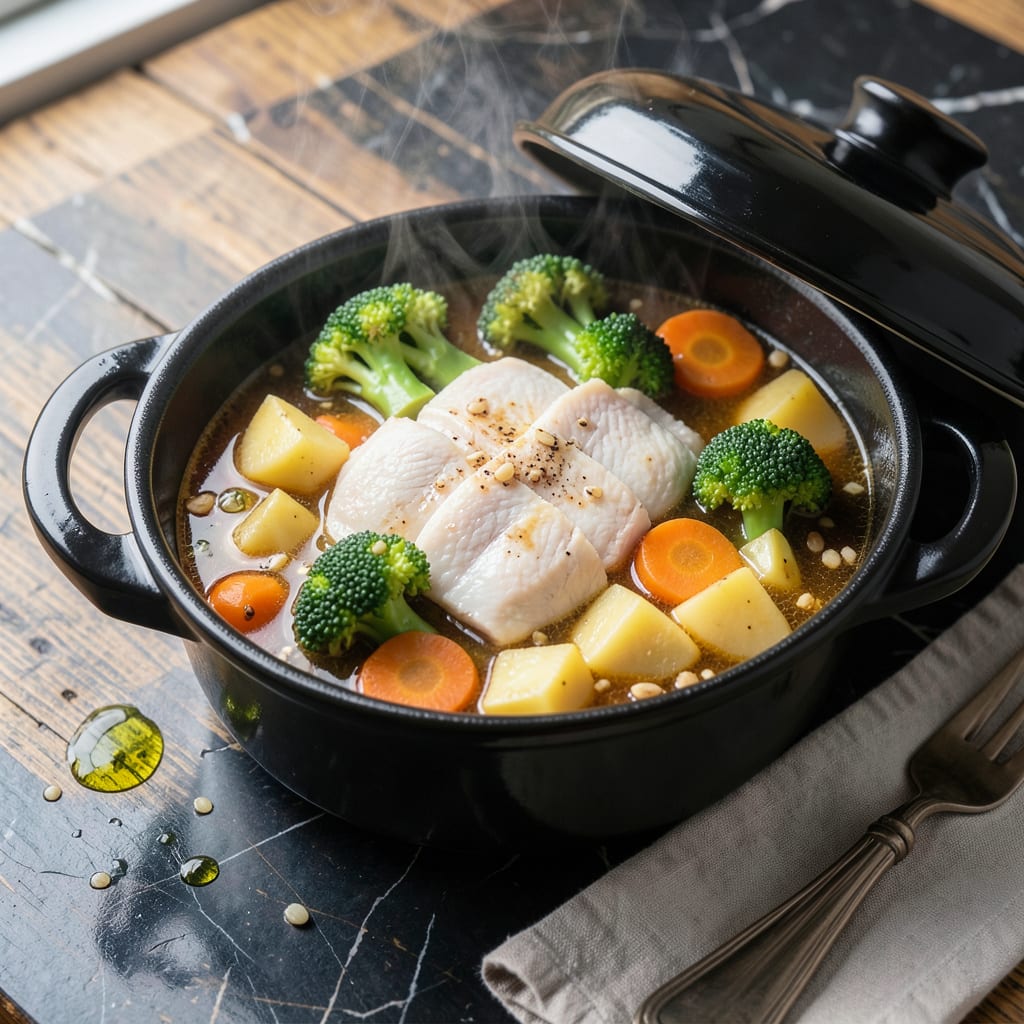
This steam pot method delivers perfectly cooked meals with minimal effort. The gentle heat preserves nutrients and natural flavors while ensuring even doneness.
I rely on this technique for hands-off cooking that produces tender vegetables, flaky fish, or succulent meats every time. The results speak for themselves.
Ingredients for Steam Pot
A balanced selection of proteins and vegetables ready for gentle, precise cooking.
| Ingredient | Amount | Notes |
|---|---|---|
| Chicken Breasts 🍗 | 1 ½ lb | Boneless, skinless, cut into even pieces |
| Carrots 🥕 | 4 whole | Peeled and cut into batons |
| Broccoli Florets 🥦 | 3 cups | Fresh, cut into uniform size |
| Potatoes 🥔 | 1 lb | Yukon Gold, peeled and cubed |
| White Fish Fillets 🐟 | 1 lb | Cod or halibut, skin removed |
| Soy Sauce 🫒 | 2 tbsp | Low-sodium preferred for balance |
| Sesame Oil 🫒 | 1 tbsp | Toasted for depth of flavor |
| Fresh Ginger 🌿 | 1 tbsp | Finely grated or minced |
| Garlic Cloves 🧄 | 4 cloves | Peeled and thinly sliced |
| Green Onions 🧅 | 4 whole | Thinly sliced for garnish |
| Water 💧 | 4 cups | For steaming base |
| Rice Vinegar 🍯 | 1 tbsp | Adds brightness to finish |
| Salt 🧂 | 1 tsp | Kosher or sea salt preferred |
| Black Pepper 🌶️ | ½ tsp | Freshly ground for best flavor |
The chicken and fish are the stars here. Optimal quality requires fresh, never frozen proteins for best texture. Whole Foods or Costco offer excellent options with consistent sizing. For the vegetables, organic carrots and broccoli (the good stuff, not the pre-cut kind) ensure vibrant color and flavor. Uniform cutting is critical—aim for even pieces to guarantee simultaneous doneness.
No white fish? Shrimp or tofu work beautifully with the same cooking time. Short on broccoli? Cauliflower or snap peas at equal volume. The soy sauce can be swapped for tamari (gluten-free) or coconut aminos. Sesame oil is non-negotiable for authentic flavor, but in a pinch, a neutral oil with a drop of toasted sesame will do. Fresh ginger and garlic are ideal, though one-third the amount of powdered can substitute.
Store proteins in the coldest part of the fridge for up to 2 days. Vegetables keep 5 days in crisper drawers. Prep ingredients the night before for effortless assembly. Leftovers reheat gently and hold 3-4 days refrigerated.
Why You’ll Love This Recipe
- One Pot Wonder: Stack chicken, fish, and veggies in layers, pour broth, and let the steam do all the work.
- Flavor Bomb: The potatoes soak up all the juices while the fish stays moist and tender.
- Weeknight Hero: I throw this together after work—dinner’s ready before the oven even finishes preheating.
- Budget Stretcher: Five ingredients, minimal waste, and it makes enough for leftovers that actually taste better the next day.
Step-by-Step Instructions for Steam Pot Cooking
This method ensures precise, even cooking with minimal effort and maximum flavor retention.
Step 1: Prepare the Steaming Liquid Base
In a large pot with a tight-fitting lid, combine the 4 cups water, 2 tbsp soy sauce, 1 tbsp sesame oil, 1 tbsp fresh ginger, 4 cloves garlic cloves, 1 tsp salt, and 0.5 tsp black pepper. The soy sauce and sesame oil infuse the steam with umami depth while the ginger and garlic create an aromatic foundation.
Bring the mixture to a rolling boil over high heat. You’ll see the surface actively bubbling and smell the garlic and ginger becoming fragrant. This flavored liquid will steam all the components, ensuring every bite carries these layered flavors.
Step 2: Layer Dense Vegetables for Even Cooking
Once the liquid boils, add the 1 lb potatoes and 4 whole carrots to the pot. These dense vegetables need the longest cooking time to become tender. Arrange them in a single layer at the bottom of the pot or in a steamer basket above the liquid.
Cover with the lid and steam for 8-10 minutes until the potatoes are just beginning to soften when pierced with a fork. The carrots should still have a slight bite—they’ll continue cooking with the other ingredients. This staggered approach prevents overcooking.
Step 3: Add Chicken and Broccoli
Place the 1.5 lb chicken breasts on top of the potatoes and carrots, then add the 3 cups broccoli florets around them. The chicken’s elevated position allows the steam to circulate evenly while the broccoli cooks quickly on the upper level.
Cover and steam for 12-15 minutes until the chicken reaches an internal temperature of 165°F and the broccoli turns a vibrant green with a tender-crisp texture. Avoid lifting the lid during this time to maintain consistent steam pressure.
Step 4: Finish with Delicate Fish and Final Touches
Gently place the 1 lb white fish fillets on top of the chicken and broccoli. Fish cooks fastest, so it goes in last to prevent it from breaking apart. Cover and steam for 5-7 minutes until the fish flakes easily with a fork and turns opaque throughout.
The fish is done when it separates cleanly along the natural segments. Remove the pot from heat immediately to prevent overcooking. The residual steam will keep everything warm while you prepare to serve.
Step 5: Garnish and Serve
Carefully transfer all components to a serving platter, arranging the chicken, fish, and vegetables attractively. Drizzle any remaining steaming liquid from the pot over the top for extra flavor. Sprinkle with the 4 whole green onions and finish with a drizzle of 1 tbsp rice vinegar for brightness.
Serve immediately while hot. The rice vinegar cuts through the richness of the sesame and soy, balancing the dish with a subtle tang. Each element should be perfectly cooked—tender but not mushy vegetables, juicy chicken, and flaky fish.
Pro Tips For Making Steam Pot
- Layer by Density: Put potatoes and carrots at the bottom, chicken and fish above, and broccoli on top—I learned this the hard way after my fish turned mushy sitting in the steam too long.
- Cut Evenly: Chop potatoes into 1-inch chunks and carrots into thin sticks so everything cooks through at the same time, about 12-15 minutes.
- Skip the Overcrowd: Leave at least an inch between ingredients or the steam won’t circulate and you’ll end up with half-cooked chicken and soggy veggies.
- Preheat the Pot: Start with boiling water in the pot before adding the steamer basket—sounds obvious, but it shaves 5 minutes off the cooking time and keeps the fish from drying out.
Regional Styles of These Flavors
Chinese Tradition
In Cantonese cuisine, this method is called “zheng” and often uses a bamboo steamer over a wok. I love how the bamboo absorbs and circulates steam more evenly than metal. A 12-inch bamboo steamer fits perfectly over a standard wok for home cooking. 🥗
Japanese Approach
“Mushi” is the Japanese art of steaming, where ingredients are arranged in a donabe (clay pot) with a lid. The porous clay retains heat beautifully, creating a gentle, consistent steam. I use my Iga donabe for delicate fish and vegetables.
Thai Inspiration
Thai steaming incorporates aromatic herbs like lemongrass and kaffir lime leaves in the water. The steam infuses everything with bright, citrusy notes. I add 3 stalks lemongrass and 4 lime leaves to my base liquid for an authentic touch. 🌿
Vietnamese Style
Vietnamese “hấp” often includes fish sauce and star anise in the steaming liquid. I use 2 tbsp Red Boat fish sauce and 1 star anise pod for depth. The result is wonderfully complex, with umami and warmth in every bite.
Korean Method
Korean “jjim” involves steaming with a flavorful broth. I create mine with 2 cups anchovy-kelp stock, 1 tbsp gochugaru (Korean chili flakes), and 1 tsp sugar. The slight sweetness balances the heat beautifully.
Nutrition Facts
Frequently Asked Questions
What’s the best liquid to use for steaming?
A flavored base works best. Use 4 cups water with 2 tbsp soy sauce, 1 tbsp sesame oil, and aromatics like ginger and garlic for maximum flavor infusion.
Can I use frozen vegetables?
Avoid frozen for this method. Fresh vegetables ensure proper texture and even cooking. Frozen releases excess moisture, making the dish watery.
How do I prevent overcooking the fish?
Add fish last since it cooks fastest. Steam for only 5-7 minutes until opaque and flaky. Remove from heat immediately to stop the cooking process.
Why stagger the cooking times?
Dense vegetables need 8-10 minutes head start. Chicken requires 12-15 minutes, while delicate fish cooks in 5-7 minutes. This ensures everything finishes perfectly together.

- 4C Bread Crumbs Meatballs Recipe: Crispy Crust and Juicy Centers - September 25, 2026
- 6 Oz Chocolate Chip Cookie Recipe: Perfectly Balanced Crispy Edges and Chewy Hearts - September 25, 2026
- 6-Inch Coffee Cake Recipe: Vanilla Bean Swirls and Buttery Streusel Topping - September 25, 2026