
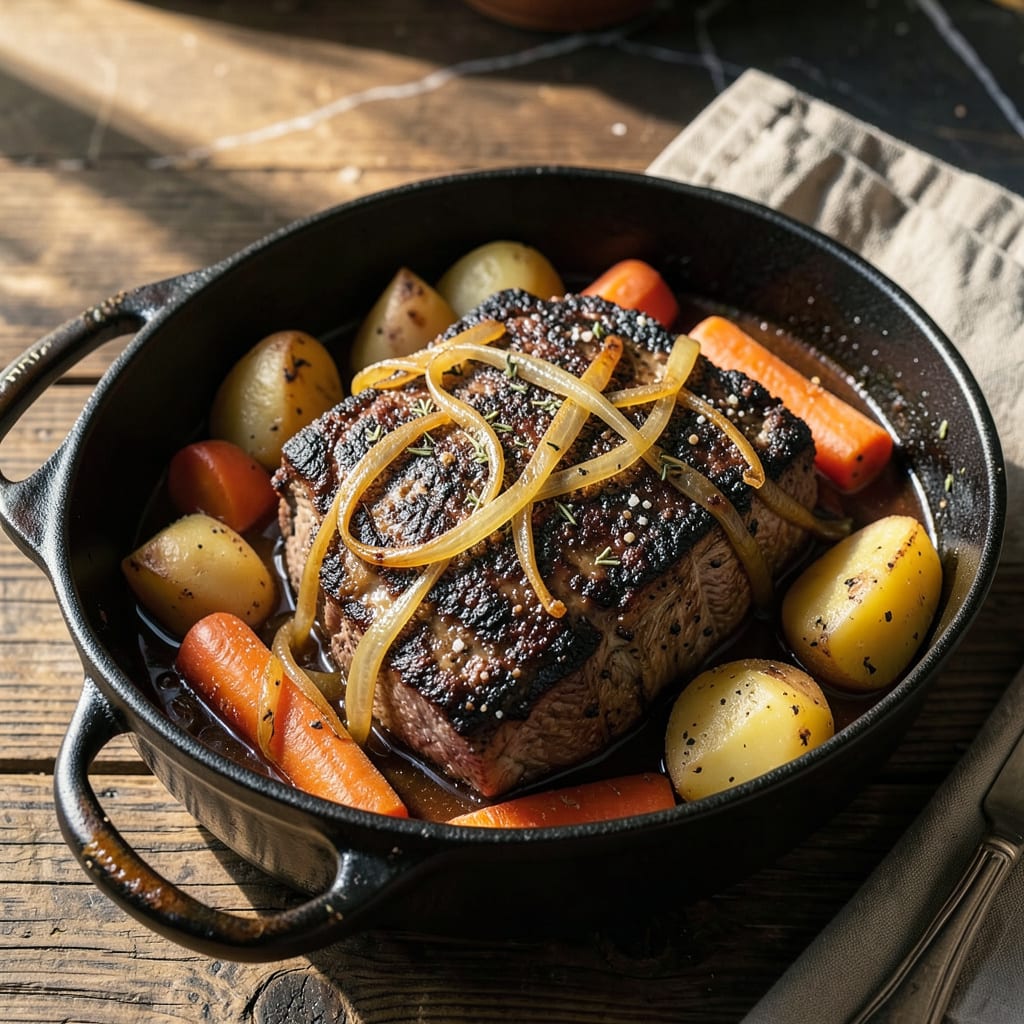
Sunday suppers call for something hearty and comforting, and this pot roast delivers exactly that. Developed with Steve Doocy’s signature home-style approach, the recipe transforms a simple chuck roast into a fall-apart tender centerpiece that fills your kitchen with rich, savory aromas. The slow-cooked beef absorbs flavors from aromatic vegetables and herbs, creating a meal that tastes like it simmered all day.
What sets this apart is the balance of simplicity and depth—searing the meat builds a flavorful crust, while low, steady heat ensures the roast becomes impossibly tender. By the time it’s done, you’ll have a dish worthy of a family gathering, with juices so rich they practically beg to be soaked up with crusty bread or mashed potatoes.
Ingredients for Steve Doocy Pot Roast
This is your Sunday supper shopping list—simple, hearty, and built for slow-cooked comfort.
| Ingredient | Amount | Notes |
|---|---|---|
| Chuck Roast 🥩 | 4 lb | Well-marbled, boneless preferred |
| Kosher Salt 🧂 | 2 tbsp | Diamond Crystal preferred for even seasoning |
| Freshly Ground Black Pepper 🌶️ | 1 tbsp | Coarse grind for searing |
| All-Purpose Flour 🌾 | ¼ cup | For dredging the roast |
| Extra-Virgin Olive Oil 🫒 | 2 tbsp | High smoke point for searing |
| Yellow Onions 🧅 | 2 whole | Large, roughly chopped |
| Carrots 🥕 | 4 whole | Peeled, cut into 2-inch chunks |
| Celery Stalks 🌿 | 3 whole | Cut into 2-inch pieces |
| Garlic Cloves 🧄 | 6 cloves | Smashed, skins removed |
| Dry Red Wine 🍷 | 2 cups | Cabernet Sauvignon or Merlot preferred |
| Low-Sodium Beef Broth 💧 | 3 cups | Quality brand like Swanson or Better Than Bouillon |
| Tomato Paste 🍅 | 2 tbsp | San Marzano preferred for depth |
| Fresh Thyme Sprigs 🌿 | 4 sprigs | Tied with kitchen twine |
| Fresh Rosemary Sprigs 🌿 | 2 sprigs | Whole, for infusion |
| Bay Leaves 🍃 | 2 whole | Dried, for aromatic depth |
The chuck roast is non-negotiable here—look for heavy marbling (those white fat streaks) at the butcher counter. Costco has great pre-cut chuck roast chunks if you’re short on time. For the wine, don’t splurge on anything fancy—Trader Joe’s $5 Cabernet works perfectly (just make sure it’s dry, not sweet). The beef broth matters more than you’d think; Better Than Bouillon paste mixed with water gives the richest flavor without the sodium overload. And yes, fresh herbs make a difference, but dried will work in a pinch (use half the amount).
Out of red wine? Extra beef broth with a splash of balsamic vinegar mimics the acidity. No fresh thyme? Dried thyme at half the quantity gets you close. The tomato paste can be swapped for 1/4 cup ketchup if that’s all you’ve got (just reduce the sugar elsewhere). For a gluten-free version, cornstarch instead of flour works for dredging—just pat the roast extra dry first. And if you’re missing celery, an extra carrot or two won’t ruin anything (the mirepoix police won’t arrest you).
This tastes even better the next day—store leftovers in the fridge for up to 5 days or freeze for 3 months. The fat will solidify on top when cold; just skim it off before reheating. I like to portion the roast into meal-sized containers with some juices, so weekday lunches are sorted. The herbs can be composted after cooking (they’ve given all they’ve got), but save that flavorful broth for soups or gravies.
Why You’ll Love This Recipe
- One-Pan Magic: Honestly, I love recipes where cleanup doesn’t involve a sink full of dishes. This pot roast sears in the same Dutch oven it slow-cooks in—just swap the stovetop for the oven and let it do its thing. One pot, minimal scrubbing, maximum flavor.
- Crispy, Tender Perfection: That first bite where the crusty flour-and-pepper crust gives way to fall-apart chuck roast? Ridiculously good. The olive oil sear locks in the juices while the slow cook turns it into something rich and deeply savory—no fancy ingredients needed.
- Sunday or Tuesday: Between us, I’ve made this for lazy weekends and hectic weeknights. It’s unfussy enough for a Tuesday (yes, even on a Tuesday night) but impressive enough for company. Leftovers? Even better—pile them onto mashed potatoes or crusty bread the next day.
- Budget-Friendly Centerpiece: A chuck roast feeds a crowd without the steakhouse price tag. I’ll be real: this cut gets tender and flavorful with time, so you’re not sacrificing quality to save cash. Five ingredients, one hearty meal, and maybe even a second dinner’s worth of leftovers.
Step-by-Step Instructions for Steve Doocy’s Pot Roast
Here’s the method I swear by for that perfect Sunday supper—tender meat and rich gravy every time.
Step 1: Season and Sear the Chuck Roast
Pat the 4 lb Chuck Roast completely dry with paper towels—this ensures a perfect sear. Season all sides aggressively with the 2 tbsp Kosher Salt and 1 tbsp Freshly Ground Black Pepper, pressing the seasoning into the meat. The coarse grind of pepper creates that classic crust we’re after.
Dredge the roast in the 0.25 cup All-Purpose Flour, shaking off any excess. Heat the 2 tbsp Extra-Virgin Olive Oil in a large Dutch oven over medium-high heat until it shimmers but doesn’t smoke. Add the roast and sear undisturbed for 4-5 minutes per side until you develop a deep, mahogany crust. You’ll know it’s ready to flip when it releases easily from the pot.
Step 2: Build the Aromatic Base
Remove the seared roast to a plate and reduce heat to medium. Add the 2 whole Yellow Onions, 4 whole Carrots, and 3 whole Celery Stalks to the pot. Cook for 5-6 minutes, stirring occasionally, until the vegetables begin to soften and develop some color. The onions should become translucent at the edges.
Add the 6 cloves Garlic Cloves and cook for 1 minute until fragrant—don’t let it brown. Stir in the 2 tbsp Tomato Paste and cook for 2 minutes, allowing it to caramelize slightly. This step builds the deep, savory foundation that makes the gravy so rich. You’ll notice the tomato paste darkening and becoming more aromatic.
Step 3: Deglaze and Begin Braising
Pour in the 2 cups Dry Red Wine, scraping up all those beautiful browned bits from the bottom of the pot with a wooden spoon. This is where the magic happens—the fond (those browned bits) dissolves into the liquid, creating incredible depth of flavor. Bring the mixture to a simmer and let it reduce by half, about 5-7 minutes.
Return the seared roast to the pot along with any accumulated juices. Add the 3 cups Low-Sodium Beef Broth, 4 sprigs Fresh Thyme Sprigs, 2 sprigs Fresh Rosemary Sprigs, and 2 whole Bay Leaves. The liquid should come about halfway up the roast. Bring everything to a gentle simmer, then reduce heat to low to maintain a bare simmer.
Step 4: Slow Cook to Fall-Apart Tenderness
Cover the pot and let the roast cook undisturbed for 3-3.5 hours. You want to maintain that gentle simmer—just a few bubbles breaking the surface occasionally. Resist the temptation to peek too often; every time you lift the lid, you add 15-20 minutes to the cooking time.
The roast is done when it’s fork-tender—insert a fork and it should slide in and out with no resistance, and the meat should easily pull apart. The vegetables should be completely softened and the liquid reduced to a rich, flavorful gravy. If the liquid hasn’t reduced enough, remove the roast and vegetables, then simmer the gravy uncovered for 5-10 minutes to thicken.
Step 5: Rest and Serve
Transfer the roast to a cutting board and tent loosely with foil. Let it rest for 15-20 minutes before slicing or pulling apart. This resting period allows the juices to redistribute throughout the meat, ensuring every bite is moist and tender. Skim any excess fat from the surface of the gravy if desired.
Serve the pot roast with the vegetables and plenty of that rich gravy spooned over the top. The meat should be so tender it falls apart at the touch of a fork, with a deep beefy flavor that’s perfectly balanced by the aromatic vegetables and herbs. This is Sunday supper at its finest—comforting, hearty, and worth the wait.
Storing and Reheating This Recipe
Refrigerator Storage
Once completely cooled (about 2 hours at room temperature), transfer the pot roast and gravy to airtight containers. I like using glass Pyrex with snap-tight lids—they’re microwave-safe and won’t absorb odors. Store in the fridge for up to 5 days. The flavors actually deepen overnight, making leftovers taste even better. 🥩
Freezing for Later
For longer storage, portion the roast and gravy into freezer-safe bags or containers. Leave 1 inch of headspace for expansion, and squeeze out excess air to prevent freezer burn. It keeps beautifully for 3 months. I recommend freezing in meal-sized portions for easy reheating.
Stovetop Reheating
Place the pot roast and gravy in a saucepan over medium-low heat. Add ¼ cup beef broth to prevent drying out, and cover. Warm gently for 10-15 minutes, stirring occasionally. The meat should reach 165°F internally. This method preserves the tender texture better than microwaving.
Microwave Method
For quick reheating, place portions in a microwave-safe dish with 2 tbsp water or broth. Cover with a damp paper towel and heat on 70% power for 2-3 minutes, stirring halfway. Let rest for 1 minute before serving—the steam finishes reheating evenly.
Gravy Revival
If the gravy thickens too much in storage, thin it with ¼ cup hot water or broth while reheating. For extra richness, whisk in 1 tbsp butter at the end. The fat from the original cooking will remelt, restoring that silky texture we all love.
Repurposing Leftovers
Shred leftover pot roast for tacos, sandwiches, or pot pies. The gravy makes an incredible base for French dip sandwiches—just heat it with ½ cup extra broth and serve with crusty rolls. I’ve even used it as a pasta sauce by simmering with ½ cup cream for 10 minutes. ✨
Nutrition Facts
Frequently Asked Questions
Can I use a different cut of beef?
Chuck roast is ideal for this recipe due to its marbling and connective tissue. If unavailable, brisket or bottom round can work, but expect slightly less tenderness. Avoid lean cuts like sirloin—they’ll dry out during long cooking.
What if I don’t have red wine?
Substitute with 2 cups extra beef broth plus 1 tbsp balsamic vinegar for acidity. Alternatively, use grape juice with 1 tsp red wine vinegar. The wine adds depth, but the dish will still be delicious without it.
How do I know when it’s done?
The roast is ready when it reaches 195°F internally and shreds easily with a fork. If unsure, test a small piece—it should melt in your mouth. Overcooking is nearly impossible with this method, so err on the side of longer cooking.
Can I make this in a slow cooker?
Yes! Sear the meat first, then transfer everything to a slow cooker. Cook on low for 8-9 hours or high for 5-6 hours. The flavors develop beautifully, though the gravy may need reducing on the stovetop afterward.

- 8 Bean Soup Recipe Crock Pot: Hearty Vegetable Medley in One Pot - September 25, 2026
- 4C Bread Crumbs Meatballs Recipe: Crispy Crust and Juicy Centers - September 25, 2026
- 6 Oz Chocolate Chip Cookie Recipe: Perfectly Balanced Crispy Edges and Chewy Hearts - September 25, 2026