
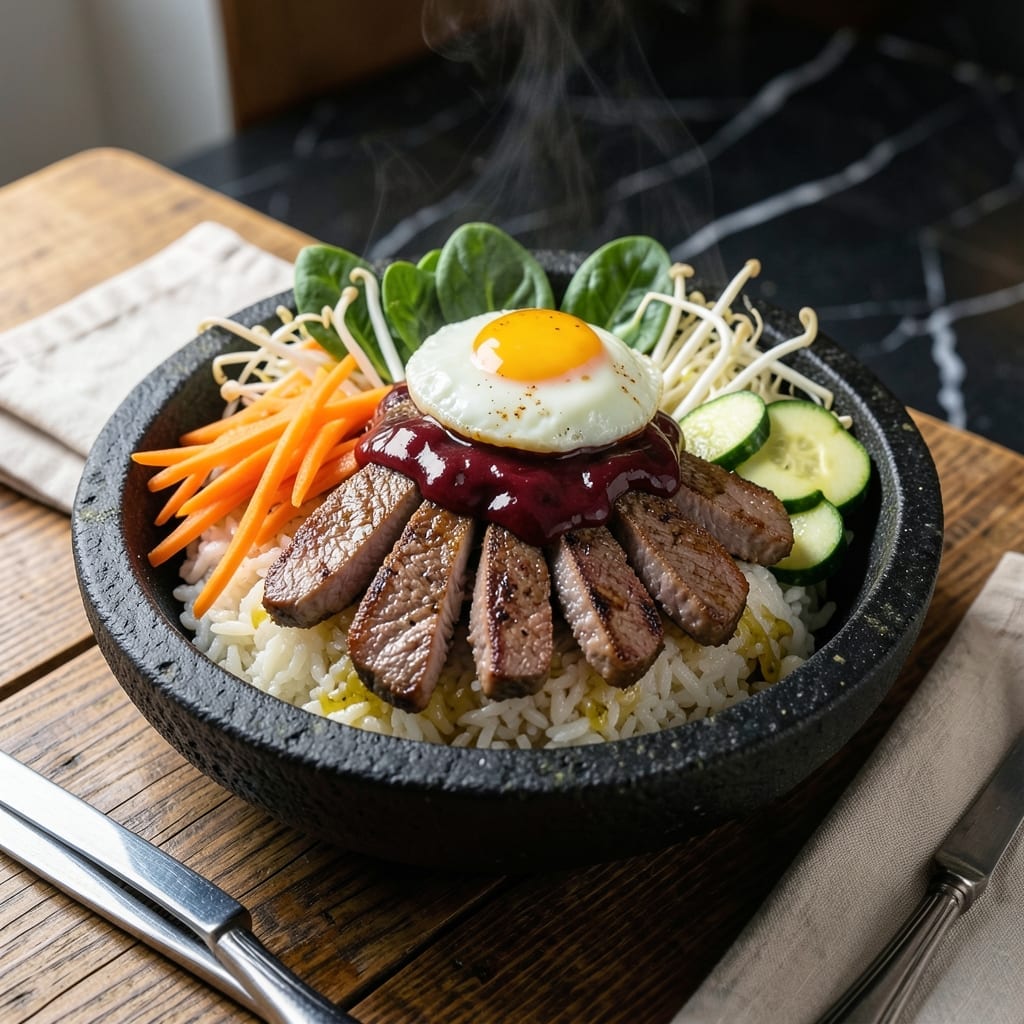
This traditional Korean dish transforms simple ingredients into a vibrant, sizzling meal served in a hot stone pot. The technique creates a crispy rice layer at the bottom that’s the hallmark of authentic bibimbap.
Fresh vegetables, tender meat, and gochujang sauce come together over steaming rice. Each component is cooked separately to maintain distinct flavors and textures before being assembled.
The stone pot, heated to 450°F, develops that coveted golden crust while keeping the top layers warm. The contrast of hot rice, cool vegetables, and spicy-sweet sauce makes every bite exciting.
Serve immediately with extra sauce on the side. The presentation is as impressive as the taste.
Ingredients for Stone Pot Bibimbap
Transform simple ingredients into this sizzling Korean stone pot classic with crispy rice and vibrant toppings.
| Ingredient | Amount | Notes |
|---|---|---|
| Short-Grain White Rice 🍚 | 2 cups | Rinsed until water runs clear |
| Ribeye Steak 🥩 | ¾ lb | Thinly sliced for quick cooking |
| Carrots 🥕 | 2 whole | Julienned into matchsticks |
| Zucchini 🥒 | 1 whole | Thinly sliced into half-moons |
| Spinach 🌿 | 4 cups | Fresh, washed and drained |
| Bean Sprouts 🌱 | 1 cup | Blanched for texture |
| Shiitake Mushrooms 🍄 | 4 whole | Fresh, stems removed |
| Garlic Cloves 🧄 | 4 cloves | Minced for flavor base |
| Gochujang Sauce 🌶️ | ½ cup | Korean red pepper paste |
| Soy Sauce 🫒 | 3 tbsp | Low-sodium preferred |
| Sesame Oil 🫒 | 1 tbsp | Toasted for aroma |
| Sugar 🧂 | 1 tbsp | For balancing sauce |
| Vegetable Oil 🫒 | 2 tbsp | For cooking vegetables |
| Eggs 🥚 | 4 whole | Sunny-side up for topping |
| Sesame Seeds 🌾 | 1 tbsp | Toasted for garnish |
The rice is non-negotiable—short-grain white rice (like Nishiki or Koshihikari) creates that essential sticky texture for the crispy bottom layer. For the beef, ribeye offers the best marbling and tenderness. H Mart or Korean grocery stores will have authentic ingredients, but well-stocked supermarkets carry most items now. The gochujang should be Korean-made for proper depth of flavor.
No ribeye? Sirloin or flank steak work well too—just slice against the grain. Vegetarian? Swap beef for extra mushrooms or tofu. Missing gochujang? Sriracha plus miso paste gets you close. The vegetables are flexible—bell peppers or cucumbers make great additions. For the rice, jasmine can work but won’t crisp as well in the stone pot.
Cooked components keep separately in the fridge for 3-4 days. Assemble and reheat in the stone pot just before serving for that fresh sizzle. The gochujang sauce can be made ahead and stored in an airtight container for up to 1 week.
Why You’ll Love This Recipe
- I’ll be real: this looks fancy but comes together faster than ordering takeout, and my kids actually eat the zucchini.
- One Pot Wonder: I love that everything—rice, steak, and veggies—cooks together in the stone pot, so I’m not juggling multiple pans.
- That Crispy Bottom: The rice gets this nutty, golden crust from the hot stone pot, and paired with the tender ribeye and fresh spinach, it’s ridiculously good.
- Weeknight Friendly: I’ll be real: this looks fancy but comes together faster than ordering takeout, and my kids actually eat the zucchini.
Step-by-Step Instructions for Stone Pot Bibimbap
Master the technique for crispy rice, tender vegetables, and perfectly cooked protein.
Step 1: Prepare and Cook the Rice
Rinse the 2 cups Short-Grain White Rice under cold water until the water runs clear to remove excess starch. This prevents the grains from becoming mushy during cooking and ensures that perfect sticky texture bibimbap requires.
Cook the rice according to package instructions, but reduce the water by 2 tablespoons to achieve a firmer grain that will crisp beautifully in the stone pot. Once cooked, transfer the rice to a heated stone pot or cast-iron skillet with 1 tablespoon Vegetable Oil, pressing it down firmly and evenly across the bottom and up the sides.
Step 2: Marinate and Cook the Ribeye Steak
Thinly slice the 0.75 lb Ribeye Steak against the grain into ¼-inch thick strips for maximum tenderness. In a bowl, combine the beef with 1 tbsp Soy Sauce, 1 clove minced Garlic Cloves, ½ tbsp Sugar, and ½ tbsp Sesame Oil. Let it marinate for 10 minutes while you prepare the vegetables.
Heat 1 tbsp Vegetable Oil in a skillet over medium-high heat. Add the marinated beef in a single layer and cook for 2-3 minutes per side until browned and cooked through. Remove from heat and set aside—the beef will finish cooking when added to the hot stone pot later.
Step 3: Sauté the Vegetables Separately
Heat the remaining 1 tbsp Vegetable Oil in a large skillet over medium heat. Add the 2 whole Carrots (julienned) and cook for 2-3 minutes until slightly softened but still crisp. Remove and set aside. Repeat with the 1 whole Zucchini (sliced), 4 whole Shiitake Mushrooms, and 4 cups Spinach, cooking each for 2-3 minutes until just tender.
For the 1 cup Bean Sprouts, blanch in boiling water for 1 minute, then shock in ice water to preserve their crunch. Drain well. In the same skillet, sauté the remaining 3 cloves Garlic Cloves for 30 seconds until fragrant, then divide it among the cooked vegetables for consistent flavor.
Step 4: Assemble and Crisp the Rice
Arrange the cooked vegetables and beef in sections atop the rice in the stone pot. Place the pot over medium-high heat for 5-7 minutes to develop a crispy crust on the bottom—listen for a subtle crackling sound, which indicates the rice is crisping perfectly.
While the rice crisps, prepare the 4 whole Eggs sunny-side up in a nonstick skillet with a touch of oil. Cook until the whites are set but the yolks remain runny, about 2-3 minutes. This timing ensures the yolks will burst over the dish when served.
Step 5: Add Sauce and Garnish to Serve
In a small bowl, combine the 0.5 cup Gochujang Sauce with the remaining 2 tbsp Soy Sauce and ½ tbsp Sesame Oil. Stir until smooth and glossy. Drizzle this vibrant sauce over the arranged ingredients in the stone pot.
Top each serving with a sunny-side up egg, then sprinkle with the 1 tbsp Sesame Seeds. Serve immediately in the sizzling stone pot, encouraging diners to mix all components thoroughly to coat every bite in the rich, spicy-sweet sauce. The contrast of hot stone, crispy rice, and fresh vegetables creates the authentic experience.
Pro Tips For Making Stone Pot Bibimbap
- Preheat the Stone Pot: I learned this the hard way—put your empty stone pot in a cold oven and heat it to 450°F for 10 minutes before adding oil and rice. It prevents sticking and gives that perfect crispy bottom layer.
- Slice Against the Grain: For the ribeye, cut it into thin strips against the grain after freezing for 15 minutes—makes it tender and easy to chew, and the pieces cook evenly in the hot pot.
- Salt Spinach Twice: Blanch the spinach, squeeze out all the water, then toss it with salt while warm. Sounds weird, but it works: it keeps the spinach from watering down the bibimbap.
- Use Day-Old Rice: Fresh rice turns mushy in the stone pot—use leftover rice from the fridge, and break up any clumps with your hands before adding it. My grandmother swore by this, and she was right.
Pro Cooking Tips for stone pot bibimbap
Stone Pot Preheating
Always preheat your stone pot on the stovetop for 5 minutes at medium-high heat before adding rice. This ensures even crisping. I use a cast-iron dolsot from Korean markets for best results. 🔥
Rice Pressing Technique
Press the cooked rice firmly into the pot using a wooden spoon or spatula. Apply even pressure for 1 minute to create a dense layer that crisps uniformly. Don’t skip this step—it’s key for that perfect golden crust.
Vegetable Sauté Order
Start with the hardest veggies: carrots first, then mushrooms, zucchini, and spinach last. Each needs just 2-3 minutes at medium heat to retain texture. I keep them slightly undercooked since they’ll finish in the hot pot.
Crisp Monitoring
Listen for a subtle crackling sound after 5-7 minutes of heating. That’s your cue the rice is crisping. If unsure, use a metal spatula to peek at the edges—it should be deep golden brown. 🌟
Egg Timing
Cook your sunny-side up eggs last, while the rice crisps. Use low heat and cover with a lid for 2 minutes to set the whites without overcooking the yolks. The residual heat will finish them perfectly.
Sauce Consistency
Thin the gochujang sauce with a splash of hot water if it’s too thick. Aim for a drizzling consistency. I add 1 tsp at a time until it flows smoothly but still clings to the spoon.
Nutrition Facts
Frequently Asked Questions
What can I use if I don’t have a stone pot?
A cast-iron skillet works perfectly as a substitute. Heat it for 5 minutes at medium-high before adding rice to get that crispy bottom. Just handle with care—it gets very hot!
How do I get the rice extra crispy?
Press the rice firmly into the pot and let it cook undisturbed for 7-8 minutes. The key is high heat and patience. Listen for a crackling sound—it means it’s ready.
Can I make this dish vegetarian?
Skip the beef and add extra mushrooms or tofu. Marinate the tofu in soy sauce, garlic, and sesame oil for 10 minutes before cooking.

- 4C Bread Crumbs Meatballs Recipe: Crispy Crust and Juicy Centers - September 25, 2026
- 6 Oz Chocolate Chip Cookie Recipe: Perfectly Balanced Crispy Edges and Chewy Hearts - September 25, 2026
- 6-Inch Coffee Cake Recipe: Vanilla Bean Swirls and Buttery Streusel Topping - September 25, 2026